
Ban the 24-Hour Workday!
In some states—New York is one of them—it is still legal to hire someone for a 24-hour shift, but to only pay them for a fraction of those hours.
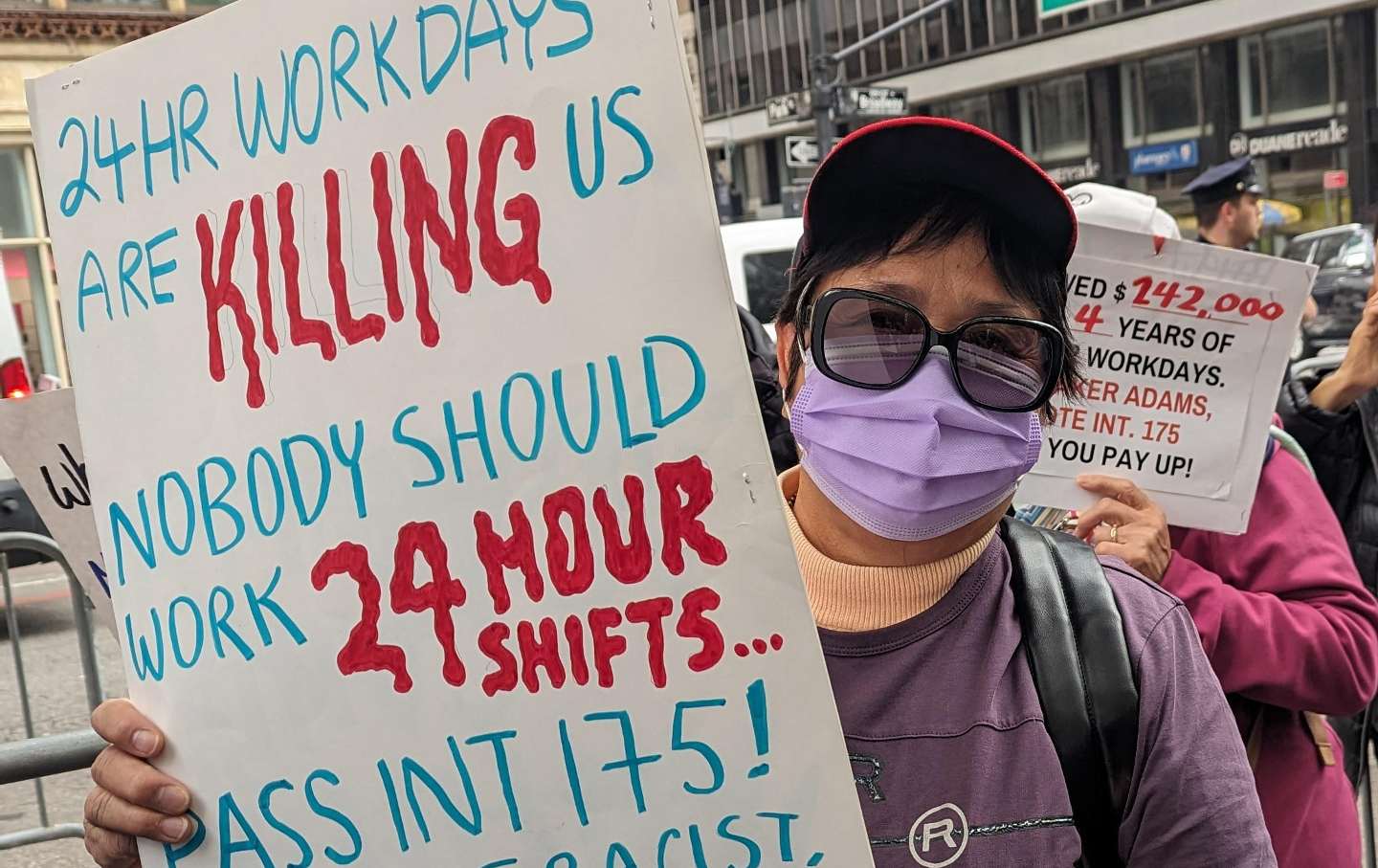
An honest day’s pay for an honest day’s work has long been an American ideal. So it may surprise you to learn that it is legal in New York State to hire someone for a 24-hour shift—but to pay them for just a fraction of those hours. Sanctioned by New York State Labor Law and governing the work of home health aides, it’s called the “13-Hour Rule.”
Last month, hundreds of protesters gathered in front of City Hall in New York City, demanding to end the practice that would surprise most Americans. Their signs and shouts in Spanish, Cantonese, and English exclaim, “NO MORE 24!” Much of the ire is focused on City Council Speaker Adrienne Adams. Their demand? For the council to bring Intro. 175—the bill banning this forced labor—to a vote.
The individuals who work these shifts are not live-in help. They are on a job site. Working for 24 hours straight.
Both city and state government are complicit in the current unfair arrangement. Earlier last month, I met Vincent Cao from the Chinese Staff and Workers Association at a picket line in front of the New York State Department of Labor (DOL). With him were a dozen off-duty attendants and activists protesting the DOL’s decision to quietly close more than 100 cases of wage theft of home health aides under investigation since 2018. In April 2023, the DOL began closing the cases—despite previous updates to claimants that their files were moving forward. In the letters informing aides that their cases had been closed was the assertion that they had other means available to resolve their claims. The DOL would not continue investigating claims from home care aides whose unions had entered into binding arbitration agreements with their employers. These workers were represented by 1199SEIU United Healthcare Workers East.
The closing of the cases took them by surprise. Cao told me, “A lot of home care workers call us.… They tell me they work many 24-hour shifts continuously.… You don’t go home.… For those three, four days, you don’t get much sleep.” According to Cao, even after working 24 hours, they are often not relieved and instead are required to continue on to another shift. The draconian demands of the job trigger chaos in their personal lives.
The 13-Hour Rule allows the agencies that provide and employ home health aides the right to schedule a worker for a 24-hour shift—but only pay them for 13 hours if they have been provided with an eight-hour sleep break (including five hours of uninterrupted sleep) and three hours of meal breaks. How can a worker asked to care for someone who needs 24-hour assistance plan their mandated breaks? According to Cao, when workers complain that their shifts do not allow them the required time for sleep and meals, the agencies blacklist them. In other locales without such a rule, the work of 24-hour caregiving is divided among two or three people.
In 2019, bill A3145A was introduced in the NY State Assembly to mandate scheduling home health aides into at least two shifts. This bill, too, has languished instead of being brought to a vote. Assemblyman Harvey Epstein, the bill’s sponsor, noted that there “has not been enough community pressure at the state level to advance the issue” But while our politicians wait, the workers continue to suffer. Commenting on this bill, Governor Hochel stated that the cost would add an additional $1 billion to the budget—with the implication that this was too much. Yet, somehow, the governor found $1.54 billion for a stadium in Buffalo.
The issue isn’t just wage theft—or exploitation. Sleep-deprived people make mistakes that can undermine the care of their patients. Given the lack of sleep and the requirements of the job—like counting out medicine or cooking on a hot stove—accidents can easily happen.
Can anyone imagine a security guard whose supervisor schedules them for a 24-hour shift—but then tells him that even though he will be at the site for 24 hours, he will only be paid for 13 hours? The difference here is gender. Home health aides in New York are predominantly immigrant women. Their plight is part of the long history in the United States of wages stolen from women—especially women of color.
Those defending the 13-Hour Rule assert that a 24-hour shift provides flexibility for staffing agencies. Banning the practice will raise the cost of care. Abolishing the rule would indeed increase the cost of care, as these workers are currently toiling at below minimum wage. But the current rule puts the needs of the agencies over those of patients and workers. Instead, the agencies should be required to provide proper care to people who hire them—and fair wages to those who provide that care to their clients.
Activists say one reason for the long-standing abuse lies in the lucrative confidential contracts between the agencies and the insurance companies and state providers like Medicaid that pay them. These contracts are awarded to agencies in a closed bid process. According to the Empire Center for Public Policy, New York State’s funding for personal care for the elderly and disabled is eight times higher than the national average. Fraud is rampant, and profits flow freely to insurance companies and agencies while the labor force is abused.
1199 SEIU, the union representing home attendants, should be fighting harder to end the 24-hour workday. But its efforts on the issue have been minimal, despite the union’s top spot in the lobbying dollars race in New York. Last year, the health aides who work under a binding arbitration clause battled their own union—objecting to the result of the mediation and arbitration process against 42 home health agencies that delivered an average payment of only $250 per worker when many were owed thousands of dollars. The February 2022 award covered eight years of labor and approximately 120,000 workers. The union touted the settlement, noting that paying more would have put home health agencies out of business. Which raises the question: Whose side is SEIU on? The union’s primary focus should be their workers’ wages and well-being—not the profit margins of the staffing agencies.
Commenting on Intro.175, a spokesperson for 1199SIEU stated that “city legislation…needs to be aligned with the state budget process to prevent immediate disruption of services and jobs. Homecare is funded by the state, not the city, and absent the necessary funding to convert 24-hour shifts into split shifts, it risks nursing home placement for thousands of homecare clients and subsequent job losses for their caregivers.” But without the legislation, where is the urgency to make the budget changes?
Popular
“swipe left below to view more authors”Swipe →Further delaying justice for the workers is the City Council’s slow-walking of a bill limiting shifts to 12 hours in New York City to circumvent the state’s 13-Hour Rule. Speaker Adams has not made bringing the bill to a vote a priority, voicing concern about “pitting groups against one another.” The concept of pitting disabled people against the home health agencies is preposterous. People with disabilities deserve proper care, and the home health agencies’ profits should not come at the expense of mandated and needed care for our fellow citizens.
After the hearing on Intro.175, interested groups, including 1199SEIU, negotiated to amend the bill. But even the amended version continues to be held back from a vote. The groups organizing the protests and picketing around New York have been doing so since 2015. How long before their efforts will be rewarded with reasonable legal protection for our vulnerable patients and workers?
Let’s ban the 24-hour workday, pay New York’s home health aides for their work, assign them humane schedules, and allow them the dignity and respect they deserve.
Support independent journalism that does not fall in line
Even before February 28, the reasons for Donald Trump’s imploding approval rating were abundantly clear: untrammeled corruption and personal enrichment to the tune of billions of dollars during an affordability crisis, a foreign policy guided only by his own derelict sense of morality, and the deployment of a murderous campaign of occupation, detention, and deportation on American streets.
Now an undeclared, unauthorized, unpopular, and unconstitutional war of aggression against Iran has spread like wildfire through the region and into Europe. A new “forever war”—with an ever-increasing likelihood of American troops on the ground—may very well be upon us.
As we’ve seen over and over, this administration uses lies, misdirection, and attempts to flood the zone to justify its abuses of power at home and abroad. Just as Trump, Marco Rubio, and Pete Hegseth offer erratic and contradictory rationales for the attacks on Iran, the administration is also spreading the lie that the upcoming midterm elections are under threat from noncitizens on voter rolls. When these lies go unchecked, they become the basis for further authoritarian encroachment and war.
In these dark times, independent journalism is uniquely able to uncover the falsehoods that threaten our republic—and civilians around the world—and shine a bright light on the truth.
The Nation’s experienced team of writers, editors, and fact-checkers understands the scale of what we’re up against and the urgency with which we have to act. That’s why we’re publishing critical reporting and analysis of the war on Iran, ICE violence at home, new forms of voter suppression emerging in the courts, and much more.
But this journalism is possible only with your support.
This March, The Nation needs to raise $50,000 to ensure that we have the resources for reporting and analysis that sets the record straight and empowers people of conscience to organize. Will you donate today?
More from The Nation

The Real Reason Americans Love Guns The Real Reason Americans Love Guns
With a weak social safety net, a gun offers a false sense of personal power and security.

The Endless Hypocrisy of Bari Weiss The Endless Hypocrisy of Bari Weiss
She claims to be a free speech champion. But as her actions at CBS News keep showing, she seems to think free speech should run only in a rightward direction.
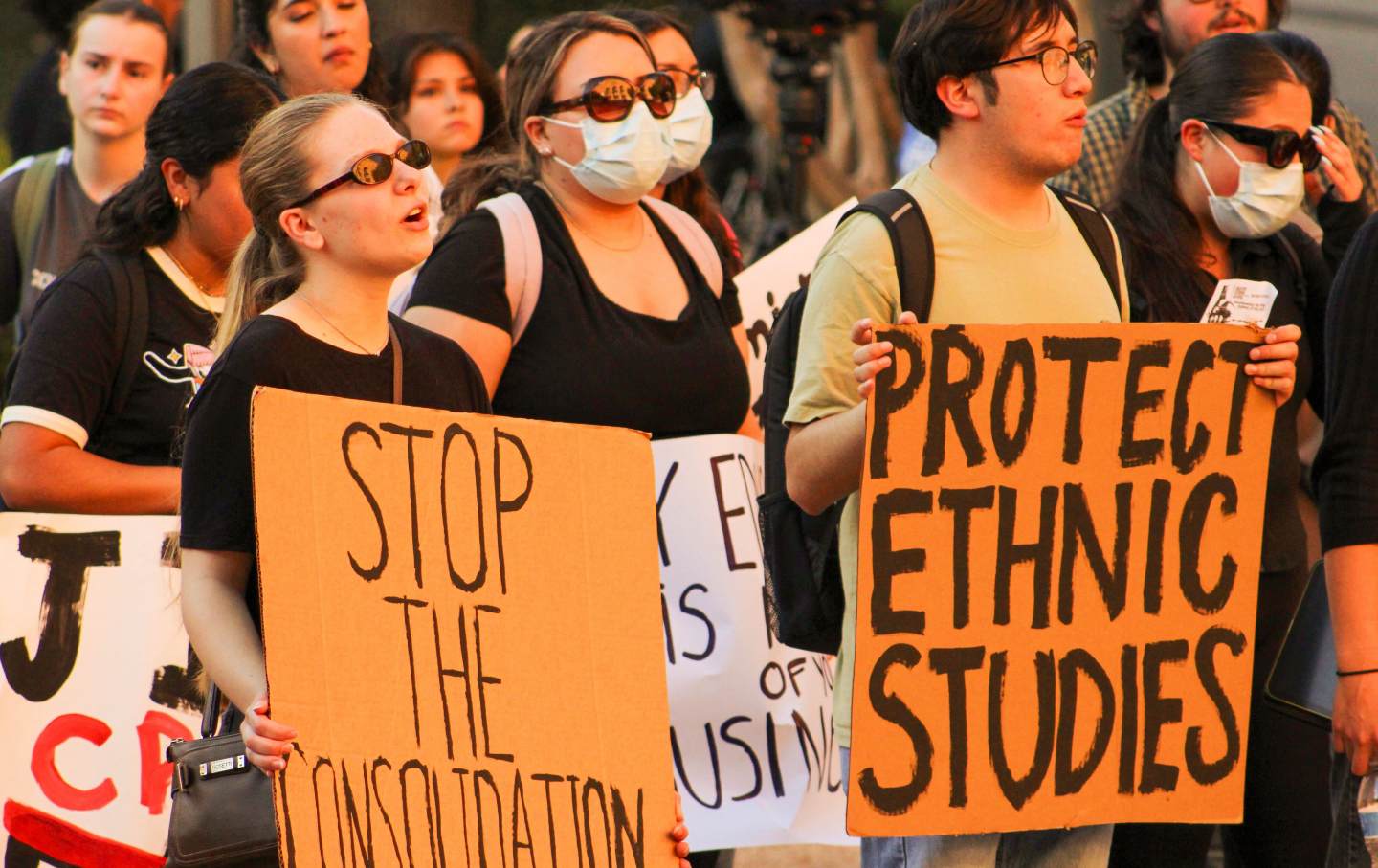
What Will Be Left After the University of Texas Destroys Itself? What Will Be Left After the University of Texas Destroys Itself?
UT-Austin has collapsed its race, ethnic, and gender studies into a single program while a new policy asks faculty to avoid “controversial” topics. But the attacks won’t end there...
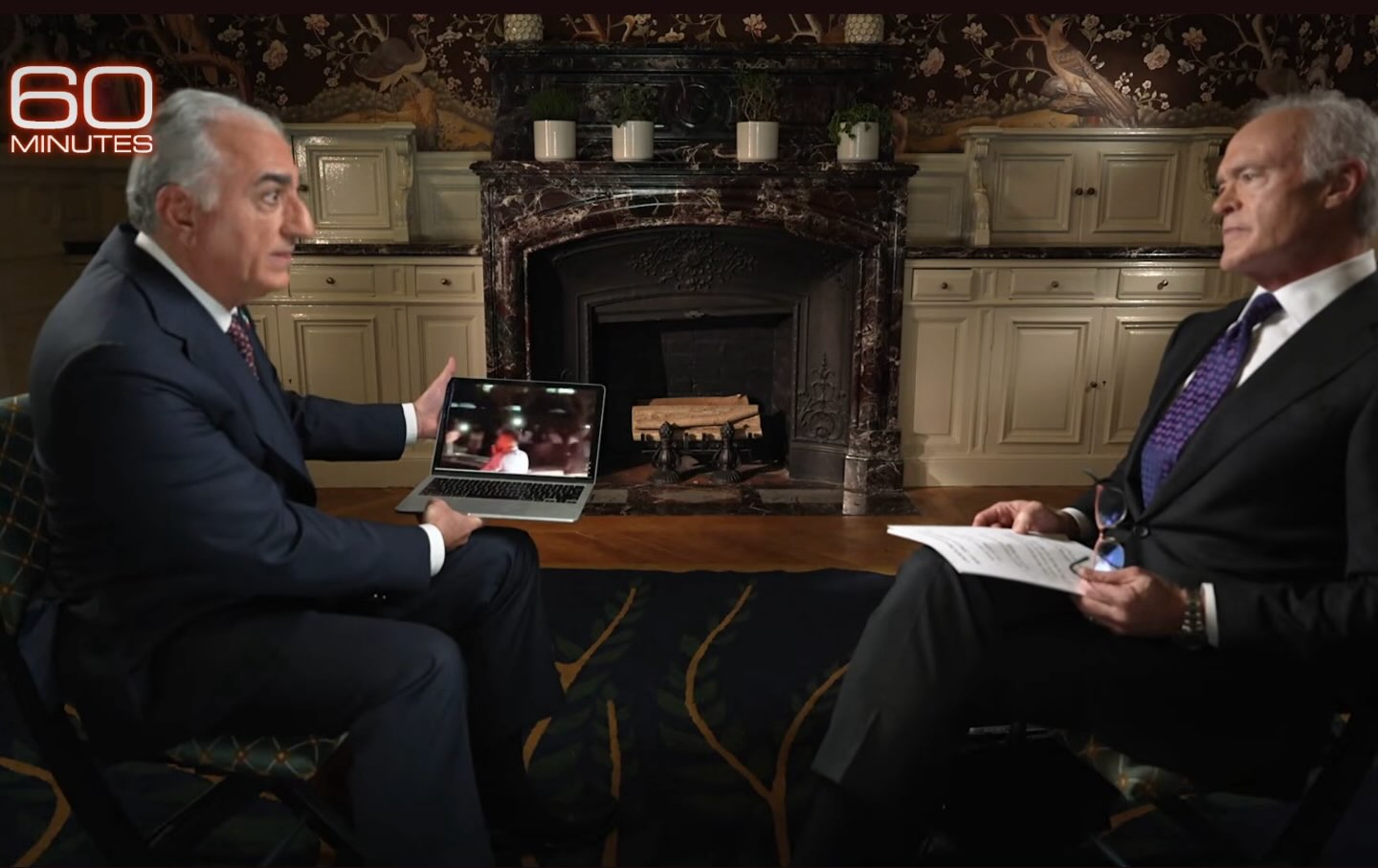
The Corporate Media Is Head Over Heels for the Iran War The Corporate Media Is Head Over Heels for the Iran War
Donald Trump’s attack may be surreal, unjustified, and illegal. But that’s not stopping the press from turning the propaganda dial way up.

The Disturbing History of ICE’s “Death Cards” The Disturbing History of ICE’s “Death Cards”
The Vietnam-era practice is yet another example of ICE agents thrilling to the brutality they have been encouraged to cultivate.
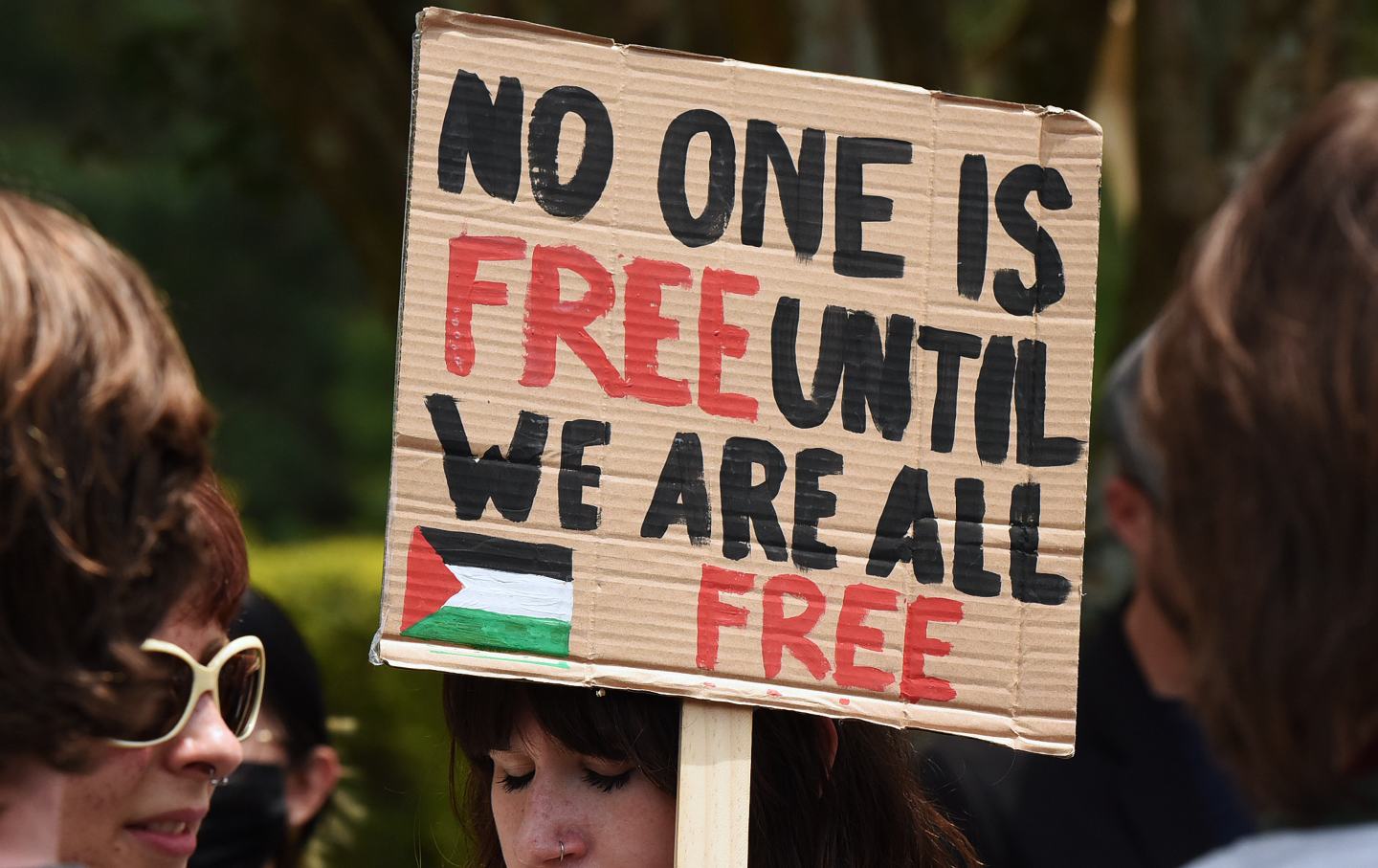
The American Universities Programming Israel’s Killer Drones The American Universities Programming Israel’s Killer Drones
Industry partnerships in higher education are pushing STEM graduates into the business of weapons manufacturing and genocide profiteering.

