
Can America Experience a New Birth of Freedom?
Five progressive leaders offer a powerful reminder of the country’s unfinished journey.
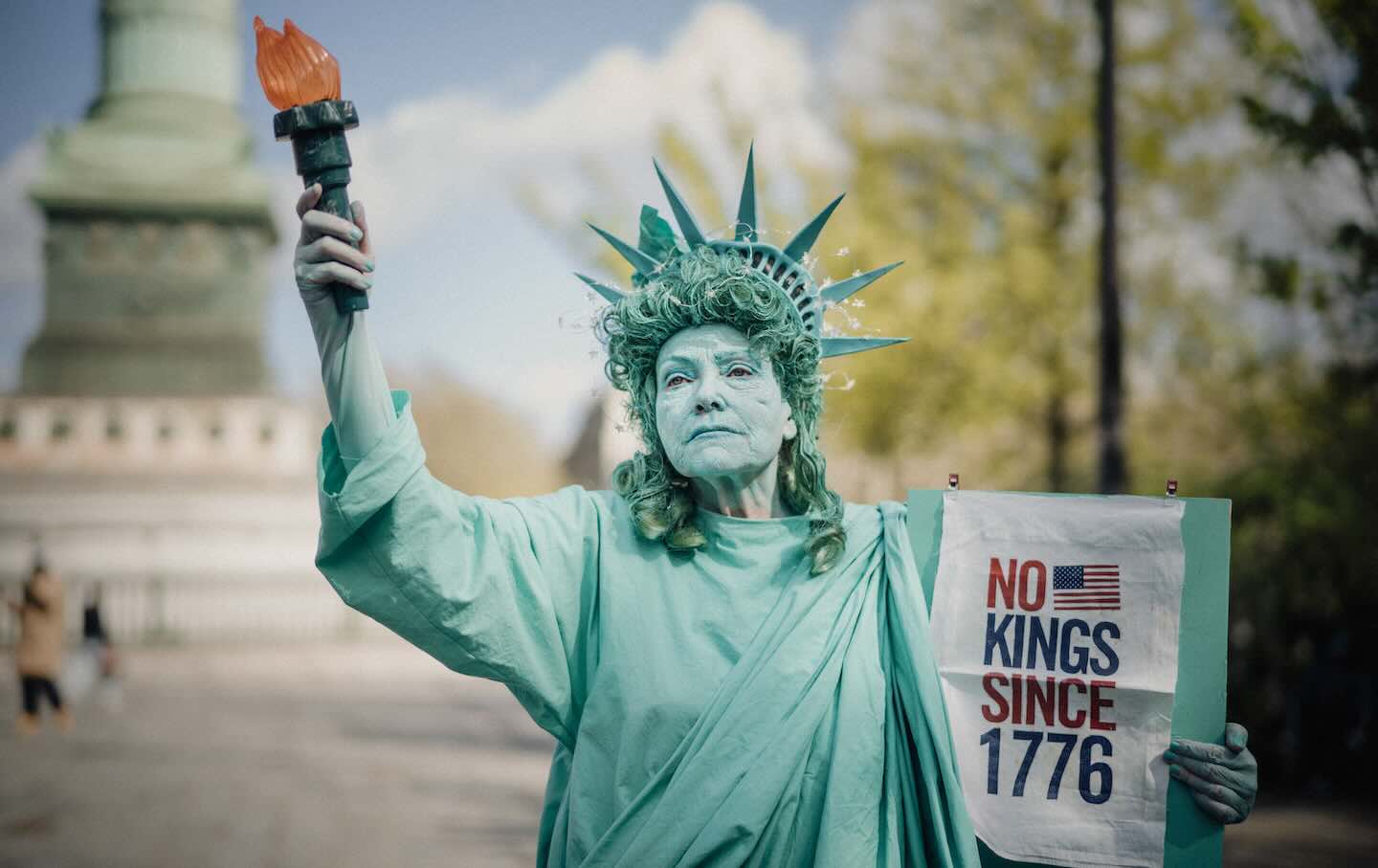
The Nation asked prominent progressives if America at 250 can experience a new birth of freedom. Here’s how they responded.
Senator Bernie Sanders: Over the past year, I must confess, I’ve been thinking a great deal about American history—about the men and women who, in 1776, with unbelievable courage, announced to the world that they would no longer be ruled by an all-powerful English monarch. Let us never forget the extraordinary message their Declaration of Independence delivered for their time, and ours: “We hold these truths to be self-evident, that all men are created equal, that they are endowed by their Creator with certain unalienable Rights, that among these are Life, Liberty and the pursuit of Happiness.”
These patriots won a Revolutionary War against overwhelmingly powerful British military forces and established a democratic form of government that inspired the world—confirming in their Constitution that, in America, we will have no kings.
In 2026, our message is the same: No kings. We will not allow this country to descend into authoritarianism or oligarchy. In America, “We the People” must rule.
Today’s establishment, including corporate media and many of my colleagues in Congress, want you to believe you are powerless—that you cannot change the status quo.
That’s a lie.
Throughout our history, when Americans have stood up and fought for justice, they have prevailed.
The founders did it when they stood up to King George III.
The abolitionists did it when they ended slavery.
The working class did it when they formed unions.
The suffragettes did it when they secured voting rights for women.
The LGBTQ community did it when they demanded basic human rights.
Time and time again, Americans stood up, fought for their freedom, and won.
They did it then. We can do it now.
I delivered this message at the flagship No Kings rally in St. Paul, Minnesota—on a day when 8 million Americans nationwide demanded freedom, democracy, and justice. That show of strength told me that we can, and we will, create the nation that you and I know we must become.
Just as Americans beat the monarchy in 1776, we will beat the oligarchy in 2026!
New York Mayor Zohran Mamdani: To love America is to see it clearly—a country of breathtaking promise and painful contradiction, never finished, always becoming. The people who have made this country better have never been the ones who told us to be grateful and quiet. They are the ones who refused to accept injustice as the price of belonging, who carried forward the tradition of demanding more—for workers, for the oppressed, for everyone shut out of the promise. I love this country and what it can be.
Happy Independence Day. No Kings in America.
Representative Ro Khanna: Our nation was founded with a brutal illustration of the conflict between high ideals and the human impulses for the domination of others and self-enrichment. The draft of the Declaration of Independence, which proclaimed the equality of all men, included a clause that condemned King George III for maintaining the “execrable commerce” of the transatlantic slave trade. Southern delegates demanded that the language be stripped from the final document.
America’s story is like the human story: a constant tension between what reason asks us to be and the reality of baser instincts. We have made tremendous progress over 250 years. I know we will make more. But progress requires vigilance. We must be open to honest dialogue and coalitions of conscience. But we must never give in to those who, for purposes of crude self-interest, would compromise our pursuit of a more perfect union.
Minnesota Attorney General Keith Ellison: Two hundred and fifty years into this experiment, the promise of America is not self-executing—it lives or dies in what each generation chooses to defend. Our Constitution begins with “We the People,” not as a slogan but as a charge: to extend liberty, secure equality, and make justice real in every community. At this moment, that responsibility falls squarely on us, even as those ideals face renewed threats: from authoritarian movements that would place power above principle, and from concentrations of wealth that strain the very foundations of democratic self-government.
Popular
“swipe left below to view more authors”Swipe →Yet our history shows that when we are faithful to the principles of liberty, equality, and justice, democracy does not retreat: It grows stronger, more inclusive, and more real. The arc has bent because people made it bend. At 250 years, the work is not finished. It is ours now—to defend, to extend, and to build a democracy worthy of generations to come.
Representative Analilia Mejia: History teaches that progress has never come from the top down. Every major expansion of democracy in this country has been fought for by ordinary people demanding that America live up to its ideals. Yet today, politicians across this country are actively working to hollow out our democracy in plain sight, because they fear what happens when ordinary people organize and demand power over the decisions shaping their lives.
We must fight for our democracy the same way generations before us did: by organizing, building people power, protecting voting rights, and refusing to surrender the promise of a multiracial democracy where every voice is heard.
More from The Nation

The Culture of Experts and the Rise of MAHA The Culture of Experts and the Rise of MAHA
The left won’t win over rural Americans by condescending to them.

What’s It Like Inside a Data Center? What’s It Like Inside a Data Center?
Northern Virginia is laden with structures that house data for Fortune 500 companies. I went inside just one of those monstrosities that bothers its neighbors.

What Trump and Tucker Carlson Have in Common What Trump and Tucker Carlson Have in Common
Carlson has broken with Trump largely over the war in Iran. But on Ukraine and immigration, the two speak very much the same language.

The Jewish Case Against AI The Jewish Case Against AI
Haredi rabbis and the secular left agree: This technology is a threat to the entire social fabric.
The Fight for Educational Equality Is Also a Fight for a Just Supreme Court The Fight for Educational Equality Is Also a Fight for a Just Supreme Court
The court has severely weakened our ability to make an education system that fulfills the promise of Brown.
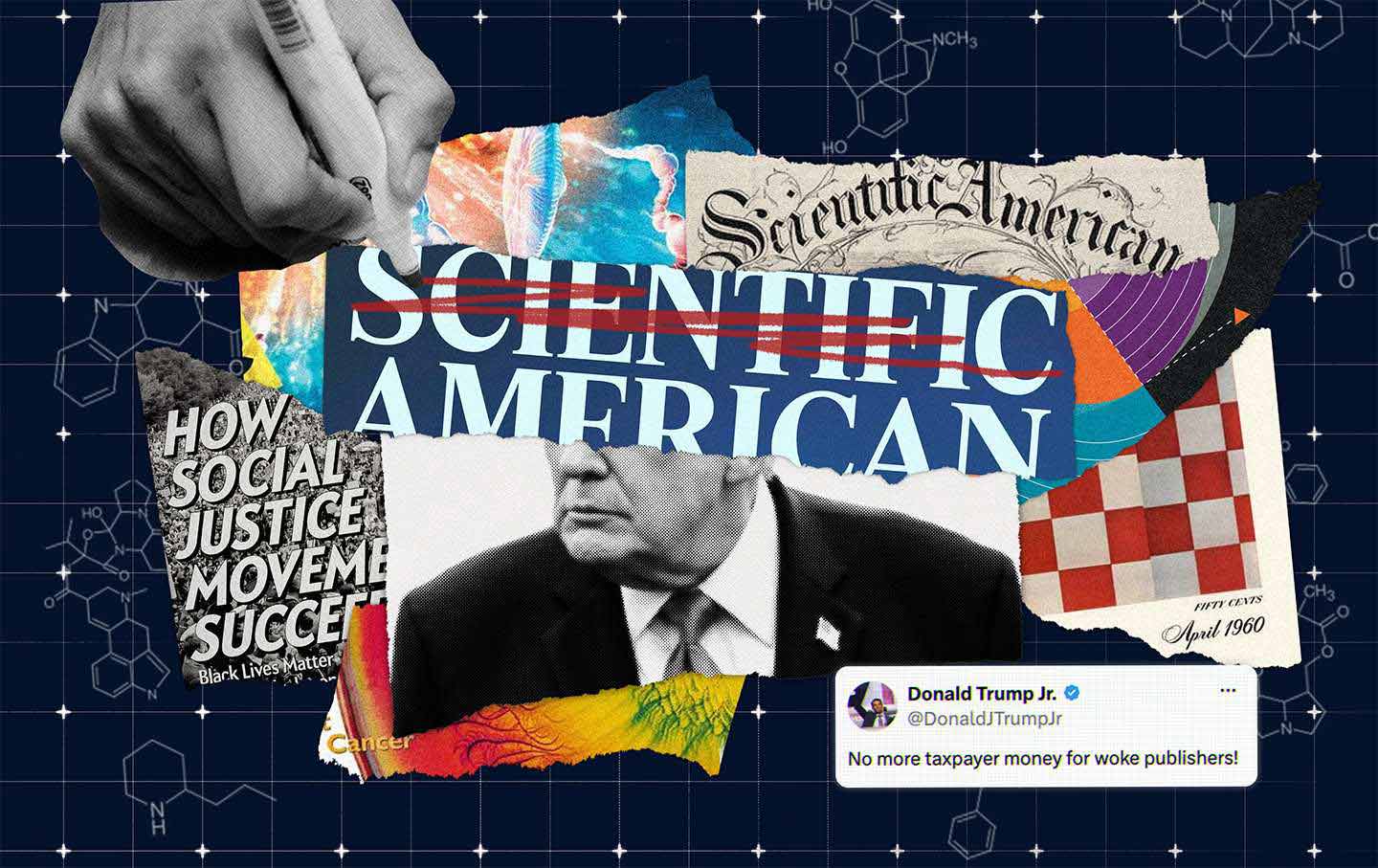
The Fall of “Scientific American” The Fall of “Scientific American”
When the Trump administration objected to the magazine's political coverage, its corporate owners stepped in. Now its future is uncertain.

