“Nobody Heard Me at Amazon”
Pregnant workers at the mega-corporation say they endure unsafe conditions and are punished when they asked for accommodations.
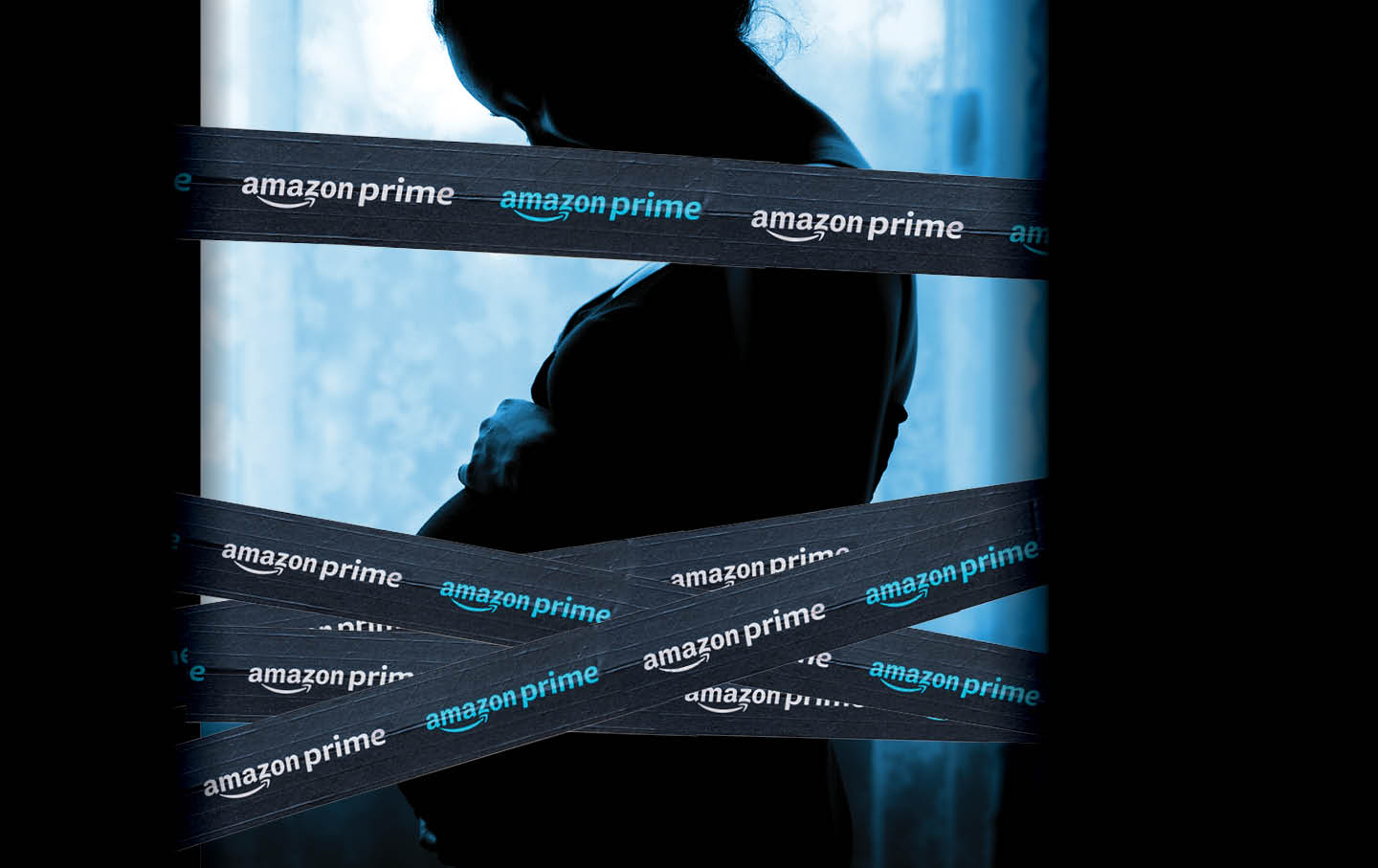
About three years ago, Key’asia Hollis’s boyfriend, now her fiancé, helped her get a job as a boxer at Amazon, which paid $23 an hour. The new job enabled her to move out of the motel where she’d been living with her sister and her sister’s family. Hollis worked 12-hour overnight shifts packing and moving heavy boxes filled with the sundry items that Amazon customers regularly order.
It was a financial lifesaver for Hollis, and all was going well—until she got pregnant. On a shift one night, she strained to lift a heavy box and started bleeding. She went to the emergency room, where medical providers advised her not to lift heavy objects for 10 days to protect her pregnancy. When she returned to work with a doctor’s note to that effect, she was fired. The termination meant that she couldn’t reapply to work at Amazon for three months. During that time, she moved into her mother’s three-bedroom house, where she lived with five other people. With no income to provide for a baby’s needs, she decided to get an abortion. “I didn’t have that baby because finances weren’t permitting,” she said.
When the three-month period ended, Hollis got another job at a smaller Amazon warehouse. When she again got pregnant in the summer of 2024, she was worried: “I didn’t want to lose my job like I did the last time,” she said. But she reasoned that she could do things “the proper way” by telling the company up front and asking for accommodations to avoid health problems while working. Unbeknownst to her, in the time between her two stints at Amazon, a new law, the Pregnant Workers Fairness Act, went into effect. The PWFA should have protected her on the job. But that’s not what happened.
When Hollis informed Amazon about her pregnancy, she was told to get her doctor to fill out paperwork so she could get on-the-job accommodations, but her doctor told her that, because it was so early in the pregnancy, she could continue to work normally. Hollis figured she could tough out the fatigue for a while longer, but Amazon didn’t agree. When she informed the company of her doctor’s recommendations—which would have required no immediate changes to her job—she was placed on unpaid leave.
While she was on leave, her doctor sent over paperwork outlining the accommodations Hollis would need when she returned. She wasn’t supposed to climb ladders or lift, push, or pull anything 30 pounds or heavier. She should also be given extra rest and bathroom breaks as needed.
After her unpaid leave was up, Hollis asked her supervisor if she could return to work and was told that she was being put on another unpaid leave while the company considered her request for accommodations. “I’m sitting at home for weeks, no pay in my pocket, no way to feed myself,” she said. “It was very emotionally stressful. It was physically stressful. It was just stressful all the way around.”
Finally, Hollis was told that her accommodations had been approved and that she could return to work. But when she got there, it was immediately clear that nothing had changed. Her “entire job” entailed climbing up and down a sliding ladder to stow items on a top shelf, she said. She was denied extra breaks, even just 15 minutes to sit or grab a snack. She strained herself pushing a box that was heavier than her doctor’s recommended limit. She also learned that the involuntary leaves of absence had eaten into her bank of unpaid time off. Amazon gives each new hire a bank of hours and deducts from it every time the employee misses work, threatening termination if the total goes too far into negative territory. Workers say the company approves absences very infrequently, even when they are sick or need to attend a doctor’s appointment.
When Hollis called Amazon’s human-resources department to find out why she was still assigned tasks that her doctor had said she needed to avoid, she was told she would have to work it out with the employees at that particular warehouse. But the HR team at the warehouse told her that her accommodations had been set up correctly. She felt like they were “ping-ponging” her back and forth, she told me.
Finally, she decided to take the bus to the warehouse on a day off to sort it out once and for all. Sobbing all the way there, Hollis spoke with a warehouse supervisor, who pulled up her original request and said it had been entered incorrectly. It couldn’t be fixed, she was told; instead, she had to start the process all over, asking her doctor to resend the paperwork, and go on another unpaid leave.
It was the week of her 25th birthday, but she couldn’t afford a celebration, not even a cake. “Amazon had ripped that out of my pockets,” she said.
A week later, Hollis returned to work, again with negative unpaid time off. After she clocked in, her manager said she couldn’t find the accommodations in the system and couldn’t allow her to work the shift she had been assigned to, given her restrictions. HR told her that she had to be sent home because there were no jobs she could work. Once again, she was put on unpaid leave.
Hollis kept calling HR, begging to find out how she could safely return to work. She was told that she was free to return to her job but with no assurance that her health needs would be met, so she didn’t. Finally, in August 2024, now three months pregnant, she received an e-mail stating she had been fired for abandoning her job. The entire experience left her feeling like nobody had listened to her. “It feels like you’re another number in a sea of people,” Hollis said. “It broke my heart.”
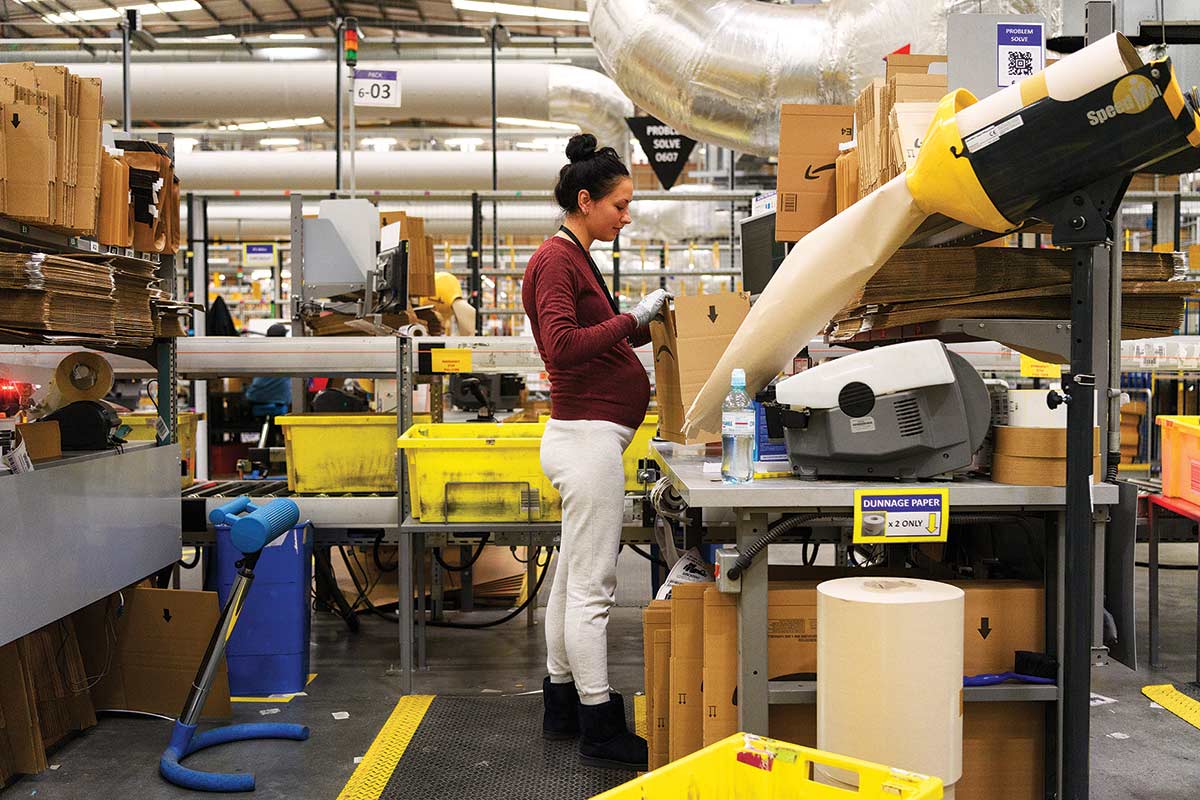
Amazon is the country’s second-largest private employer and a name brand that millions of Americans interact with every day. It’s where we turn for everything from socks to swimming pools. In 2025, it booked $426 billion in net sales in North America.
But the company’s relentless focus on moving products as fast as possible from its warehouses into American homes has often created brutal working conditions. A 2021 report from the Strategic Organizing Center found that in 2020, Amazon’s warehouse workers experienced an injury rate of 6.5 out of every 100 full-time employees, much higher than the rate of 4 percent in non-Amazon warehouses. In 2023, the company recorded 30 percent more injuries than the industry average for warehouses. “Amazon expects workers to move at unsafe rates and in unsafe conditions,” a report issued by Senator Bernie Sanders found.
At the same time, the company makes it extremely difficult for employees to take time off for medical needs. A 2020 report by the nonprofit legal organization A Better Balance on attendance policies like the one at Amazon, which penalize employees when they take unsanctioned time off, found that the companies that deploy them frequently fail to tell workers about their rights and violate laws that entitle them to paid time off for sickness, disability, pregnancy, or childbirth.
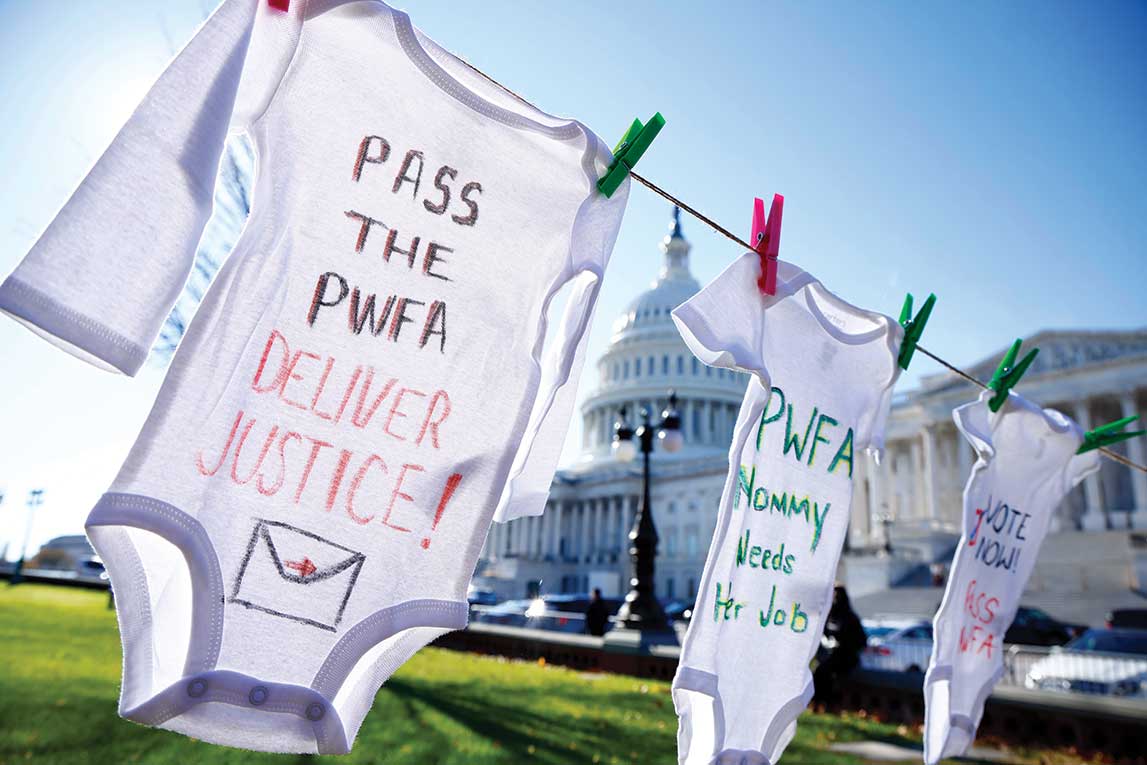
These problems become even more acute when the warehouse employees are pregnant. In interviews with The Nation, five current or former employees who were pregnant while working at Amazon reported that their requests for minor accommodations at work—such as taking more breaks or avoiding heavy lifting—were denied. They were made to endure grueling conditions, forced to go on unpaid leave just when they needed extra income to get ready for a new baby, and retaliated against when they dared to ask for what they needed. These problems all occurred after the Pregnant Workers Fairness Act, which bans these practices, went into effect in June 2023. These issues do not seem to be isolated. In February, the director of the Washington field office of the Equal Employment Opportunity Commission (EEOC), the agency that enforces the PWFA, determined that there was evidence that Amazon’s treatment of pregnant women across its warehouses had violated the law.
This is “not in a gray area,” said Liz Morris, codirector of the Center for WorkLife Law at UC Law San Francisco, who is not representing any of the workers interviewed by The Nation. “What we’re seeing at Amazon are precisely the harms that the law was designed to prevent.”
In response to a request for comment, an Amazon spokesperson said, “The claims that we don’t follow federal and state laws like the Pregnant Workers Fairness Act are simply not true.” The spokesperson said that more than 99.9 percent of pregnancy-accommodation requests had been approved in the past year and contended that the workers’ stories “contain inaccuracies and omit important details,” while saying that the company couldn’t share an individual employee’s details.

In 2024, Tamesha (who requested that The Nation use only her first name) was working at an Amazon warehouse in Virginia retrieving products to be packed for orders, which required constantly climbing ladders and lifting heavy objects to maintain a rate of 300 units per hour. Tamesha found out that she was pregnant with twins at the end of May of that year. She sent Amazon a request for accommodations the next week, but the company didn’t respond until mid-July. Tamesha tried to keep working, but it was hard on her body, and she kept accumulating penalties when she had to leave her workstation to throw up. “I felt like I was going to pass out on station a couple of times,” she said.
When Amazon finally responded, the company said that she could either keep working with no changes to her job or go on unpaid leave. Tamesha chose the unpaid leave, knowing that she couldn’t keep doing the work. The loss of income came just when she had to cover $30 copays for her frequent doctor visits. She fell behind financially; she had just moved out of her parents’ house and didn’t have a partner to help. “I couldn’t win for losing,” Tamesha said.
Extremely stressed, she lost one of the twins she was carrying. After she eventually returned to work, she developed high blood pressure and preeclampsia, which required her to give birth to the surviving twin at just 29 weeks in an emergency C-section. Her baby ended up in the neonatal intensive-care unit for 140 days.
After she gave birth, Tamesha was told she had to return to work full-time—even with her baby in the NICU—for at least two weeks before she could go back on unpaid leave to be in the hospital with her infant. Tamesha called HR, crying. “I’m not going to choose you over my baby,” she told the representative, who switched her to a flexible schedule that amounted to only 30 hours a week but allowed her to stay with her baby when she needed to. Eventually, her baby left the NICU but needed a feeding machine, which kept Tamesha tied to the 30-hour flex schedule instead of the 40 hours she had worked previously.
Her baby is now a year and a half old, and financially, “I’m playing catch-up,” Tamesha said. She’s moved back in with her parents. She feels tied to her Amazon job; it’s not easy to get a new one in the current economy, plus the $21 hourly wage is better than what many other jobs pay. But it’s all taking a mental toll. “They didn’t hear me—nobody heard me at Amazon,” Tamesha said. “Amazon is not a good company.”
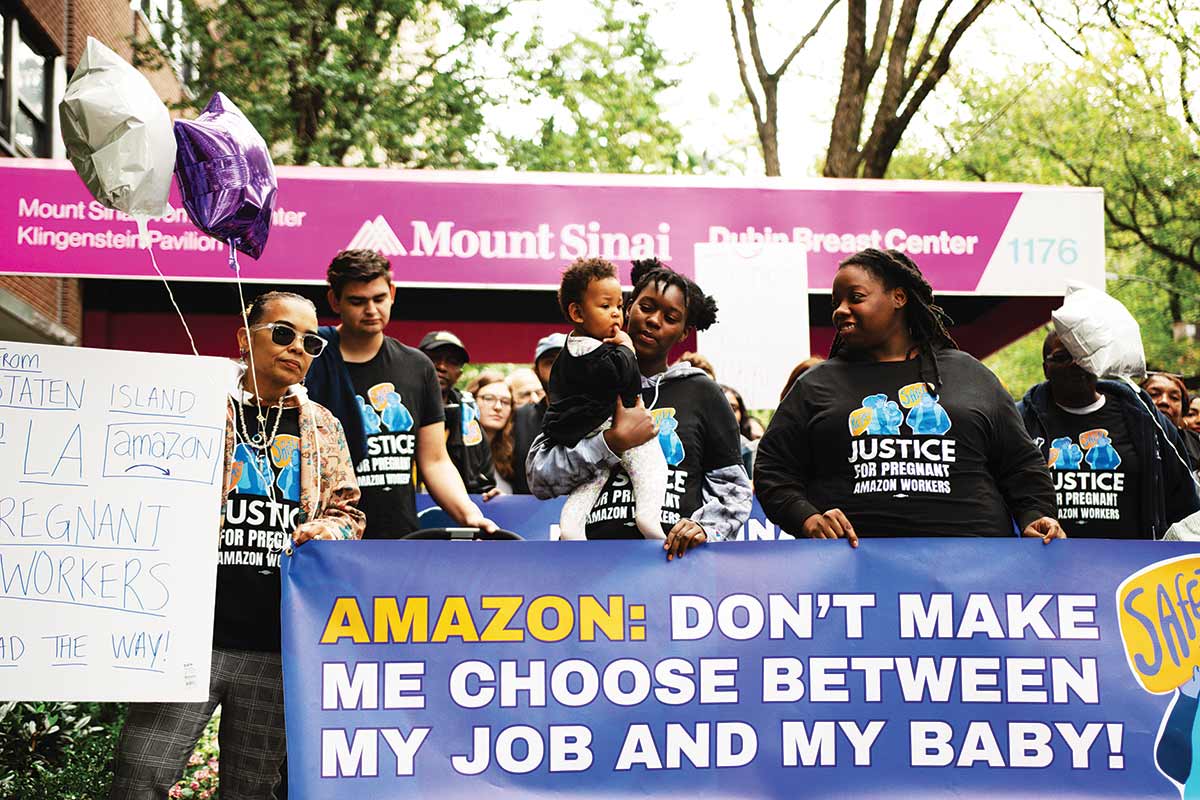
The Pregnant Workers Fairness Act covers workers as soon as they apply for a job and applies to employers with 15 or more employees. It requires employers to meet their pregnant workers’ needs for accommodations unless they can prove, with evidence, that the changes would pose an undue hardship. Employers must respond to accommodation requests “without unnecessary delay,” said Katherine Greenberg, vice president of litigation at A Better Balance, which is representing some of the workers The Nation spoke with.
Regulations published by the EEOC make it clear how employers are supposed to follow the PWFA. Employers are forbidden from requesting medical paperwork for straightforward accommodations such as more breaks, sitting or standing more often, and other needs that are “obvious” and “known.” Accommodations like this “will in almost all instances not impose an undue hardship for an employer,” Greenberg said.
For other needs, such as avoiding heavy lifting, employers can ask for medical documentation, but only for the minimum necessary. Employers also can’t require the documentation to be in a particular format, which means that if a worker submits a doctor’s note saying she needs to avoid lifting more than 30 pounds, an employer can’t then ask her to fill out a specific form. Amazon said that in most cases the company requires documentation from “an appropriate healthcare provider” and may follow up to request additional documentation if it feels the original lacks “sufficient detail.”
The law also requires that employers engage in an interactive process with employees to find a solution that addresses the needs of both sides, similar to what is mandated by the Americans With Disabilities Act. “It’s incumbent on the company to at least try to find something that works for the worker,” said Gillian Thomas, senior counsel at the ACLU’s Women’s Rights Project, who is not representing the Amazon workers. The lack of a good-faith back-and-forth, said Inimai Chettiar, the president of A Better Balance, means that “Amazon is at risk of violating the law.”
The PWFA bans employers from forcing workers to go on leave while the two parties are discussing the accommodations, or as an alternative to providing accommodations. But the workers I spoke with reported that at Amazon, after they’d submitted a request, their managers asked them to choose between working without changes or going on unpaid leave. Then the company sat on the requests for weeks or even months, the workers said, during which time they either went without pay or kept performing dangerous tasks. When asked about these practices, the Amazon spokesperson said that employees “may be placed on leave if they indicate they are unsafe to work while their accommodation request is being evaluated, and depending on eligibility and state laws, this leave may be paid.”
According to the PWFA, workers can request unpaid leave to go to prenatal or other medical appointments or to recover from childbirth as accommodations. And the law prohibits retaliation for asking for changes. “If you punish a worker for taking time off,” Greenberg said, “those are two separate violations of the PWFA.”
“What I have heard is happening to pregnant women who work at Amazon is horrible,” Senator Patty Murray (D-WA), a cosponsor of the PWFA, said in a statement to The Nation. “The Pregnant Workers Fairness Act established protections for pregnant women on the job everywhere…. Amazon should easily be able to provide this support to their pregnant employees.”
Amazon’s brutal work environment led to the launch in July 2024 of #ExposeAmazon, a national campaign to collect employees’ stories of injuries on the job. The campaign, a joint project of Warehouse Life, an organization of current and former Amazon employees, and the workers’-rights group Jobs With Justice, was initially focused on the high injury rates at Amazon warehouses. Then stories of workers miscarrying on the job started pouring in. “I wasn’t allowed to take bathroom breaks, and when I did, they would count every minute I took in the bathroom,” an anonymous worker in Louisiana told the campaign. “I ended up having a miscarriage at work and told my manager I needed to go to the hospital, and her response was, ‘Can’t you wait for your shift to be over?’” The organizers decided to focus specifically on pregnancy at Amazon. Of the 700-plus stories from pregnant and postpartum workers in 39 states and Washington, DC, that they collected, a mere handful are positive.
The accommodations that pregnant workers have asked for at Amazon should be possible for a multibillion-dollar company to fulfill. The employees that A Better Balance has spoken to “are consistently able to identify process paths or assignments they could be given that would not involve heavy lifting,” Greenberg said. “The fact that Amazon is the second-largest employer [in the United States] means that there is an even greater ability to comply with the law as compared to smaller employers,” said Morris, whose hotline at the Center for WorkLife Law has received complaints from pregnant Amazon employees alleging that the company is violating the PWFA. Amazon has more resources, more locations, and more employees to shift and absorb tasks. (Amazon said that workers with doctor’s notes indicating “significant physical restrictions” are placed in modified-duty roles.)
While the Center for WorkLife Law’s hotline also gets calls about other employers that haven’t followed the law, “large employers across the country on the whole have revised their pregnancy-accommodation policies since the Pregnant Workers Fairness Act went into effect,” Morris said. And in the cases where they haven’t, “the employer changes its behavior and follows the law” after the center has brought it up to speed. “I am not aware of another large employer that has so blatantly and comprehensively ignored the requirements of the new law,” Morris added.
Amazon’s actions “violate the plain terms of the statute,” said Thomas, the ACLU lawyer. “There is just no universe in which the company has not had ample time to change its ways.”
Amazon’s mistreatment of pregnant workers has not gone unnoticed by government agencies and officials. The EEOC has been investigating and said in February that it had found evidence that Amazon has violated pregnant workers’ rights across the country. In 2025, after receiving multiple workers’ complaints, New Jersey’s attorney general filed a complaint against Amazon accusing it of violating pregnant workers’ civil rights. A multiyear investigation by the office found that the company required “rigid and unnecessary” paperwork and automatically placed workers on unpaid leave while it considered requests for accommodations. It also found that some employees had their requests denied, while others were retaliated against and even fired. The litigation in New Jersey is ongoing.
Ispoke with three other former amazon employees who’d suffered medical problems while they were pregnant after the company refused their requests for accommodations. Marley Lewis was drawn to work at a Wisconsin Amazon warehouse by the promise of good wages. The pay—$20 an hour, plus an extra $2.40 an hour for weekend shifts—“was more money than I was used to having at other jobs,” she said.
Lewis loved working there—she made friends and enjoyed the games they played to incentivize their productivity—and never had any physical issues until she found out that she was pregnant in September 2024. At the time, she was moving 50-pound boxes onto carts and then getting them onto trucks. After she became pregnant, she developed high blood pressure, gestational diabetes, and severe swelling in her legs and feet. Her tasks at work were the culprit, her doctor told her, and said she should sit down more often, stop lifting heavy objects, and avoid running while holding objects. Lewis submitted a note from her doctor through Amazon’s employee app.
She never heard back, she said, even after she brought it up with her manager. Lewis started wearing multiple pairs of compression socks to combat the swelling in her legs. If she found a chair to rest on for a few minutes, a manager would take it away, “because he would think I was not doing anything and I’m lazy,” she said. Every day she worried about her baby’s health.
Eventually, the complications prompted her doctor to recommend that she deliver her baby early. But Amazon stuck a wrench in the works: The company said she couldn’t go on maternity leave until it was within 30 days of her original due date, which had been in early April 2025, forcing her to hold off. “I feel like Amazon does not like pregnant workers,” Lewis said.
Jennifer Hatch, who worked at an Amazon warehouse near Buffalo, alleges in an EEOC complaint that she was told by her doctor that, because of her high-risk pregnancy, she should avoid lifting more than 30 pounds and take a 15-minute seated break every four hours. Yet after she informed her bosses about her condition, she was assigned to unload boxes from trucks and sort the clothing, shoes, and other heavy items inside. She wasn’t allowed to take any extra breaks. One time in March, when she was about three months pregnant, she tried to sit down in a chair near her work station, but a manager came over and forced her to stand for the rest of the shift. The work also exacerbated her asthma. Multiple times, due to intense pain, she asked for an ambulance to take her to the hospital. Once she returned, Hatch said, Amazon penalized her for missing work. “I was trying to follow my doctor’s orders to the best I could,” she said. “Amazon wasn’t allowing me to do that.”
One day in late March, Hatch showed up for her shift as usual, but her badge wouldn’t allow her to enter the building, and an HR official refused to tell her why. Weeks later, she got an e-mail officially informing her that she had been fired. She couldn’t afford baby items; she had to ask family and friends to buy them for her.
Before she got pregnant, Hatch was moved to a problem-solving team in recognition of her strong performance. “I would have enjoyed staying at Amazon doing the good work that I was doing there, but I guess they didn’t want that,” she said. In February, the EEOC said it found evidence supporting Hatch’s claims of pregnancy discrimination.
Early in 2025, Willamina Barclay lost a pregnancy while working at an Amazon warehouse in Rochester, New York. She had never experienced a miscarriage before, despite giving birth to nine previous children. She soon got pregnant again; this time, she suffered from hyperemesis gravidarum and gestational diabetes.
As she alleges in an EEOC complaint, Barclay told Amazon that she needed to switch to a job that didn’t include climbing ladders, lifting more than 15 pounds, or squatting, and that she needed breaks to sit and eat. She said she was never given a position that would allow her to sit down. She could get through an hour or two of a shift before she started to get extremely dizzy and hot. “I felt like I was literally going to faint, to pass out,” she said.
During a shift last June, while she was being pushed to work quickly and had to lift objects that were over the weight limit set by her doctor, Barclay started to experience stomach pain. When the pain wouldn’t go away, she headed to the hospital. She was limping, so an on-site medical employee took her to her sister’s car in a wheelchair. Even though Barclay provided a doctor’s note, Amazon reduced her unpaid time off. “I felt like they penalized me because I was pregnant,” she said.
A few days after that, Barclay got “really sick,” vomiting frequently. Her doctor sent a note to the company saying that she couldn’t come in. When Barclay returned to work and swiped her badge to enter the building, it had been deactivated. She was fired. “They did it in the most embarrassing way possible,” she told me.
“Financially, it really messed me up,” she said. Barclay has been unable to afford upkeep on her car, so it sits unused, making it “very difficult to get around.” She couldn’t buy anything for her baby, who was born in November. When she was fired, she had worked at Amazon for 10 months; had she been able to stay until her baby arrived, she would have been eligible for up to 20 weeks of paid parental leave that the company offers warehouse workers who give birth after one year of “continuous tenure.” But Chloe Sigal, a senior campaign organizer with Warehouse Life, said that what happened to Barclay was not unusual: “It’s been very rare that we hear of people actually being able to access their maternity-leave benefits.” Many are either fired first or forced to take so much unpaid leave that they never qualify.
Barclay found herself struggling to find another job while visibly pregnant. When we spoke in December, she couldn’t pay her rent. “It’s been a big stress on me, wondering if I’m going to get evicted,” she said. She went so far as to report herself to child-welfare services seeking help. “I got really desperate,” she told me. Of Amazon, she said, “They feel like you’re disposable.”
After Amazon fired her, Key’Asia Hollis looked for a new job. She filled out applications at fast-food and retail employers but never landed a position. “I feel like I was marked because I was pregnant,” she said. Without income, Hollis had to forgo the shower she had planned to throw for her baby. “I wanted to nest for him,” she said, but she could only gather baby essentials from places giving them out for free.
After her son was born last February, Hollis would have loved to go back to her job at Amazon, one with “amazing” pay and that, at its best, offered a sense of community. “But I’m so turned off by that entire experience that I can’t even imagine myself working there ever again,” she said. “I just can’t do it.”
Editor’s Note: The quotation from Inimai Chettiar has been modified.
More from The Nation
Trump Is Writing Off Kids With Disabilities, but We Shouldn’t Trump Is Writing Off Kids With Disabilities, but We Shouldn’t
A broad coalition of organizations, lawmakers, and former Department of Education officials are calling to preserve the agency from Trump’s liquidation plans.
Shut Out of Special Education, This Texas Family Is Fighting Back Shut Out of Special Education, This Texas Family Is Fighting Back
Five-year-old Annie Morey was denied a public education even before Trump began dismantling the Department of Education. Her case now sits before the Fifth Circuit.
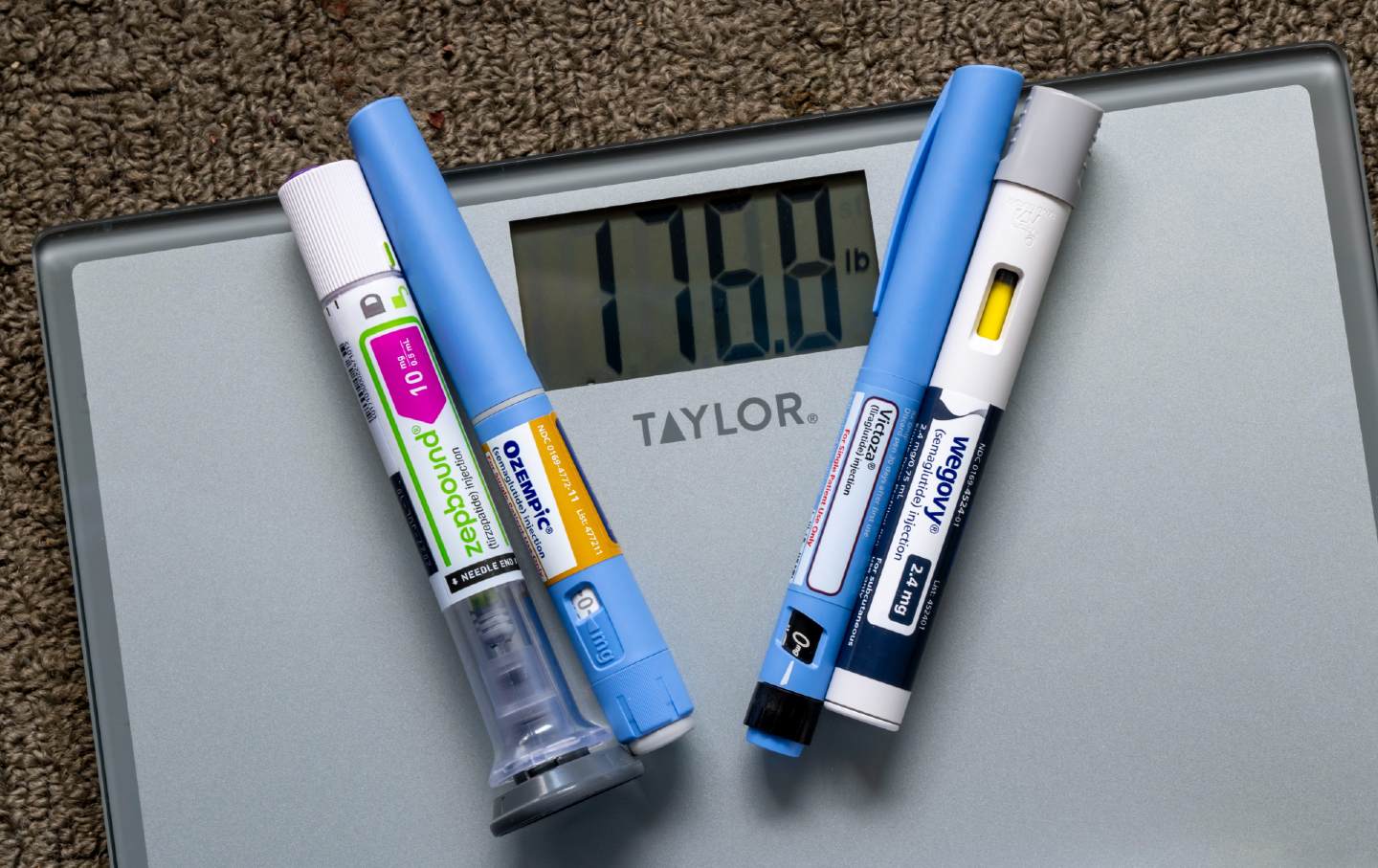
What You Need to Know About the GLP-1 Economy What You Need to Know About the GLP-1 Economy
The making of a medical caste.

The Dignifying Solution to America’s Care Crisis The Dignifying Solution to America’s Care Crisis
Employee ownership turns care work jobs into good jobs—and leads to better patient outcomes.
How Protein Ate Our Grocery Stores How Protein Ate Our Grocery Stores
Everyone from RFK Jr. to social media influencers are telling us that the nutrient needs to be maximized in our diet as much as possible. But is that actually good for our bodies?...
Can Zohran Mamdani Get Criminal Justice Reform Done if Jessica Tisch Is His Police Commissioner? Can Zohran Mamdani Get Criminal Justice Reform Done if Jessica Tisch Is His Police Commissioner?
His promises haven’t yet been fulfilled.

