
How Closing the Strait of Hormuz Has Sparked a Wider Energy Debate in Europe
The lessons from these shocks is clear.
For the second time in less than five years, a politically driven energy crunch is buffeting Europe, leading to soul-searching about how to avoid these damaging episodes in the future.
In 2022, Russia, while invading Ukraine, slashed natural gas supplies to some European countries, including Germany, its best customer, squeezing businesses, consumers, and forcing governments to spend hundreds of billions of euros on supports.
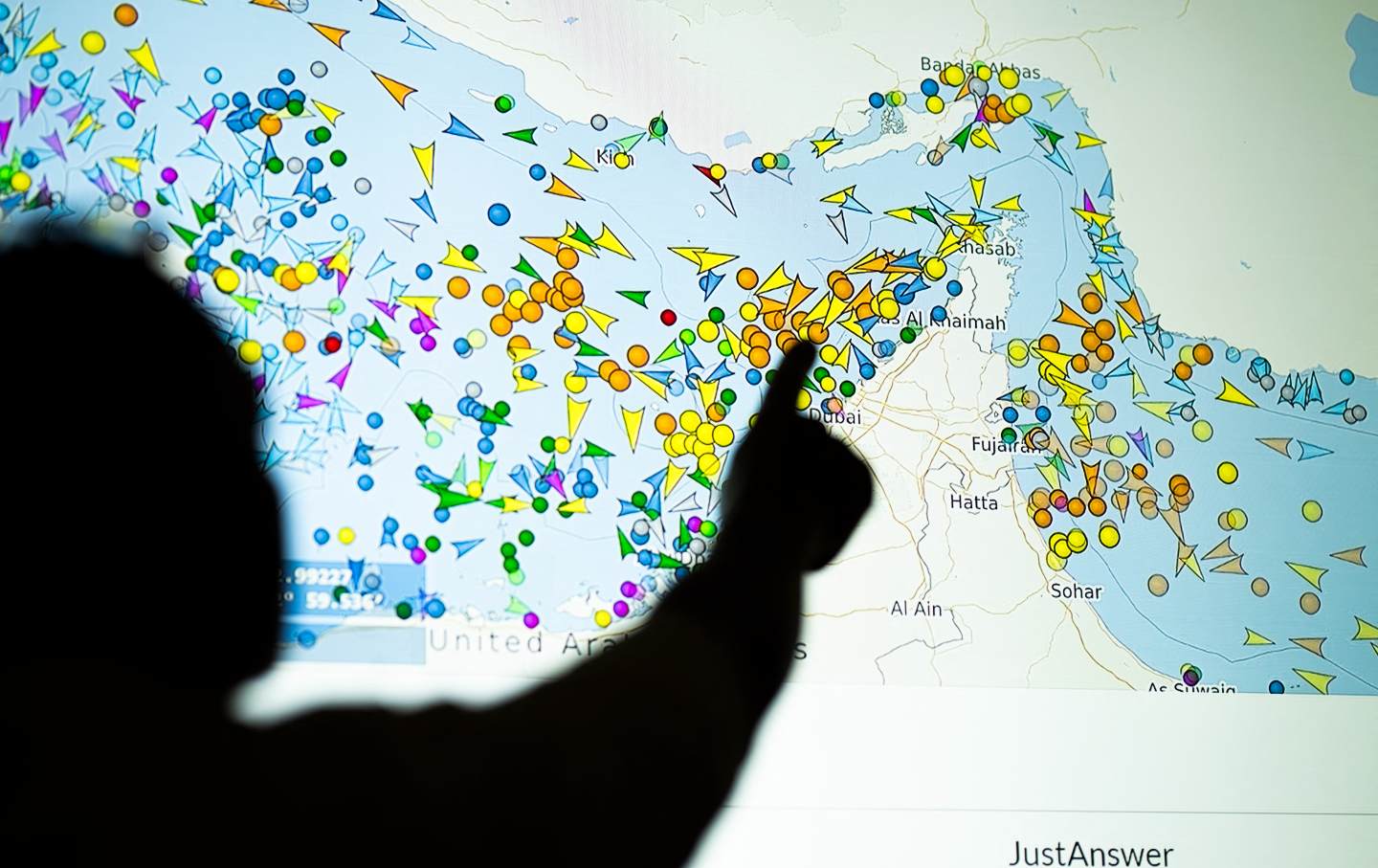
The closure of the Strait of Hormuz, a key conduit for oil and natural gas shipments from the Persian Gulf region, means that Europeans face the threat of disruption of energy supplies, including aviation fuel, and a rise in prices that were already high. The European price for natural gas, which many countries use to generate a portion of their electricity, has risen about 40 percent since the beginning of the war to levels several times above those of the United States.
For some European politicians and clean energy executives, the lessons from these shocks are clear. Europe, they say, must accelerate already robust efforts to shift to clean energy technologies like wind and solar power not only to mitigate climate change but, increasingly, to avoid blackmail and preserve independence.
“Energy is being leveraged, and this comes at an exceptionally high price for households and businesses,” Rasmus Errboe, the chief executive of Orsted, a Denmark-based developer of multibillion-dollar offshore wind farms, told journalists on Wednesday. “It doesn’t have to be that way,” he added.
“The way forward is obvious,” European Union President Ursula von der Leyen said on April 29. “We must reduce our overdependency on imported fossil fuels and boost our home-grown, affordable, clean energy supply.”
Some European green energy advocates, though, are less confident about the way ahead. While the Trump administration’s antipathy toward renewable energy has yet to take hold in Europe, there is questioning about whether decades of heavy investment in these technologies has produced enough of a payoff.
Countries like Britain and Germany have been among the world leaders in deploying technologies like wind and solar to tackle climate change. The modern wind industry largely arose in Europe, especially in Denmark, where turbines with blades longer than football fields were developed.
Green energy has become a substantial source of electric power in Europe. Over the last year, more than 32 percent of Britain’s electric power came from wind and more than 6 percent from solar on average, according to Drax Electric Insights, an energy website. More than 70 percent of electric power in the 26-member European Union came from low-carbon sources in 2025.
Yet punishing energy costs, partly a byproduct of these efforts, have created a backlash that could hobble future green energy efforts. In Britain, for instance, the long-standing political consensus on the need to achieve net zero carbon emissions by mid-century has come to an end. This goal, however worthy, “cannot be achieved without bankrupting us as a country,” said Kemi Badenoch, the leader of the opposition Conservative Party last year.
Badenoch also wants to step up drilling in Britain’s North Sea waters. In recent years, high taxes and a ban on new exploration licenses have discouraged investment in domestic oil and gas resources, contributing to production declines and job losses in the industry.
Nigel Farage’s right-wing Reform UK party, which scored big wins in recent local elections, also promises to “scrap net zero to cut energy bills.”
Popular
“swipe left below to view more authors”Swipe →Concern about waning support for climate policies was evident at a conference of green energy developers convened in London by Aurora Energy Research, an Oxford-based consulting firm. “The political risk we all face is quite extreme, and it’s driven by cost,” said Greg Jackson, founder and chief executive of Octopus Energy, a utility that has become a market leader in Britain through championing green power.
Europe’s wholesale electricity prices in 2025, for instance, were twice those of the United States, according to the International Energy Agency, harming the competitiveness of industries. The Paris-based monitoring group also ranked Europe’s household electricity bills among the world’s highest.
When it comes to global energy competition, Europe’s main handicap against the United States, a fossil fuel power, is that it must import most of the oil and natural gas it consumes. “It essentially is a massive weakness to be linked” to volatile oil and gas prices, said Marc Hedin, head of research at Aurora.
After the invasion of Ukraine, Europe replaced large flows of relatively cheap natural gas piped from Russia with chilled, liquefied natural gas, which tends to be more expensive. Much of this LNG comes from the United States, raising concerns that Europe has traded an unhealthy dependence on Russia for energy with one that could be subject to the whims of an increasingly unreliable Washington.
Given Europe’s predicament, analysts like Hedin say that shifting to an electrified economy based on renewables makes sense for European countries, but, he acknowledges, the transition is proving costly. European countries are spending enormous sums to build a new power system of wind and solar farms and batteries, with new power lines to connect them. Because the sun only shines in the day and wind is variable, more generating capacity is needed than in the past to ensure that sufficient power is available at times of peak demand.
Under terms designed to encourage renewable developers, wind and solar farms are often paid whether there is demand for their electricity or not.
“Investors will build wind, solar and nuclear plants only if they are paid,” wrote Dieter Helm, a professor of economic policy at the University of Oxford, in a recent presentation. While sun and wind may be free, some of the equipment needed to turn them into electricity is expensive and requires huge upfront costs. Offshore wind farms, a mainstay for countries around the North Sea like Britain, Germany, and Denmark, can cost billions of dollars to build. Britain and other countries also continue to rely on natural gas-fired power plants, which can be costly to run, to back up the renewables.
Energy advocates counsel patience, saying that the investment in new systems will eventually lead to lower prices. “The end result,” Hedin of Aurora said, “is that there will be some relief at some point.”
More from The Nation


On Being Awarded the Women Waging Peace Award On Being Awarded the Women Waging Peace Award
It has never been more urgent to revive the idea of peace, not as a slogan, but as the only serious, respectable, responsible, reasonable, humane position.


PSA: Trump Continues to Commit Crimes PSA: Trump Continues to Commit Crimes
While the president is unlikely to face any consequences for his patently illegal, taxpayer-funded ads, it’s essential to remember he should.

Freedom Can’t Be Fenced In Freedom Can’t Be Fenced In
A call for freedom written across a pedestrian overpass, framed by wire.

Zohran Mamdani’s Campaign May Have Accomplished Something More Fundamental Than Moving Policy Debate to the Left Zohran Mamdani’s Campaign May Have Accomplished Something More Fundamental Than Moving Policy Debate to the Left
It’s the people, stupid.

