
Mamdani Starts Governing by Getting the Imagery Right
Early signs suggest that the Mamdani era in New York is off to an encouraging start—beginning with the mayor’s continued mastery of political spectacle.
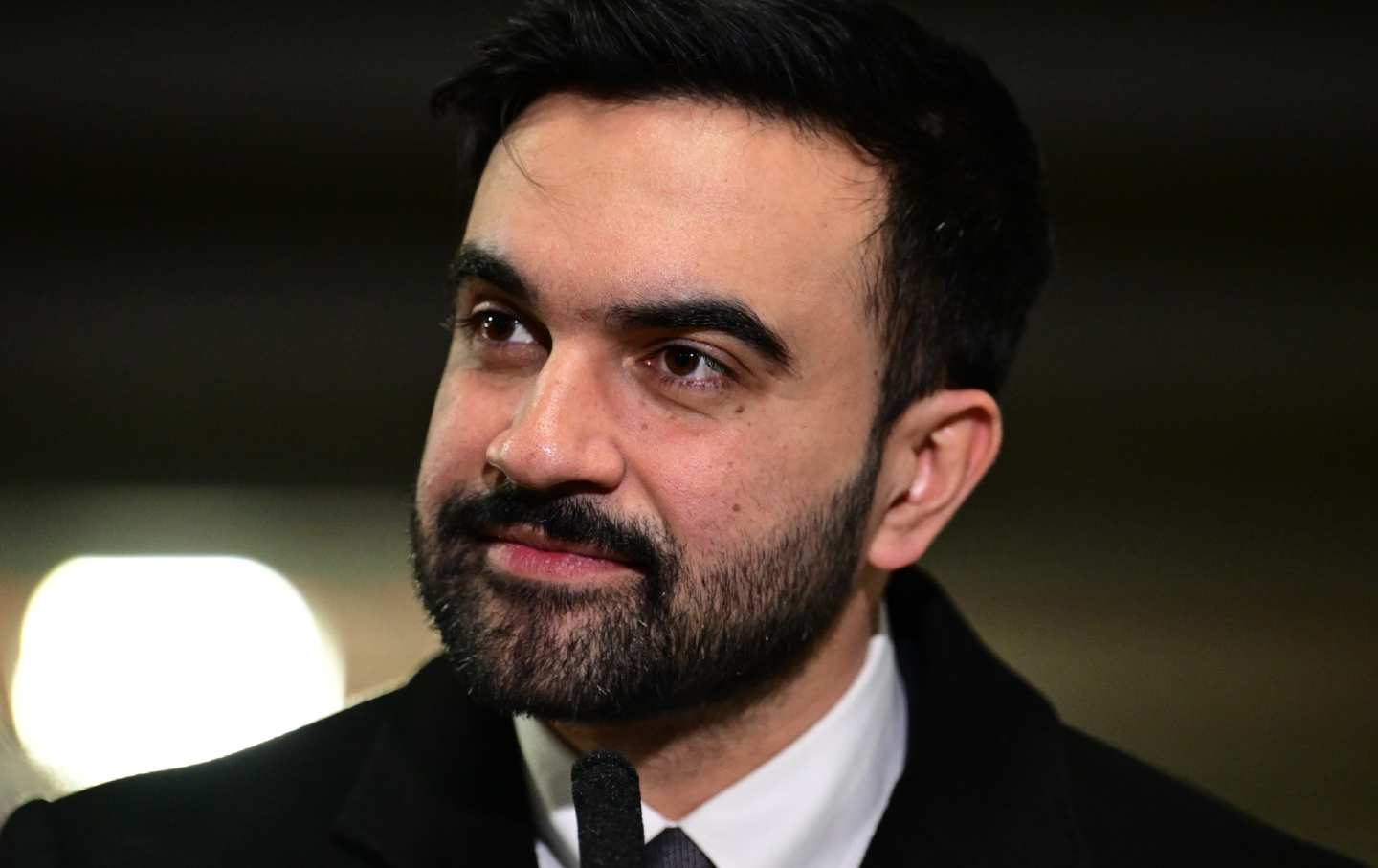
Mayor Zohran Mamdani at a January 13 press conference
(Kyle Mazza/Anadolu via Getty Images)On the first Monday of the new mayor’s first week in office a returning visitor to Room 9—the press room just off the right side of the lobby—was struck by how little has changed.
The scenery has been upgraded, with laptops and iPads now replacing more cumbersome computer terminals, and the phalanxes of daily tabloid and weekly magazine reporters reduced to a handful, their ranks replaced by staffers from online organs whose pedigrees barely stretch past the de Blasio administration. Still, the big “Pee Here” target, a prop from independent candidate Bo Deitl’s protest over de Blasio’s downgrading of the penalties for public urination, must have been hanging on the wall in the back corner of the room for nearly a decade.
The personnel have, likewise, been refreshed. But then when I covered my first budget—for the late, lamented Village Voice, during Ed Koch’s third term—City Hall was still a genuinely public building. It was easily accessible to any New Yorker with a grievance, many of whom could be found holding forth on its steps at almost any hour of the day or night. That was still true the last time I left the premises, a year into the Dinkins administration, when I went on what turned out to be a rather extended book leave from New York Newsday, where I would sometimes pass my colleague Murray Kempton, just arriving on his bicycle. Still writing four times a week into his 70s, Murray knew he could always find grist for his column at City Hall.
That all changed after 9/11. Today would-be visitors have to pass through a police checkpoint and X-ray machine just to gain access to City Hall Park—measures that have considerably diminished the opportunities for political theater. At least outside the building. Yet once you go inside, the architecture of city government remains manifest: on the left, the offices of the mayor and his staff, and the Blue Room (where bill signings and full-scale press conferences are held), and to the right, the domain of the City Council (though most council members, like the heads of most mayoral agencies, have offices outside the building). Through the soaring rotunda—where both Abraham Lincoln and Ulysses S. Grant once lay in state—and up the stairs is the chamber where the City Council holds its deliberations. Traditionally, the council has been subservient to the mayor; as my former boss Henry Stern (himself a council member at the time, though he would later serve as parks commissioner) once remarked, “The difference between the City Council and a rubber stamp is that at least a rubber stamp leaves an impression.”
Will that change under Mayor Zohran Mamdani? Like almost everything else about the new administration, it is still too soon to tell. But at the end of New York’s second week of rule by democratic socialism, it can certainly be said that Mamdani has hit the ground running.
In his first week he warmed the hearts of cyclists by “filling in the notorious Williamsburg Bridge bump,” revoked every one of Eric Adams’s executive orders issued after the former mayor’s indictment for corruption, and issued his own executive orders addressing everything from ending solitary confinement at Riker’s Island and improving conditions in city shelters to reducing fines and fees for small businesses.
And for Mamdani-stans concerned by the new mayor’s rapid abandonment of Catherine Almonte DaCosta, who resigned as director of appointments after just one day in office when her antisemitic social media posts from a decade ago surfaced in the press, he stood staunchly behind tenant advocate Cea Weaver, newly appointed as head of the Mayor’s Office to Protect Tenants, despite her own record of intemperate tweets, including one condemning home ownership as a “weapon of white supremacy.” Whether that has more to do with the relative power, or sensitivity, of white New Yorkers versus the city’s Jews—or with the fact that, unlike DaCosta, Weaver is a uniquely respected tenant leader with a long track record of activism on an issue of great importance to the new administration—is a matter on which reasonable people may well differ.
But for this observer, it was another of the mayor’s new hires—former City Council member Rafael Espinal as the new commissioner for the Mayor’s Office of Media and Entertainment—that offered a more revealing illustration of the Mamdani governing style. The press conference announcing the appointment was held at Samson Stages—a shiny film complex in Red Hook previously seen in music videos for both Dua Lipa and Bruce Springsteen.
The summons to Brooklyn furnished yet another example of the mayor’s determination to get out of—and be seen out of—the formality of City Hall. But it also featured a revealing cameo appearance by City Council Speaker Julie Menin. In his introduction, the mayor—who besides being, as he put it, “the proud son of a DGA [Director’s Guild of America] member myself” is also “a former PA [Production Assistant]”—managed to name-check “the Central Park foliage from When Harry Met Sally…, the summer heat of Do the Right Thing, [and] the culture of hustle of Marty Supreme”—a neat hat trick of movie references each beloved by at least one component of his coalition.
Menin’s appearance was likewise a deft bit of political theatre. She’s a mainstream Jewish Democrat who was being promoted by some of the mayor’s critics as a counter-force, especially on matters relating to Israel—and Mamdani’s invitation to share the (literal) spotlight with him demonstrated, yet again, that he really does know how to play this game—including making ethnic symbolism work in his favor. Since Menin was MOME commissioner under de Blasio, her presence at the announcement made sense. But it was also a chance to make nice with someone who is in a position to significantly help—or hinder—the delivery of Mamdani’s ambitious agenda.
Of course, the most important relationship for the mayor over the coming months will be with Governor Kathy Hochul, given the outsize role of the state government in running New York. The governor, who attended the mayor’s inauguration but was not—unlike Bernie Sanders or Alexandria Ocasio-Cortez—invited to speak, was the featured speaker at one of the new mayor’s first official public events, celebrating the first anniversary of the city’s successful traffic congestion charge. Held at the McBurney YMCA, the event offered a preview of a double act crucial to Mamdani’s ability to deliver on at least two of his three key campaign promises.
Mamdani doesn’t need the governor’s permission to freeze the rent for stabilized tenants, since appointees to the Rent Guidelines Board are in the mayor’s gift alone (though Eric Adams, who appointed four new members just last month—perhaps out of sheer spite—may well have delayed his successor’s ability to act until their terms expire next year). But action on universal childcare and eliminating fares on city buses will be heavily dependent on cooperation from the governor. Here, too, the early signs are positive: By the end of the new mayor’s first week, the dynamic duo popped up again in Albany, where they announced plans to extend childcare in New York City from the current 3-K provision to include 2-year-olds—an important step on the road to free universal childcare.
Of course, an announcement is not a program—and the governor notably only guaranteed funding for the next two years. But that is still a significant step on an issue that Mamdani’s critics were quick to dismiss as a pipedream.
Popular
“swipe left below to view more authors”Swipe →Meanwhile, the spectacle of governing goes on. Back in Room 9 last Wednesday, those of us in “legacy media” had to press our noses against the figurative glass as the mayor welcomed “new media” scribes and influencers to an invitation-only press conference in the Blue Room. Watching on the livestream, some of my colleagues expressed their disgust. “They’re all clapping when he speaks, one groused. “It’s nauseating!”
It certainly was a change from the adversarial exchanges of the past. But judging by the rest of his schedule, this mayor is not hiding from anyone.
The real crunch—and the first real test of Mamdani’s inaugural pledge to “govern like a Democratic socialist”—will only begin later this month, when the mayor issues his preliminary budget. When he does, The Nation will be there.
Support independent journalism that does not fall in line
Even before February 28, the reasons for Donald Trump’s imploding approval rating were abundantly clear: untrammeled corruption and personal enrichment to the tune of billions of dollars during an affordability crisis, a foreign policy guided only by his own derelict sense of morality, and the deployment of a murderous campaign of occupation, detention, and deportation on American streets.
Now an undeclared, unauthorized, unpopular, and unconstitutional war of aggression against Iran has spread like wildfire through the region and into Europe. A new “forever war”—with an ever-increasing likelihood of American troops on the ground—may very well be upon us.
As we’ve seen over and over, this administration uses lies, misdirection, and attempts to flood the zone to justify its abuses of power at home and abroad. Just as Trump, Marco Rubio, and Pete Hegseth offer erratic and contradictory rationales for the attacks on Iran, the administration is also spreading the lie that the upcoming midterm elections are under threat from noncitizens on voter rolls. When these lies go unchecked, they become the basis for further authoritarian encroachment and war.
In these dark times, independent journalism is uniquely able to uncover the falsehoods that threaten our republic—and civilians around the world—and shine a bright light on the truth.
The Nation’s experienced team of writers, editors, and fact-checkers understands the scale of what we’re up against and the urgency with which we have to act. That’s why we’re publishing critical reporting and analysis of the war on Iran, ICE violence at home, new forms of voter suppression emerging in the courts, and much more.
But this journalism is possible only with your support.
This March, The Nation needs to raise $50,000 to ensure that we have the resources for reporting and analysis that sets the record straight and empowers people of conscience to organize. Will you donate today?
More from The Nation

Everything Is Quiet in Trump’s Mind. The Real World Is Another Story. Everything Is Quiet in Trump’s Mind. The Real World Is Another Story.
Trump’s press conference dedicated to stabilizing global markets was filled with delusions and wish-fulfillment fantasies about a peaceful, compliant planet.
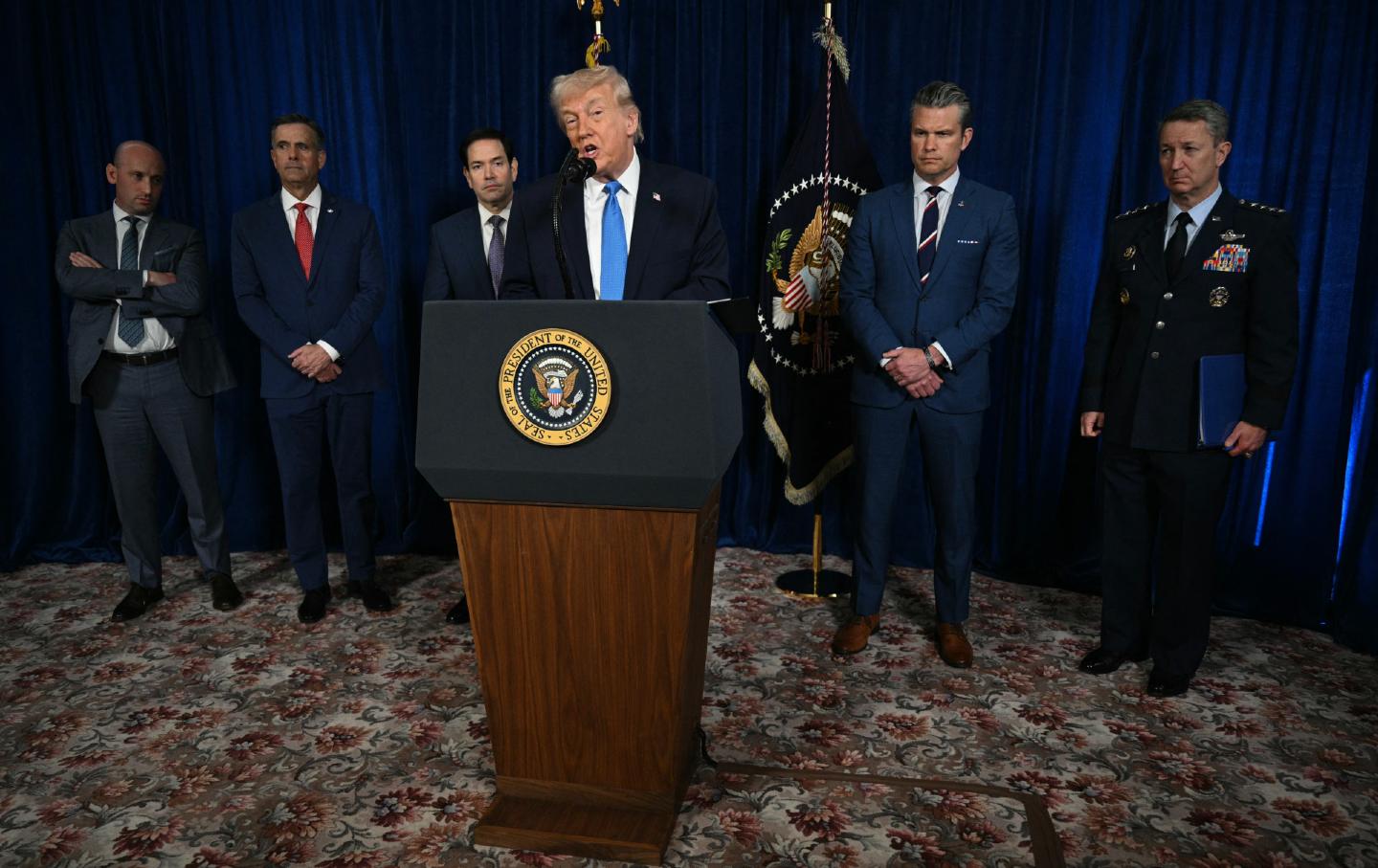
The Trump Administration Has Perfected the Performance of Legality The Trump Administration Has Perfected the Performance of Legality
This administration understands that pantomiming rule-following allows it to pursue its ultimate objective of justifying whatever intervention it may deem necessary.
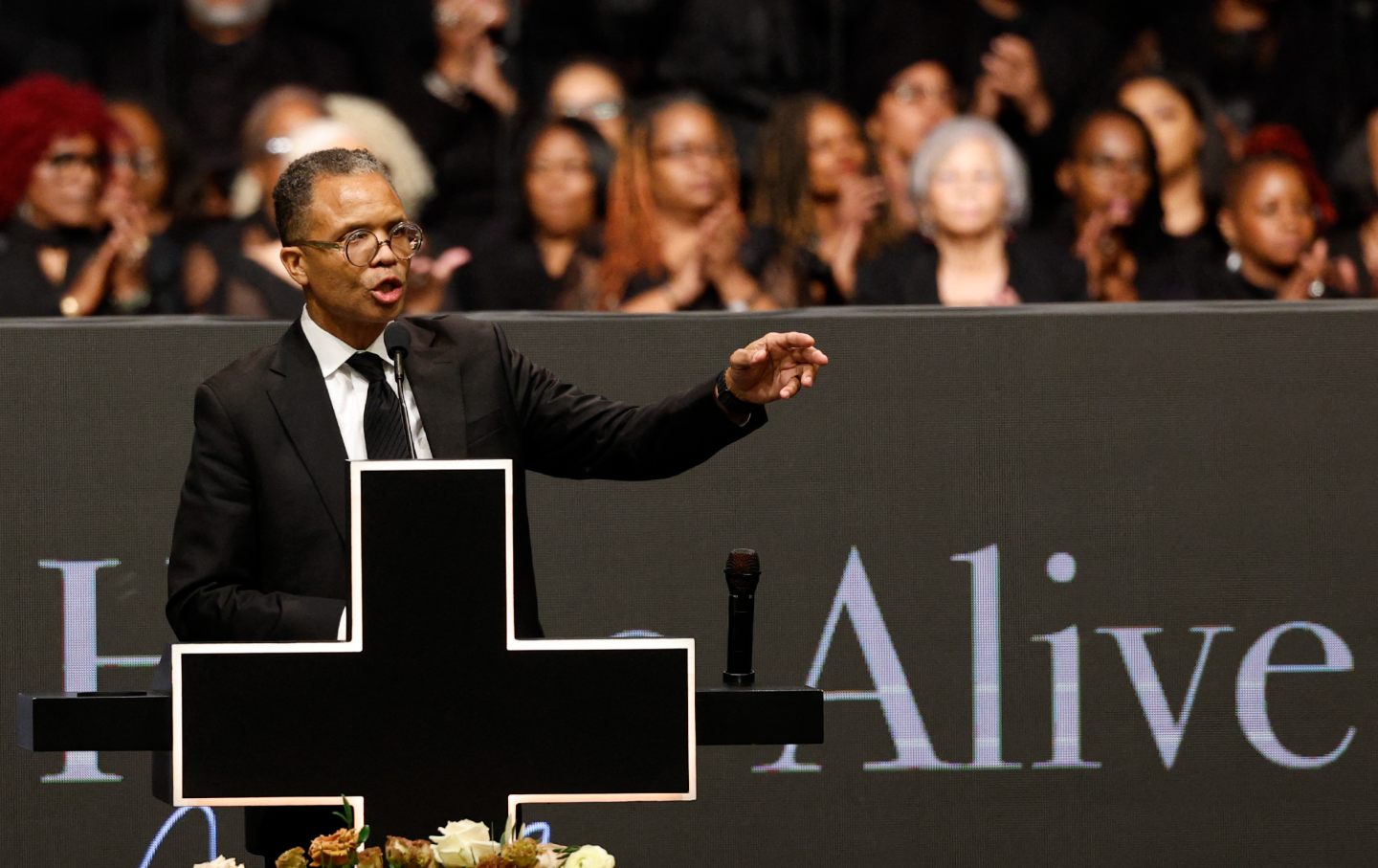
Jesse Jackson Jr. Summons His Father’s “Consistent Prophetic Voice” Jesse Jackson Jr. Summons His Father’s “Consistent Prophetic Voice”
“He took the ministry from Sunday morning, and he delivered it to the people,” the younger Jackson said.

X-Ray-Stein X-Ray-Stein
https://www.thenation.com/wp-content/uploads/2026/03/Pedo-Scan.mp4 Check out all installments in the OppArt series.
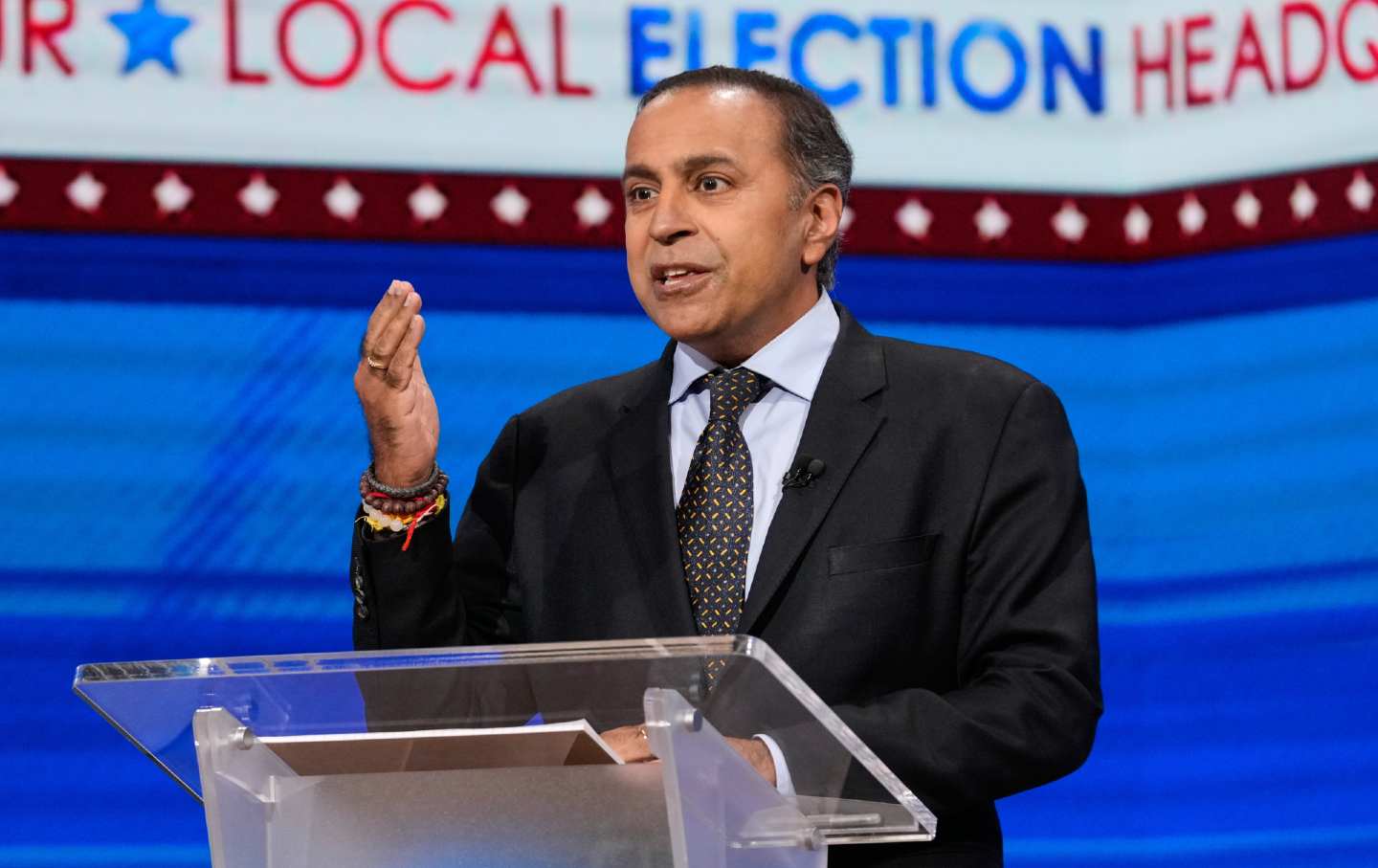
How Illinois May Bumble Its Way Into Electing a Senate Moderate How Illinois May Bumble Its Way Into Electing a Senate Moderate
The battle for Dick Durbin’s seat in a potential blue-wave cycle should be a progressive cakewalk in a state like Illinois. Cue the infighting and undermining.
How Marco Rubio Went From Neocon “It” Boy to Top MAGA Lieutenant How Marco Rubio Went From Neocon “It” Boy to Top MAGA Lieutenant
Rubio’s transformation may say as much about neoconservatism as it does about the man himself.

