
How Illinois May Bumble Its Way Into Electing a Senate Moderate
The battle for Dick Durbin’s seat in a potential blue-wave cycle should be a progressive cakewalk in a state like Illinois. Cue the infighting and undermining.
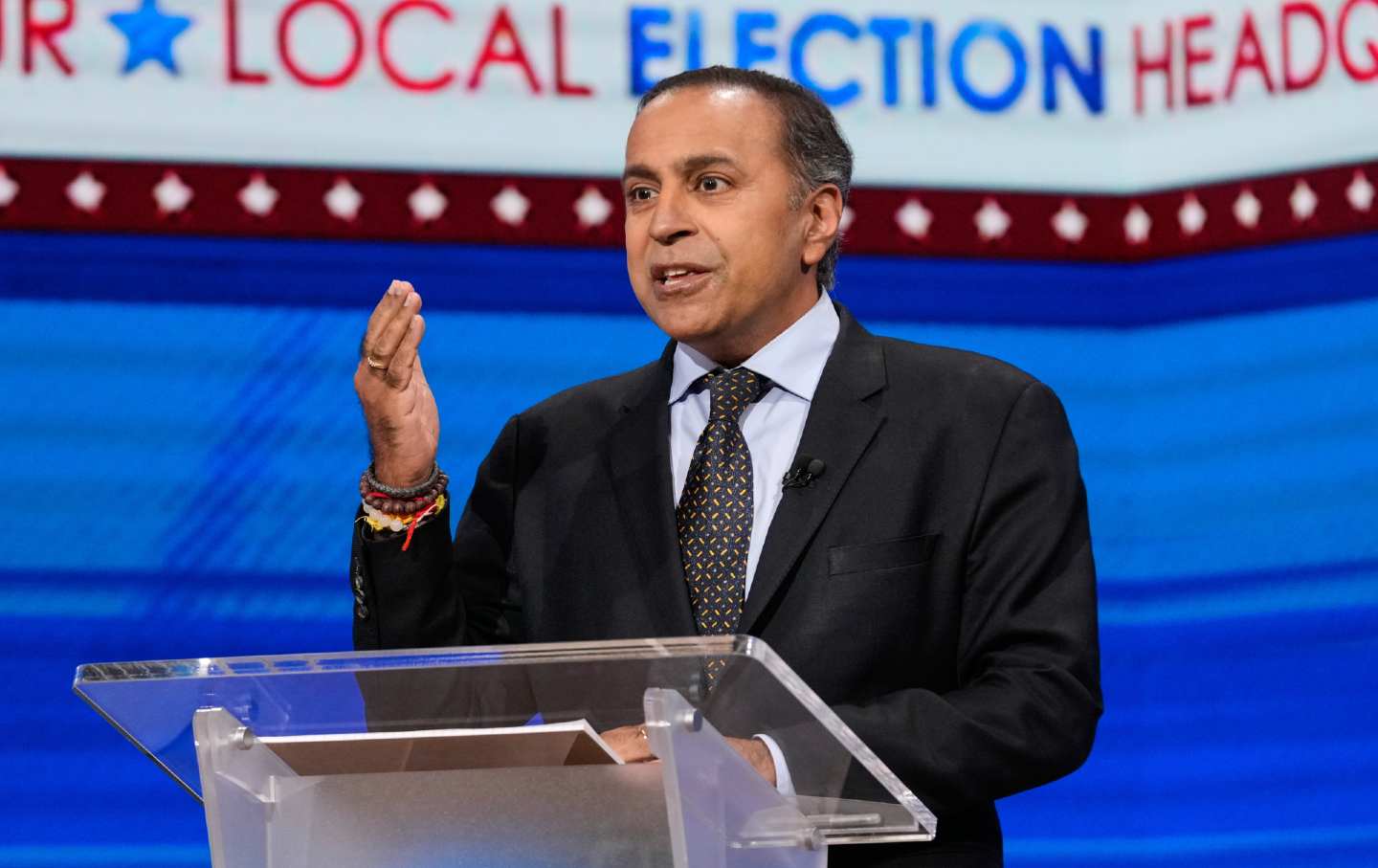
House Representative Raja Krishnamoorthi at last month’s Illinois Senate Democratic primary debate.
(Nam Y. Huh / Associated Press)Democrats spent most of 2025 understandably focused on President Donald Trump’s relentless campaign of partisan repression, jaw-dropping corruption, and international aggression. In the middle of this long national nightmare, Illinois Democratic Senator Dick Durbin, who has been in the Senate for 28 years, announced his retirement, opening up a seat that even in a neutral environment would be a layup for Democrats. In what looks like blue-wave territory, it’s a set-it-and-forget-it race for the national party that needs to spend its resources on the contests it has to win for its long-shot bid to flip the Senate.
So with virtually everyone on the left in the Democratic stronghold of Illinois focused elsewhere, the primary field has so far been dominated by longtime US Representative Raja Krishnamoorthi, a moderate. While Krishnamoorthi is not the devil incarnate or anything, Illinois Democrats deserve to be represented by someone who more closely shares their values. Unfortunately, with Krishnamoorthi leading most polls by double digits, time is running out and the state’s progressives may fall victim to a vote-splitting fiasco.
For the progressive left, the case against Krishnamoorthi is pretty straightforward, if not as lurid as some of the attacks being leveled against him. He’s a member of the 109-member New Democrat Coalition in the House, which on its own should be enough to disqualify him from serving as a US senator from a Democratic stronghold state. The coalition opposes Medicare for All and supports gargantuan Homeland Security budgets and blank checks to Israel. Krishnamoorthi is part of a long, unhappy lineage of Democrats whose boldest proposals involve tinkering with the tax code or the healthcare system on the margins and calling it a day. However, since both former speaker Nancy Pelosi and current House minority leader Hakeem Jeffries have run highly disciplined operations with very few defections on key votes, there’s little in his voting record that jumps out immediately as worrisome.
But if you dig a bit, there are some red flags. He’s accepted donations from a long list of tech companies that cravenly aligned themselves with the Trump administration after his 2024 victory, including Google, Amazon, and Microsoft. He’s also taken money directly from billionaire fascists like Marc Andreesen and from Palantir executive Shyam Sankar (although he did renounce that one after it gained the press’s attention). Given that the fight against our emerging AI oligarchs looks like it might be the struggle of our generation, this is not a great look. He also supported two bills designed by and for the crypto sector, the GENIUS Act (which one of his primary opponents, Representative Robin Kelly also supported) and the CLARITY Act. Both were major priorities of the Trump administration, which is knee deep in crypto grift and graft and shouldn’t be trusted to buy 1/100th of a Bitcoin, let alone lead the industry’s regulatory regime.
Krishnamoorthi’s campaign platform is also a classic New Democratic array of half-measures—a far cry from what we might hope the next Democratic trifecta in Washington could achieve. Rather than universal childcare, for example, he proposes “low-interest federal loans through the Small Business Administration to entrepreneurs who open affordable child care facilities and pay their workers living wages.” These are not bad ideas, but they don’t exactly meet the moment. It’s hard to see him backing the abolition of the filibuster to codify Roe or pass desperately needed democracy reform efforts like a new voting rights bill.
The data also supports the impression that Krishnamoorthi, who is presenting himself to the primary electorate as a progressive, is actually moderate. In political science, the gold standard for measuring ideology in Congress is the system pioneered by researchers Kenneth Poole and Howard Rosenthal. It uses longitudinal data from legislative roll call votes to place individual members of Congress on a scale from -1 (the most liberal) to 1 (the most conservative). At -.347, Krishnamoorthi is currently the 136th most liberal Democrat in the House. “Middle of the pack” isn’t exactly how Krishnamoorthi is being attacked from the left, but it certainly isn’t where you would want a senator from the third-largest Democratic-leaning state in the country, whose largest city is on the front lines of the regime’s campaign of internal repression and ethnic cleansing.
Partly because of how strongly his campaign came out of the gate last year, and partly because so many Democrats have been fixated on primary races in Texas and Maine, Illinois progressives have had trouble consolidating around a non-Krishnamoorthi candidate. According to polls, the only other aspirants with a shot are six-term US Representative Robin Kelly and the state’s sitting lieutenant governor, Juliana Stratton. And this is where we arrive at the kind of in-fighting and self-defeating behavior that has long plagued the state Democratic Party.
A decade ago, the Illinois Democratic Party was in shambles, arguably the worst blue-state operation in the country. In 2014, Democrats bumbled their way into nominating the hapless incumbent, Pat Quinn, in the state’s gubernatorial race and he promptly kicked it away to Republican Bruce Rauner. Rauner’s four-year tenure can only be described as an unmitigated disaster that mostly took the form of a destructive and years-long budget standoff.
If that weren’t bad enough, the state House of Representatives was in the iron grip of the profoundly corrupt Speaker Mike Madigan, and one of the two US Senate seats was still held by Republican Mark Kirk, who basically backed his way into office in the GOP wave of 2010. (That red wave was hailed as a breakthrough for the Tea Party movement, but in Illinois, the more relevant data point is that Kirk’s victory happened two years after the state’s Democratic governor, Rod Blagojevich, was impeached, removed from office and later convicted for trying to sell Barack Obama’s Senate seat.) The state’s fiscal outlook could politely be described as “apocalyptic.”
Billionaire Governor J.B. Pritzker, of all people, has led the righting of this ship, and while he hasn’t been perfect, he has exceeded even the most optimistic expectations. Pritzker’s success particularly defied the expectations of those of us on the left who objected in principle to a scion of one of the country’s richest families buying his way into office. But under his watch, Democrats have increased their margins in the state legislature, passed a host of progressive wish-list bills and remade the state’s genuinely horrific budget situation. The old-guard figures who presided over decades of disastrous and corrupt governance have been sent packing. And Pritzker managed all this without indulging the signature reflex of New Democratic governance: throwing organized labor under the bus.
That has made Pritzker, who is running for a third term and obviously has 2028 presidential aspirations, a kingmaker in Illinois. He’s backing his deputy, Stratton, in both word and financial deed, which has set off the kind of intraparty feuding that could lead to a Krishnamoorthi win. The Congressional Black Caucus is furious with Pritzker for not backing Kelly—and not for the first time. In 2022, Pritzker succeeded in pushing Kelly out of her role as the state Democratic Party chair. Pritzker and his allies insisted the move was rooted in a Federal Elections Commission ruling that limited her ability to raise and direct money on behalf of the state party. “In practical terms, that meant the person running the DPI couldn’t actually do the main job of the chair, which is raising money and funding legislative races,” one state Democratic strategist told me.
Some Illinois progressives are backing Kelly because she has staked out what the influential, impressively encyclopedic Chicago-based “Girl, I Guess” Illinois voter guide puts it, a “courageous and morally correct stance on Palestine.” She called Israel’s war in Gaza “genocide” in a recent debate as Stratton awkwardly evaded the question, and Kelly touted her support for the (obviously doomed in this congress) Block the Bombs Act that would prohibit the sale of offensive weapons to Israel.
Popular
“swipe left below to view more authors”Swipe →This is a miscalculation, albeit a well-intentioned one. To be blunt, the junior senator from Illinois is not going to have a ton of say in whether there is a top-level pivot in US backing for Israel. That policy change will have to come from the top of the 2028 ticket, given the heavy preponderance of elected Israel backers in the Democratic Party. That moment is probably closer than it seems—this week, for the first time in the long history of Gallup’s polling, more Americans sympathize with Palestinians than with Israelis. But it’s also worth noting that Kelly has been on multiple congressional junkets to Israel and accepted donations from AIPAC in the past. Her current stance feels more like a strategic maneuver than the outcome of a moral conviction.
And because Illinois does not use ranked-choice voting—a failure to pursue structural political reform is one of the few real blemishes on Pritzker’s record—this is a zero-sum game. No one understands that better than Krishnamoorthi, whose allies are quietly boosting Kelly: The technically pro-Krishnamoorthi Indian American Impact Committee has engineered a $250,000 Kelly ad buy. Rich Miller, who runs Capitol Fax, an influential state politics institution, wrote, “That wouldn’t be an attempt to split Black votes to boost Kelly’s lagging numbers, would it?”
“The reality is Robin Kelly has a 0.1 percent chance of winning this race and probably lower,” the state Democratic strategist told me. “And I think everyone on Team Kelly understands that.” She has not led a single survey and has been in third place behind Stratton in 15 out of the 16 public polls in the race released since last summer. Meanwhile, there is some evidence that Stratton is staging a last-minute comeback, and there are still loads of undecided voters in every poll. Also, if progressive Democrats are serious about clawing the party back from its fateful drift into gerontocracy, it seems less than ideal to send Kelly, who would be 70 when she takes office, to start her first term in the Senate.
For the left, then, this race really should come down to Stratton versus Krishnamoorthi. This is just strategic voting 101 in a winner-take-all election. And Stratton is simply the better choice here, given her call to abolish ICE outright, versus Krishnamoorthi’s cynical call to “abolish Trump’s ICE.” She supports Medicare for All. She wants to raise the federal minimum wage to $25.
Ultimately though, the Illinois Democratic Senate primary might be most disappointing for what hasn’t been discussed—how any conceivable version of the progressive agenda is going to get through a political system that remains rigged for minority rule. Democratic aspirants to federal office really should be subjected to a short series of litmus tests, including filibuster abolition, Supreme Court expansion, and statehood for DC and Puerto Rico. Without these basic reforms, which the next Democratic president will be left once again trying to stuff every priority into a single budget reconciliation package—and therefore failing once again to achieve many critical policy goals, including those most important to the party’s long-maligned base.
In the meantime, the best path toward achieving such fundamental change is to make the most of the deeply flawed status quo. “They’re all cut from that cloth,” said former Chicago Reader political columnist Ben Joravsky of the Senate field. “They’re all conventional politicians who have come up from very conventional paths. They’ve all been around forever, and I can’t remember any one of them being on the front lines when it was audacious to be there.” To really transform the country, Democrats are going to need to figure out a way to get transformational figures into these seats, and sleeping on races in landslide states like Illinois is not going to get that done.
That means one thing for next week’s Senate primary: The only way to stop Krishnamoorthi is to vote for Stratton.
Become a Sustaining Donor This September
Between the reemergence of right-wing red-baiting and Donald Trump’s use of the chilling National Security Presidential Memorandum–7 to criminalize left political organizing, we’re seeing McCarthyism reborn before our eyes.
This assault on democracy cannot be ignored or wished away. Resisting it requires bravery in the face of threats and repression, a steadfast commitment to the truth, and the unwavering belief that we can—and will—overcome this darkness.
We must have an independent media that sets the record straight, unearths corruption and abuses of power, and advances a politics of justice and dignity for all if we’re to win this fight.
That’s why I’m writing to you today. This September, The Nation needs to add 100 monthly donors to sustain our progressive journalism. Your contribution makes the next investigative report, the next truth-speaking column, and the next pathbreaking essay all possible.
I hope you’ll support our work with a recurring donation today. If you donate $10 or more a month, we’ll send you a brand new “Hands Off the Free Press!” sticker to recognise your commitment to our cause. Please, donate today.
Onward,
Katrina vanden Heuvel
Editor and Publisher, The Nation
More from The Nation
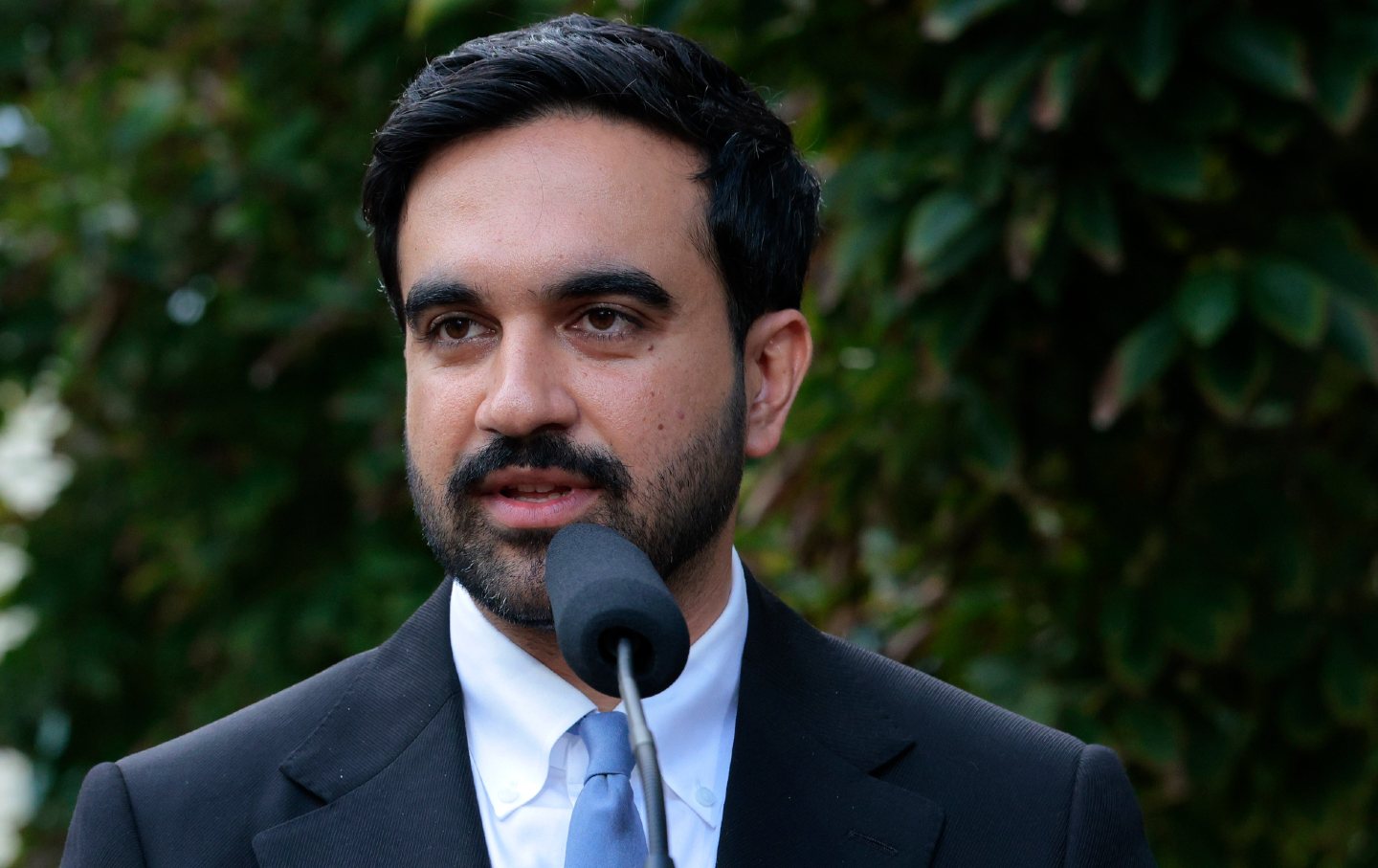
Zohran Mamdani Hosts the World Zohran Mamdani Hosts the World
In a meeting with mayors from around the globe, Mamdani argued that the left must fix everyday problems—or the right will find someone to scapegoat for them.

Is There Any Good News Left? Is There Any Good News Left?
Despite what our algorithms suggest, there’s still news worth celebrating.

CEOs Are Losing Control of AI CEOs Are Losing Control of AI
With no slowdown from Trump’s administration.
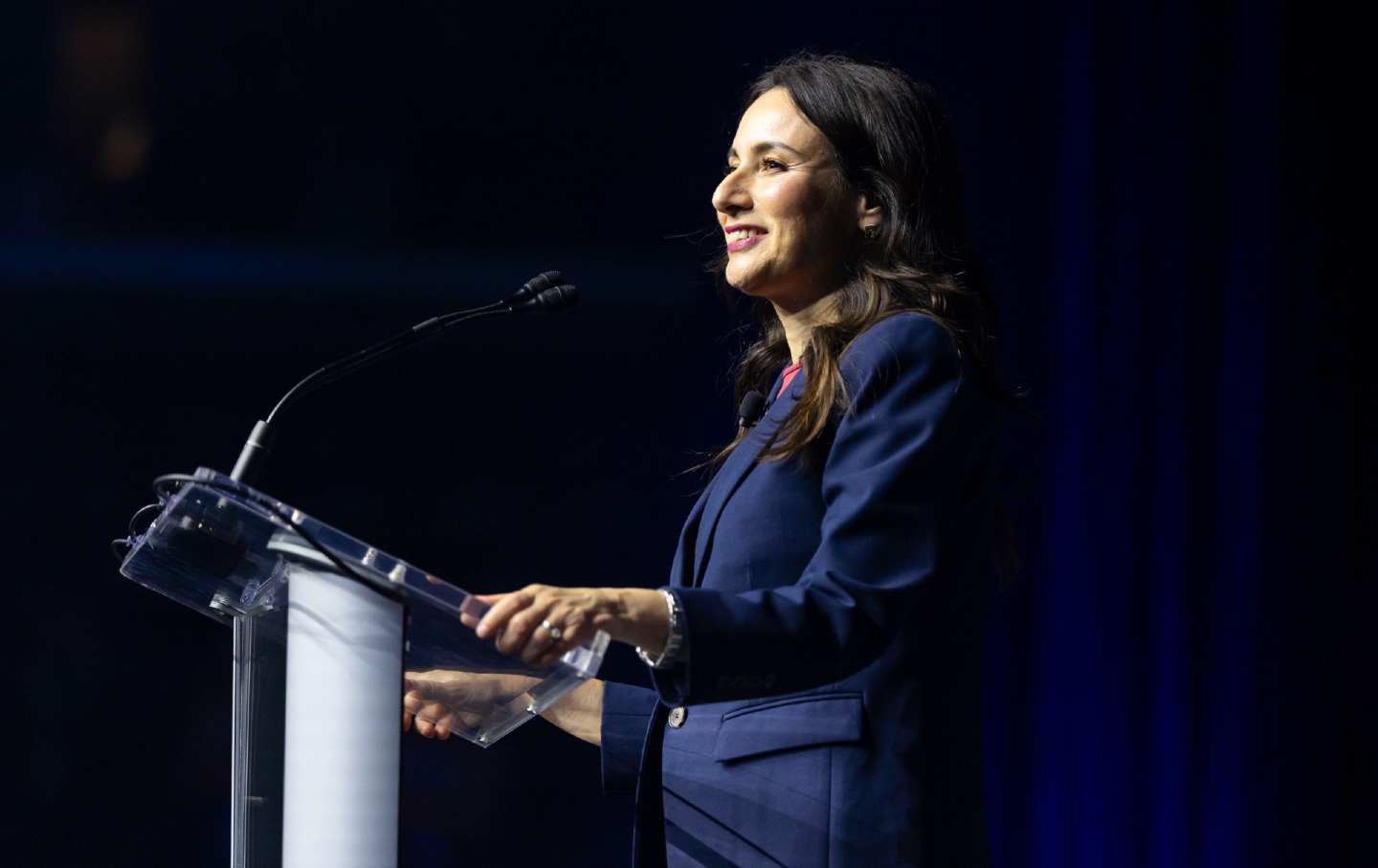
Gina Hinojosa: “We Flip Texas, and It’s Over” Gina Hinojosa: “We Flip Texas, and It’s Over”
Talking to Texas gubernatorial candidate Gina Hinojosa about what redistricting could mean and how a new generation of Democrats is speaking more directly to voters.
Trump Wants to Keep Journalists Out of the White House. He Should Get His Wish. Trump Wants to Keep Journalists Out of the White House. He Should Get His Wish.
The president has banned MS NOW, CNN, and Politico from attending press briefings. The rest of the media should respond with a boycott.

