
Dispatches From the First Great British CPAC
Through conferences, media ventures, and fat public-affairs contracts, the MAGA industrial complex has spent 10 years trying to buy British politics.
If you have spent any time on the British side of social media—Elon Musk’s X, in particular—you will know that the United Kingdom is being invaded by foreigners.
They arrive professing their love of the place. They are made welcome. Then they settle in like Penelope’s suitors: occupying the hall, running down the estate, insulting the kingdom, and maintaining throughout the assumption that one of their own will soon be master. They hold British norms in contempt. They don’t speak proper English. They infiltrate British politics and influence it against British interests. They are convinced that their culture and religion are superior, and they won’t shut up about it. They are here, above all, to extract.
Let’s not be politically correct. We all know whom I am talking about: Americans.
For the UK, the “special relationship” has always been an unrequited love. Westminster will stay up until the last state is called. Washington cannot reliably remember that we have a chancellor of the Exchequer rather than a treasury secretary. In the past 10 years, Brexit and the war in Ukraine have turned the British desire to please Americans into the necessity of appeasing Donald Trump.
Through conferences and sponsorships, media ventures, no-bid State Department grants, and fat public-affairs contracts, the MAGA industrial complex has spent 10 years trying to buy British politics.
The question is whether MAGA got the return on investment it expected. Has Trumpism won British hearts and minds? Or is the sight of his brand on British soil no more meaningful an endorsement than a Kardashian holding up a bottle of gummies?
Musk’s purchase of X was the first turning point. British tabloids are even more swayed by what trends there than their Washington counterparts, and the dominoes fall fast: Whatever is trending by breakfast is what some minister has to answer for on the morning round. Back then, being liked by the man who owns the algorithm felt like a massive undeclared political donation. Now it is starting to feel like the kiss of death.
Michael Gove—“Baron Gove”—was once one of the most powerful men in the Conservative Party. A former cabinet minister, he is now editor of The Spectator, the oldest surviving magazine in the world and a home of British Toryism. He is critical of Trumpism’s entertainment-industry metastasis in the UK.
“The people within it sustain a cartoonish view of the country’s problems,” he tells me.
You see this most clearly in the conferences funded by American evangelical, cryptocurrency, defense, and technology interests: CPAC, NatCon, and Turning Point.
“They have a pantheon of demons, but you will never see them seriously engage with the fundamental problems, like improving transport or making devolution work,” Gove says.
At the first Great British CPAC, held last week in London, I encountered a parade of increasingly uncomfortable, formerly respectable British Conservative figures dancing like bears at a Gypsy wedding for rich Americans whose political agendas are irrelevant to the British public. This spectacle has become the British right’s greatest political liability.
“It’s sad what happened to Liz Truss; she morphed from a serious political figure into the ringmaster of a circus,” Gove reflects. “CPAC used to be a useful exercise for American Republican politicians to test their message, but it has become an amalgamation of baby podcasters, YouTube Zoomers, and thrill-seeking transgressives who want to ‘own the libs.’”
A Young Conservative volunteer I meet has been tasked with handing out free tickets the day before the conference, in order to avoid the embarrassment of a hall containing more left-wing journalists than right-wing attendees. He maintains a perfect stiff upper lip as I quiz him about the event’s obscene aesthetics.
“This is grifting,” he sighs. “It has nothing to do with British values.”
Ed Vaizey—“Baron Vaizey”—another former Conservative minister and a radio presenter, is also unimpressed and most certainly not in attendance.
“Speaking the same language doesn’t mean sharing the same culture or interests,” he tells me. “When Obama came to support the Remain campaign, Brexiteers were outraged. Now they are happy to have Trump tell Britain what to do.”
Writing about the Second World War in The Lion and the Unicorn, George Orwell credited British hypocrisy with fascism’s failure to take hold among the British elite. Or, as the American self-help guru James Clear puts it in Atomic Habits, identity drives behavior. A person who identifies as health-conscious waves away the dessert menu without thinking about it. A Briton whose identity has been forged in the national myths—Magna Carta, the abolition of slavery, the defeat of the Nazis—cannot bear the idea of Trump’s White House.
There is, as Gove puts it, “a residual British belief that governing should include dignity.” Replace the quiet dependability of a press release with the vulgarity of race-slop memes? No, thanks. We are British.
Popular
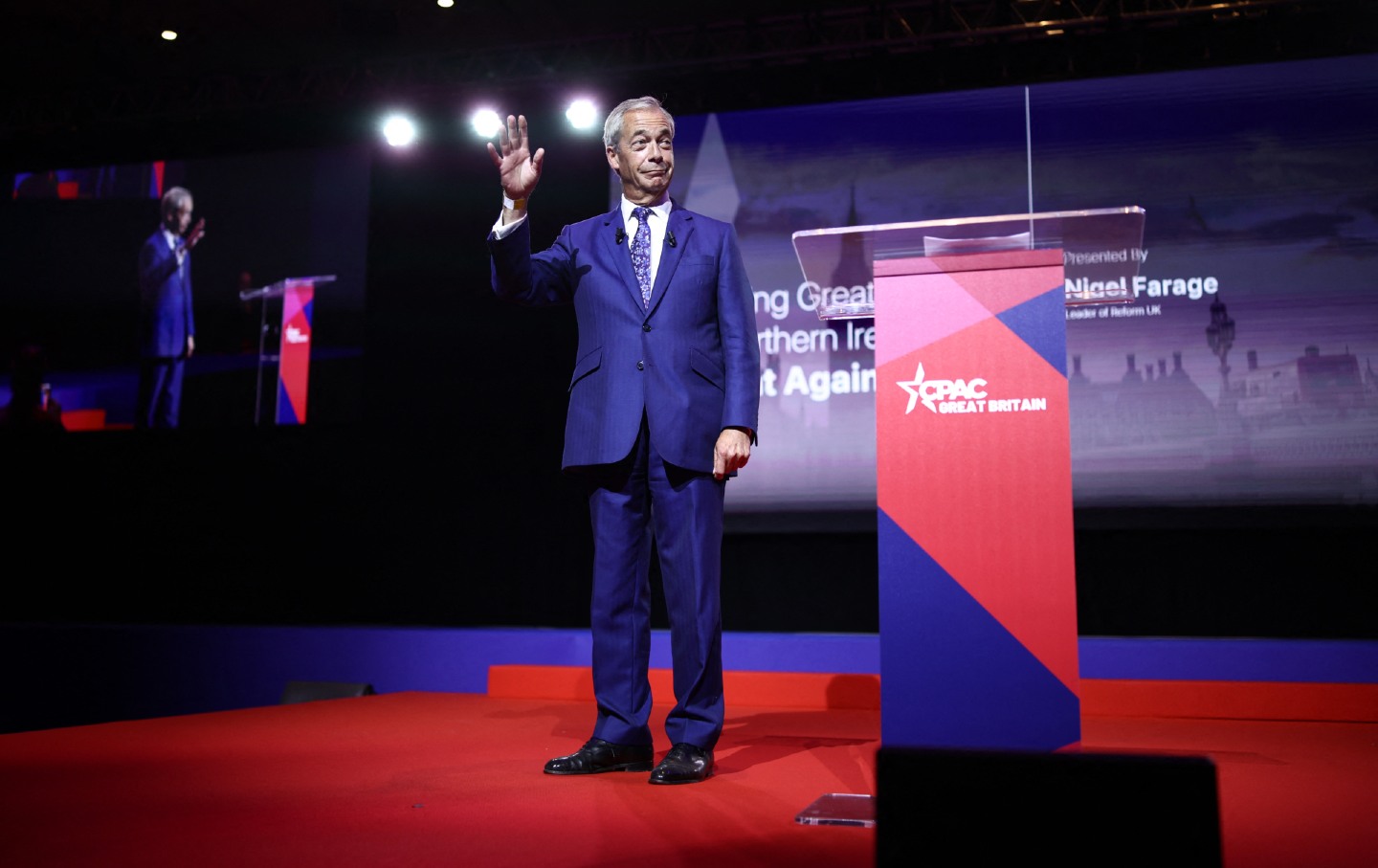
“swipe left below to view more authors”Swipe →Nigel Farage, the leader of Reform UK, the right-wing party competing with the Tories, and CPAC GB’s headline speaker, personifies Trumpism’s failure to win genuine buy-in in Britain. The right-wing press that courted him for a decade has found the meme-king kleptocracy impossible to stomach.
The first crack came with Christopher Harborne, Reform’s biggest donor, a Thailand-based billionaire who gave Farage £5 million personally—a sum Farage failed to enter in the Register of Members’ Financial Interests. Jacob Rees-Mogg, his fellow GB News presenter and a former Conservative minister who has argued for a Reform–Tory merger, tactfully suggested that he give it back. The commentariat held its nerve.
Two months later, it ran out.
George Cottrell, a convicted fraudster who has cowritten a book about grooming politicians into corruption by picking up the bill for nondeclarable expenses such as travel and accommodation—which is precisely what he did with Farage—turned out to be a mainstay of Reform’s political operation.
Here is one thing I learned in 14 years of living among the British: They won’t show you contempt to your face. You’ll see it in what they do.
For all their aversion to earnestness, every English politician secretly wants his Love Actually moment. Hugh Grant’s prime minister, repelled by an American president who has made a pass at a junior No. 10 staffer, does something astonishingly un-British: At the joint press conference, he takes the microphone and says the quiet part out loud.
The relationship has gone bad, he tells the room. The president takes what he wants and ignores “all those things that really matter to, erm… Britain.”
Whatever the financial desperation of individual British right-wingers, the small-c conservatism of the British psyche may prove more resistant to the MAGA grift than progressives have been bracing for since 2016. The next time American money comes knocking, I hope the British do what they do best and tell it to go back where it came from.
More from The Nation
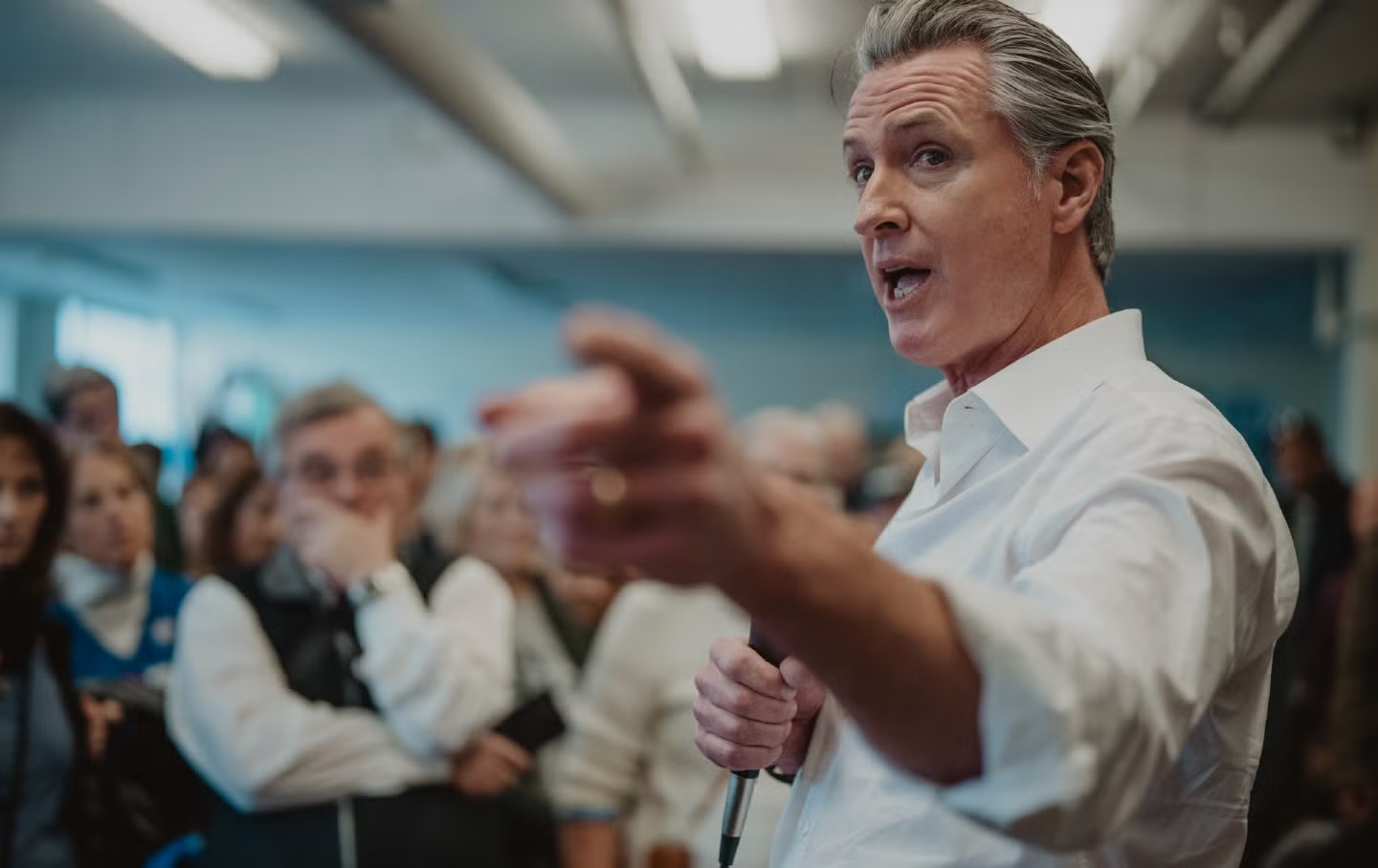
What Are Democrats Prepared to Do if Trump Rigs the Election? What Are Democrats Prepared to Do if Trump Rigs the Election?
In this week’s Elie v. U.S, our justice correspondent challenges Democrats' lack of a plan if Trump steals the midterms. Plus: the most racist, and honest, AI add ever.
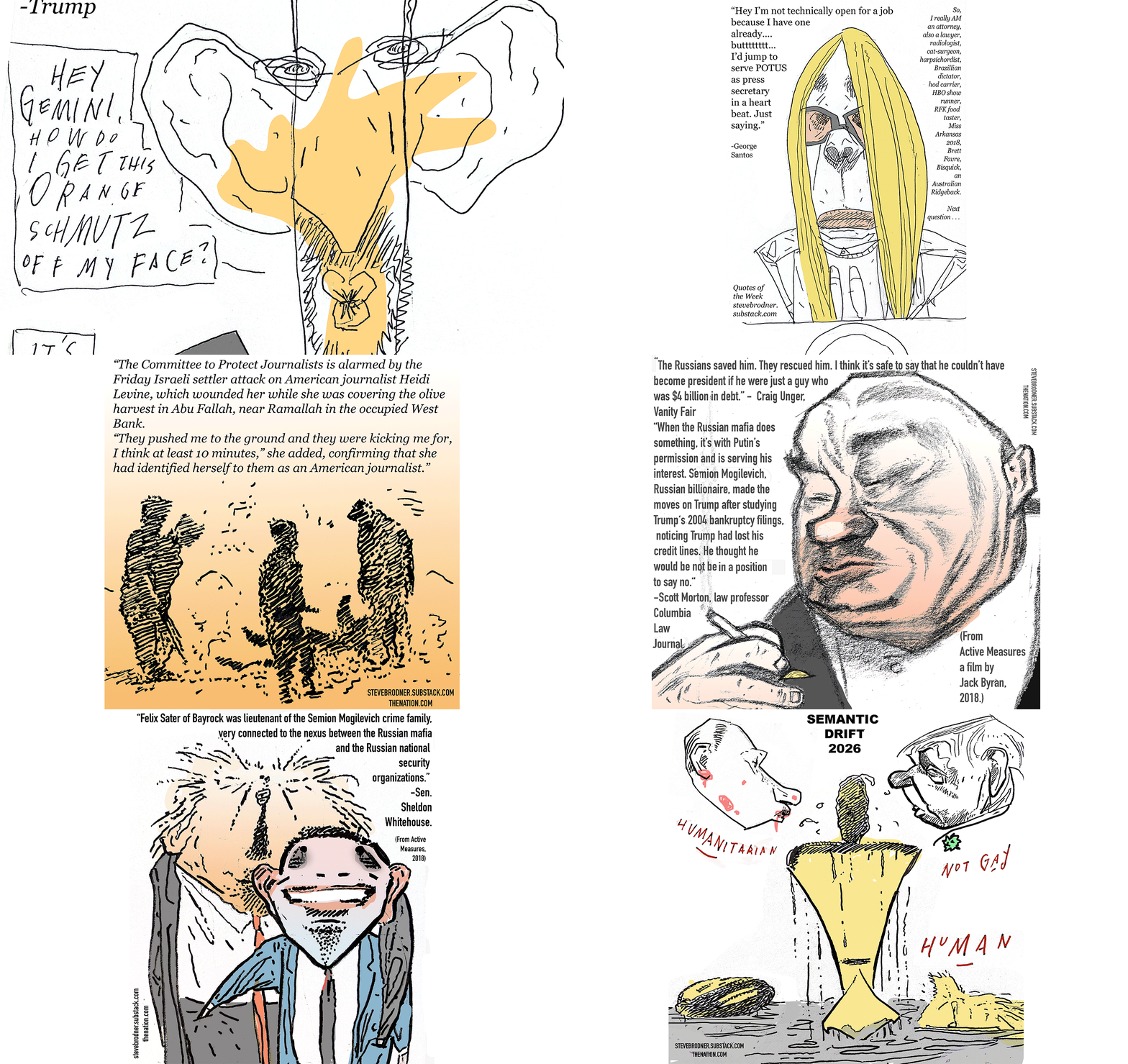
Ramaswamy’s Guide to a Better Vocabulary Ramaswamy’s Guide to a Better Vocabulary
Quotes of the Week.
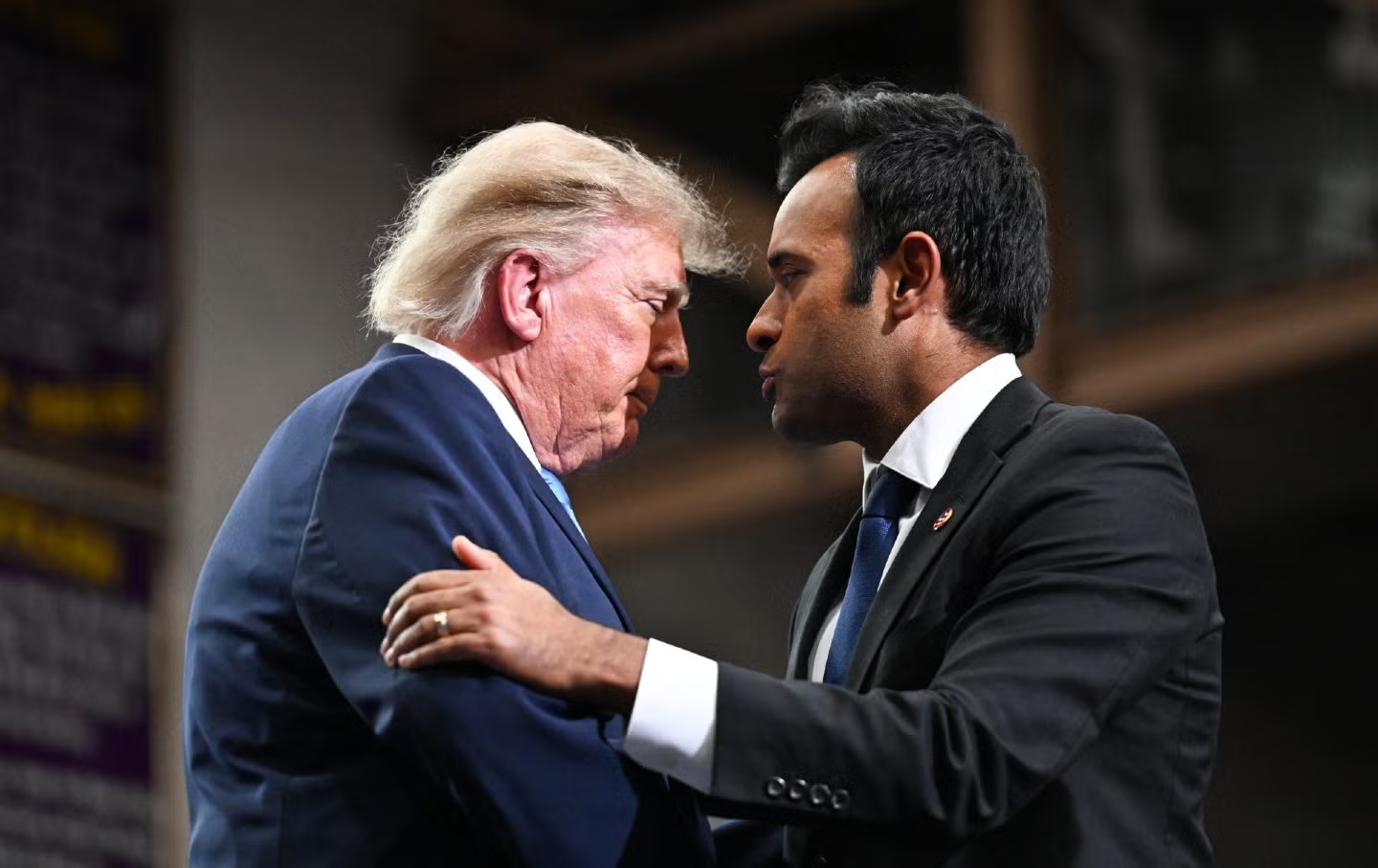
Why Trump Is Embracing Vivek Ramaswamy’s Vile Ad Why Trump Is Embracing Vivek Ramaswamy’s Vile Ad
The president is leaning into the politics of toxic parenting.

The Shadow Knows The Shadow Knows
High-tech weapons, low-tech intelligence.
Tom Hayden’s Legacy and the New American Left Tom Hayden’s Legacy and the New American Left
It’s been 10 years since he passed away.
The Decades-Long Battle Within the Democratic Party Establishment Between the Heirs of Dean Acheson and Franklin Roosevelt The Decades-Long Battle Within the Democratic Party Establishment Between the Heirs of Dean Acheson and Franklin Roosevelt
The calamitous history of America’s wars of choice.

