
The Red-State War Against Blue Cities
St. Louis has a Missouri problem. But like many other Democratic cities in Republican states, it can fight back by expanding.
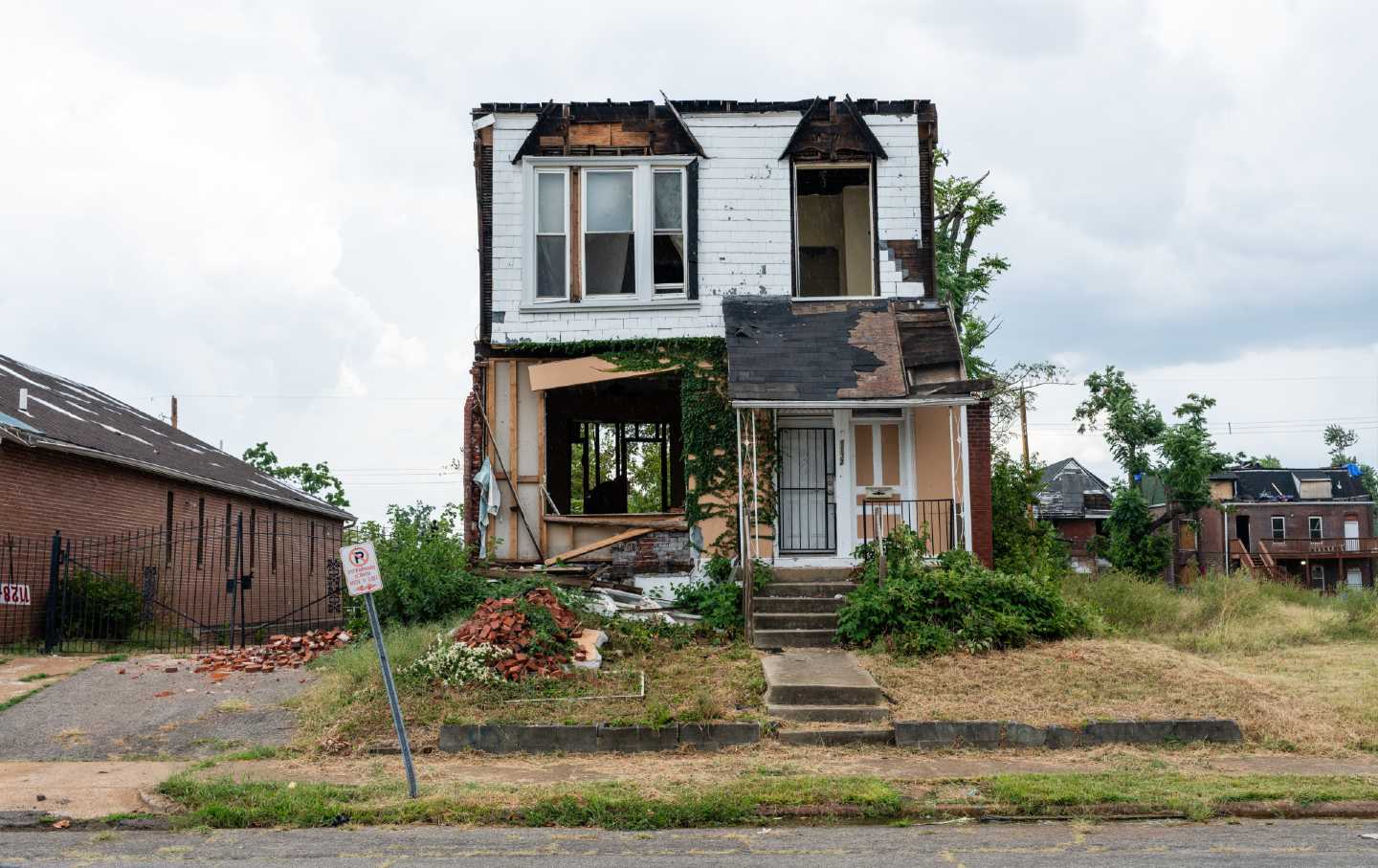
A home damaged by an F3 tornado in May in St. Louis, Missouri.
(Eric Lee / Bloomberg via Getty Images)St. Louis—St. Louis’s May 2025 tornado reached upwards of 150 miles an hour. It’s enough to tear roof lining off sturdy new houses, enough to turn a chimney into a buckshot of brick and mortar, enough to rip century-old trees out of the ground—to grab them by their broccoli heads, push them over, and expose great rooted soil mounds.
The storm killed five St. Louisans, and tree trunks blocked roadways after taking down electrical lines. Parts of the city lost power for a week.
Still, two hours into the disaster, the skies cleared, the sun came out, and I watched an Amazon worker deliver a package. It did not seem as though the US government existed in the destruction zone. Grassroots groups like ACTION sprang into their namesake. The People’s Response Emergency Hub met immediate needs—food, water, tools, gloves, baby wipes. Tarps and ropes were in demand so that roofs could be covered up as more storms came rolling in across the region.
For the rest of June and July, hundreds of Ameren Electric cherry-picker trucks went to work restoring electricity. Most of St. Louis experienced nothing more than a nasty storm, but in the destruction path, chainsaw crews went street by street. Mack trucks hauled brick and stone and insulation and glass. Industrial tractor-trailers towed enormous dual scrap bins, hauling shattered lumber away with green leaves still clinging to the branches.
Teams of roofers blasted pop-country, mariachi, and ranchero as they fixed flashing and shingles. Some of the World’s Fair mansions along Lindell Avenue still have white plastic coverings capping their tops, waiting their turn. These houses face a newly bald portion of Forest Park, where grounds crews have now planted hundreds of saplings to replace the gargantuan red oaks and towering American sycamores. While much of St. Louis and Forest Park is as lush and enchanting as ever, 50 years will need to elapse before the Lindell-Wydown area feels as shaded and leafy as it used to.
The tornado touched these affluent Washington University areas before crossing Delmar Boulevard and hitting a more fragile, impoverished part of the city, which took most of the damage.
Across the Delmar Divide, the tornado battered an estimated 10,000 properties. There remains so much work to be done rebuilding North St. Louis, but the usual story is playing out—the rich rebuild while the poor are failed at every level: federal, state, and local.
The vast majority of Missourians live in cities. Yet urban residents struggle to effect change in state and federal politics because of a set of changeable lines drawn on a map. There are reasons the government fails blue cities in red states again and again. If cities like St. Louis are to escape the death spiral inflicted upon them, we will have to build political power. The easiest way is to expand cities’ political jurisdictions—to become big, unignorable blobs.
In St. Louis, as The Wall Street Journal pointed out, the Federal Emergency Management Agency (FEMA) has been antagonistic to recovery efforts. Neither the president nor this last year’s Homeland Security director, Kristi Noem, believe that FEMA should exist. Some Senate Democrats believe Noem’s pausing and delaying FEMA payments violated federal law, but the effect is that Missouri has been added to a growing list—alongside North Carolina after Hurricane Helene—of states cut loose, left to rebuild on their own. Noem cut FEMA’s workforce by thousands to achieve this result, and if St. Louis is a test case for contemporary climate disasters, the verdict is in: You’re on your own.
The mess comes from money and aid strangled in red tape. FEMA created complicated, under-advertised application processes, and still received and approved 9,400 applications. The city got 4,200 applications for tornado damage property assistance, but review takes months and months. And meanwhile residents live in their cars or in tents pitched on their front lawns, waiting in the shadow of their century-old red brick home with a tarped-up roof.
The architecture of North St. Louis is historically priceless, but thousands of buildings have spent the last year rained on, baked in the sun, snowed on, frozen, and thawed without structural repair. Time and weather exacerbate the damage; mold and mildew make buildings unlivable. Roof rot and water damage make them unrepairable.
But the tornado was only the acceleration of a century-long economic disaster unfolding in North St. Louis, in which vacant properties have been left to decay, becoming eyesores and public hazards, dragging the local community down. North Side community organizations call for repair and rejuvenation, but part of the solution is to knock down 1,000 structures, many vacant and condemned. In March 2026, FEMA announced it will not pay for that. As St. Louis Chief Recovery Officer Julian Nicks reasoned, that means the money will have to come from state or local coffers.
St. Louis City Mayor Cara Spencer admits that things have moved too slowly, and that money has not reached storm victims. As St. Louis Public Radio notes, local programs like rental assistance, which help the unhoused or those living in damaged structures, deny claims or go months without accepting applications. Or, they award money at such a slow pace that residents said they were forced to turn elsewhere for aid or give up on their homes. Community groups have continued to hold townhall meetings and organize to pressure politicians, but without the national attention of the initial disaster, a year later, many residents have not received a cent.
While some Missouri Republicans claim they are upset about FEMA’s dysfunction, they are also using the tornado recovery to lash St. Louis. This year the GOP plans to bankrupt the city. This is not an exaggeration—in January, the Missouri legislature turned $100 million in relief into a weapon to compel St. Louis to enact the budget policy of eliminating the earnings tax, a prime source of city revenue.
It’s also not an exaggeration to say that the Missouri State Legislature spent last year moving forward with the re-invasion of the City of St. Louis. The Republican-controlled state spends much of its legislative time trying to overturn voter referendums. State-wide, Missourians approve abortion, vote in favor of increasing the minimum wage, and reject right-to-work legislation. Meanwhile, Missouri lawmakers go to work to criminalize abortion, lower the minimum wage, and get right-to-work back on the ballot.
In March 2025, three months before the tornado, Governor Mike Kehoe rejected a 2012 voter referendum that granted local control of the St. Louis Metropolitan Police Department (STLPD) to the City of St. Louis. Instead, STLPD is now overseen by a commission empaneled by the Republican governor, who formerly worked as head of a Ford car dealership. On that panel, Kehoe appointed a fellow car dealership owner, Don Brown.
There are two cities in the entire United States whose police force is controlled by the governor instead of the city’s mayor. Both of those cities are in Missouri, with St. Louis re-joining Kansas City in a form of state-occupation.
This arrangement calls back to the Civil War, when Missouri’s Confederate leadership wanted to gift the City of St. Louis’s armory to Jefferson Davis’s slaveowner militia. Missouri’s Confederate legislature seized control of the St. Louis Police Department so that an assemblage of proto-Confederates could capture the largest stockade of weaponry west of the Mississippi. But St. Louisans foiled the plan of Governor Cliborne Jackson, who would go on to join the Confederacy. Lincoln loyalists and St. Louis’s socialist-abolitionist German population successfully captured the pro-slavery outpost at Camp Jackson, keeping the armory out of the hands of Missouri’s pro-slavery hinterland, delivering it to pro-Union forces mobilizing in Illinois. Saving St. Louis for the Union helped keep the greater Mississippian waterways under Lincoln’s control.
Today, while St. Louisans camp outside their broken homes, Governor Kehoe is using his control over St. Louis’ Police Department (STLPD) to break the city’s budget. One of the first acts of Mayor Spencer’s tenure was an olive branch—she dropped a lawsuit against the governor’s takeover of STLPD. Kehoe and the Missouri Republicans have rewarded her by pushing the St. Louis City to spend $48 million more than what the city allocated and then escalating that figure to $125 million.
In response, Mayor Spencer announced possible layoffs for St. Louis City employees in the most-needed, underfunded, chronically understaffed departments—water, forestry, parks, road maintenance, etc.
Kehoe and his Republican colleagues say St. Louis is plagued by crime, even when crime has dropped year on year consistently, decreasing by 16 percent in 2025, mirroring national trends.
Even if crime were St. Louis’s biggest problem, the city should still control its police force. Most of Missouri’s wealth is generated in its cities, in St. Louis and Kansas City, which are Missouri’s primary economic engines. In 2023, 45 percent of the state’s GDP—$157 billion—comes from St. Louis alone. Another $80 billion was produced in Kansas City. Add in Springfield’s $20.3 billion, and cities generate 80 percent of the state’s wealth.
By strictly capitalist measures, the system should be hard at work ensuring that St. Louis and Kansas City have no potholes, run on thriving transit systems, and enjoy lead-free water. There are roughly 2.8 million people who live in the Greater St. Louis area, and there are 2.25 million who live in the Kansas City metropolitan area. Both entities should have a loud say in state and federal politics, but both are automatically knee-capped—divided by Kansas and Illinois state lines.
Still, Missouri used to be a bellwether; a purple state. A big part of Kehoe’s agenda is devoted to further shattering Kansas City at the direct request of President Donald Trump, creating an absurd map in which three different congressional districts compose the west, north, and south parts of Kansas City, and then balloon out into a shard of Missouri hinterland.
This new map is contested, but it’s a multifront war. The other half of Kehoe’s agenda revolves around eliminating Missouri’s income tax. Kehoe and the Republicans want to do to Missouri what Sam Brownback did to Kansas: Destroy what remains of the public systems by bankrupting the state.
The Kansas experiment failed wildly, but billionaire cash is flowing into Missouri Republican coffers, with libertarian “index fund pioneer” Rex Sinquefield being one of the biggest. Slashing the income tax is an effort to attract rich people to the state, an explicit strategy Sinquefield had one of his toadies write about in a book titled How Money Walks.
This is part of a global trend documented in Quinn Slobodian’s Crack-Up Capitalism, with the philosophy at work dictating that no tax zones and the founding of libertarian Bantustans will unlock growth. It’s not a race to the bottom, it’s a race to become Hong Kong or Lichtenstein. The Missouri state representative who designed the bill removing local control of STLPD has also put forward a bill that creates an income-tax-free “innovation zone” in downtown St. Louis.
Destroy the public sector to make your state—and its cities—attractive locations for capital flight. This is the game across Colorado, Missouri, Tennessee, and Georgia. Ultimately it stems from the fact that our economy is K-shaped, which means it is not designed for the middle or lower class; it is designed to service the wealthy, who account for most of our collective spending capacity. The result is that middle states battle in fierce jousting contests to try and attract the attention of a vanishingly small minority of rich people who might take their New York or California wealth and park it in the hinterland.
This is a competition that Missouri will always lose. I say this with pure love in my heart: Affluent people do not want to live in St. Louis, and no amount of tax-slashing is going to make our state competitive with the Cayman Islands or Dubai.
There is a bigger problem unfolding in St. Louis beyond tornados and the state legislature: Children are disappearing from the city.
St. Louis County is poised to enter a “demographic winter,” joining St. Louis City in a compounding pattern of population decline. Fewer kids are born every year while the elderly pass on, shrinking the region. Ness Sandoval, a sociology professor and demographer at St. Louis University, told St. Louis Public Radio that we’re running out of time. “We’re going to become like Pittsburgh, and Pittsburgh in a permanent demographic winter.”
A lot of St. Louis schools have become abandoned asset fields. The buildings where two generations of O’Sheas were taught to read and write—my father, his six siblings, myself, and my sister—St. Roch Elementary—shut its doors for good in 2024. One-third of the 80 Catholic grade schools on the chopping block, and the public system is much worse off, with St. Louis Public Schools (SLPS) poised to spend $6 million demolishing six of its gargantuan, historic buildings.
As of 2024, there are 36 inactive SLPS properties. These castle-like public buildings were once the envy of the educated world. Now every year, they deteriorate further, as does the promise of American education.
On this front, as Sandoval points out, Trump’s war on immigrants has been catastrophic for St. Louis. As opposed to sending aid, the Republican president uses Homeland Security to invade and terrorize blue cities from Washington, DC, to Memphis, to Chicago. From the city’s founding, St. Louis history is nothing but immigration—Native American, French, Spanish, Irish, Italian, African American, Chinese, Haitian, Latin American in no particular order. Hinduism, Christianity, Islam, Judaism, Buddhism—we got it all. The story of St. Louis’s Bosnian population is well-told in the documentary A New Home, and speaks to the truth: Missouri Republicans hate the state’s cities because they are cosmopolitan, and cosmopolitanism produces more interesting and varied ways of being (both as an individual and as part of a community). What they want, and prefer, is evangelical Christian suburbs.
Two of St. Louis’s core economic pillars are Washington University and Barnes-Jewish Hospital. Both are international institutions in scope and lose big when the political atmosphere becomes violent toward anyone with melanin and a green card. Despite the Wash U chancellor’s attempt at Vichy acquiescence, the Department of Justice has been hard at work forcing the school to end diversity initiatives or else lose federal funding for medical research.
This extortion is being done to a university that wishes to compete against Yale and Cambridge for the children of world elites. It cannot do that that if Chinese students feel threatened with deportation and Indian scientists opt for European educations out of fear of an ICE raid on the lab.
The war on the Other—the war against migration and citizenship—is a failure of both parties. It yields a meaner, thinner, more disgusting version of the United States, and again, by strictly capitalist measures, it breeds stagnation.
St. Louis is a city where people have always come from elsewhere to become themselves. The city is host to a panoply of religious and ethnic communities and has always been an oasis for the LGBTQ+ of Arkansas, Kansas, Kentucky, Iowa, and Missouri fleeing the strictures of small-town life.
The best things about St. Louis are working class in nature—there is plentiful red brick housing, with many architectural marvels boarded up, waiting for refurbishment. On top of the pride of becoming a St. Louis underdog, the city is leafy, and closer to nature because it is underpopulated compared to places like Chicago. Plus there are free community amenities in the zoo, the history museum, and the world-famous art museum. Food from all over thrives here, as does the creative community, who manage to make the city beautiful despite official neglect.
St. Louis needs people to come live here. Make your home next to ours, join in the power of the community.
This won’t happen in the current configuration of state and federal power. Local power in Missouri’s cities need to maximize influence—the 80 percent of the state GDP needs to translate into an attitude change in Jefferson City, and one step toward that power is for St. Louis to become itself—a blob of concentrated residential, commercial, and industrial capacity.
Since before Jonathan Franzen centered his first novel, The Twenty-Seventh City (1988), on a plot to merge St. Louis’s city and county, the 1876 divide has been widely known as a undemocratic flaw in the region. The county is balkanized into hundreds of little fiefdoms, and St. Louis City sports a “weak mayor” system, shared with 14 aldermen. Some suggest moving to a borough system like New York, but anyway you cut it, a more unified local government would be better able to fight Governor Kehoe, with money saved cutting redundancy across police, fire, waste, and so on.
Popular
“swipe left below to view more authors”Swipe →The St. Louis blob would mean the city and county are harder to play off one another for contracts and corporate deals, and the blob would be better able to exert pressure inside and out. The merger could take back the police department, and the blob power could raise taxes on the wealth that resides here. It could threaten to absorb more territory, like St. Charles or Wentzville, and pressure the wealthiest institutions—like Wash U—into paying more into our cash-strapped public system through initiatives like a PILOT program, in which private universities like Brown and Yale annually contribute millions to their host community’s public school system in lieu of property taxes.
The problem of a city-county merger is that it has more than a few bad faith proponents. In 2009, libertarian billionaire Sinquefield attempted to engineer a merger through “Better Together,” but it was a Trojan Horse. Better Together’s plan was designed to torpedo the tax base—again, like in Brownback’s Kansas. St. Louis City and County would run aground, and a debt servicing board would force privatization.
Building an effective blob must begin by learning from the past, figuring out a way to leverage St. Louis’s strengths against statewide Republican control. Conservative money rules Missouri politics, and the process will be complicated. There is great risk that a merger will only go half way or further nullify St. Louis power in the region, but the blob is gaining momentum, with St. Louis County’s Executive Director Sam Page coming out in favor.
At this point, there’s not much to lose by trying, and in the best case, the city could become a unified metropolis with a singular identity, moving toward a vision of what an American city can be; an urban entity designed for regular people—luxury public schools, pristine public transit, opulent public goods. A community of neighbors who fight for each other, reject climate doom and authoritarianism, and draw pride from their home as a democratic bastion of working-class power, built one brick at a time.
More from The Nation
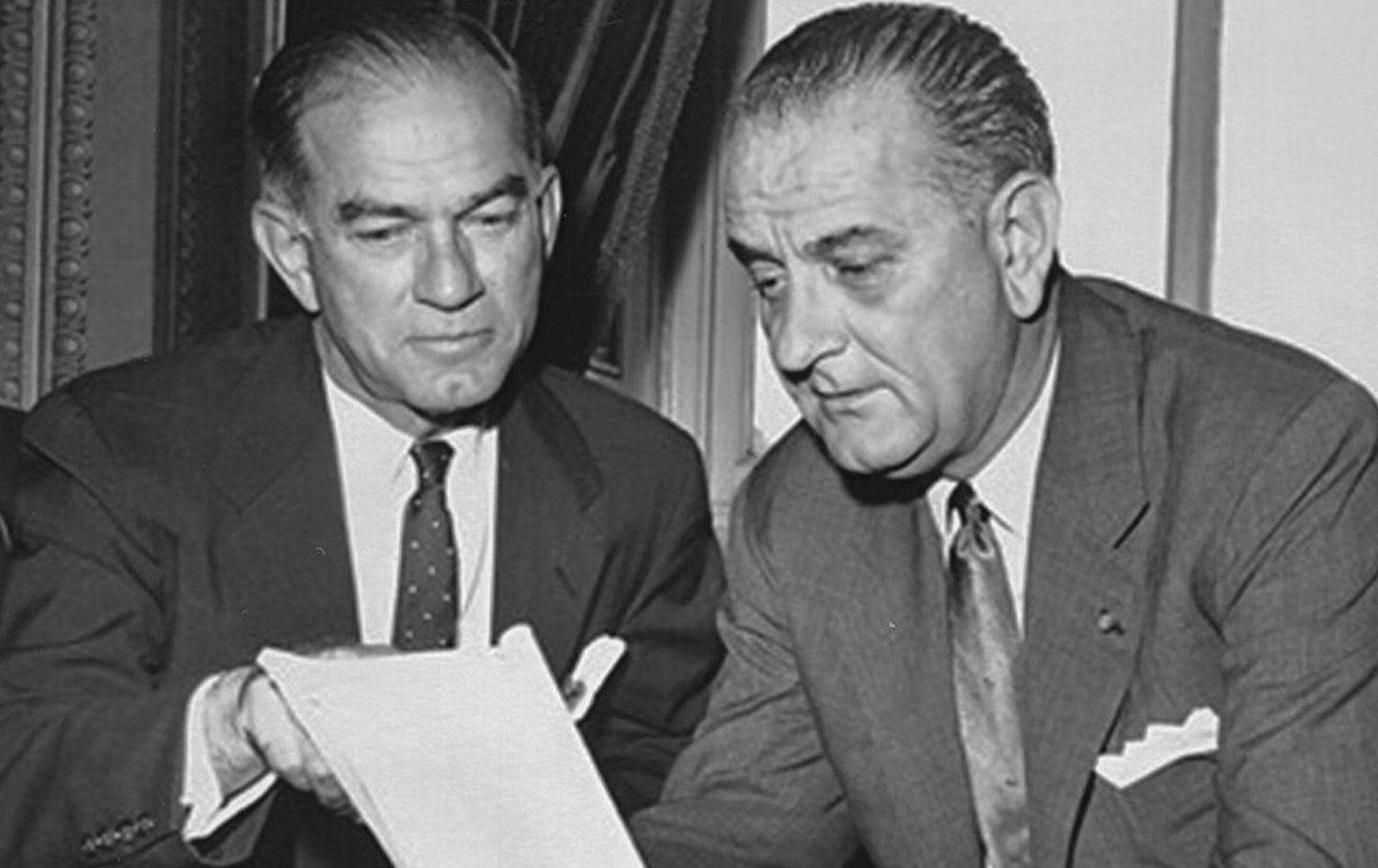
Senator J. William Fulbright Is Remembered Today Primarily for the Scholarship Program That Bears His Name Senator J. William Fulbright Is Remembered Today Primarily for the Scholarship Program That Bears His Name
But a broader look at Fulbright’s legacy reveals him as one of the most prescient critics of militarism and the “imperial presidency”—lessons that apply more than ever today.
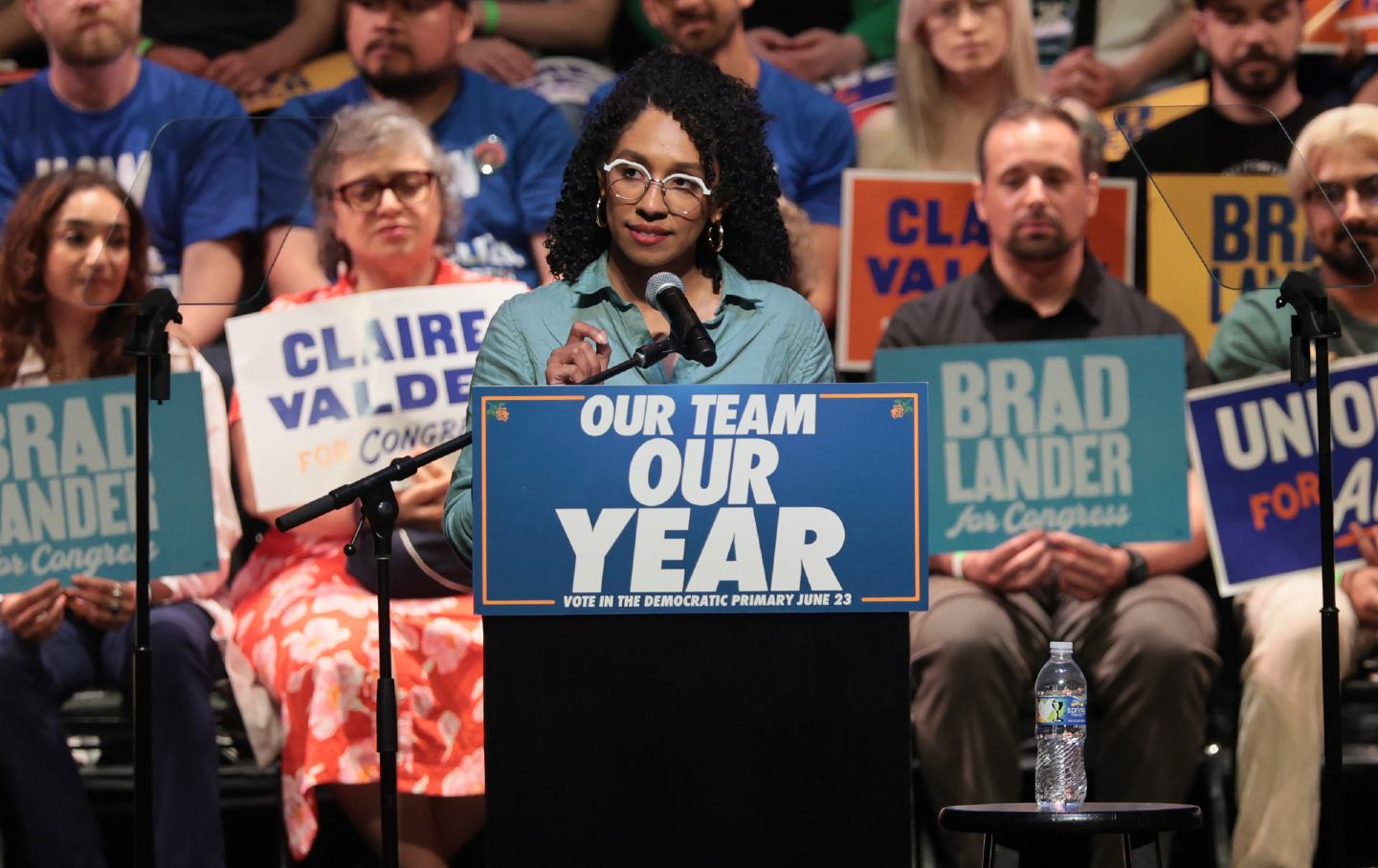
Establishment Democrats’ Response to DSA’s Electoral Wins Should Be of Concern to Anyone Invested in the Future of Black Politics Establishment Democrats’ Response to DSA’s Electoral Wins Should Be of Concern to Anyone Invested in the Future of Black Politics
Whatever happened to “big tent” politics?
Ben Wikler Has a Plan to Supercharge American Democracy Ben Wikler Has a Plan to Supercharge American Democracy
Democrats can save the country from an authoritarian takeover, but to do so they must focus on systemic reforms, the author argues in this adaptation from his new book.
Trump’s Caribbean Killing Spree Is a Feckless, Criminal Failure Trump’s Caribbean Killing Spree Is a Feckless, Criminal Failure
Blowing up innocent fishermen hasn’t curbed the drug trade.

