
Remembering Fred Harris
1930–2024
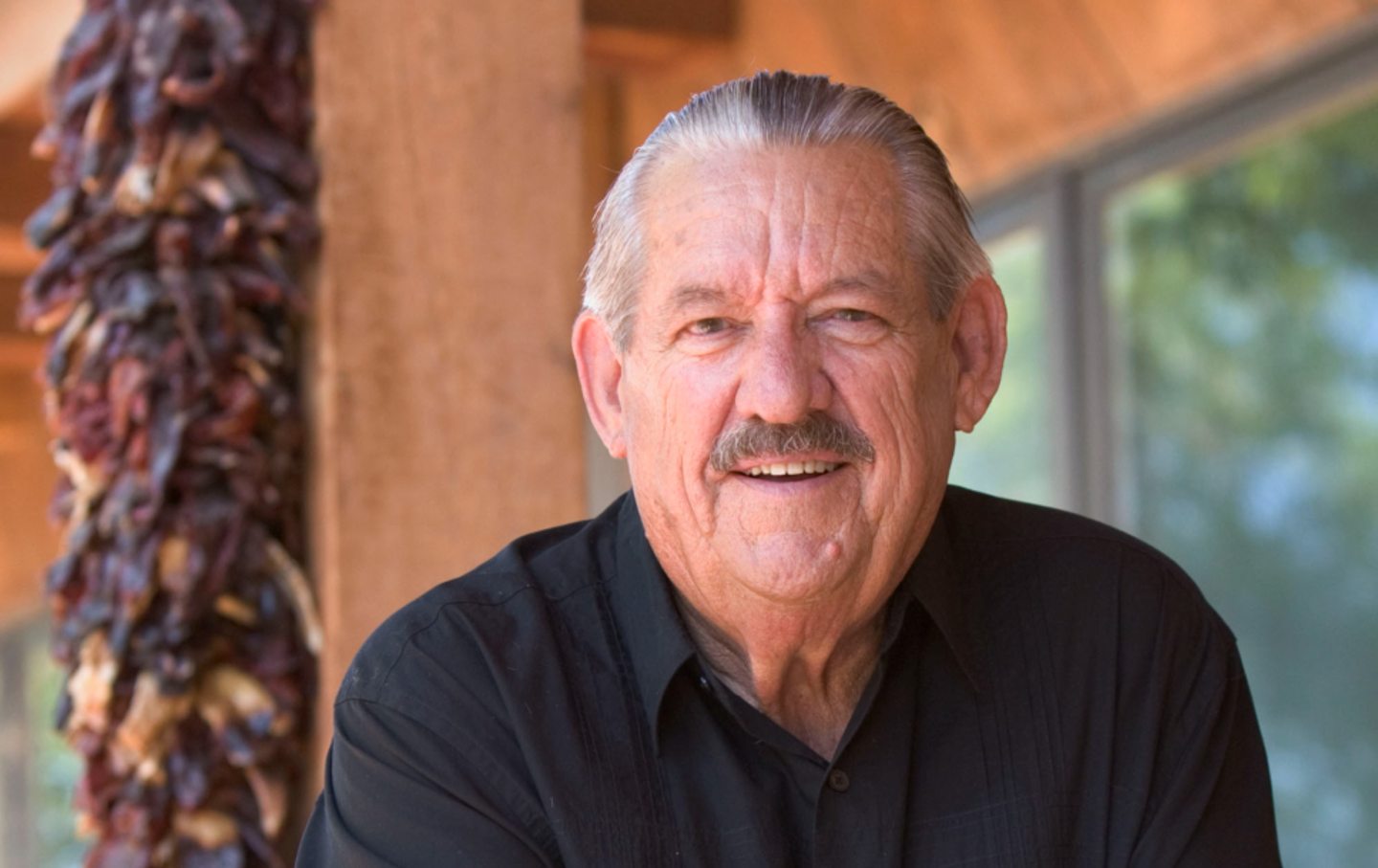
In Washington and most state capitals, “political principle” has become an oxymoron, with plain political honesty largely trumped by crude partisanship, self-promotion, and conspiratorial nincompoopism.
Does it have to be this way?
No. I knew and worked with a US senator who routinely used his political prominence to achieve a little more economic fairness and social justice in our country: Fred Harris, who died last month at 94.
The beauty of Fred was that he was real—a down-to-earth fellow who rose from red-dirt rural Oklahoma to the national political heights without being consumed by his own ego. Born into an impoverished family of tenant farmers and day laborers, he remained fully immersed in the anti-establishment attitudes, egalitarian values, and underdog spirit of hardscrabble prairie populism.
Harris lost as many fights as he won, but throughout his long life, he didn’t hesitate to take on the Powers That Be on behalf of the Powers That Ought to Be, embracing the wisdom of an old cowboy maxim: “Speak the truth, but ride a fast horse.”
Fred was a model and mentor for my own populist pursuits, and we teamed up as coconspirators on a broad range of efforts—from nearly defeating Earl Butz’s appointment as Nixon’s secretary of “agribusiness” to creating the American Folklife Foundation. Especially wild was his 1976 presidential campaign, with me as national coordinator.
Fred threw down the populist gauntlet at the start of his maverick challenge to the moneyed elites controlling both parties. “The issue is privilege,” he declared. “Too few people have all the money and power.” Adding pointedly, “The widespread diffusion of economic and political power ought to be the express goal—the stated goal—of government.”
He carried that blunt message directly to the people all across America in our low-dollar, grassroots run. I recall an Omaha gathering, for example, where an attendee grumped that government spending was so out of control the city was paying garbage men $5 an hour. Fred interrupted him right there, curtly asking, “Is that too much?” The attendee was shocked to be confronted. “How much would it take you to do that job?” Fred asked, flashing a bit of genuine anger. He lost that guy’s vote but won big points for no-bullshit honesty.
One more point. When most national political sparklies lose a race, they never leave Washington. Instead, they become high-paid lobbyists or find themselves ensconced in corporate-funded think tanks. But Fred simply packed up and left town, decamping for New Mexico—not to retire, but to work. For the next 50 years, he toiled as a “citizen politician.”
Fred nurtured student activists as a popular professor at the University of New Mexico, served as state Democratic chair to help reenergize the party, wrote over 20 books, held frequent fundraisers for progressive candidates, and created an internship program in Washington to help low-income Native American students find opportunities in national government. And that was just the start. He was also a renowned raconteur who loved good stories and laughter and was a devoted friend to many, including me.
One final story from Fred’s boyhood speaks to all of us fighting for fairness and justice today, often against great odds. Being raised on tenant farms, he noted, is hardly a bucolic experience. Even at 5 or 6 years old, he was expected to help lift the family’s tedious workload.
Before daylight, his father would roust him and a couple of cousins out of bed to put two draft horses in position to be hitched to plows or other farm equipment. The crew needed to be in the field at the crack of dawn—but first, Fred’s God-fearing mother insisted they all gather in the kitchen for prayer. His father impatiently tolerated this delay. The instant Momma finally said “Amen,” Dad barked, “Hitch ’em up, boys.”
Fred told me he was 13 before he realized that when he was in church and the preacher said “Amen,” he wasn’t supposed to punctuate the prayer by saying aloud, “Hitch ’em up, boys.”
But I’m sure Fred would tell us progressives that we should urgently hitch up our populist principles these days, putting them to work in America’s political fields. In my view, Harris was not some proverbial “great man,” but something less pretentious and more useful: a decent human being.
Popular
“swipe left below to view more authors”Swipe →Support independent journalism that does not fall in line
Even before February 28, the reasons for Donald Trump’s imploding approval rating were abundantly clear: untrammeled corruption and personal enrichment to the tune of billions of dollars during an affordability crisis, a foreign policy guided only by his own derelict sense of morality, and the deployment of a murderous campaign of occupation, detention, and deportation on American streets.
Now an undeclared, unauthorized, unpopular, and unconstitutional war of aggression against Iran has spread like wildfire through the region and into Europe. A new “forever war”—with an ever-increasing likelihood of American troops on the ground—may very well be upon us.
As we’ve seen over and over, this administration uses lies, misdirection, and attempts to flood the zone to justify its abuses of power at home and abroad. Just as Trump, Marco Rubio, and Pete Hegseth offer erratic and contradictory rationales for the attacks on Iran, the administration is also spreading the lie that the upcoming midterm elections are under threat from noncitizens on voter rolls. When these lies go unchecked, they become the basis for further authoritarian encroachment and war.
In these dark times, independent journalism is uniquely able to uncover the falsehoods that threaten our republic—and civilians around the world—and shine a bright light on the truth.
The Nation’s experienced team of writers, editors, and fact-checkers understands the scale of what we’re up against and the urgency with which we have to act. That’s why we’re publishing critical reporting and analysis of the war on Iran, ICE violence at home, new forms of voter suppression emerging in the courts, and much more.
But this journalism is possible only with your support.
This March, The Nation needs to raise $50,000 to ensure that we have the resources for reporting and analysis that sets the record straight and empowers people of conscience to organize. Will you donate today?
More from The Nation

An Argument Against Voting for the “Electable” Guy An Argument Against Voting for the “Electable” Guy
In this week’s Elie v. US, The Nation’s justice correspondent shares his thoughts on the Texas primaries. Plus, a terrible Supreme Court decision and a bad play by Major League Ba...

A Conflict Without Reason Has Become a Dangerous Holy War A Conflict Without Reason Has Become a Dangerous Holy War
Lacking a clear rationale for the attack on Iran, Trumpists are increasingly talking like crusaders.
RFK Jr.: America’s Snake Oil Salesman RFK Jr.: America’s Snake Oil Salesman
Raw truth: MAHA is NUTS.

The Unfathomable Toll of the Syrian Civil War The Unfathomable Toll of the Syrian Civil War
How to make sense of the 13-year conflict?
Celebrate Kristi Noem’s Firing. But Keep Protesting ICE. Celebrate Kristi Noem’s Firing. But Keep Protesting ICE.
Finally, someone in the administration is paying for their cruelty and incompetence.

