
The Nation Endorses Kamala Harris
“The Nation” Endorses Kamala Harris
In her own right, and because we oppose Donald Trump’s reactionary agenda.
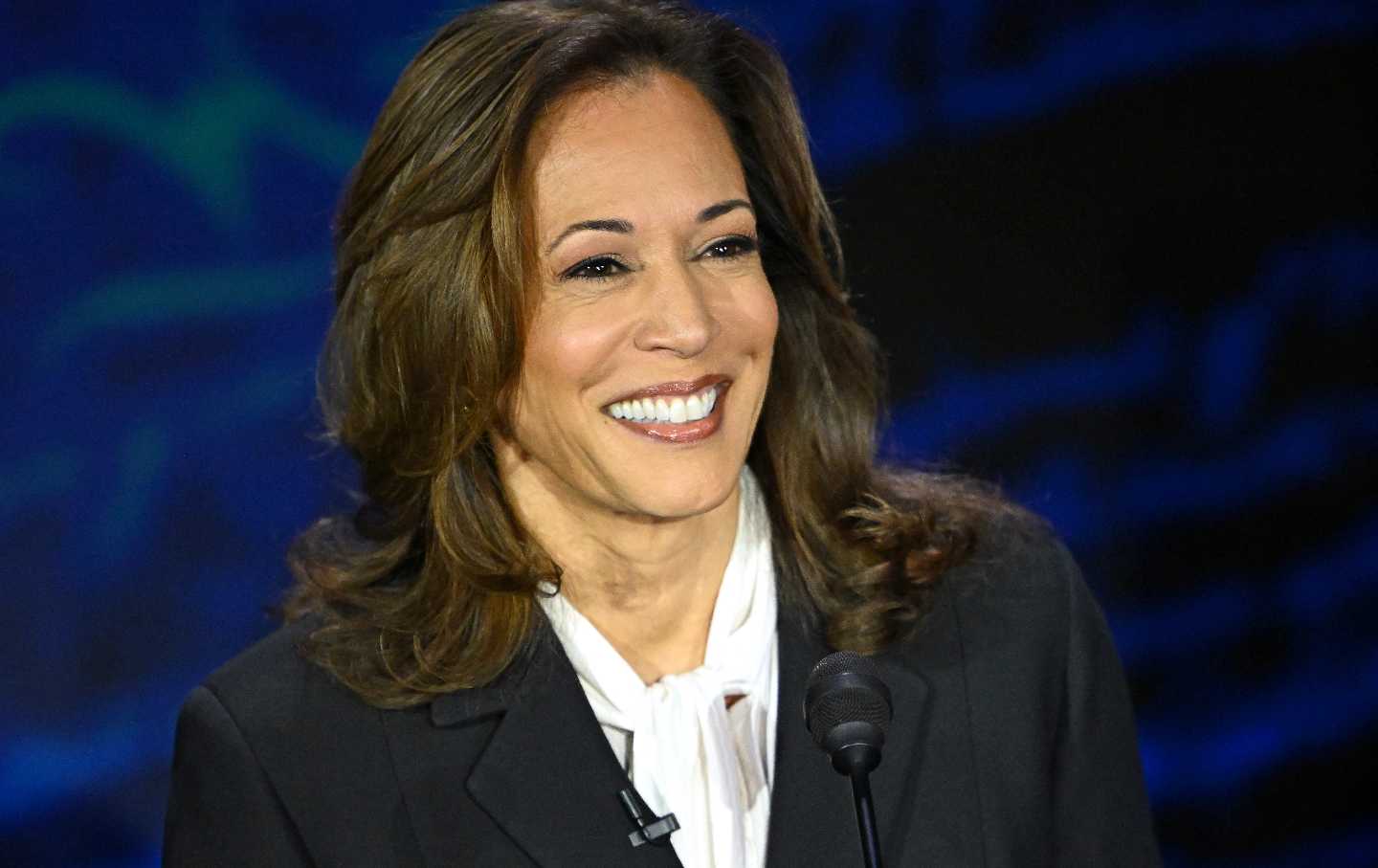
The great strength of Kamala Harris’s unlikely but existentially important campaign for the presidency is her powerful grasp of what is at stake in this election. “In many ways, Donald Trump is an unserious man,” Harris declared in her acceptance speech at the Democratic National Convention. But as she reminded the delegates, “the consequences of putting Donald Trump back in the White House are extremely serious.”
Warning of the danger to democracy posed by a reelected “Donald Trump with no guardrails”—especially after the Supreme Court’s recent 6–3 decision granting him “presumptive immunity” from criminal prosecution for his official acts—Harris urged Americans to “consider what he intends to do if we give him power again. Consider his explicit intent to set free violent extremists who assaulted those law enforcement officers at the Capitol. His explicit intent to jail journalists, political opponents, and anyone he sees as the enemy. His explicit intent to deploy our active-duty military against our own citizens.”
We believe those threats are real. Of course we endorse Harris over Trump. But we also endorse Harris in her own right, as an experienced and capable leader with a vision for America’s future that—while not as progressive as we might prefer, particularly when it comes to foreign policy—represents a clear advance on the Democratic presidential nominees of the past half-century. In her selection of a progressive governor, Minnesota’s Tim Walz, Harris also demonstrates an awareness of the need not merely to build on the many successes of the Biden-Harris administration but to go farther in the pursuit of economic, social, and racial justice—and the preservation of our planet.
Harris has long been an eloquent and tireless fighter for reproductive freedom. She spent the months following the Supreme Court’s decision in Dobbs v. Jackson Women’s Health Organization highlighting the connections between that assault and the other Republican efforts to roll back our rights. Now, in Walz, she has a spirited partner to assist her in combating Trump’s increasingly deranged anti-abortion rhetoric and the more quietly reactionary—but equally devastating—proposals outlined in Project 2025.
Harris proposes to make the child tax credit permanent, pass the PRO Act (making it easier for labor unions to organize), build 3 million units of affordable housing, expand Social Security, and tackle price gouging and healthcare costs—all significant extensions of the Biden administration’s notably progressive economic achievements. And although some of her wealthy backers haven’t been shy in pressing her to fire Federal Trade Commission chair Lina Khan, Harris has, so far at least, stood firm behind Khan and the anti-monopoly agenda she has pursued at the FTC. Harris may have backed away from her 2019 embrace of Medicare for All and a ban on fracking, but Bernie Sanders, describing such shifts as “pragmatic,” still has no difficulty in recognizing Harris as worthy of our votes and our support. Neither do we.
On foreign policy, however, the positive case is harder to make. Harris’s campaign refused to allow even one Palestinian elected official to address the Democratic convention. And she has failed so far to offer anything more substantive to the millions of Americans—including the 650,000-plus Democrats who, in order to take a stand on this issue, voted “Uncommitted” during the primaries—desperate for an end to America’s unconditional support for Israel’s brutal war on Gaza. Her change in tone, and her statements taking note of the horrendous death toll among Palestinian civilians, while welcome, might also be little more than the standard “pro-Israeli, pro-Palestinian, but subtly more pro-Israeli…say-nothing bullshit” lampooned so effectively on Veep. (Though at least Secretary of State Antony Blinken will be gone.)
On the war in Ukraine, Harris’s position is hawkish. On relations with Russia and China, she has done nothing to indicate any departure from the Biden administration’s belligerent rhetoric—or any recognition of the toll the Pentagon’s bloated budgets would take on her domestic agenda. Indeed, in her acceptance speech, she promised to “ensure America always has the strongest, most lethal fighting force in the world”—a recipe for blank checks from now till doomsday. Still, anyone promoting Trump as a peace candidate needs to check their eyesight. Or their privilege.
Donald Trump has been a cancer on our public life since his days posing as a successful casino operator. His pervasive influence not just on our politics but on our manners, conversations, imaginations, and media developed a momentum that, until Biden withdrew, seemed likely to carry this habitual liar and adjudicated rapist back to the pinnacle of power. Preventing such a calamity ought to be reason enough to turn out to vote—particularly since, unlike in 2016, there is little doubt about how Trump would use such power.
Leftists contemplating voting for a third party in protest of Harris’s shortcomings—or out of discontent with our two-party system—need to ask themselves why their particular cause, or their personal discomfort, is more important than making sure that Trump, JD Vance, and their claque of congressional collaborators are defeated decisively, not only in the Electoral College but in the popular vote as well. Especially since we can already see Trump preparing another attack on the legitimacy of our elections.
Harris deserves credit for moving nearly $25 million from her campaign to downballot races. The vice president knows she can’t afford to win narrowly in the battleground states; for her and Walz to govern effectively, to break the fever of Trumpism, they also need to lift Democrats in the races that will decide control of the House and Senate. Because a Democratic administration that lacks the means, or the will, to break the current congressional gridlock—or the death grip of a reactionary Supreme Court—risks provoking even greater cynicism and despair.
This magazine was founded by abolitionists who believed that the victories won on the battlefields of the Civil War, and paid for in blood at Antietam and Gettysburg and Appomattox, needed to be secured in Washington and in the states. Both visionary radicals and deeply practical politicians, they knew what each generation of Americans is apparently fated to learn for itself: that the ruling class of the Confederacy, and the racist ideology whose comforts—North and South—it rationalized, would not simply acknowledge defeat and allow the country to move toward justice and equality. It also had to be disarmed and beaten politically.
The insurrectionists who attacked the Capitol on January 6, 2021, may have been unsuccessful. Their aims, however, were part of a long campaign to drag this country back not to some mythical golden age but to the actual past when Black Americans had “no rights which the white man was bound to respect” (in the words of the Dred Scott decision), women had no control over their own bodies, corporations were free to pollute our air and water, and employers were allowed to terrorize and discard their workers.
Job one for Harris, then, is to defeat Trump—and Trumpism—decisively this November. Yet the current moment, and Harris’s campaign, offers more than merely a chance to wake from our long national nightmare.
Ralph Featherstone, an activist with the Student Nonviolent Coordinating Committee (until he was assassinated by a car bomb in 1970) used to say that a revolutionary is “someone who knows what time it is in history, and acts accordingly.” Kamala Harris, who was not yet born when Featherstone went down to Neshoba County, Mississippi, in the summer of 1964 and was still a little girl in pigtails when he was murdered, is no revolutionary. Rather, as the Irish writer Fintan O’Toole has noted, she is the child of revolutionaries who has chosen a different path.
But unlike the self-proclaimed radicals who argue that there is no real difference between the two parties, or the two candidates, Harris has long shown an enviable—if not always admirable—awareness of what time it is in history. Her rise from the tougher-on-crime district attorney of San Francisco, to the state attorney general who took on corporate criminals and Medicare fraudsters and created the California Homeowner Bill of Rights, to the US senator who quickly established a reputation as a feared and trenchant interrogator, to the vice president of the nation is ample evidence of that.
Americans are indeed desperate, as Harris puts it, to turn the page on the dead-end politics of the past. Not only on Trump and his corrosive campaign, and on the bankrupt neoliberalism that sent jobs and manufacturing abroad, but on the winner-take-all economy in which billionaires make the rules and the rest of us fight over the crumbs.
Popular
“swipe left below to view more authors”Swipe →From Make the Road, the Working Families Party, the Debt Collective, the Sunrise Movement, and 350.org to Moral Mondays, Uncommitted, and the ranks of a resurgent labor movement, we can seize the time, together, to renew our republic, forging a new majority coalition to demand that our government deliver on the endlessly deferred promise of shared prosperity, justice, and freedom. First, though, we have to elect leaders who will hear us, can see us, and who rely on our votes. Electing Harris and Walz will not, on its own, be sufficient. But it is the necessary next step on the road to redeeming our democracy.
More from The Nation
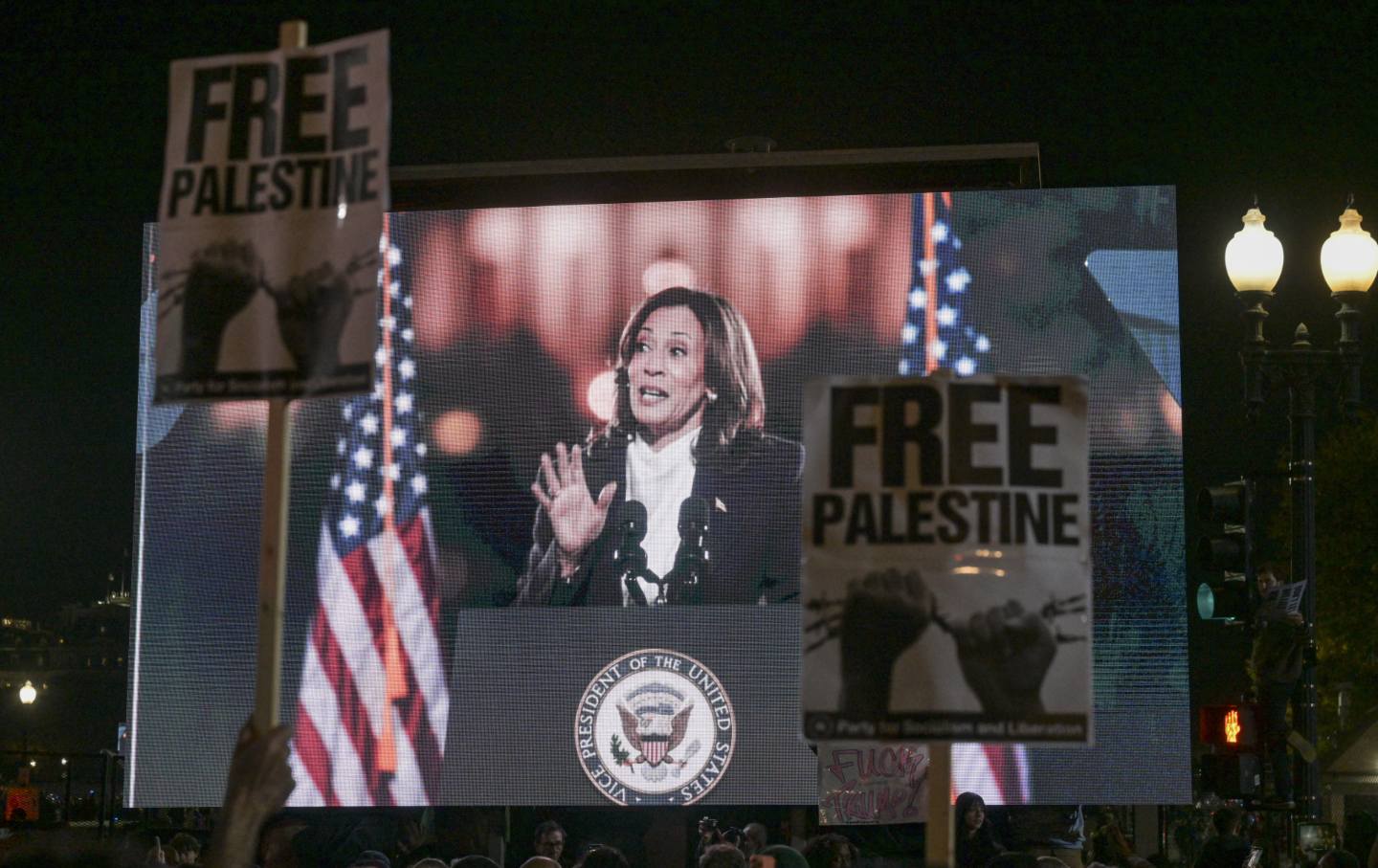
We Don’t Need an Autopsy to Tell Us the Democrats Failed on Gaza We Don’t Need an Autopsy to Tell Us the Democrats Failed on Gaza
The DNC is allegedly hiding a report showing that Kamala Harris's Gaza policy helped cost her the 2024 election. But that report won't tell us anything we don't already know.
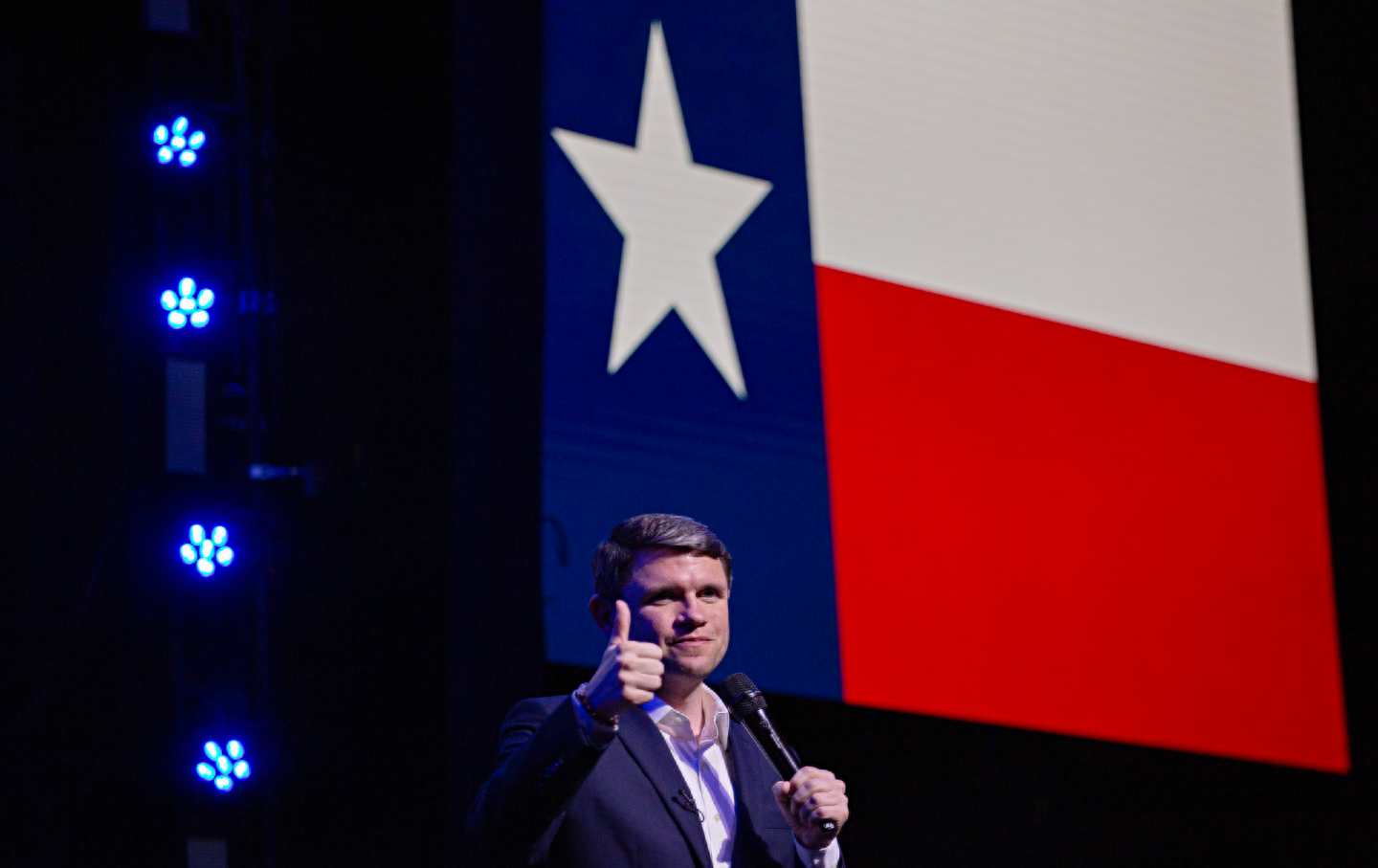
Texas's Senate Primary Has Already Made History—and It's Not Over Yet Texas's Senate Primary Has Already Made History—and It's Not Over Yet
Democratic nominee James Talarico is getting national media attention, but the real story is sky-high voter turnout, even amid GOP bids to suppress balloting
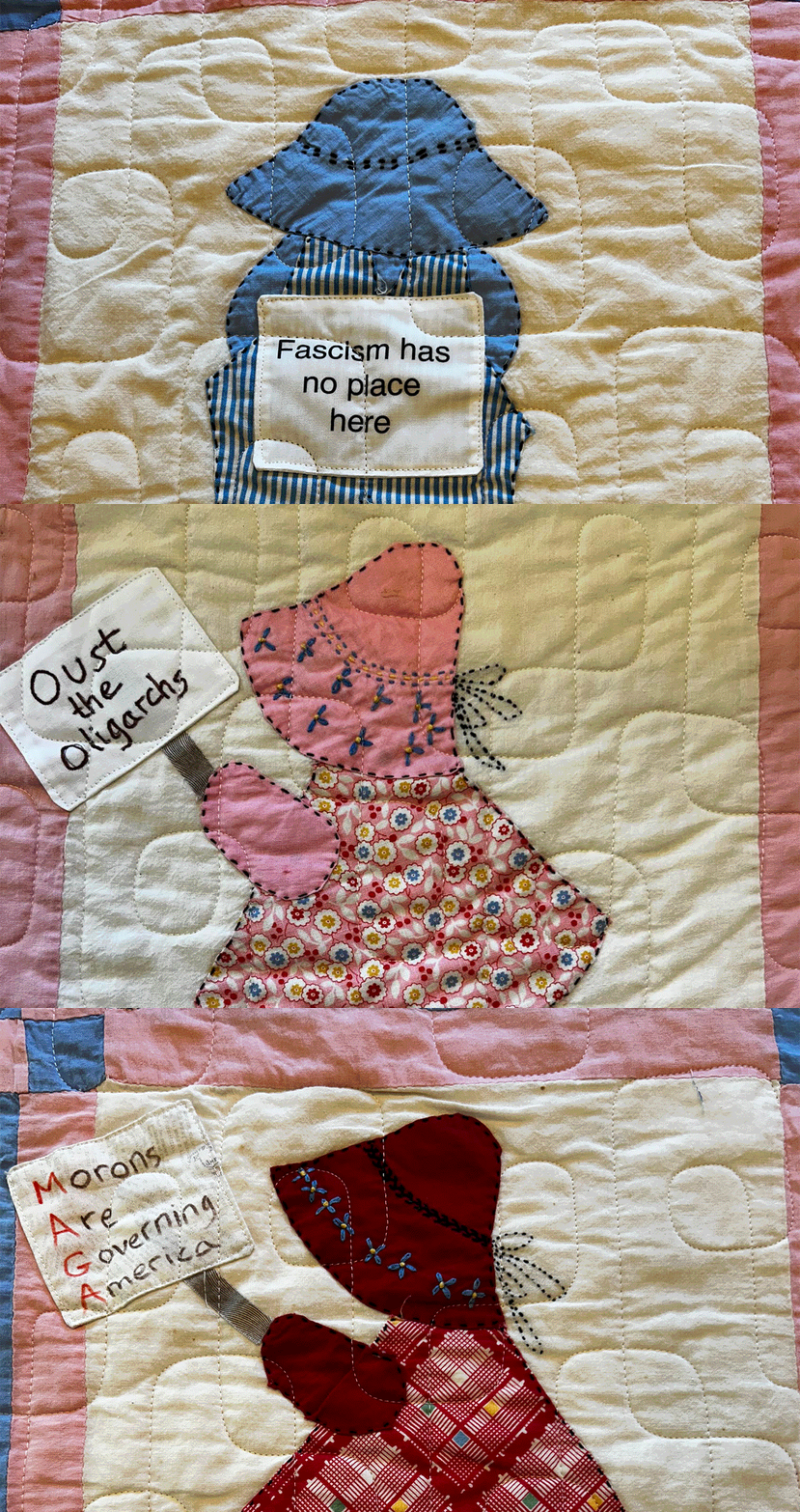
Quilted Messages Quilted Messages
Sunbonnets carrying not-so-sunny truths.
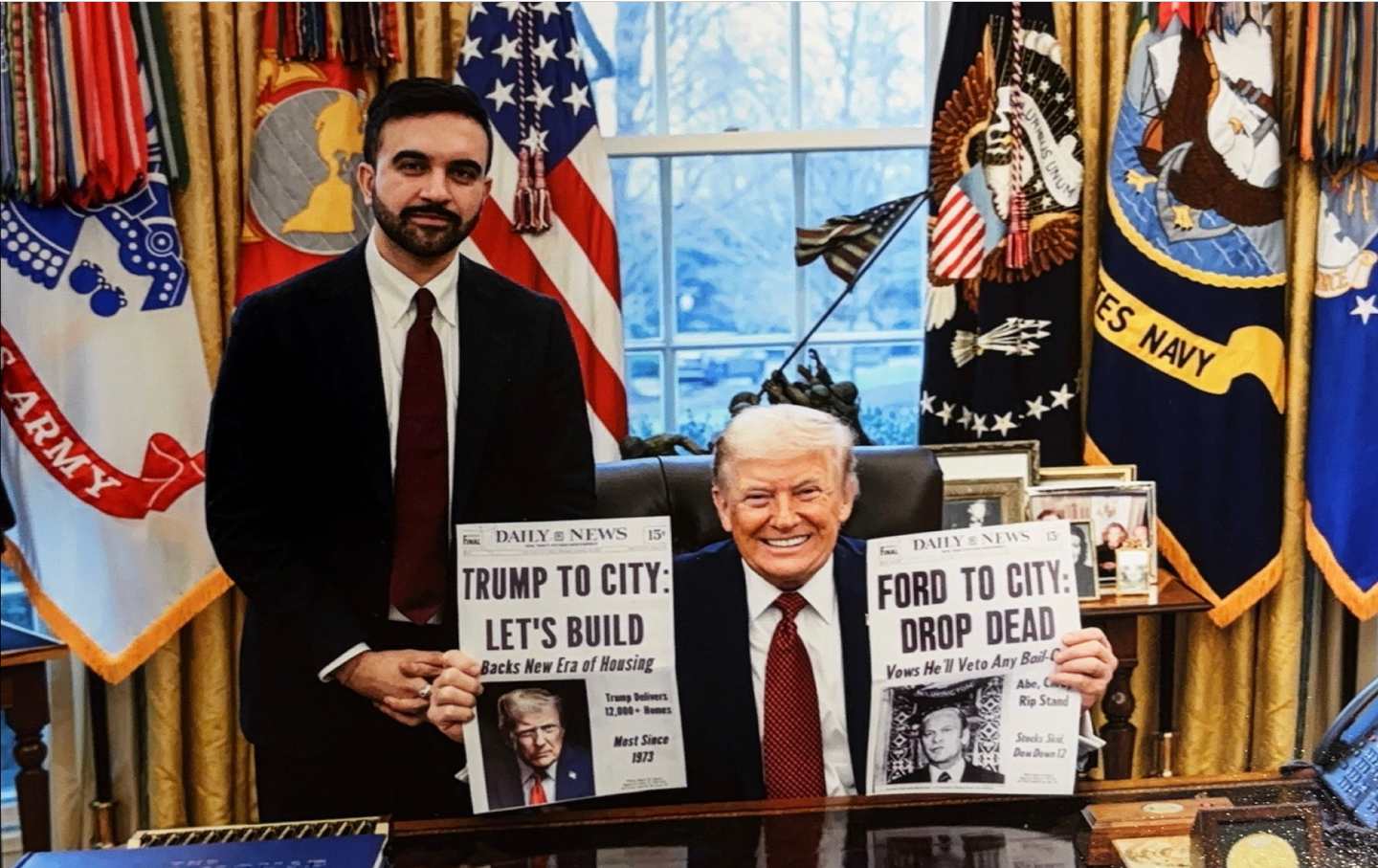
How the Theatrics of Mamdani’s Trump Meeting Backfired How the Theatrics of Mamdani’s Trump Meeting Backfired
By pandering to the president’s vanity, the New York mayor reinforced Trump’s image as a strongman commanding deference—an especially bad look on the eve of Trump’s war with Iran

Students in New York Are Going Hungry. How Can Mamdani Help? Students in New York Are Going Hungry. How Can Mamdani Help?
With plans for city-owned grocery stores and a focus on affordability, the new mayoral administration offers fresh hopes of successfully confronting the food crisis among students...

We Are the Fire That Melts the ICE We Are the Fire That Melts the ICE
Oaxaca, Mexico, street art.

