
Sleepy Donald Snoozes, America Loses
It’s bedtime for Bozo—and you’re paying the price.
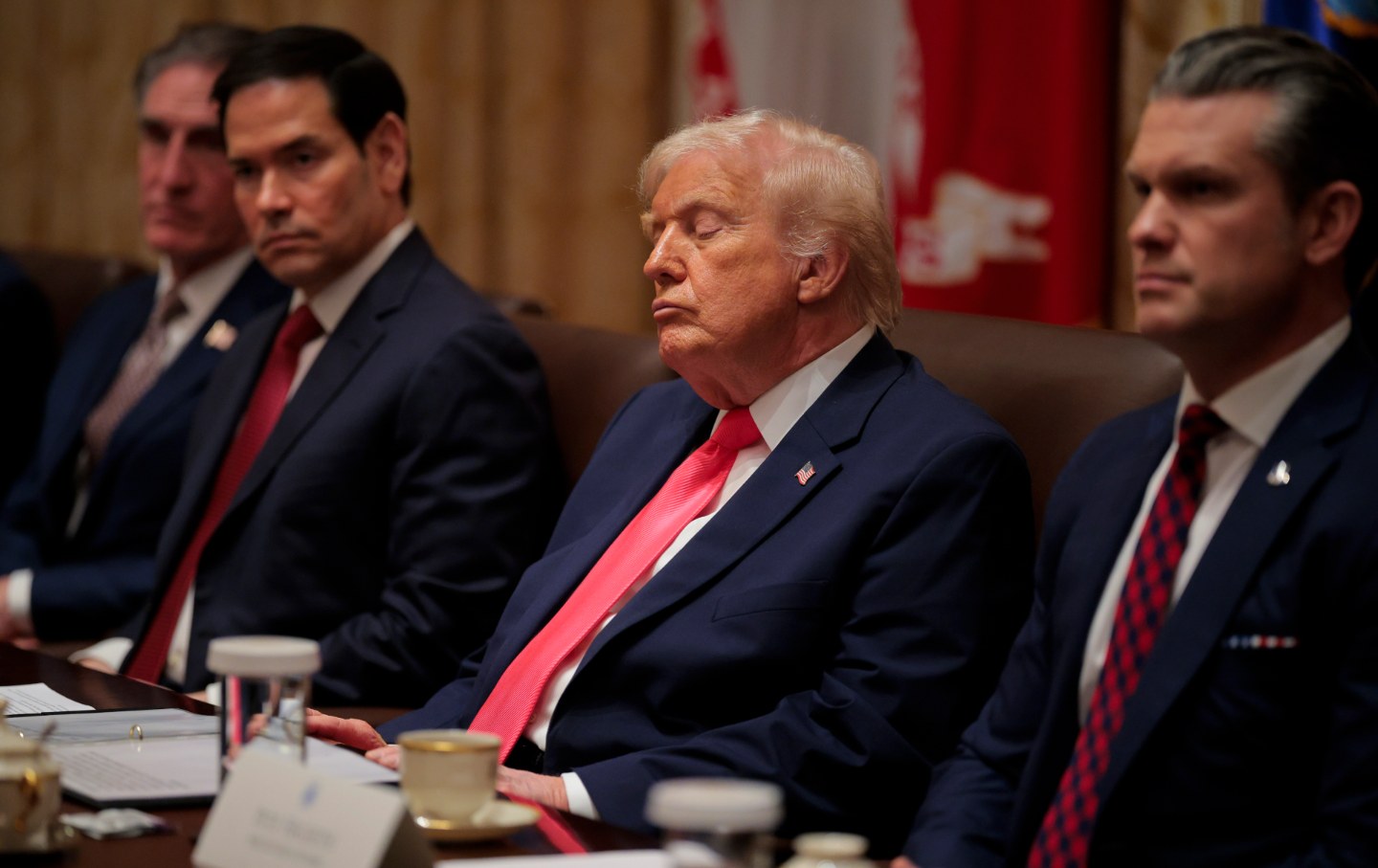
President Donald Trump attends a cabinet meeting at the White House in Washington, DC, on December 2, 2025.
(Chip Somodevilla / Getty Images)One of Donald Trump’s most successful political tactics has been labeling his opponents as too physically enervated to handle the job of the presidency. In 2016, Trump immortally smeared Jeb Bush as “low energy” (a charge that doomed Bush’s campaign) and framed Hillary Clinton as lacking in “stamina” (a jibe supercharged with sexism). In 2019, Trump coined the nickname “Sleepy Joe” for Joe Biden. Initially, this insult failed to resonate with the electorate, who handed Biden a resounding victory over Trump in 2020. Unfortunately, Biden himself lent credence to the “Sleepy Joe” taunt as he became visibly more timeworn during his presidency—a decline that culminated in the stammering, incoherent performance that destroyed his reelection chances for good in 2024.
Biden’s embarrassing decrepitude couldn’t have been luckier for Trump. Not only did it lead to the end of his reelection bid—it also helped Trump look vigorous and healthy by comparison. But now, a year into his second term, there is no Biden to distract the public from the obvious truth—that Trump is at least as low-energy and sleepy as any of his rivals.
In his speeches and press conferences, Trump frequently digresses into chaotic verbal nonsense. But talking disjointedly at least keeps Trump, who has a narcissistic love of being at the center of attention, alert. Yet, as a string of recent videos has shown, when Trump has to listen to other people speak, his brain tends to lapse into a default mode of somnolence.
Even the mainstream media, which has been negligently reluctant to raise questions about Trump’s physical and mental well-being, has started to take note. On Friday, The Washington Post reported,
President Donald Trump closed his eyes for extended periods as Cabinet officials went around the room Tuesday providing updates on their work, at times seeming to nod off.
It was the second time in less than a month that Trump has appeared to struggle to stay awake as his advisers speak about the administration’s initiatives. A Washington Post analysis of multiple video feeds of the meeting Tuesday showed that during nine separate instances, Trump’s eyes were closed for extended periods or he appeared to struggle to keep them open, amounting cumulatively to nearly six minutes. The episode was similar to an Oval Office event on Nov. 6 when the president spent nearly 20 minutes battling to keep his eyes open.
This version of Trump—let’s call it Sleepy Donald—is not new. In April of 2024, while Trump sat in a Manhattan courtroom facing criminal charges in a hush-money trial, he frequently had difficulty staying alert. As The New York Times reported, “Trump appeared to nod off a few times, his mouth going slack and his head drooping onto his chest.”
Trump’s increasing lethargy has also significantly affected his daily schedule, as the Times documented last month:
Trump’s first official event starts later in the day. In 2017, the first year of his first term, Mr. Trump’s scheduled events started at 10:31 a.m. on average. By contrast, Mr. Trump in his second term has started scheduled events in the afternoon on average, at 12:08 p.m. His events end on average at around the same time as they did during the first year of his first term, shortly after 5 p.m.
The number of Mr. Trump’s total official appearances has decreased by 39 percent. In 2017, Mr. Trump held 1,688 official events between Jan. 20 and Nov. 25 of that year. For that same time period this year, Mr. Trump has appeared in 1,029 official events.
It would be concerning enough if Trump merely needed a lot more naptime. But it’s worse than that. He is sometimes up very late at night, posting relentlessly on social media, only to taper off during the day. This is the kind of sleep pattern you might find in your average teenager or cocaine addict—in other words, not the sort of behavior you want in a president. Certainly, it’s worrying that the man who has his finger on a nuclear arsenal that can destroy all life on earth is keeping such irregular hours.
To be sure, when Trump is genuinely engaged with an event, he can liven up. Trump seemed uncharacteristically peppy in a recent meeting with New York Mayor-elect Zohran Mamdani, a political foe who nevertheless strangely energized the president. Similarly, Trump found a new spring in his step when receiving the transparently fraudulent FIFA Peace Prize, a bauble created by a corrupt soccer league and designed to please the president’s childish love of shiny trinkets. But these events are the exception; most of the time, Trump has become ever more lumbering, slow, irritable, and drowsy.
Trump and his supporters have responded to investigations into his health and alertness with surly denials and attempts at distraction. Trump has gone back to drawing a contrast between himself and his rivals. In November, Trump said Biden “broke every record. He sleeps all the time, during the day, during the night, on the beach.” Ted Cruz, descending into a sycophancy that is ridiculous even for him, defended the president by saying, “I don’t think [Trump] sleeps at all.” Other presidential cronies have also made patently absurd claims about Trump’s energy.
Trump is far from the first president to fight a losing battle to keep awake. His predecessors William Howard Taft (president from 1909 to 1913) and Calvin Coolidge (1923–29) were also impressively prone toward fatigue. Ronald Reagan (1981–89)—who would drift off to slumberland during cabinet meetings—also deserves a spot in the Mount Rushmore of napping presidents. Interestingly, all three men were, like Trump, big-business conservatives.
As The Washington Post noted in 2003, Taft “once fell asleep while talking face to face with Joseph Cannon, the speaker of the House. He did the same with the French ambassador’s wife. He nodded off while signing papers, attending the opera and standing in review of troops. He was the most obviously sleepy person to ever inhabit the White House.” Historians have speculated that Taft suffered from sleep apnea, a by-product of his notorious portliness.
We have no exact measure of presidential sleepiness, but Calvin Coolidge, who stayed in bed for nine hours a night and napped for at least two in the afternoon, was a contender for the title of most dormant commander in chief. In an obituary, H.L. Mencken, the premier journalistic wit of his age, argued that Coolidge “slept more than any other President, whether by day or by night. Nero fiddled, but Coolidge only snored.” Mencken speculated that if Coolidge had governed during the Great Depression, he “would have responded to bad times precisely as he responded to good ones—that is, by pulling down the blinds, stretching his legs upon his desk, and snoozing away the lazy afternoons.”
Mencken was an ardent advocate of laissez-faire government, so for him the sleepiness of Coolidge was a virtue. Mencken likely felt the same way about Taft’s heavy-lidded presidency.
But Trump gives the lie to the idea that a president who tunes out is good for the country. In Trump’s case, there is little relief in the fact that he himself is checked out and prefers to spend his dotage garishly remaking the White House and accepting gifts that are transparently bribes. That’s because, while Trump may be inactive, his minions certainly aren’t. He’s surrounded himself with a crew of extremists, notably Stephen Miller, Robert F. Kennedy Jr., Pete Hegseth, and Marco Rubio. These underlings have been empowered by Trump’s lack of interest in government. It’s allowed them to pursue harsh policies of immigration restriction, deregulation, and militarism. With his fading mind and lack of interest in governance, Trump has been able to ignore criticism of these policies. Far from being a benign personal foible, Trump’s tiredness is a major reason his second term is shaping up to be an even bigger disaster than his first.
Popular
“swipe left below to view more authors”Swipe →Support independent journalism that does not fall in line
Even before February 28, the reasons for Donald Trump’s imploding approval rating were abundantly clear: untrammeled corruption and personal enrichment to the tune of billions of dollars during an affordability crisis, a foreign policy guided only by his own derelict sense of morality, and the deployment of a murderous campaign of occupation, detention, and deportation on American streets.
Now an undeclared, unauthorized, unpopular, and unconstitutional war of aggression against Iran has spread like wildfire through the region and into Europe. A new “forever war”—with an ever-increasing likelihood of American troops on the ground—may very well be upon us.
As we’ve seen over and over, this administration uses lies, misdirection, and attempts to flood the zone to justify its abuses of power at home and abroad. Just as Trump, Marco Rubio, and Pete Hegseth offer erratic and contradictory rationales for the attacks on Iran, the administration is also spreading the lie that the upcoming midterm elections are under threat from noncitizens on voter rolls. When these lies go unchecked, they become the basis for further authoritarian encroachment and war.
In these dark times, independent journalism is uniquely able to uncover the falsehoods that threaten our republic—and civilians around the world—and shine a bright light on the truth.
The Nation’s experienced team of writers, editors, and fact-checkers understands the scale of what we’re up against and the urgency with which we have to act. That’s why we’re publishing critical reporting and analysis of the war on Iran, ICE violence at home, new forms of voter suppression emerging in the courts, and much more.
But this journalism is possible only with your support.
This March, The Nation needs to raise $50,000 to ensure that we have the resources for reporting and analysis that sets the record straight and empowers people of conscience to organize. Will you donate today?
More from The Nation
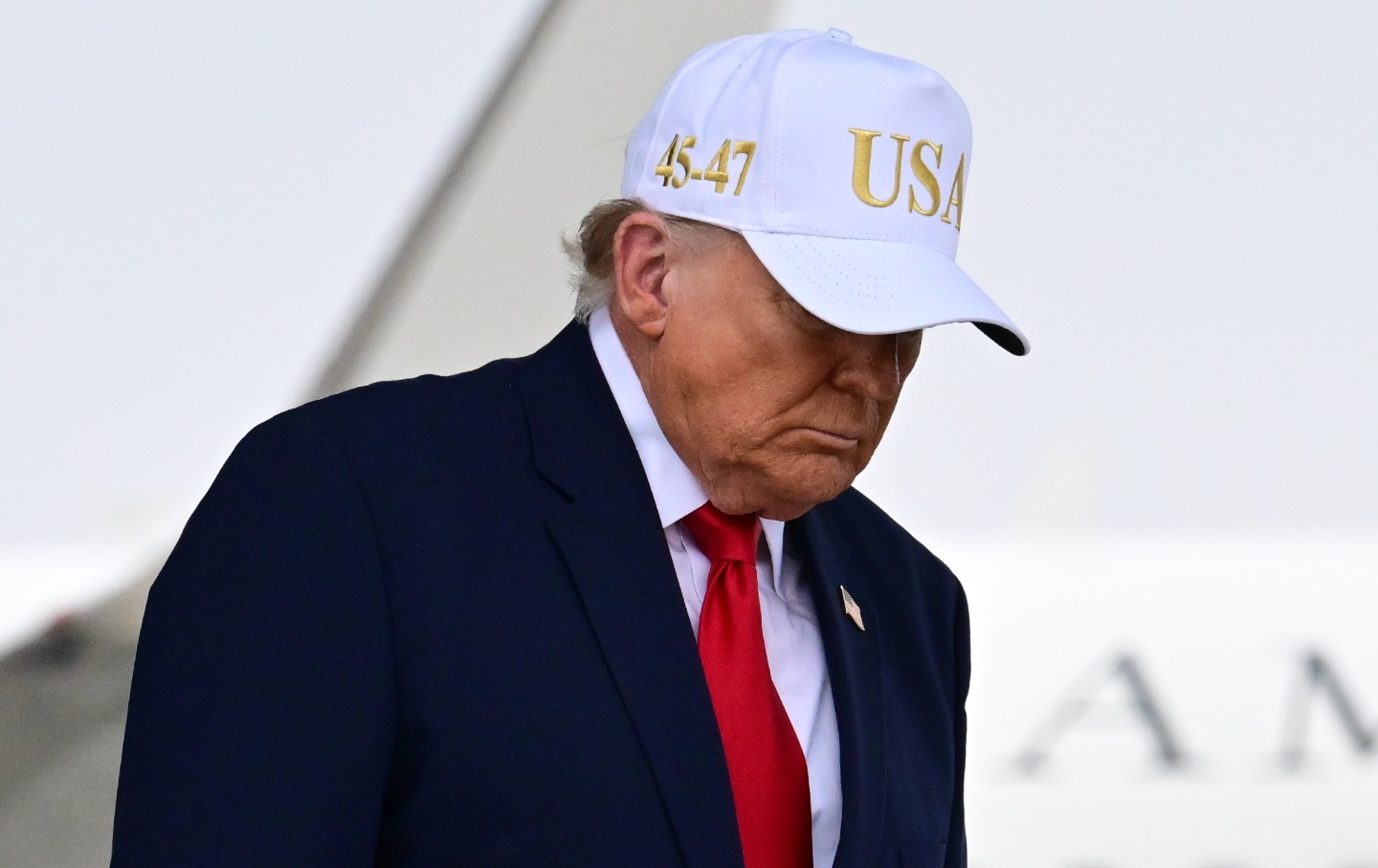
Trump’s War Is Destroying the Global Economy Trump’s War Is Destroying the Global Economy
Spiraling financial chaos might be the only thing that can force the president to pull back from this conflict.
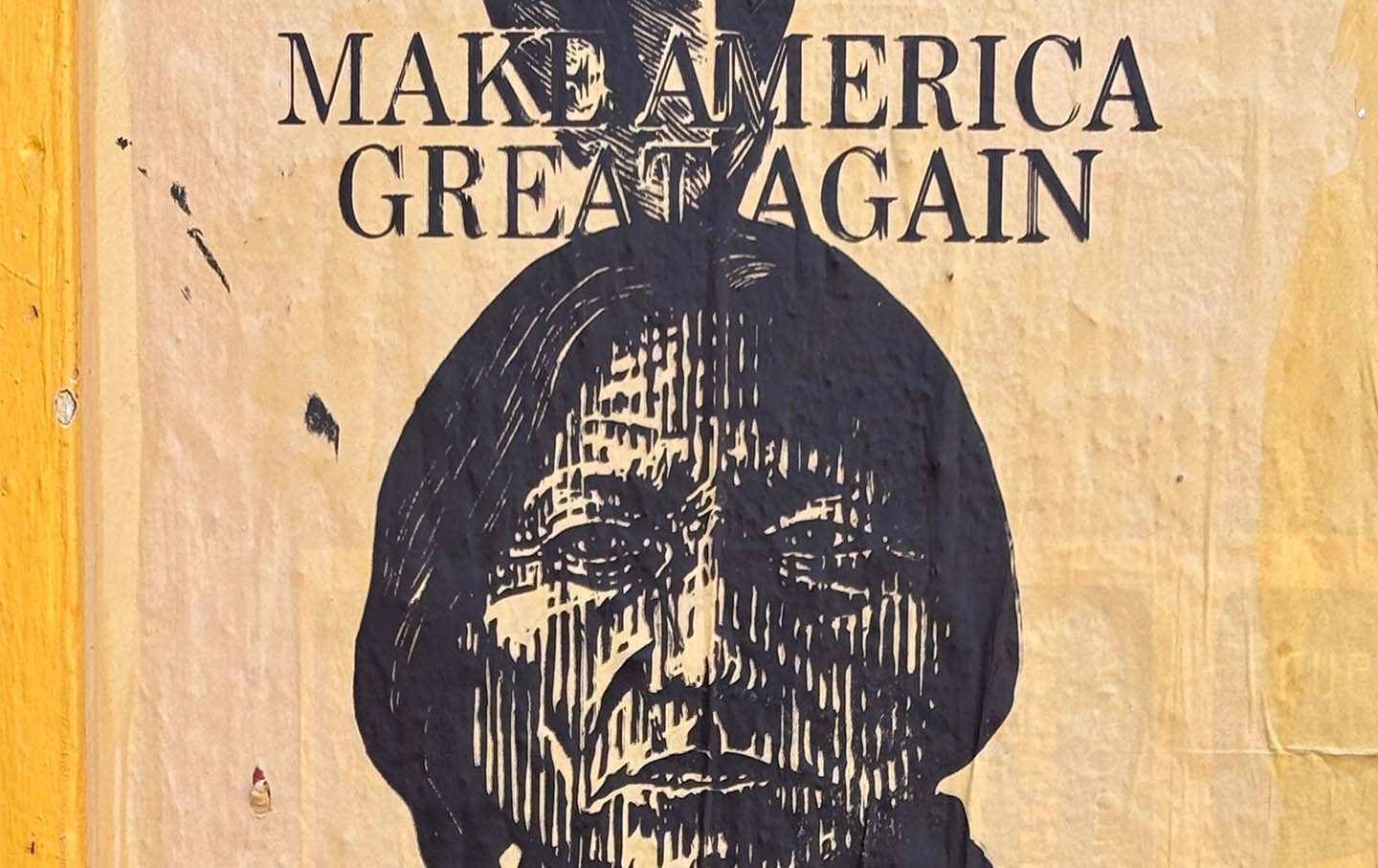
Make America Great Again Make America Great Again
Who are the immigrants?
OppArt / Anonymous and Peter Kuper
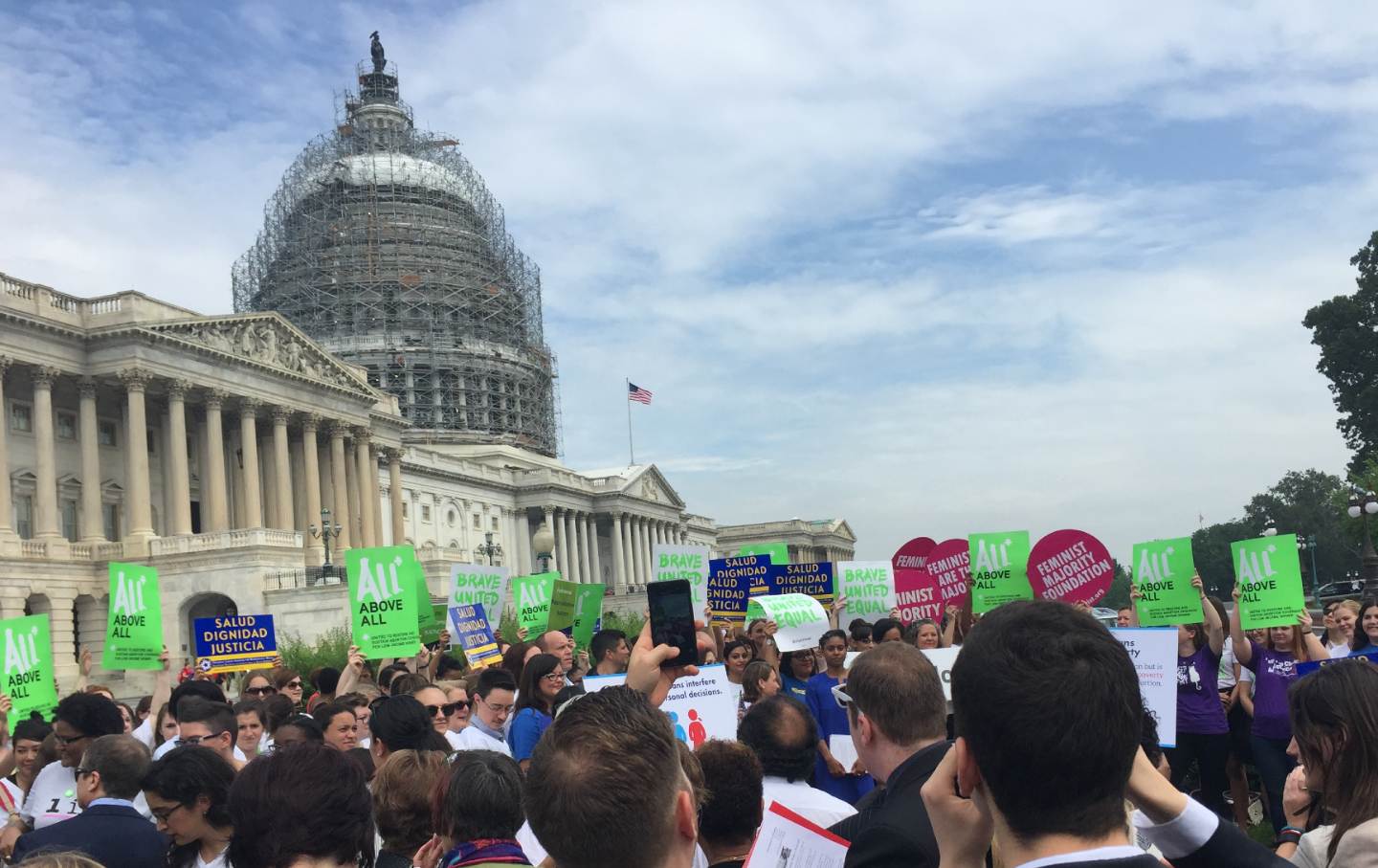
How the Abortion Rights Activists Found Their Radical Imagination How the Abortion Rights Activists Found Their Radical Imagination
A long-shot campaign to restore public funding for abortion turned into the movement’s biggest success in a generation.
An Argument Against Voting for the “Electable” Guy An Argument Against Voting for the “Electable” Guy
In this week’s Elie v. US, The Nation’s justice correspondent shares his thoughts on the Texas primaries. Plus, a terrible Supreme Court decision and a bad play by Major League Ba...

A Conflict Without Reason Has Become a Dangerous Holy War A Conflict Without Reason Has Become a Dangerous Holy War
Lacking a clear rationale for the attack on Iran, Trumpists are increasingly talking like crusaders.

