Japan’s New Climate Bomb—in the US
Bloomberg Green reveals the climate costs of the US-Japan trade deal.
Four years ago, The Guardian published a landmark expose in climate journalism that detailed a coming “carbon bomb” of oil and gas projects. Damian Carrington and Matthew Taylor reported that the projects included plans to explore for, drill, frack, refine, and transport enough additional oil and gas to equal 10 years of China’s planet-warming emissions. Quoting the Sixth Assessment Report by the UN Intergovernmental Panel on Climate Change’s hundreds of scientists, Carrington and Taylor added that if all 195 of the “carbon bombs” they identified became operational, there would be no chance of securing “a livable and sustainable future for all” by limiting temperature rise to the 1.5º C target of the 2015 Paris Agreement.
Now, fresh reporting from Bloomberg Green has revealed a new proposed climate bomb—this one financed by Japan but built in the US.
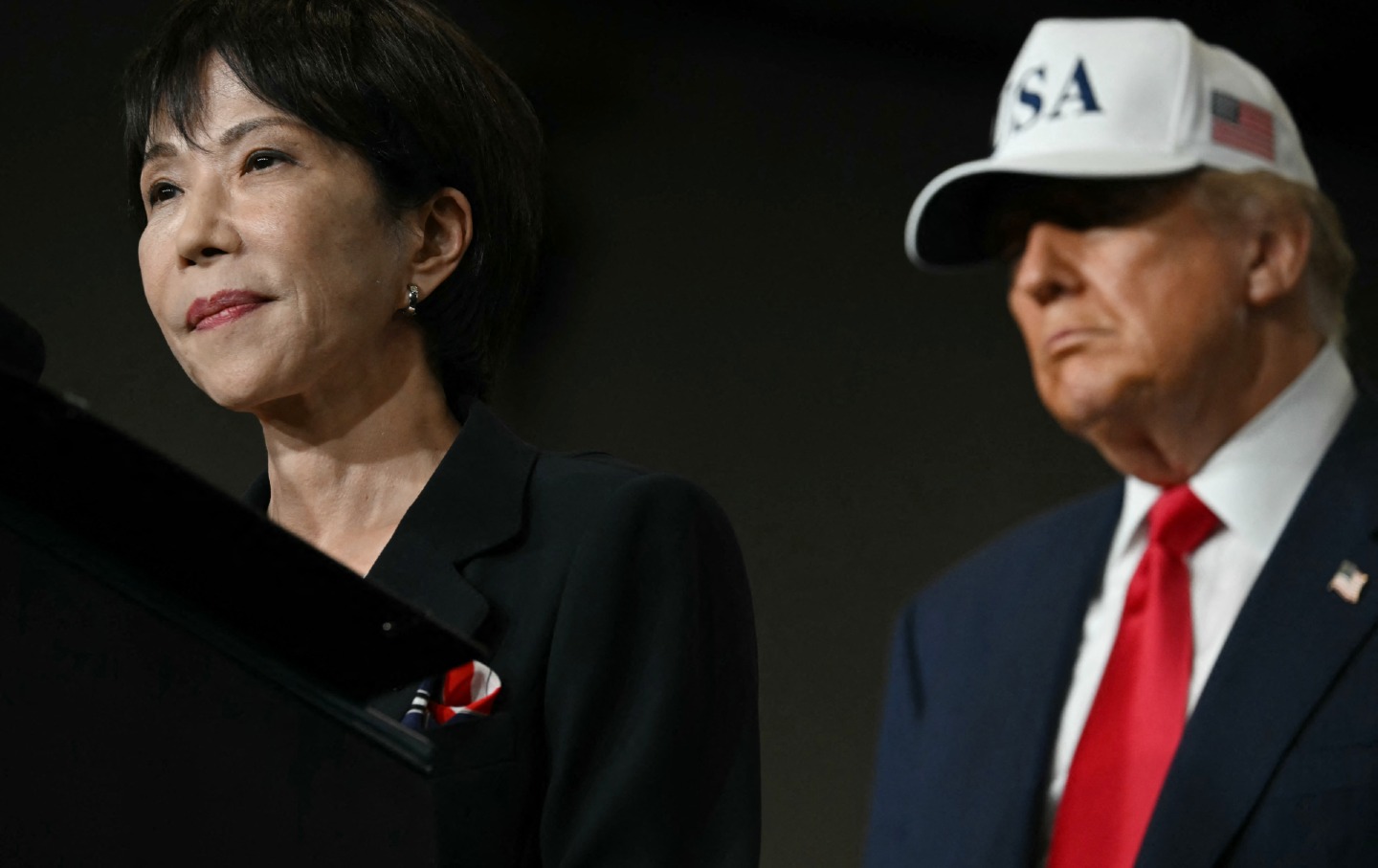
On February 20, Prime Minister Sanae Takaichi and US President Donald Trump announced a new aspect of the trade agreement they reached last October. Their announcement was major news in Japan but got little coverage in the United States, crowded out by revelations from the Epstein files and the Supreme Court ruling that Trump’s tariffs are unconstitutional. The few stories that did run mostly summarized the two governments’ official statements, leading with the news that, in response to Trump’s tariff threats, Japan will invest $36 billion in three US infrastructure projects: a gas-fired power plant in Ohio, an oil export facility off the Texas coast, and a manufacturing facility in Georgia.
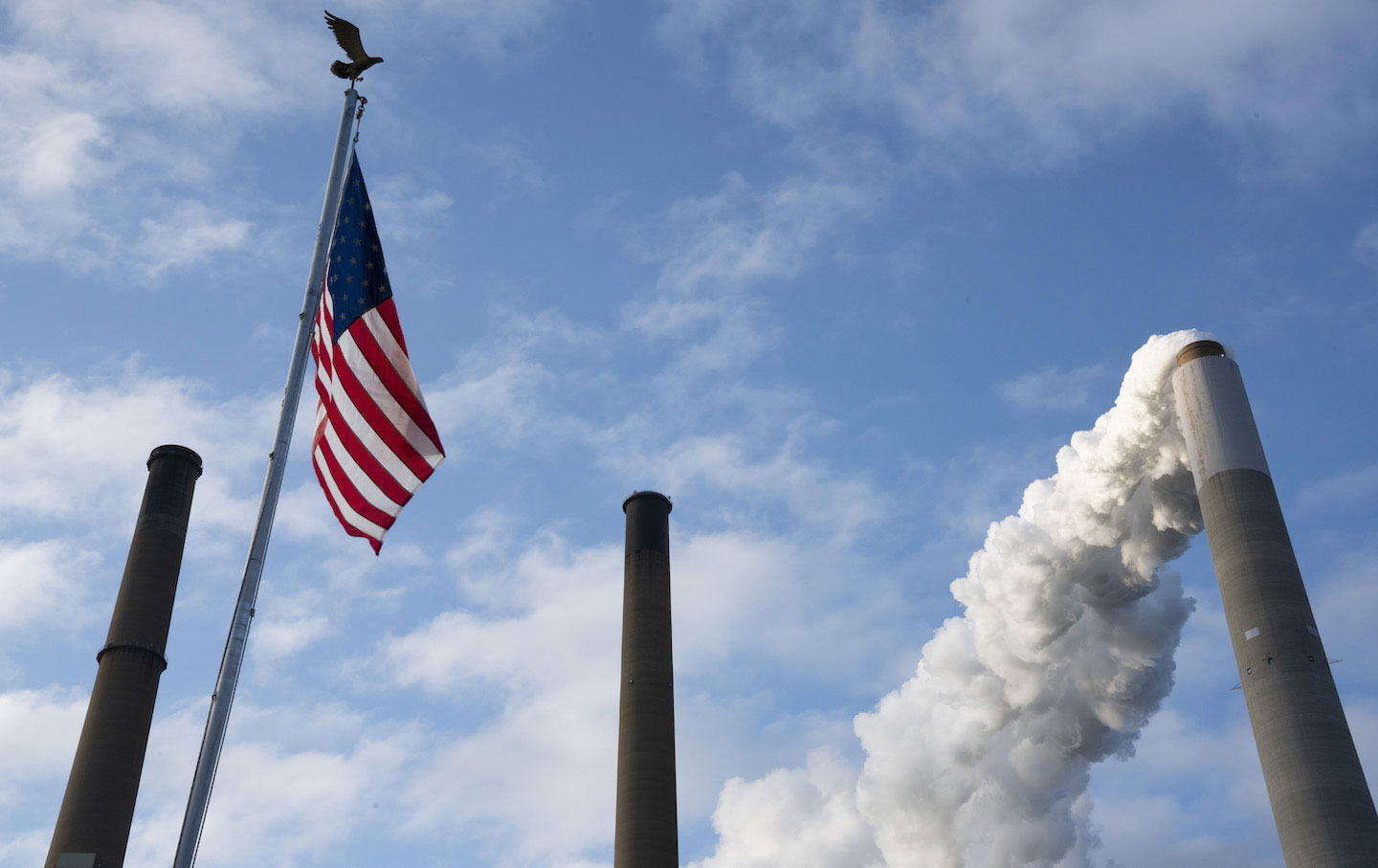
Bloomberg Green’s Aaron Clark and Eric Roston went beyond those official statements to make the climate connection to Japan’s promised investments. Focusing on the $33 billion power plant in Ohio, Clark and Roston noted that its 9.2 gigawatts of generating capacity would make it the biggest power plant in the US, “capable of supplying millions of homes with electricity.” The reporters then cited two estimates—one from Bloomberg New Energy Finance, one from the Rhodium consultant company—of how much carbon dioxide the plant would emit: between 16.2 million and 19.3 million tons annually. The Ohio plant therefore would rank as “one of the nation’s largest sources of carbon dioxide emissions from electricity generation,” Clark and Roston wrote, roughly equivalent to “3.8 million gas cars over a year of driving.”
Even this might understate the proposed plant’s climate impact. As recently as the 2010s, fossil gas was widely regarded as less damaging to the climate than coal, because this gas contains much less CO2. But a growing body of peer-reviewed science, notably a 2024 paper by Robert Howarth of Cornell University, has found that natural gas is in fact not much better than coal, and liquified gas is far worse. Gas is composed mainly of methane, which leaks throughout the supply chain and is 80 times more potent as a climate pollutant than CO2 over a 20-year period. That 20-year period matters, because it is during those years that the battle to limit temperature rise to an amount our civilization can survive will be won or lost.
“The future must be zero fossil fuels,” Howarth said in an e-mail interview. Given that solar and wind are increasingly the cheapest sources of electricity, “why spend billions investing in gas?”
Like the 195 oil and gas projects identified by The Guardian, the Ohio power plant analyzed by Bloomberg Green is not a done deal. Whether the projects actually come online remains an open question for government officials, regulatory bodies, courts, financiers, and citizens. Which makes these projects ongoing news stories for journalists to cover and illuminate. The US-Japan trade deal is a reminder that there are climate stories everywhere you look. The trick is to tell them.