Climate Stories Are Everywhere
Why do many news outlets ignore the connections between climate change and the struggle for democracy?
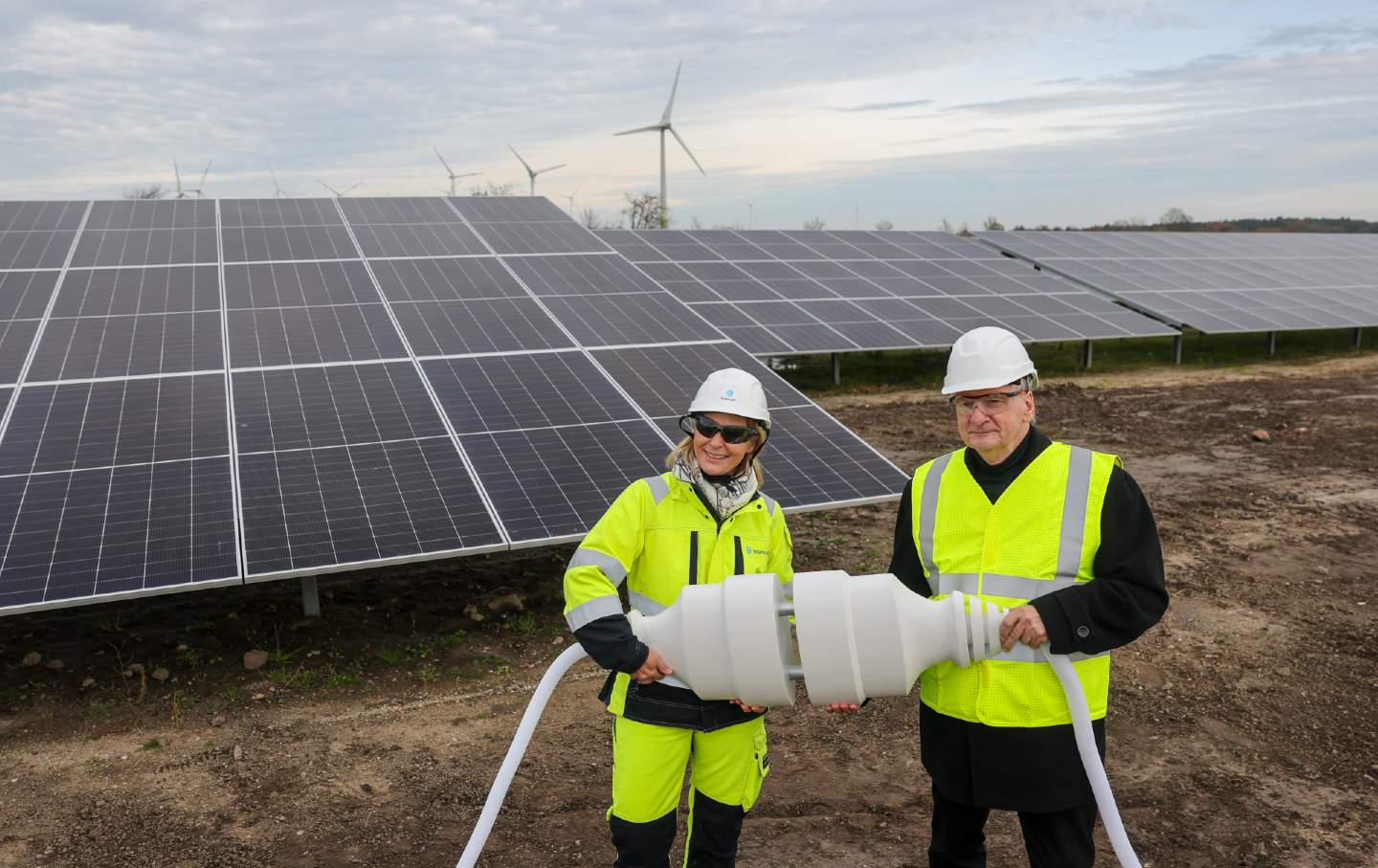
A new solar park and battery storage system goes online in Saxony-Anhalt in Germany in November 2025.
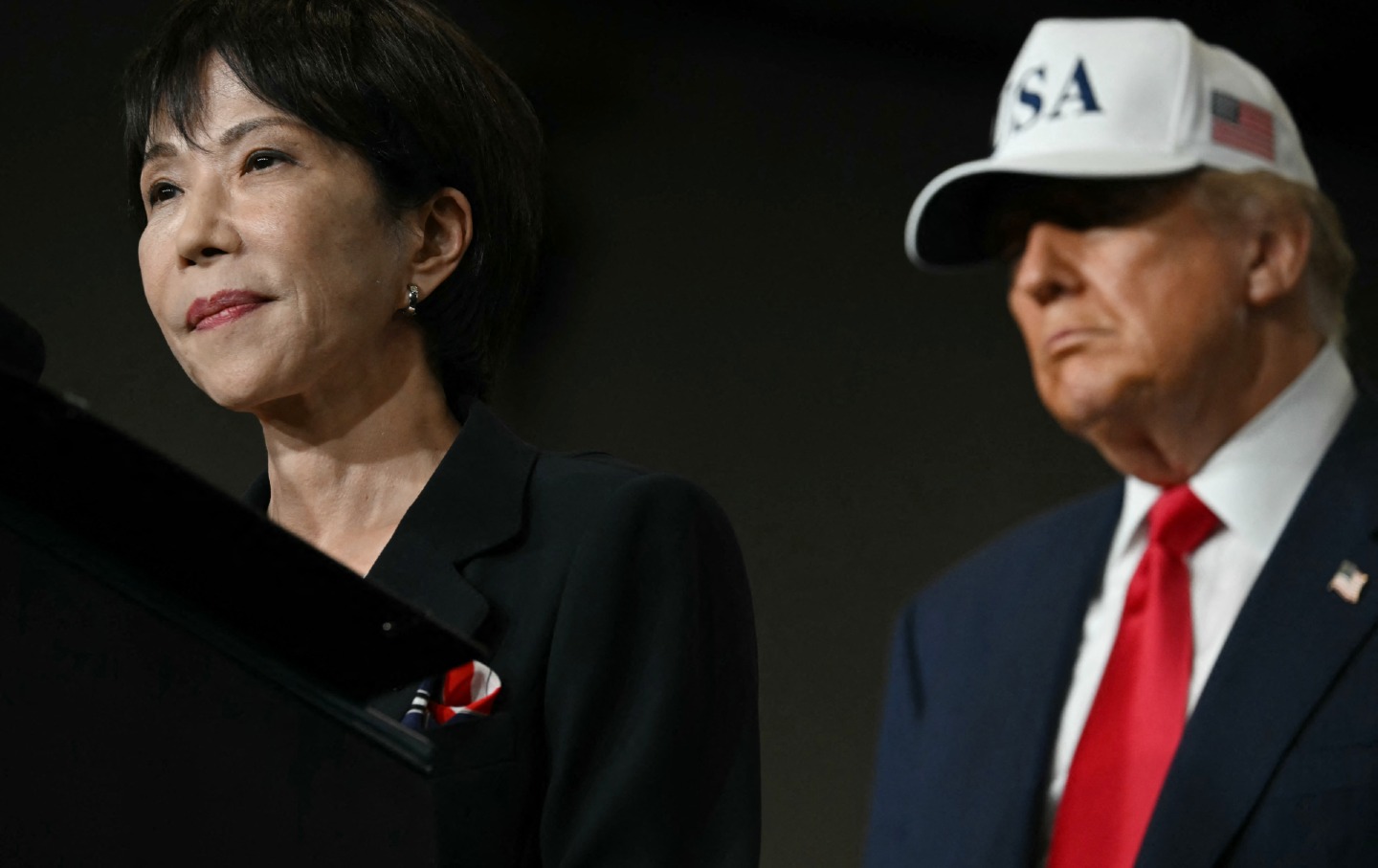
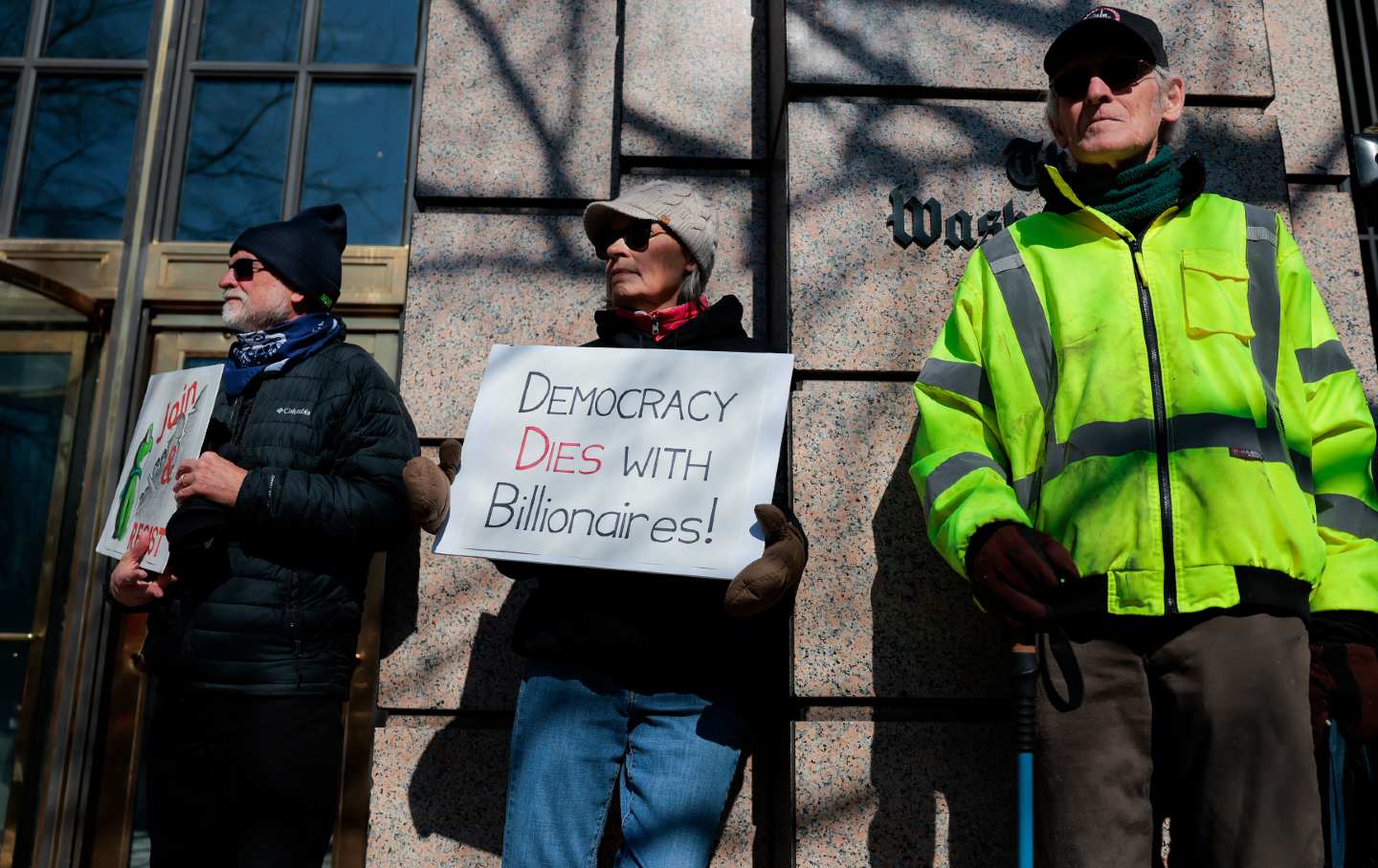
(Jan Woitas / picture alliance via Getty Images)“Protecting the climate and protecting our democracy are inextricably linked,” veteran climate reporter and activist Bill McKibben said last week at a Covering Climate Now press briefing on covering the climate story in 2026. President Donald Trump “is in many ways operating as a political arm of the oil industry,” McKibben added, “and coming to grips with his authoritarian impulse is going to be crucial to ever getting any climate action.”
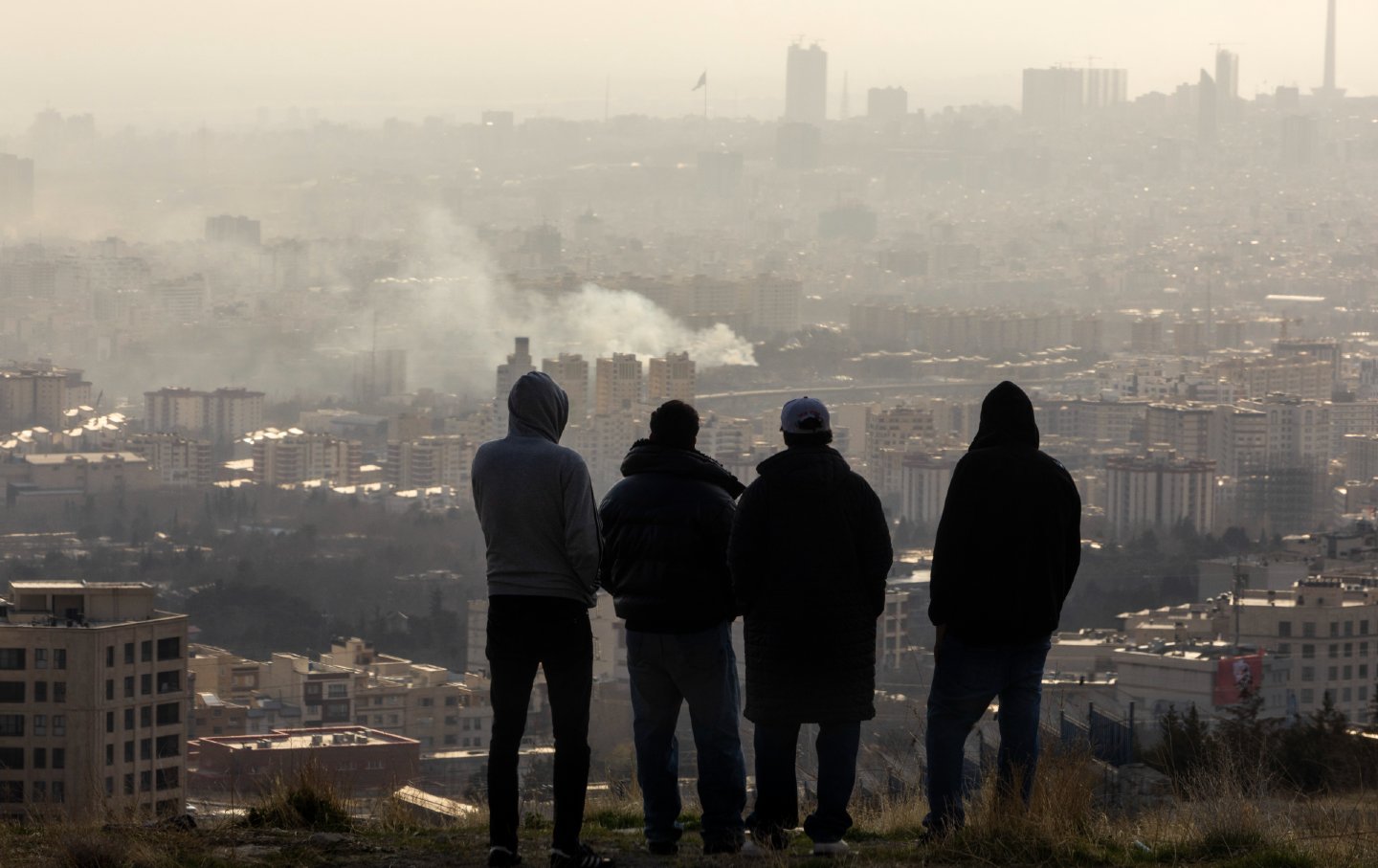
The struggle for democracy—in the streets of Minneapolis, Tehran, and beyond—is but one high-profile issue with a strong climate-change connection. Internationally, Greenland, Venezuela, and Iran possess sizable amounts of oil whose burning could push Earth’s climate past catastrophic tipping points. In the United States, the surging cost of electricity produced by coal and gas is shaping up as an issue in congressional elections in November that could either counter or reinforce Trump’s authoritarianism. Yet, despite newsrooms devoting countless airtime hours and column inches to these subjects, climate change is still missing from most news coverage.
McKibben cited Trump’s obsession with Greenland as a perfect example. While most Greenland coverage has focused on the geopolitical and military implications of Trump’s aggression, McKibben said, “the actual strategic asset in play here is a two-mile-thick sheet of ice that, if it melts, will change the lives of every person on planet Earth” by raising sea levels catastrophically.
Meanwhile, developments in Europe and Africa contrast sharply with US behavior, Mohamed Adow, director of the NGO Power Shift Africa, said during the briefing. Africa has become “one of the world’s most important laboratories for climate solutions,” Adow said, though the speed at which change is happening “is often missed” in media coverage. (This excellent Bloomberg Green article is an exception.) “Kenya now generates 95 percent of our electricity from renewables,” he said. “Solar capacity has expanded rapidly in countries such as South Africa, Morocco, and Egypt…. Solar mini-grids in rural Nigeria, Tanzania, and Senegal are bringing reliable electricity to [rural] communities that fossil fuel-based grids have failed to reach for decades.”
The European Union’s imposition of climate tariffs on January 1, 2026, is also an “incredibly important” development, said Fiona Harvey, whose article in The Guardian explained that under the EU’s carbon border adjustment mechanism, “companies selling steel, concrete, and other high-carbon goods into the European Union will have to prove that they comply with low-carbon regulations, or they will face fines.” The tariff is aimed at companies that might “shift their manufacture of those high-carbon goods or services to another [country] that has more lax regulation,” Harvey said, “so you don’t actually get any carbon saving.”
Noting that editors like stories about unexpected developments, McKibben highlighted “the dramatic reduction in the price of clean energy, which is shaking up all of our assumptions…. With solar and wind now providing 90 percent of new generating capacity around the world, there’s nothing alternative about them anymore, and one of the stories we need to tell is that we’re breaking into a new paradigm.”
Editors also need to hear that polls repeatedly show that “people really do care about this stuff,” Harvey said. Our job as journalists, she added, is “to show them that there are constructive ways out of the mess, as well as presenting them with the reality of the mess.”
Support independent journalism that does not fall in line
Even before February 28, the reasons for Donald Trump’s imploding approval rating were abundantly clear: untrammeled corruption and personal enrichment to the tune of billions of dollars during an affordability crisis, a foreign policy guided only by his own derelict sense of morality, and the deployment of a murderous campaign of occupation, detention, and deportation on American streets.
Now an undeclared, unauthorized, unpopular, and unconstitutional war of aggression against Iran has spread like wildfire through the region and into Europe. A new “forever war”—with an ever-increasing likelihood of American troops on the ground—may very well be upon us.
As we’ve seen over and over, this administration uses lies, misdirection, and attempts to flood the zone to justify its abuses of power at home and abroad. Just as Trump, Marco Rubio, and Pete Hegseth offer erratic and contradictory rationales for the attacks on Iran, the administration is also spreading the lie that the upcoming midterm elections are under threat from noncitizens on voter rolls. When these lies go unchecked, they become the basis for further authoritarian encroachment and war.
In these dark times, independent journalism is uniquely able to uncover the falsehoods that threaten our republic—and civilians around the world—and shine a bright light on the truth.
The Nation’s experienced team of writers, editors, and fact-checkers understands the scale of what we’re up against and the urgency with which we have to act. That’s why we’re publishing critical reporting and analysis of the war on Iran, ICE violence at home, new forms of voter suppression emerging in the courts, and much more.
But this journalism is possible only with your support.
This March, The Nation needs to raise $50,000 to ensure that we have the resources for reporting and analysis that sets the record straight and empowers people of conscience to organize. Will you donate today?