

Inside Out Inside Out
With its new building, the Whitney Museum is now the best place to see modern and contemporary art in New York City.
May 6, 2015 / Books & the Arts / Barry Schwabsky
Crash-and-a-Half Crash-and-a-Half
Mourn the poem or porn locked inside or fried, the white scrambled pre-word, impulses so electric they’re post-, just the paths, the pulse. The embarrassment of backup forgotten, Alzheimer put on like a coat you paid a lot for, months owed to a machine. Here— take this, my life in numbered bundles. Don’t forget. Such blackness arrives always sudden and sad but peaceful, not even an accident this time. And you, half-brained, mea culpa the air where the data hadn’t risen to cloud height, so suitable for burial, disremembered, dismembered.
May 6, 2015 / Books & the Arts / Terese Svoboda

Critical Agents Critical Agents
How J. Edgar Hoover’s paranoid view of literature led him to target African-American writers.
May 6, 2015 / Books & the Arts / Peter C. Baker
Demon Demon
“Good news,” said the doctor, “it’s a demon.” I asked for its name: was it No One? Was it Superego? He said it wasn’t those but he couldn’t guess the name. “Who knows,” he said, “It mightn’t even be a demon. It’s what we call a ‘diagnosis by elimination.’” Explaining he couldn’t operate, the doctor said let’s go ahead and medicate the hell out of it, make it sleepy. I named him “Demon” after his identity. I put him to sleep twice a day, one short one long; three times a week he did sport; he grew to six foot two; I said he was good; I went to the door of his room and left food.
May 6, 2015 / Books & the Arts / Kathryn Maris

Financial Pop Financial Pop
Money is sitting around in its sweatpants listlessly spooning peanut butter out of a jar.
May 6, 2015 / Books & the Arts / Joshua Clover
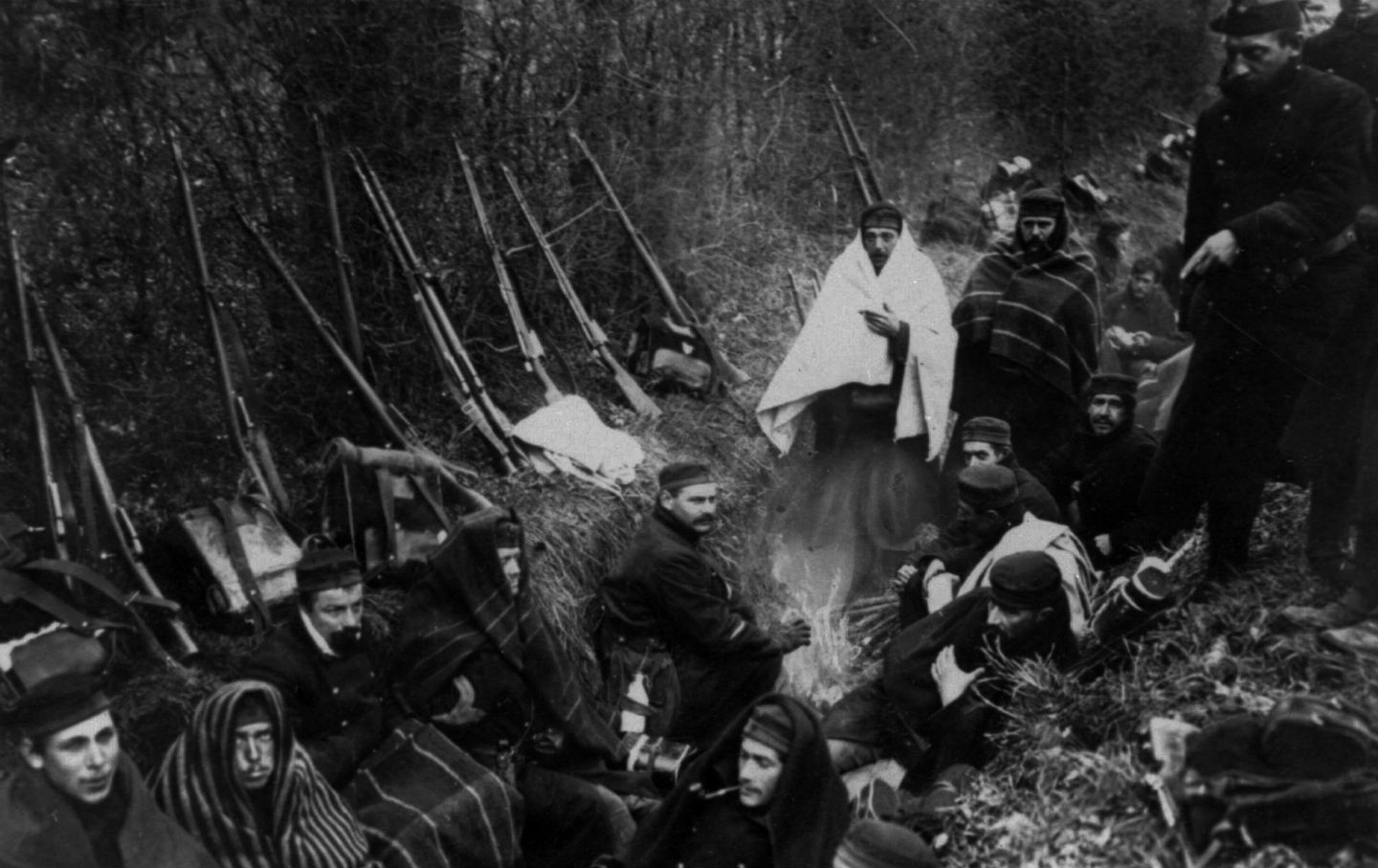
How the Horrors of World War II Lived On How the Horrors of World War II Lived On
Tens of millions were murdered or expelled from their homes in a whirlwind of ethnic cleansing.
May 5, 2015 / David Nasaw

How Long Can Genius Last? How Long Can Genius Last?
In this week’s Altercation Eric honors artists and writers whose careers have stood the test of time.
May 5, 2015 / Eric Alterman

The Bold Experimentation of Gwendolyn Brooks The Bold Experimentation of Gwendolyn Brooks
“Where the subject is the Negro people, or the Negro person, Miss Brooks has gone considerably beyond…quaint and for-tourists-only self-consciousness.”
May 5, 2015 / Richard Kreitner

What Are ‘Nation’ Interns Reading the Week of 5/4/15? What Are ‘Nation’ Interns Reading the Week of 5/4/15?
What Are ‘Nation’ Interns Reading the Week of 5/4/15?
May 4, 2015 / StudentNation / StudentNation
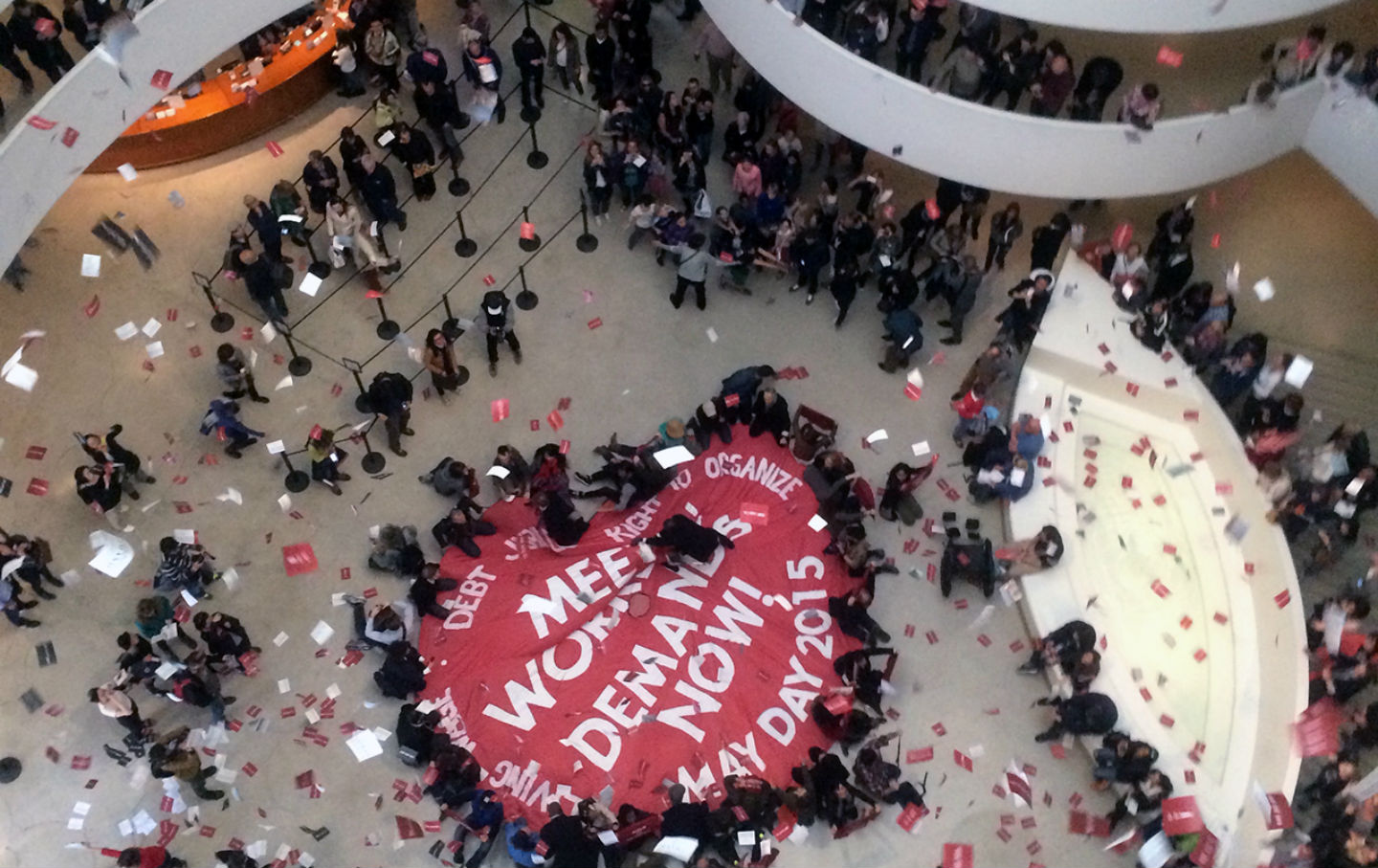
Why Did These Activists Shut Down the Guggenheim? Why Did These Activists Shut Down the Guggenheim?
The May Day occupation is part of an escalating campaign to get the Guggenheim to end the exploitation of migrant workers at the museum's Abu Dhabi site.
May 4, 2015 / Michelle Chen