Books & the Arts / November 27, 2024

Rain and Mountains

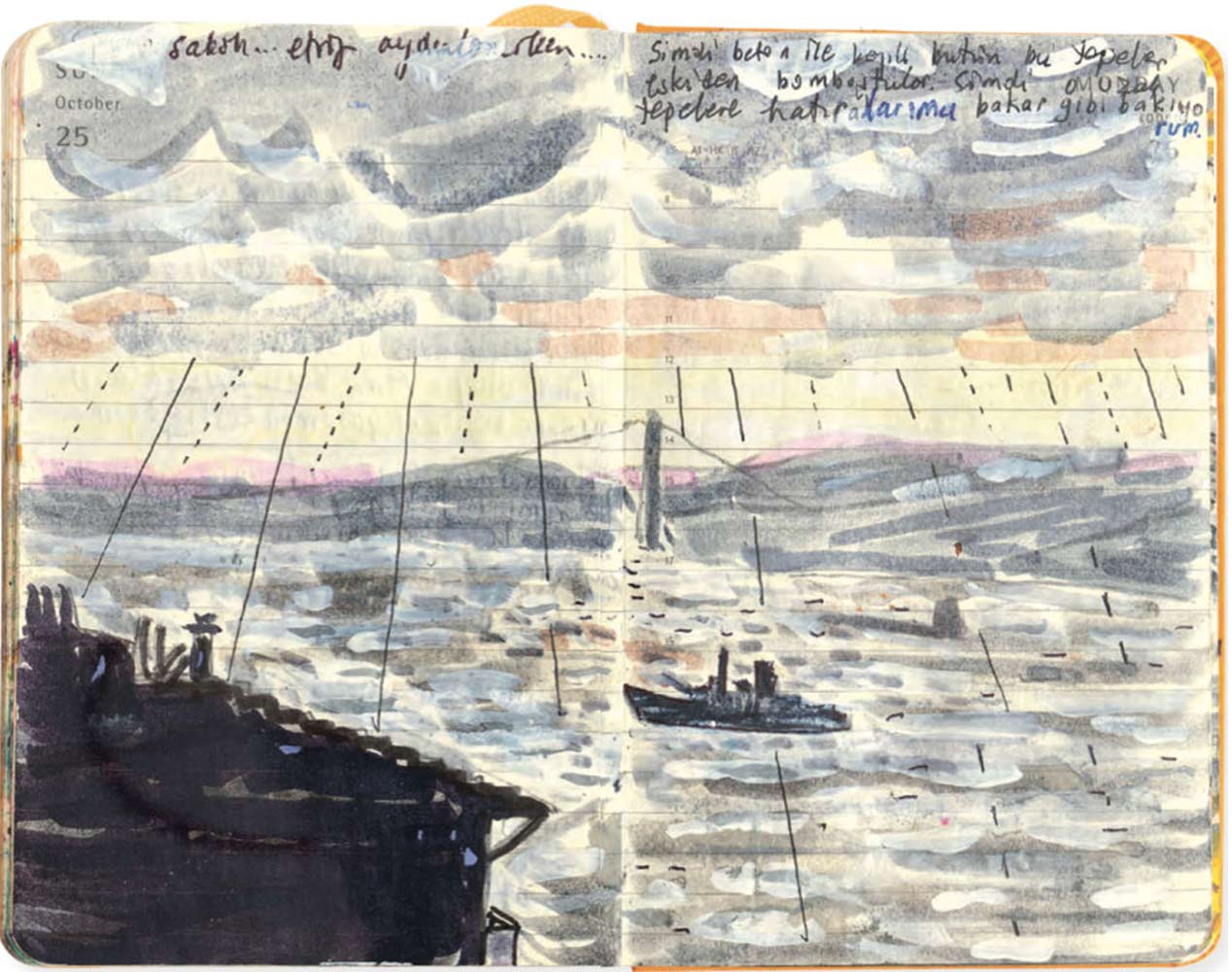
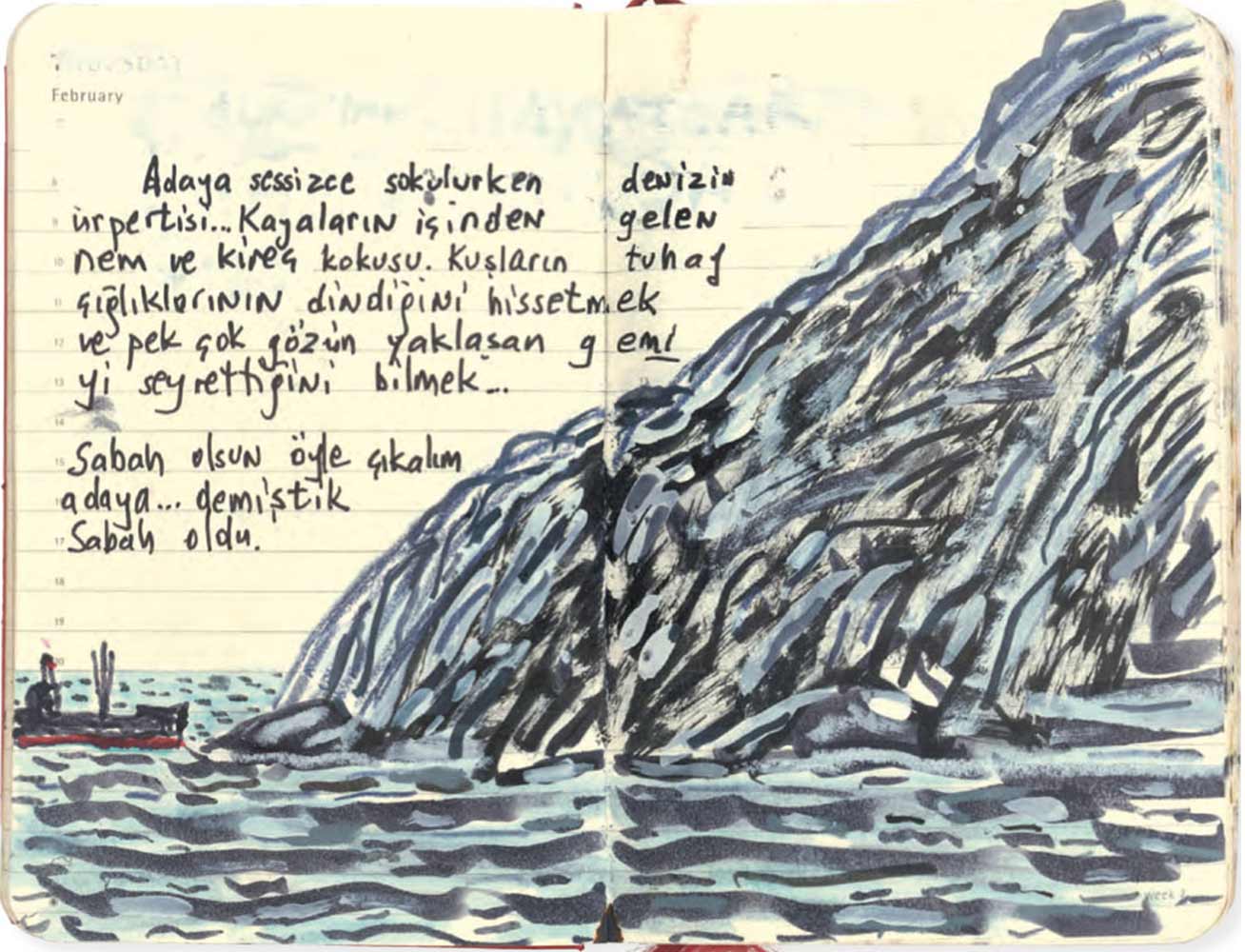
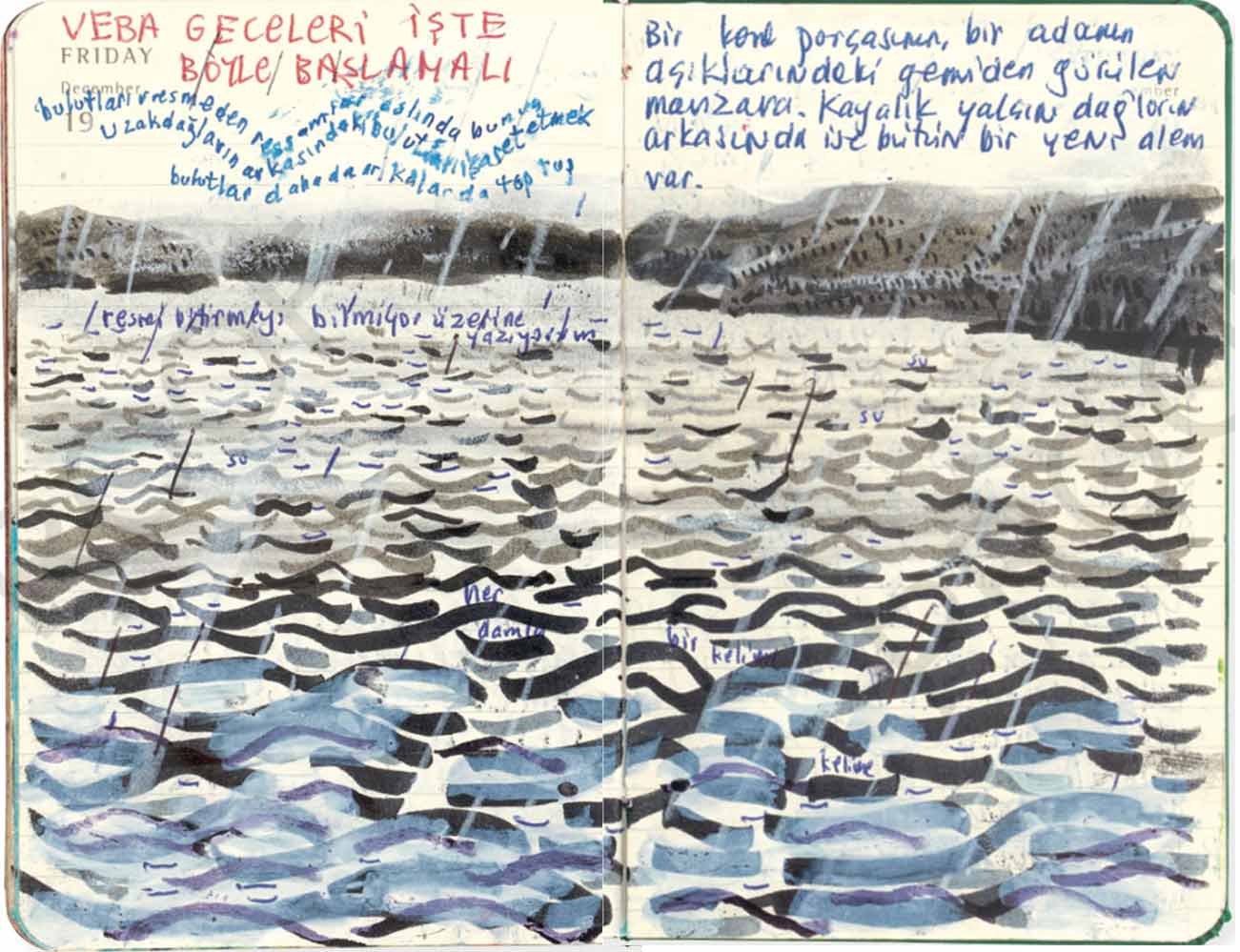
Pages from a novelist’s notebook.

Rain and Mountains

Pages from a novelist’s notebook.

Orhan Pamuk

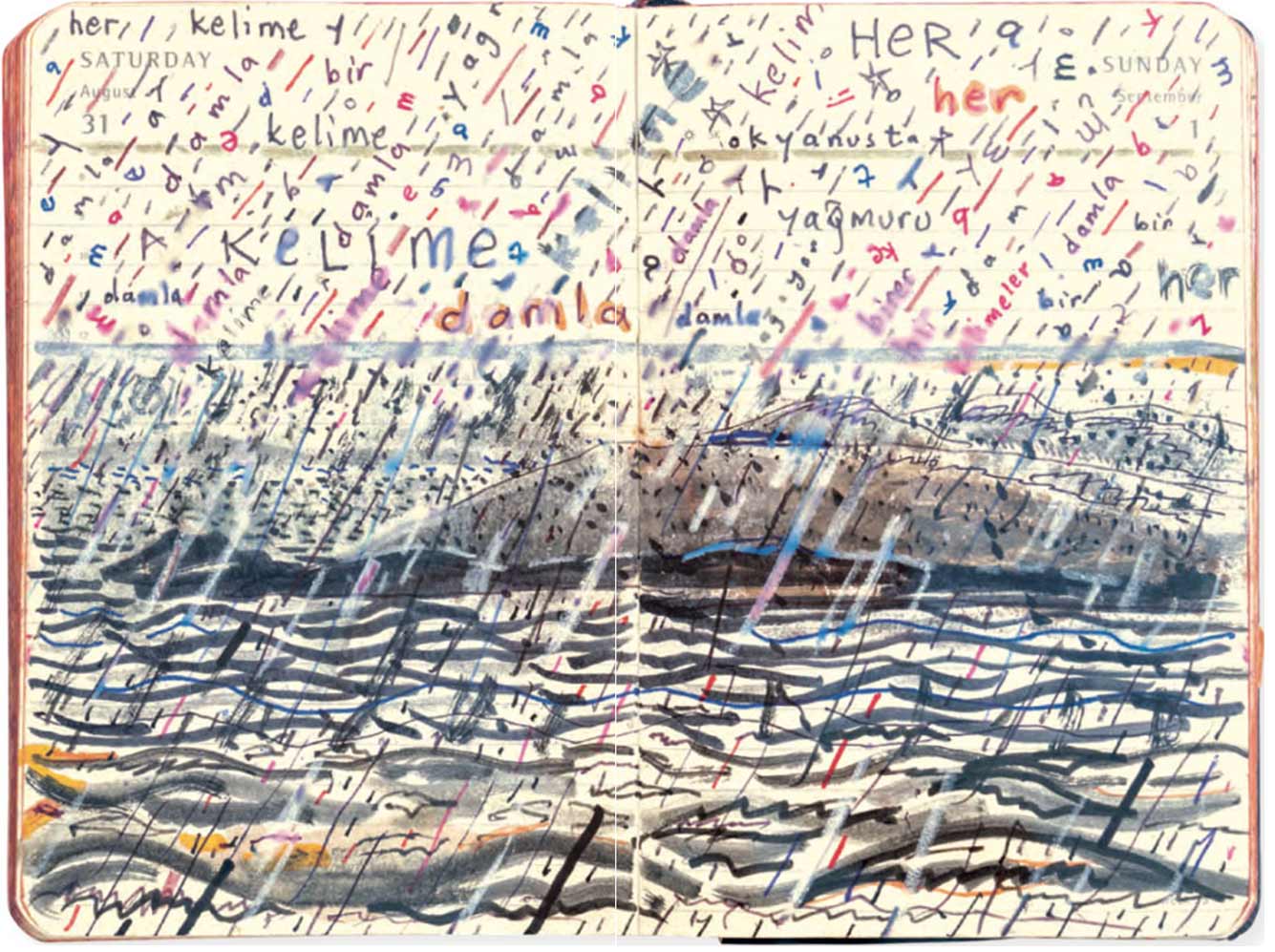
After spending his adolescent years imagining he would become a painter, Orhan Pamuk had a change of heart. “At 22, I killed the painter inside of me,” he recounts, “and began writing novels.” Since then he has gone on to write many novels, including The White Castle, My Name Is Red, Snow, and Nights of Plague, and win the Nobel Prize in Literature. Yet his love of visual art, and in particular landscapes, remained, and in 2008 he “walked into a stationery shop, bought two big bags of pencils, paints, and brushes, and began joyfully and timidly filling little sketchbooks with drawings and colors. The painter inside of me hadn’t died after all.” The following are from these sketchbooks, excerpted from Memories of Distant Mountains: Illustrated Notebooks 2009–2022.

Excerpted with permission from Alfred A. Knopf. ©2024 Orhan Pamuk.
Orhan Pamuk

Orhan Pamuk is the author, most recently, of Istanbul and Snow. He was
awarded the 2005 Prix Medicis and won the International IMPAC Award in
2003 for My Name Is Red.

More from The Nation

Charli XCX performing in San Francisco.

The Genius of Charli XCX The Genius of Charli XCX

On her new album, Music, Fashion, Film, the musician embraces rock.

Books & the Arts / Bijan Stephen

Who Was Emily Brontë?

Who Was Emily Brontë? Who Was Emily Brontë?

A new biography tries to reconstruct her everyday life.

Books & the Arts / Sarah Chihaya

Trump at the White House Ballroom construction site in May 2026.

The Architectural Follies of Trump’s Washington, DC The Architectural Follies of Trump’s Washington, DC

The president plans to remake the capital in his own image, but is all he is doing destroying what’s already there?

Books & the Arts / Karrie Jacobs

“In Minor Keys,” 61st Venice Biennale, 2026, installation view featuring Éric Baudelaire.

The Carnival of Venice Biennale The Carnival of Venice Biennale

That so much of the art of “In Minor Keys” is muted in effect is ironic, because so much of it is overproduced, aspirationally eye-catching, and so big.

Books & the Arts / Barry Schwabsky