
A Holy Space
The introspective club hits of Jamie xx.
The Introspective Club Hits of Jamie xx
With In Waves, Jamie xx—whose real name is James Smith—has perfected what he explored in In Colour: an album full of searching tunes that can double as dance songs.

Jamie XX performing in London in 2024.
(Joseph Okpako / WireImage)
I always seem to be listening to Jamie xx just before bad news. In Colour, his debut album, came out in 2015, and I was still spinning it a year later when Donald Trump won his first term in the White House. Another eight years and another presidential election, and I find myself in the same place—only this time I’m listening to his second album, In Waves. America has fractured once again along the familiar lines of race and class and gender, and I’m here listening to vibey electronic music.
There have been some changes, though, in what I’m hearing. Where In Colour was more self-conscious, In Waves feels effortfully effortless; it’s the sound of sprezzatura. It’s meant for the club or the after-party or—as the Australians call it—the kick-on (the party that starts the next day, after the afters). But more than anything, it’s an accessible entry point for people interested in pursuing the kinds of pleasure you can find only on a club dance floor, surrounded by strangers and enveloped in bass.
With In Waves, Jamie xx—whose real name is James Smith—has perfected what he explored in In Colour: an album full of introspective songs that can double as club hits. Many of its best tracks are something you can play anywhere you’d like to have a little more fun and be a little more thoughtful. It’s easy to think those two things are at odds, but I think that’s wrong—and In Waves makes the argument well. You can bring the club anywhere, in other words. But what Jamie xx is really doing here is a little more subtle: He’s making the case that the club is a holy space, a place worth devoting your life to.
Jamie xx’s style of effortlessness can be difficult to pull off. You have to at once carefully shape and sharpen your sound and then, of course, cover your tracks. As any artisan will tell you, apparent simplicity is one of the hardest things to achieve. And yet one finds it throughout In Waves.
“Breather,” a track on the back end of the album, is a perfect example. The first half of the song feels muted and gold-leafed, almost like a tarnished antique; the second half is a four-on-the-floor kick paired with hopeful chords, the kind you might hear on a more conventional electronic album. It’s got an ease that comes with confidence.
“All You Children,” which follows, also effectively combines its contradictions. It chops and samples the poet Nikki Giovanni’s “Dance Poem” into something you’d hear pouring out of the speakers at an unfamiliar club in an unfamiliar city. It sounds like an immaculate bootleg, something ported from another world. I didn’t think you could put Giovanni on a track coproduced by Jamie xx and the Avalanches and have it feel like part of an intelligible whole, and yet here’s proof that you can.
“All You Children” also exemplifies the other genius of In Waves: The album feels complete, a coherent artistic statement. Sure, it has singles, but it also works as a unified whole. It’s that uncommon musical composition that has a gestalt; it’s much more than the elements that make it up.
This sense of wholeness extends to many of the featured artists on the album: Robyn, Panda Bear, Honey Dijon, and Jamie’s bandmates from the xx, Romy and Oliver Sim, all make cameo appearances. Jamie xx might be from England, but his friends seem to be from all around the world. While you can hear their distinctive influences on their respective tracks, the guests are absorbed into the larger project, the sound that is Jamie xx’s alone. In “Life,” we hear Robyn singing about spending the night with someone special. The first time I heard her on the track, I had to run it back to confirm that the voice I was hearing was in fact hers—because it just works so well, so seamlessly.
If there is a criticism one can make about In Waves, it is that it can sometimes feel too slick, too seamless. That’s not necessarily a bad thing; it’s easy to listen to and through. But I sometimes found myself wishing for more friction: something that did more than wash over me with its beauty.
Even so, as a listener, sometimes you don’t mind too much; not everything needs to be difficult. I’ve played In Waves in airports, in bars, in the car home from the club, while comforting a friend after his breakup, and at the aforementioned kick-on—the places, in other words, where my life was happening. And it has been a wonderful companion, a small sonic escape.
If In Colour showed us a musician coming into his own, In Waves shows us an artist who has taken the time to construct an entire alternate world. How else to take a song that moves like “Treat Each Other Right”? It samples Almeta Lattimore’s soulful ballad “Oh My Love” and refashions it into a narrative scaffolding; in Jamie xx’s hands, it becomes an earnest plea. And I take him at his word here: It doesn’t feel ironic, just PLUR—“peace, love, unity, and respect,” the raver’s creed.
In Jamie xx’s world, love is just around the corner, baddies are everywhere, and joy is fundamental. And the best moments on the album—the exuberance of “Baddy on the Floor,” the optimism of “Life,” the studied hope of “All You Children”—are the ones that fuse the weightlessness of a long night with the euphoria of the dawn.
I don’t know what’s going to happen over the next four years. Nobody does. All I do know is that we’ll have to practice finding joy and keeping our hearts soft; we’ll have to find solace in solidarity, hope in organizing, and maybe even some peace, love, unity, and respect.
Become a Sustaining Donor This September
Between the reemergence of right-wing red-baiting and Donald Trump’s use of the chilling National Security Presidential Memorandum–7 to criminalize left political organizing, we’re seeing McCarthyism reborn before our eyes.
This assault on democracy cannot be ignored or wished away. Resisting it requires bravery in the face of threats and repression, a steadfast commitment to the truth, and the unwavering belief that we can—and will—overcome this darkness.
We must have an independent media that sets the record straight, unearths corruption and abuses of power, and advances a politics of justice and dignity for all if we’re to win this fight.
That’s why I’m writing to you today. This September, The Nation needs to add 100 monthly donors to sustain our progressive journalism. Your contribution makes the next investigative report, the next truth-speaking column, and the next pathbreaking essay all possible.
I hope you’ll support our work with a recurring donation today. If you donate $10 or more a month, we’ll send you a brand new “Hands Off the Free Press!” sticker to recognise your commitment to our cause. Please, donate today.
Onward,
Katrina vanden Heuvel
Editor and Publisher, The Nation
More from The Nation

Edward Said: Between Worlds Edward Said: Between Worlds
A new film biography depicts the Palestinian writer as still out of place—and ahead of his time.
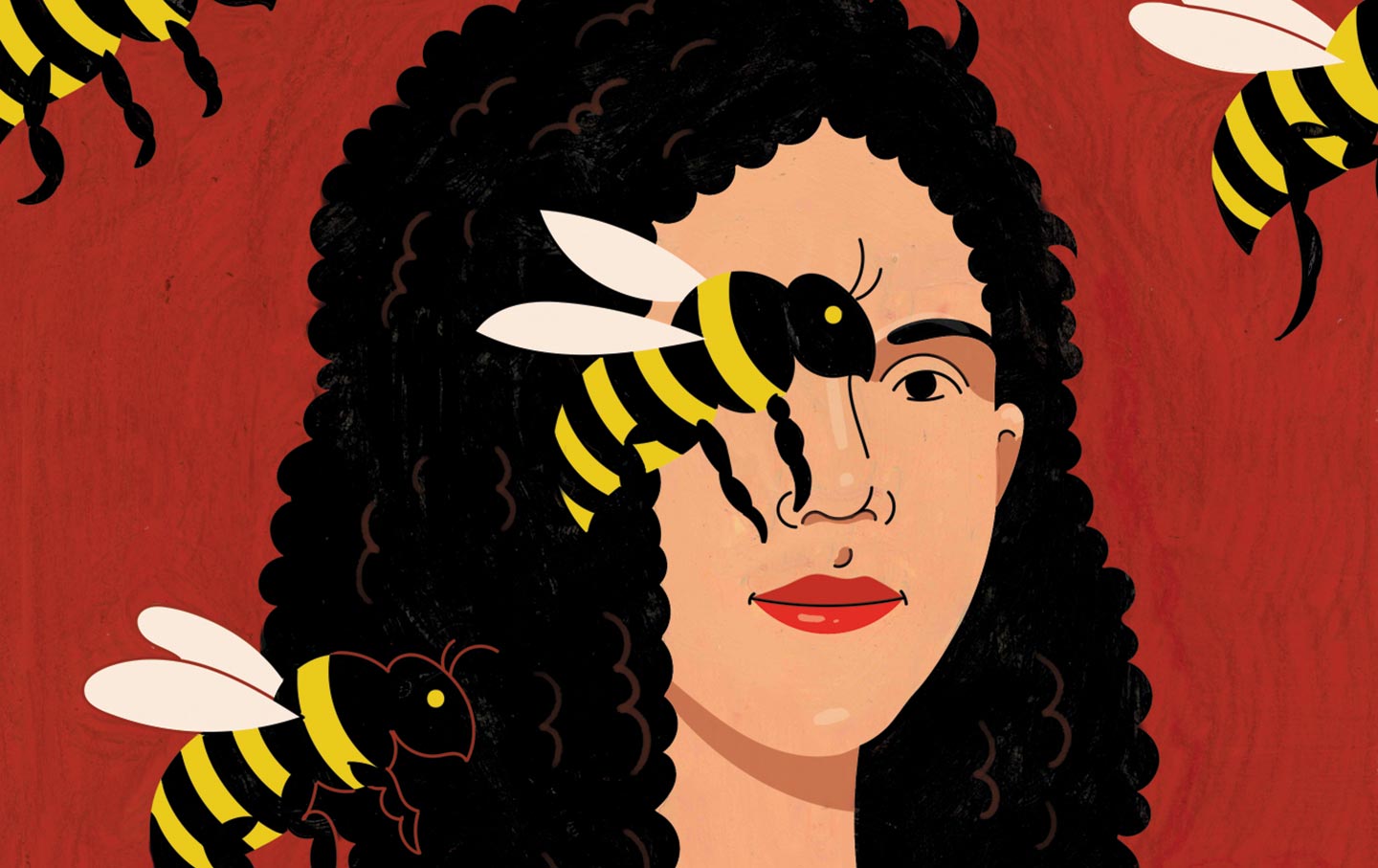
Imani Thompson’s Grad-School Thriller Imani Thompson’s Grad-School Thriller
In Honey, the novelist offers a different take on the campus satire.

Love and Literature in Leslie Fiedler’s America Love and Literature in Leslie Fiedler’s America
When will the American novel grow up?

What’s Behind the Dubai-ification of America’s Yemeni Cafés? What’s Behind the Dubai-ification of America’s Yemeni Cafés?
Over the years, Yemeni cafés have become beloved establishments for students and coffee lovers alike. But recently they have undergone a conspicuous aesthetic makeover.

