
Will Scholars Take a Stand Against Scholasticide in Gaza?
The fight inside the historical profession heats up.
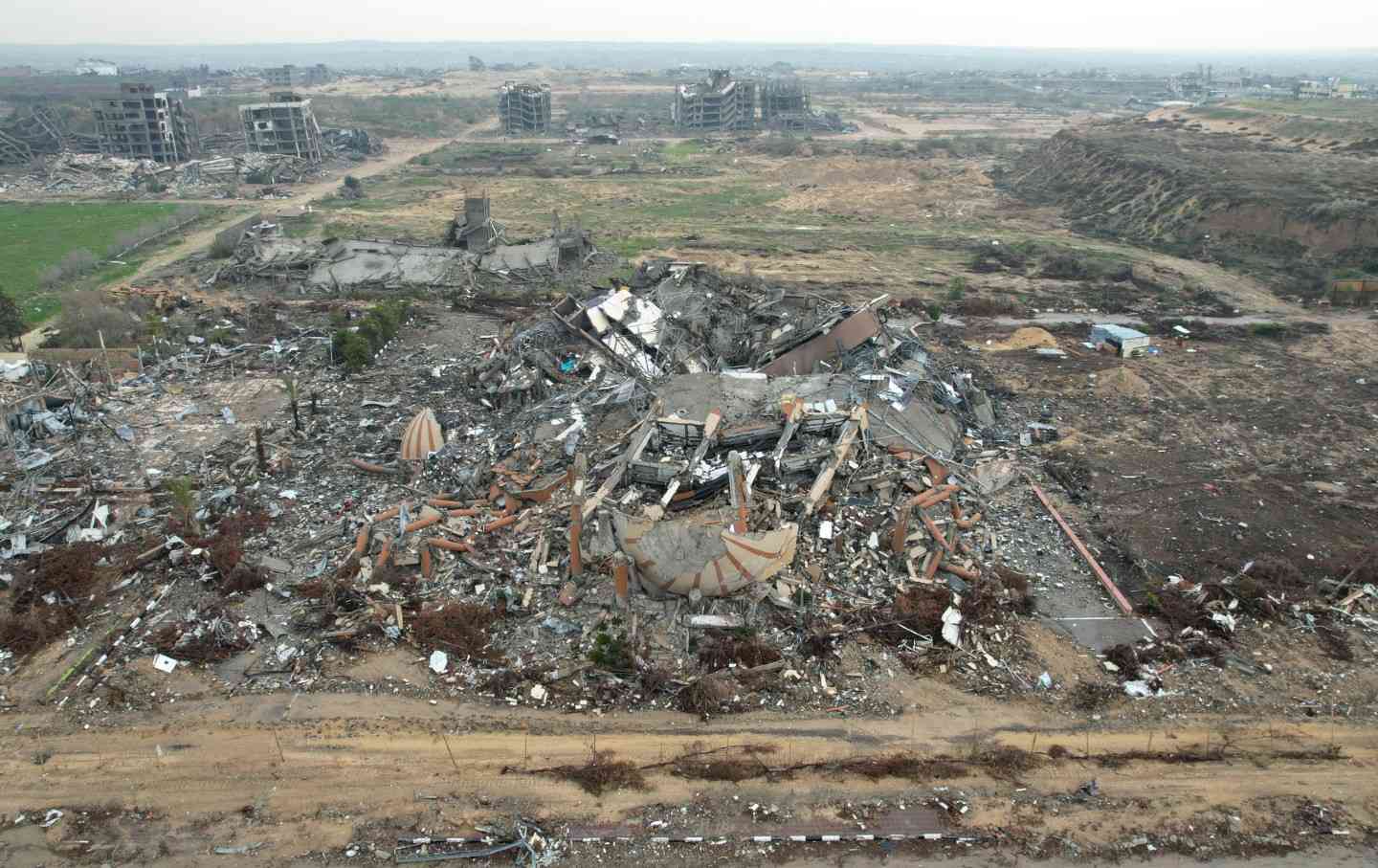
An aerial view shows the University of Palestine campus in al-Zahra, Gaza, on February 10, 2025, damaged by 15 months of continuous Israeli military attacks.(Mohammed Fayq / Anadolu via Getty Images)
The activities of scholarly organizations do not typically elicit general interest, even for many inside the discipline. Annual meetings are places to test-drive new ideas, see colleagues, and scout publishers. Until Zoom came along, they were mainly job fairs where newly minted PhDs lined up to be grilled by search committees.
Occasionally, however, these meetings explode over political debates that can’t be ignored. That was the case at this year’s Annual Meeting of the American Historical Association (AHA), the nation’s most venerable learned society, chartered by Congress in 1889, boasting Woodrow Wilson and Theodore Roosevelt as presidents. On two previous occasions, the organization I cochair, Historians for Peace and Democracy (HPAD, formerly Historians Against the War), gathered sufficient signatures to put resolutions censuring Israel’s violations of Palestinian educational rights on the agenda of annual business meetings. In each case, our resolutions were voted down. Some argued that Israel was being unfairly singled out, while others maintained that the AHA must avoid “politics.”
In 2025, it was different. HPAD crafted a “Resolution to Oppose Scholasticide in Gaza,” citing UN documents. “Scholasticide” refers to the intentional obliteration of a people’s cultural and historical apparatus: their archives and libraries, their universities, the bodies of their educators. We anticipated that this charge would have deep resonance with historians, since our professional lives focus on bringing the past into the present, and this proved to be correct. HPAD mobilized intensively, as did our allies in Historians for Palestine.
The January 5 AHA Business Meeting saw more than 500 members crowd a ballroom at New York’s Midtown Hilton, with more kept out by fire marshals. After a debate pro- and con-, the vote was overwhelming: 428–88 in favor of the resolution. The next day, The New York Times reported on the meeting in detail, and extensive coverage followed both here in the United States and in Israel.
And yet, 12 days later, the AHA’s elected council exercised its authority to veto the resolution, refusing to allow the membership to vote. Its single contention that the resolution “contravene[d] the Association’s Constitution and Bylaws, because it lies outside the scope of the Association’s mission and purpose” was at odds with previous practice. The obvious precedent was the 2007 business meeting, where members passed a resolution brought by our organization that was critical of the Iraq War, and which urged historians “to do whatever they can to bring the Iraq war to a speedy conclusion.” At that time, members of the council did not suggest this measure was outside the organization’s mission or constitution. Instead, they submitted it to the membership for a debate followed by an online vote, where it passed by an overwhelming margin.
In recent years—and without consulting the membership—AHA’s council has criticized multiple foreign governments. In February 28, 2022, it released a statement “condemn[ing] in the strongest possible terms Russia’s recent invasion of Ukraine” and Russian President Vladimir Putin’s “distorted and tendentious misreading of history” as justification for the attack.
Indeed, the resolution on scholasticide is clearly consistent with the AHA’s “Guiding Principles on Taking a Public Stance.” Action is appropriate: “When public or private authorities, in the United States or elsewhere, censor or seek to prevent the writing, publication, exhibition, teaching, or other practices of history or seek to punish historians.”
HPAD does not believe that a resolution opposing scholasticide in Gaza or anywhere else is “outside the scope of the Association’s mission and purpose.” It is our understanding that council’s real concerns were more practical: first, that going on record criticizing the government of Israel will materially damage the Association’s advocacy work in Washington, DC, pioneered by retiring executive director James Grossman; second, that any such action could result in the loss of the major foundation grants which pay for many of the AHA’s programs.
Historians for Peace and Democracy would have welcomed a frank debate over those institutional concerns versus the need to speak out about the horrifying violence directed at our fellow scholars, their students, and the 12 universities in Gaza that now lie in ruins.
Indeed, we still hope to have that debate. What we fear, as do many outside the historical profession, is the onset of anticipatory obedience, or as a statement by the American Association of University Professors describes it, “acting to comply in advance of any pressure to do so.” The historians Ellen Schrecker and Mary Nolan, both members of our Steering Committee, have pointed out the parallels to how American universities acted during McCarthyism, firing anyone who refused to “name names” to congressional committees or the FBI, and German universities’ purging Jewish scholars in advance of Nazi edicts.
Many AHA members are deeply upset by the veto. They thought the AHA belonged to its members, rather than to the 11 among the 16-member council who backed the veto. But rather than advocating withdrawal or mass resignations (as is happening in the Modern Language Association, after its leadership refused to allow members to vote on a BDS resolution), we have decided to appeal the decision.
Working closely with leading Palestinian historians like Sherene Seikaly (who spoke first for us on January 5, followed by the Israeli historian Raz Segal), HPAD and the Palestine Historians Group drafted a “Petition to the AHA Council.” Over 1,900 historians, including four former AHA presidents, have signed it, and we sent it to the council today, March 6, for consideration at their meeting on March 20.
We are requesting that the council open an online debate and then let the members vote, as in the past: Should the institutional imperatives of the AHA trump the imperative to declare solidarity with fellow scholars in extremis? And we are bringing a similar resolution denouncing scholasticide in Gaza to the annual meeting in April of the other major disciplinary body, the Organization of American Historians.
Ultimately, this fight inside the historical profession is about more than standing up against one of the most horrific war crimes in recent history, implemented with massive backing from our government, using our tax dollars. It also raises the question of whether historians should avoid addressing present problems and bringing their historical knowledge to bear on them.
Popular
“swipe left below to view more authors”Swipe →Former AHA president Barbara Weinstein, who gave the closing argument for our resolution, challenges that perspective in a History News Network essay, “What is the role of the historian?” In her view, the most “important service” we can perform is “challenging commonplace assumptions and hierarchies of knowledge and power.” For her, and for many of us, “the historian should be, above all, a disrupter, by which I mean a scholar who contests conventional ways of viewing the past and the past’s relationship to the present.”
It is urgently important that American historians speak out clearly about the destruction of the Palestinian educational system, and the need to rebuild. Even if members of the council think differently, they should let their members debate—and vote.
Support independent journalism that does not fall in line
Even before February 28, the reasons for Donald Trump’s imploding approval rating were abundantly clear: untrammeled corruption and personal enrichment to the tune of billions of dollars during an affordability crisis, a foreign policy guided only by his own derelict sense of morality, and the deployment of a murderous campaign of occupation, detention, and deportation on American streets.
Now an undeclared, unauthorized, unpopular, and unconstitutional war of aggression against Iran has spread like wildfire through the region and into Europe. A new “forever war”—with an ever-increasing likelihood of American troops on the ground—may very well be upon us.
As we’ve seen over and over, this administration uses lies, misdirection, and attempts to flood the zone to justify its abuses of power at home and abroad. Just as Trump, Marco Rubio, and Pete Hegseth offer erratic and contradictory rationales for the attacks on Iran, the administration is also spreading the lie that the upcoming midterm elections are under threat from noncitizens on voter rolls. When these lies go unchecked, they become the basis for further authoritarian encroachment and war.
In these dark times, independent journalism is uniquely able to uncover the falsehoods that threaten our republic—and civilians around the world—and shine a bright light on the truth.
The Nation’s experienced team of writers, editors, and fact-checkers understands the scale of what we’re up against and the urgency with which we have to act. That’s why we’re publishing critical reporting and analysis of the war on Iran, ICE violence at home, new forms of voter suppression emerging in the courts, and much more.
But this journalism is possible only with your support.
This March, The Nation needs to raise $50,000 to ensure that we have the resources for reporting and analysis that sets the record straight and empowers people of conscience to organize. Will you donate today?
More from The Nation

The Cinema of Societal Collapse The Cinema of Societal Collapse
This year’s Oscar-nominated international feature films—especially The Secret Agent and Sirāt—tackle what it means to live and die under tyranny.
Can the Dictionary Keep Up? Can the Dictionary Keep Up?
In Stefan Fatsis’s capacious, and at times score-settling, personal history of the reference book, he reveals what the dictionary can still tell us about language in modern life

Why We Misunderstand the Chinese Internet Why We Misunderstand the Chinese Internet
Journalist Yi-Ling Liu’s The Wall Dancers traces how the Internet affected daily life in China, showing how similar this corner of the Web is to the one experienced in the West.
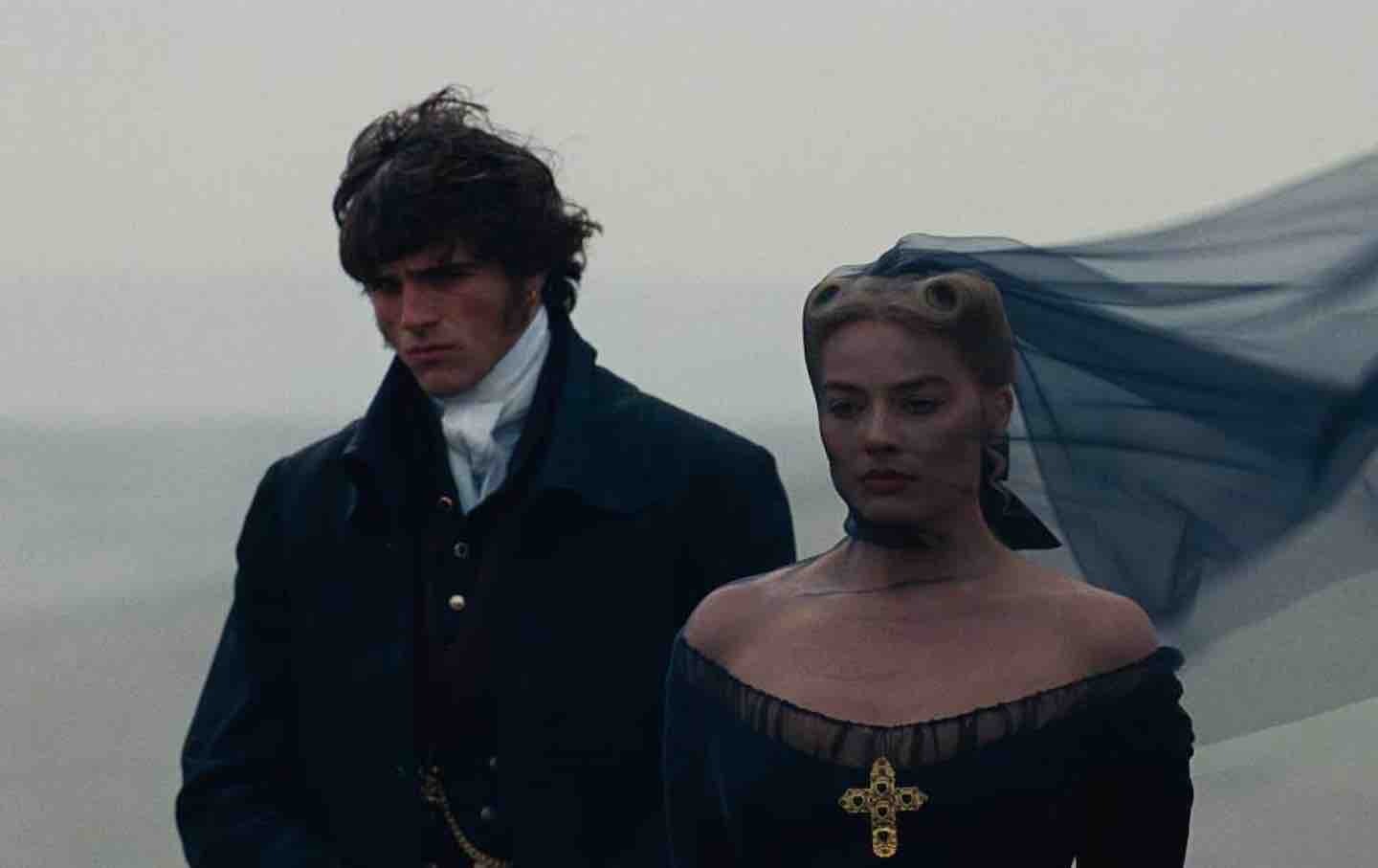
The Bad Vibes of “Wuthering Heights” The Bad Vibes of “Wuthering Heights”
Keeping its distance from the novel, Emerald Fennell’s film ends up offering us a mirror of our own times.

Has Contemporary Fiction Ignored the Working Class? Has Contemporary Fiction Ignored the Working Class?
Claire Baglin’s bracing On the Clock gives its readers a close look at work behind the fry station, and in the process asks what experiences are missing from mainstream letters.
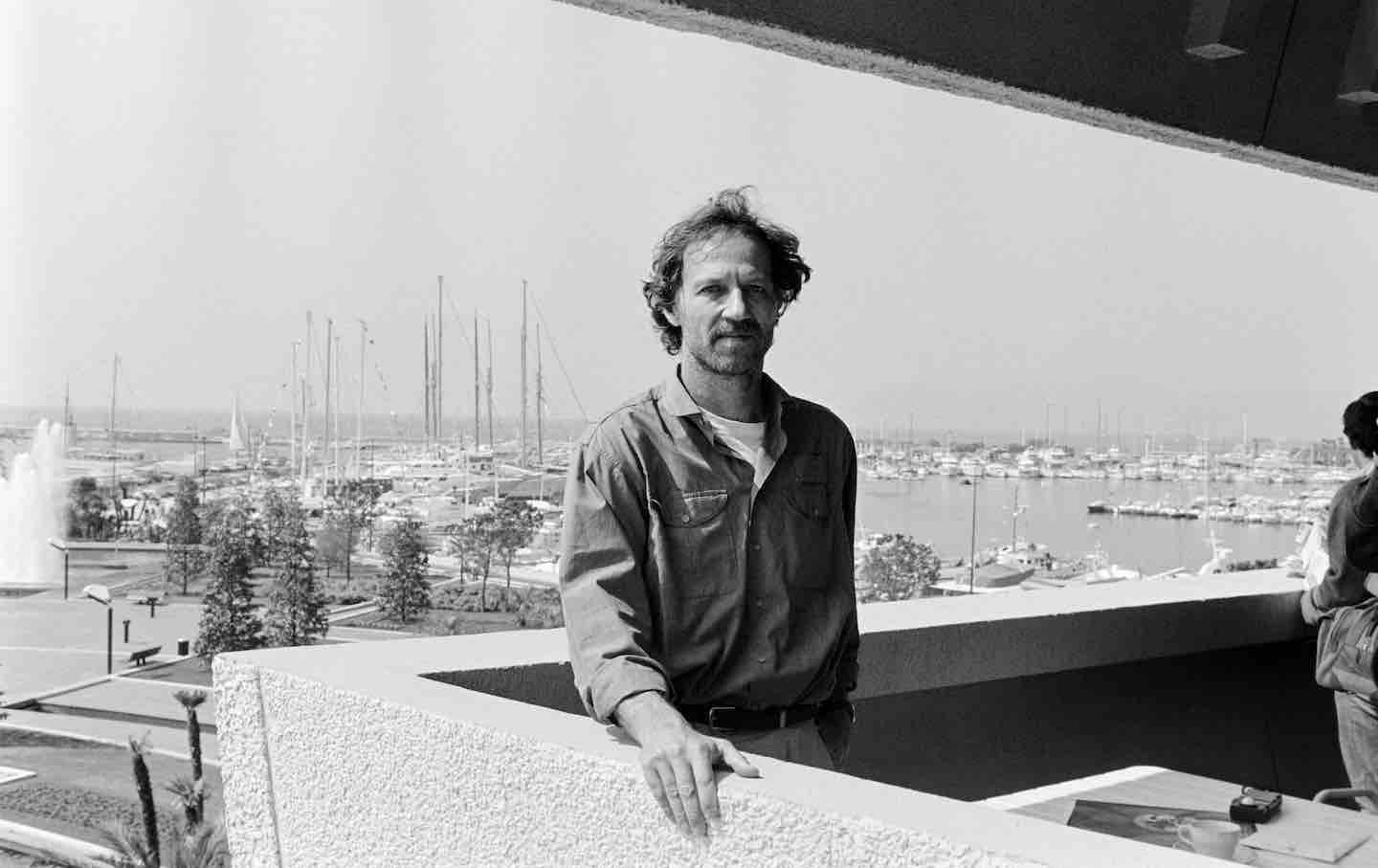
Werner Herzog Between Fact and Fiction Werner Herzog Between Fact and Fiction
The German auteur’s recent book presents a strange, idiosyncratic vision of the concept of “truth,” one that defines how he sees the world and his art.

