
Inside Cornell’s Week of Protest
“We won’t be silenced anymore. Our university needs to start protecting us, like they should’ve with Jane Doe and all other survivors on campus.”
At approximately 3 am on Monday, October 5, a glass door shattered at the entrance of Day Hall, Cornell’s main administration building. Anonymous activists painted “SMASH THE PATRIARCHY” and “AT CORNELL RAPISTS ARE PROTECTED PROTESTORS ARE EXPELLED” in red across the walls, marking the beginning of a week of community action. According to a statement from the activists sent to The Cornell Daily Sun, the demonstration was in response to a lawsuit filed September 14 by a former Cornell student who alleges that she was gang raped by seven members of the Chi Phi fraternity in 2024.
In the days that followed, Cornell students, faculty, and staff organized the Justice for Survivors protest, an open town hall, a “campuswide economic blackout,” and a seven-hour sit-in, turning outrage over the allegations—and the university’s handling of them—into a broader call for institutional change.
Hours after the early-morning action at Day Hall, chants echoed across Ho Plaza as the community gathered at 4:30 pm for the student-led Justice for Survivors protest, organized by a coalition of 20 student-led organizations. According to one Cornell professor who has been in Ithaca for decades, the demonstration was “the largest student protest at Cornell since Vietnam.”
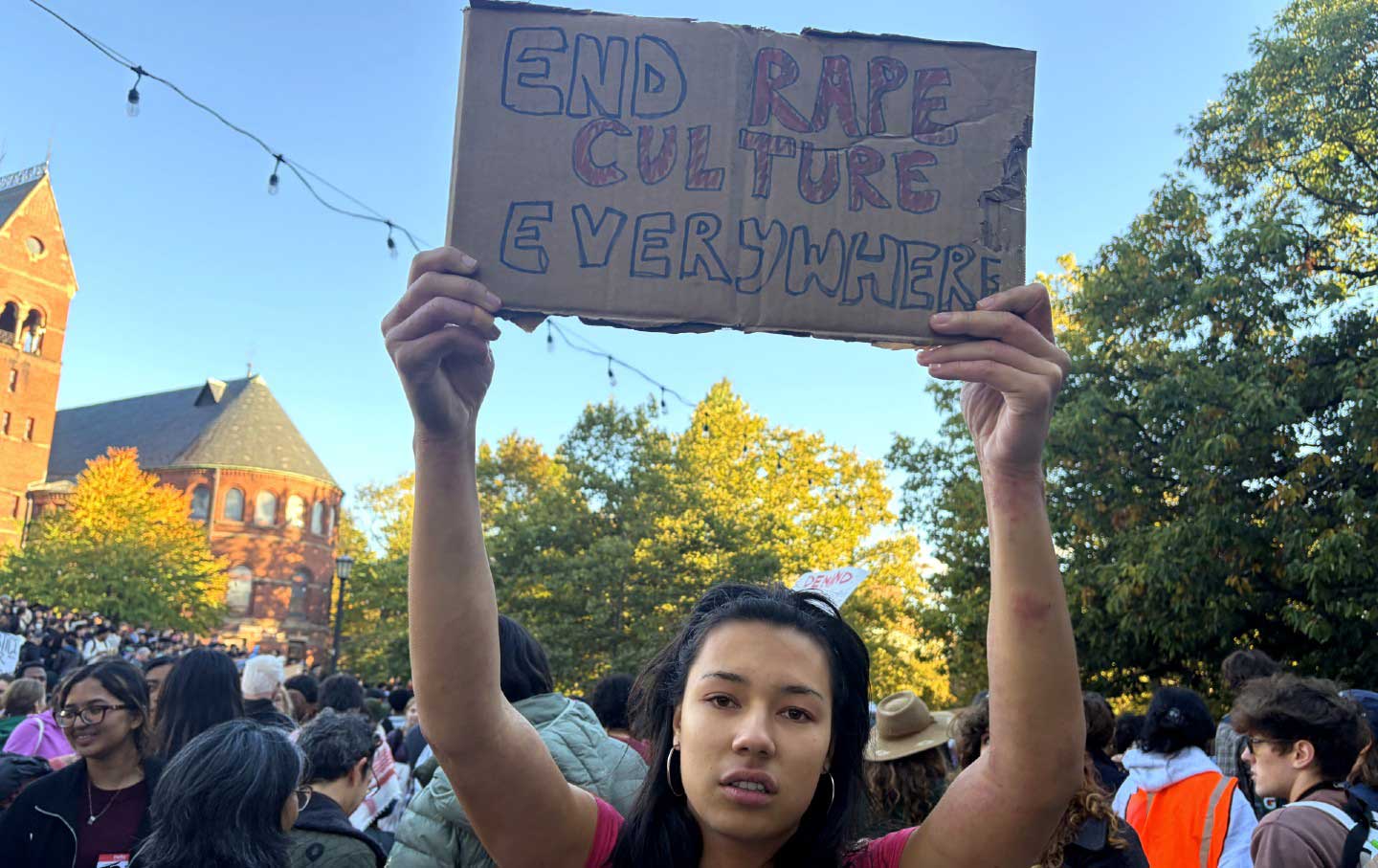
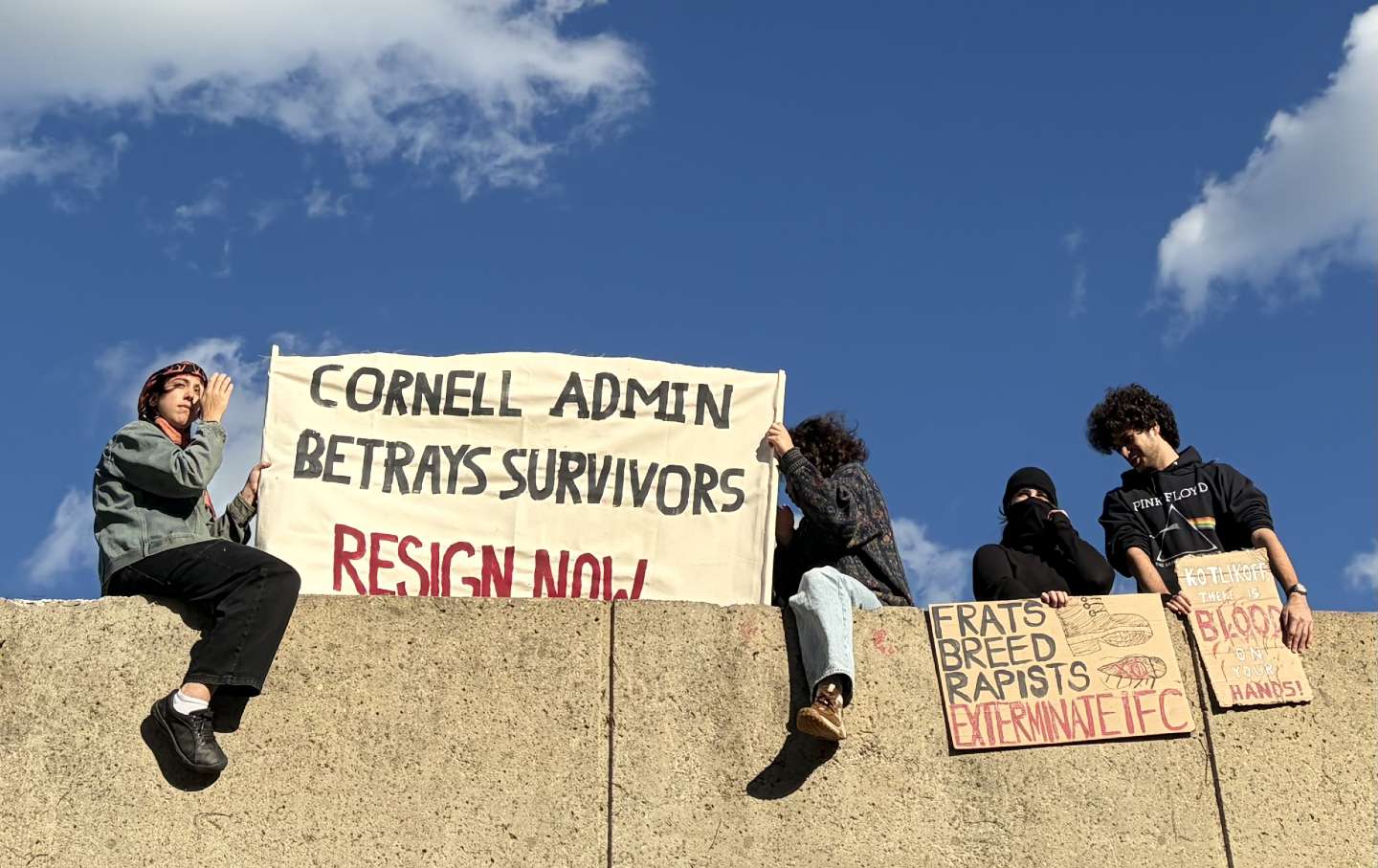
Across campus, students raised trembling voices, burst into applause, and brushed away tears. Their faces reflected the anger, hope, and heartbreak of the moment. Chants rang out in the mid-Autumn chill, and protest signs read:
“Cornell admin betrays survivors. Resign now.”
“We are Jane Doe.”
“CU, it’s SA, not essay. Stop protecting rapists.”
“Frats breed rapists.”
“Kotlikoff, there is blood on your hands.”
Protestors’ calls for systemic change were echoed by organizers: “We won’t be silenced anymore. Our university needs to start protecting us, like they should’ve with Jane Doe and all other survivors on campus,” read one post advertising the protest. The rally’s five main demands were that Cornell expel or revoke the degrees of all alleged perpetrators, require independent hearings and minimum sanctions for sexual assault, allow for an external investigation into Cornell’s administration, institute mandatory sexual assault prevention trainings for students and trauma-informed training for CUPD, and fully comply with New York State’s “Enough Is Enough” Law.
At the gathering, Students for a Democratic Cornell (SDC) public relations co-chair Saya Taylor opened the protest with a fiery speech, criticizing the university systems that she said enabled the alleged assault.
“The systems placed by this university and the state of New York have allowed sexual assault culture to thrive and for rape to go unpunished,” Taylor said. “Jane Doe deserved a campus that supported her. Jane Doe deserved an administration that delivered a fair and proper judicial process. Jane Doe deserved a police department that actually followed up on her case. Instead, she was silenced. Her rapists free to walk the grounds of Cornell under a system that chose the university over the student. Jane Doe was failed by the system before she even set foot in the Chi Phi house.”
The crowd shouted “shame” after each of Taylor’s statements.
Even amid the mounting outrage, speakers repeatedly pulled the crowd back toward a shared purpose, reminding students that despite their differences, they had come together to stand up for one another.
“Repeat after me: One struggle, one fight. One struggle, one fight,” Athena Holloway, Cornell NAACP president, chanted.
“Look around you. We come from different races, genders, sexualities, classes, religion, abilities, communities, and experiences. But today, our struggles intersect,” Holloway said.
But students weren’t the only ones showing up. Professors also voiced support for survivors and those calling for institutional change.
“They call it the ‘Cornell Seven,’ but we are Cornell too,” said Cornell professor Julia Chang. “The decades of Jane Does are Cornell. The 58,000-plus alumni who signed the petition in support of Jane Doe, they too are Cornell. The dozens of student organizations that make this protest happen today are Cornell.”
Students, faculty, and staff then marched side by side across campus toward Day Hall, their chants of “When do we want justice?” and “Now!” reverberating through Cornell’s walkways.
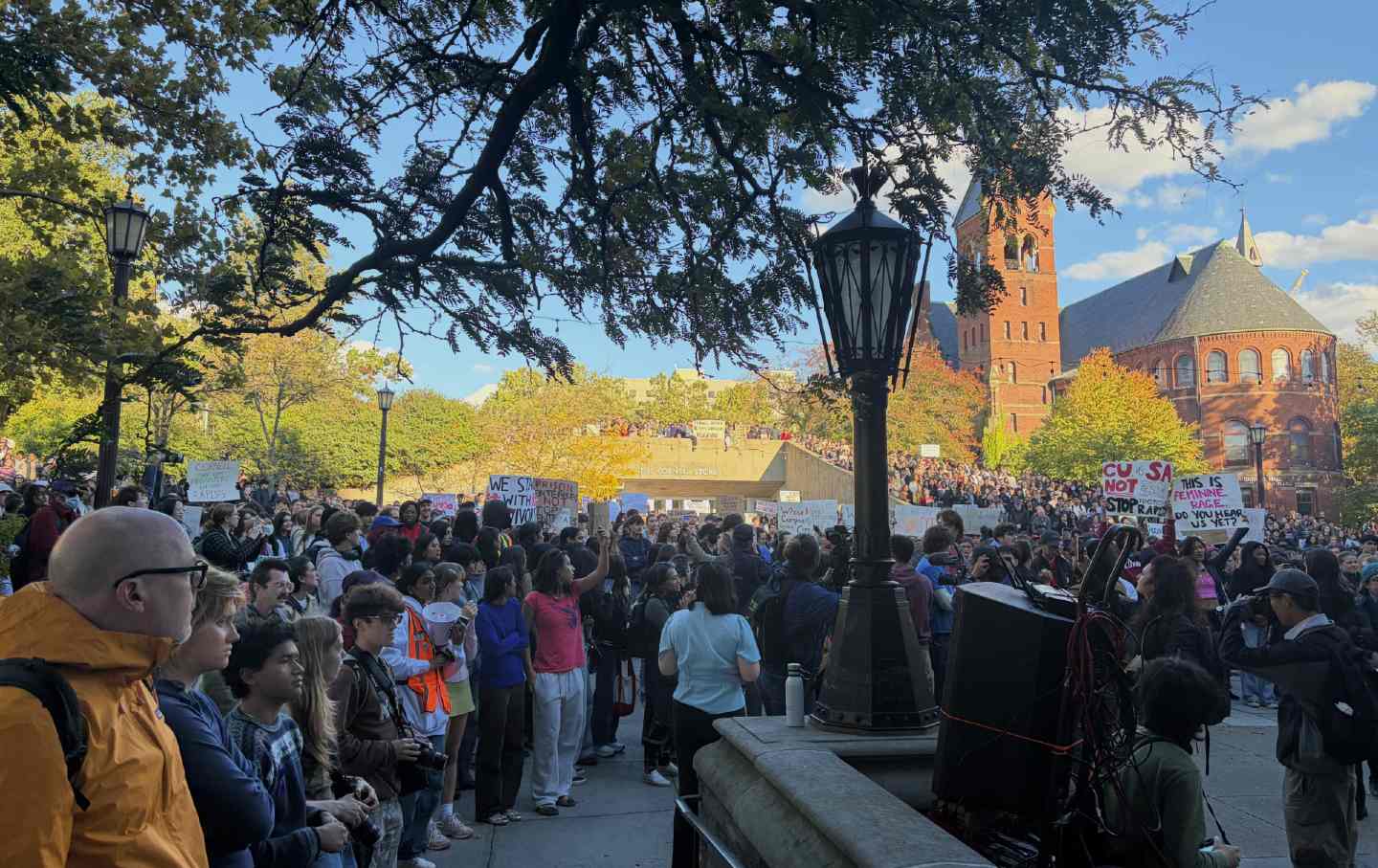
For organizers like SDC community co-lead John Hartnett, the turnout—and the attention the protest drew nationally—signaled promise of real change.
“It’s just great to see the support we have from the community,” Hartnett said. “If you look around, there are hundreds, maybe thousands of people here. We have national media. International media. We’re not going to stop organizing.”
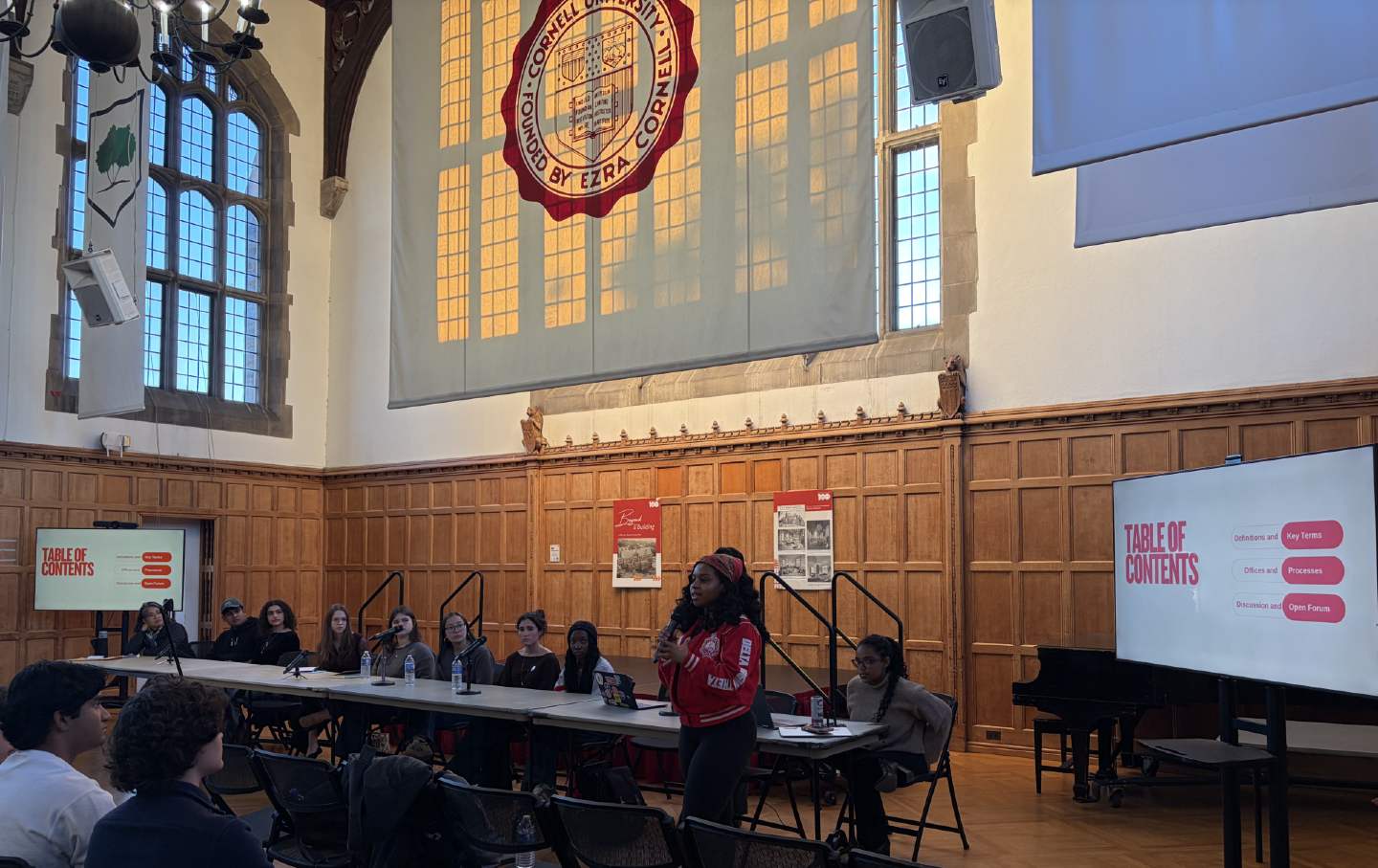
The demonstrations continued the following day: On Tuesday, October 6, 21 student organizations, with cosponsorship from the Feminist, Gender, and Sexuality Studies Department, hosted an open town hall at Willard Straight Hall. Twelve speakers, including professors and student representatives, walked attendees through the allegations, Cornell’s Title IX process, the Office of Civil Rights, the Office of Student Conduct and Community Standards, and Cornell-specific nondiscrimination and sexual misconduct policies.
“I hope attendees of the town hall not only got a better understanding of Title IX and the existing systems that exist to help us, but are also encouraged to hold our administration accountable,” said Jonathan Lam, copresident of Cornell’s ACLU Chapter.
The town hall ended with a question-and-answer session in which students inquired about how they could help Jane Doe seek justice.
“We were moved to see the Cornell community come together at the town hall to create a space of safety and care. But the work continues, and Jane Doe’s story will not be forgotten,” Alysha Adusei, vice president of the Wanawake Wa Wari Cooperative, said.
By Wednesday, the week of action had entered its third day. Five student organizations hosted a “Zero Day Economic Blackout,” calling on members of the community to participate in a sit-in at Toni Morrison Dining Hall from 1:30 to 8:30 pm.
“This is the first sit-in that Cornell has had in a long time, so it’s good to see that this sort of organizing is coming back to campus when it felt very dormant on a wide range of issues,” Hartnett said.
Popular
“swipe left below to view more authors”Swipe →Hartnett estimated that hundreds to thousands of people would come and go throughout the sit-in, though he said many dedicated organizers, including himself, planned to remain for the full seven hours, matching the duration of Jane Doe’s alleged assault.
“What’s next for this coalition is a continued dedication to action,” Hartnett said. “Sexual assault is not a new thing on Cornell’s campus, and [the administration] hasn’t made any changes. We are going to continue to organize actions to the point where they can’t take another hit to their credibility, another hit to their reputation, another hit to their pocketbooks.”
Over the course of three days, students, faculty and staff gathered in different spaces and through different forms of action, but returned to the same demands: support for survivors, changes to the systems they believe have failed them, and accountability.
Popular action will not be confined to the campus week of action. Six social media advocates unaffiliated with Cornell are organizing a “grassroots rally” on October 13 at 3 pm at 100 N. Tioga St., extending the response beyond campus and into the broader Ithaca community.
But the week of action also drew a counter-response from figures who disputed the allegations and defended the seven men named in the lawsuit. One counterprotester came to Café Jennie in the Cornell Store at approximately 4 pm on Wednesday and held up protest signs reading “Matthew Ingalls was raped” and “Cornell 7 innocent.”
That opposition also surfaced beyond campus. According to a video from The Cornell Daily Sun, online commentator Michael Tracey disrupted a Wednesday night Common Council meeting after claiming that his public-comment card had been discarded and that he was denied the opportunity to speak about a proposed moratorium on Cornell student event permits. After Mayor Robert Cantelmo reprimanded him for speaking out of order and alderperson David Shapiro escorted him from the council chambers, Tracey returned and shouted at council members, criticizing the proposed resolution and their response to the allegations against seven men named in the Cornell lawsuit. Earlier that day, Tracey had also posted “From the River to the Sea, Raping Crimes will be Free” on X about the case.
By Wednesday night, the response to the lawsuit had stretched well beyond Cornell’s campus, pulling students, faculty, local officials, outside activists, and commentators into an increasingly public struggle over accountability—and over whose voices would define what came next.
More from The Nation
Netanyahu Came to New York. New Yorkers Were Ready for Him. Netanyahu Came to New York. New Yorkers Were Ready for Him.
Scenes from the defiant protest against the genocidal leader’s UN speech.
A Message From Prairieland Prisoner Autumn Hill: “Don’t Be Afraid” A Message From Prairieland Prisoner Autumn Hill: “Don’t Be Afraid”
I talked to the political prisoner about the politics of love, her case, surviving as a trans woman in a men’s prison, and how she makes it through the day.
The Impossible Will Take a Little While: The Power of Persistence The Impossible Will Take a Little While: The Power of Persistence
In troubled times, history offers a lesson: Seemingly impossible change can begin with ordinary people who refuse to give up.
Gloria Steinem’s Many-Splendored Feminist Life Gloria Steinem’s Many-Splendored Feminist Life
The feminist icon lived the struggle for gender equality and always found time to lend support and solidarity to other women leaders, even in her final days.
No, Woke 1 Was Not Crazy No, Woke 1 Was Not Crazy
AOC and others are laughing off 2020 as a wild, isolated moment. None of that is true.
How Occupy Wall Street Still Explains Politics Today How Occupy Wall Street Still Explains Politics Today
It sowed the seeds for a new era of social movements—but its politics of powerlessness should act as a cautionary tale.

