On Being Awarded the Women Waging Peace Award
It has never been more urgent to revive the idea of peace, not as a slogan, but as the only serious, respectable, responsible, reasonable, humane position.
In a world that seems to be spiraling out of control, in which chaos seems to reign and peace feels elusive, your celebration of peace, disarmament, and sanity becomes ever more important.
I regret not being with you—but I am with you in spirit, deeply honored by your recognition of my life’s purpose and passions.
I’ve always believed that journalists are more than spectators to the events and historical developments that we cover. We’re also participants. That’s especially true at a magazine like The Nation. We’ve never pretended to stand outside the struggle—against unjust occupations, illegal wars, genocide, and other crimes against humanity.
We believe in a world devoted to peace and possibility and human flourishing, as opposed to one addicted to war and division and exploitation. We see our work, our journalism, as a small but noble way of contributing to making a better world possible.
The Nation remains committed today, as it has been for much of its history, to the idea that advocating for peace is anything but naïve—that it is, in fact, the only realistic position.
The Nation was founded in 1865 by abolitionists, in the aftermath of the Civil War. An editorial in the very first issue expressed the hope that the Confederacy’s defeat represented the beginning of the end of “the conflict of ages, the great strife between the few and the many, between privilege and equality, between law and power, between opinion and the sword.”
That conflict continues to this day, even though over time we have become somewhat more skeptical of the idea that war can lead to anything other than more war. The Nation’s commitment to the peace movement crystallized in the 1920s, when, having just watched one senseless world war consume a generation, the magazine’s editors participated in an international argument over how peaceful means might help adjudicate disputes between countries. A movement rose up to try to write peace into international law. One result was the Kellogg-Briand Pact of 1928, which declared war illegal as an instrument of policy. History has not been kind to the Pact. It’s remembered now, when at all, as hopelessly unenforceable. The Nation saw that coming. The magazine didn’t oppose outlawing war because it went too far. We opposed it because it didn’t seem to go far enough.
In 1945, when the United States dropped the world’s first atomic bomb on Hiroshima, our editor at the time, Freda Kirchwey, argued that peace now required something as radical as a world government to harness the powerful technology in the interests of people rather than states. Some of what she wrote rings with new truth in the age of AI. “If we are to survive our new powers we must understand their full meaning,” she wrote. “This program will sound drastic only to people who have not yet grasped the meaning of the new discovery. It is not drastic. We face a choice between one world or none.” Kirchwey and The Nation understood immediately what a lot of the world took years to absorb: that the old calculus of war had changed permanently, and that even minor wars might spin so far out of the control of those who began them as to threaten humanity itself. Only international cooperation on a scale never before instantiated could save the planet from destruction.
Over the years, The Nation has published the writing of more than a dozen Nobel Peace Prize winners, including Martin Luther King Jr., Elie Wiesel, Willy Brandt, and Desmond Tutu, among others. One former Nation editor, Emily Balch, helped found the Women’s International League for Peace and Freedom. In 1946, she won the Nobel Peace Prize.
Then there was our civil rights correspondent in the 1960s. From 1961 to 1966, King published annual reports in The Nation updating readers on everything the civil rights movement had accomplished that year, and all there was still left to do. King, of course, spent his final years warning that peace at home could never be achieved so long as the US remained a force of imperialism and endless war abroad. It was at a Nation-sponsored event in Los Angeles in early 1967, two months before his more famous Riverside Church speech, that King first publicly denounced the war in Vietnam.
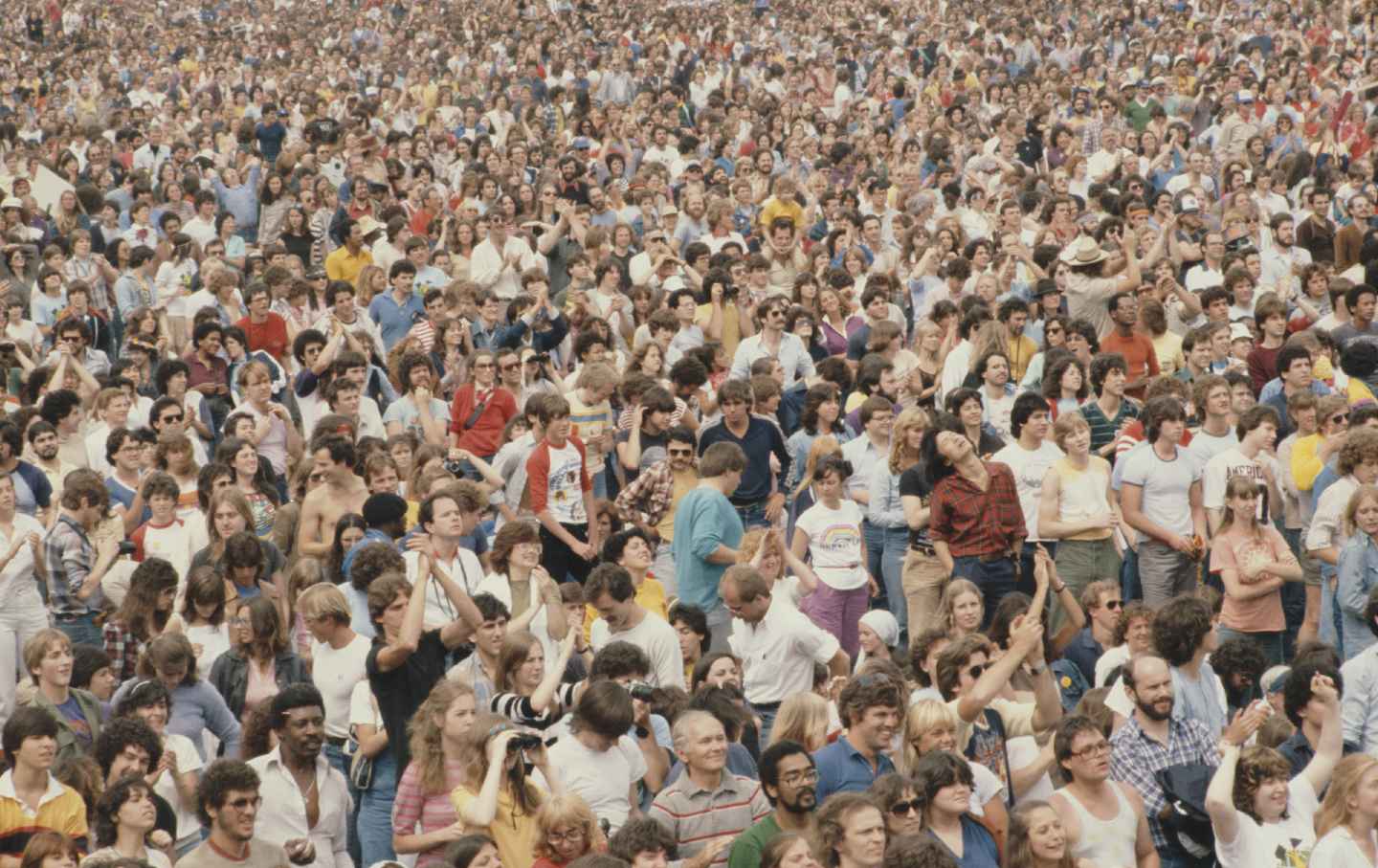
In 1980, a Nation intern published a 500-word editorial calling for a bilateral freeze on nuclear weapons production by the United States and the Soviet Union. Two years later, in June 1982, a million people gathered in Central Park to demand an end to the nuclear arms race, still the largest political demonstration in American history. The Nation had a small but spirited delegation there. Within months, hundreds of town meetings, municipalities, and peace, religious, labor, and civil rights groups had endorsed the idea. The nuclear freeze movement was born.
A few years later we covered the historic and courageous efforts of Soviet leader Mikhail Gorbachev to pursue the abolition of nuclear weapons. My late husband Stephen Cohen, who worked tirelessly for good relations with the former Soviet Union and Russia, long believed, as I do, that Gorbachev was a great and visionary leader, and the greatest reformer in his country’s tormented history, someone who understood, before almost anyone else in power, that security could be built through disarmament rather than dominance. I suggest you find Gorbachev’s remarkable 1988 speech to the UN General Assembly. He spoke of the demilitarization of international relations, of movement toward a nuclear-free and nonviolent world. His words rang out in a body dedicated to ending the scourge of war.
Today, the risk of nuclear war is at its highest level since the 1962 Cuban missile crisis. But with the US engaged in two chaotic, bloody, and escalating wars, with the news that the Pentagon’s new Nuclear Strategy Review emphasizes the role of tactical nuclear weapons and offers limited-use options, with the possibility of integration of AI in nuclear weapons operations—our time may be the most dangerous. The grave risk of a nuclear accident or nuclear war has gone from vague and remote to quite plausible now, in Ukraine and the Middle East.
Yet we live in denial. The normalization of thinking and talk about the use of nukes is terrifying and insane. The Trump administration’s 50 percent increase in war spending is an obscene measure of our priorities.
Such times demand building shared security and peace—not building and shipping more weapons. Instead of Europe remilitarizing, why not find the diplomatic force to build a new global and regional security architecture?
For years our “peace correspondent,” a title for which you’ll search the mastheads of other publications in vain, was the great writer Jonathan Schell, who spent his career arguing for abolition, not management, of the nuclear bomb. At a time when the Trump administration appears to be selling nuclear proliferation to the Saudis in exchange for benefits likely to accrue largely to the president’s family, Schell’s work on the hazards is worth revisiting, especially his full-issue Nation essay from 1998, “The Gift of Time,” later published as a book.
Schell wrote in The Nation’s pages about more than nuclear bombs and apocalyptic scenarios. He also warned about the dangers of US military adventurism abroad turning into slow-moving catastrophes that would come back to haunt and undermine the so-called “homeland” itself. In a Nation editorial published on the eve of the 2003 invasion of Iraq, Schell predicted that “the decision to go to war to overthrow the government of Iraq will bring unreckonable death and suffering to that country, the surrounding region and, possibly, the United States.” The forces advocating for peace, in record-breaking marches all around the world, were silenced and ignored.
Schell’s warning about the fallout from the Iraq War on the “surrounding region” turned out to be an understatement. In few places has American war-making and imperialism had a more pernicious effect than in the greater Middle East, especially Israel-Palestine. The story of US-Israel relations, and how Americans are permitted to talk about it, has shifted seismically in recent years, a transition The Nation has often been far out in front of. The Nation was the first US publication to hire a dedicated Palestine correspondent.
Popular
“swipe left below to view more authors”Swipe →Advocating for peace right now has to include the devastating conflict between Ukraine and Russia. What we’ve seen in Ukraine is an old kind of land war fought with very new weapons. Trench warfare and grinding attrition along largely static front lines: This is basically the bloody and wasteful mass slaughter along the western front of World War I, only now with autonomous drones overhead. The current and, yes, illegal war didn’t begin in a vacuum: The West’s own choices in the years after the Cold War, above all the eastward march of NATO over Moscow’s repeated objections, helped build the conditions for this catastrophe, even if that history is rarely allowed into the conversation. But being for peace can’t mean making exceptions for the wars that feel righteous. Here, too, endless war is not a strategy. The time for reconstruction is approaching and we should start thinking now about how that shattered land might return to security and peace.
This past year we at The Nation formally nominated the people of Minneapolis for the Nobel Peace Prize. We believe the whole country, and indeed the world, owes a heartfelt thanks to Minneapolis for resisting, without violence, a second Trump administration’s use of masked security forces to try to intimidate a city into submission. As we wrote in our nomination: “Through countless acts of courage and solidarity, the people of Minneapolis have challenged the culture of fear, hate, and brutality that has gripped the United States and too many other countries. Their nonviolent resistance has captured the imagination of the nation and the world.”
A major study of international conflicts recently recorded “65 state-based conflicts last year—the highest number since 1946.” Military thinking dominates almost everywhere you look. It is such a time that it’s often been the pope, nearly alone among world leaders, willing to insist publicly that the world could be organized around the interests of ordinary people rather than the logic of arms.
It has never been more urgent to revive the idea of peace, not as a slogan, but as the only serious, respectable, responsible, reasonable, humane position. It has never been easy to argue for peace in a world built for war. It wasn’t easy for Emily Balch and the Women’s International League for Peace and Freedom, or for Martin Luther King and those who protested against segregation and the Vietnam War, or for Jonathan Schell and those who marched for a nuclear freeze or against the Iraq War. It isn’t easy now for those who march for Palestinian freedom, or those of us who advocate peace in eastern Europe.
It wasn’t easy for Mikhail Gorbachev to be the most radical and committed arms reductionist ever to lead a nuclear country—he was a dedicated supporter of nuclear abolition. The establishment may insist that the abolition of nuclear weapons is an unachievable and therefore utopian goal. Wrong. As Gorbachev would say: “If we do not attempt what seems impossible, we will risk facing the unthinkable.” Let us reject the unthinkable. May we make peace possible. There is no alternative.
More from The Nation

PSA: Trump Continues To Commit Crimes PSA: Trump Continues To Commit Crimes
While the president is unlikely to face any consequences for his patently illegal, taxpayer-funded ads, it’s essential to remember he should.
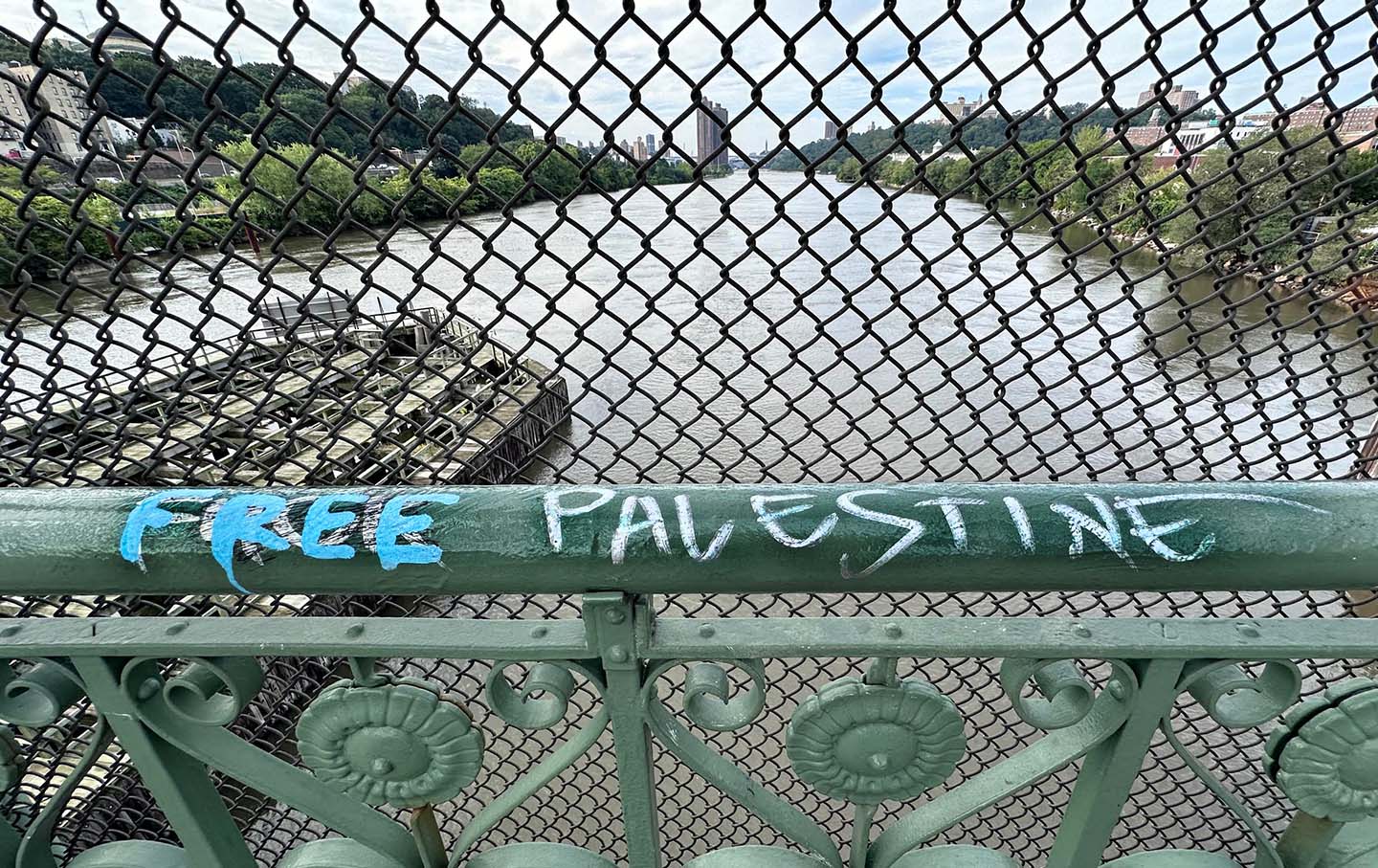
Freedom Can’t Be Fenced In Freedom Can’t Be Fenced In
A call for freedom written across a pedestrian overpass, framed by wire.
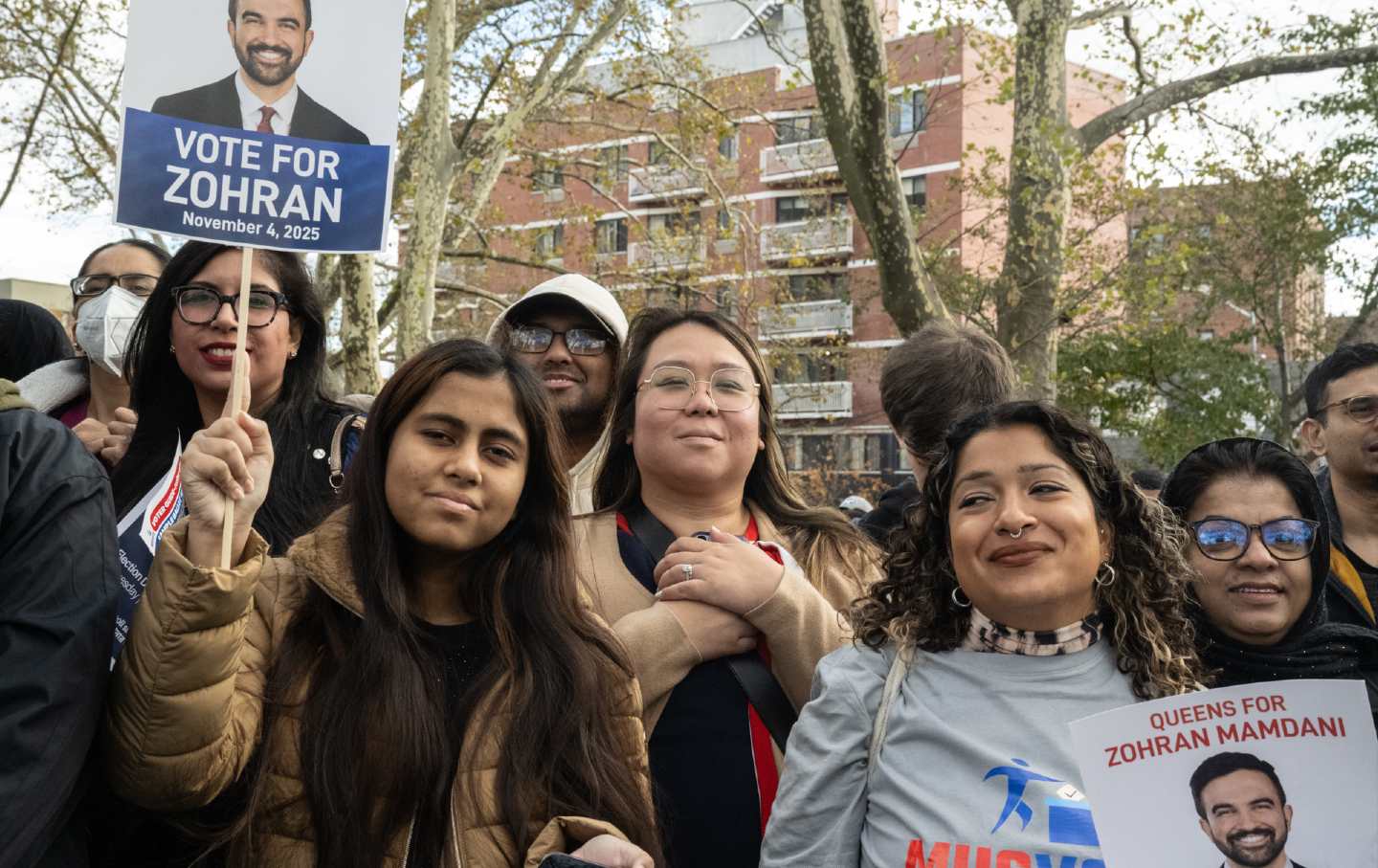
Zohran Mamdani’s Campaign May Have Accomplished Something More Fundamental Than Moving Policy Debate to the Left Zohran Mamdani’s Campaign May Have Accomplished Something More Fundamental Than Moving Policy Debate to the Left
It’s the people, stupid.
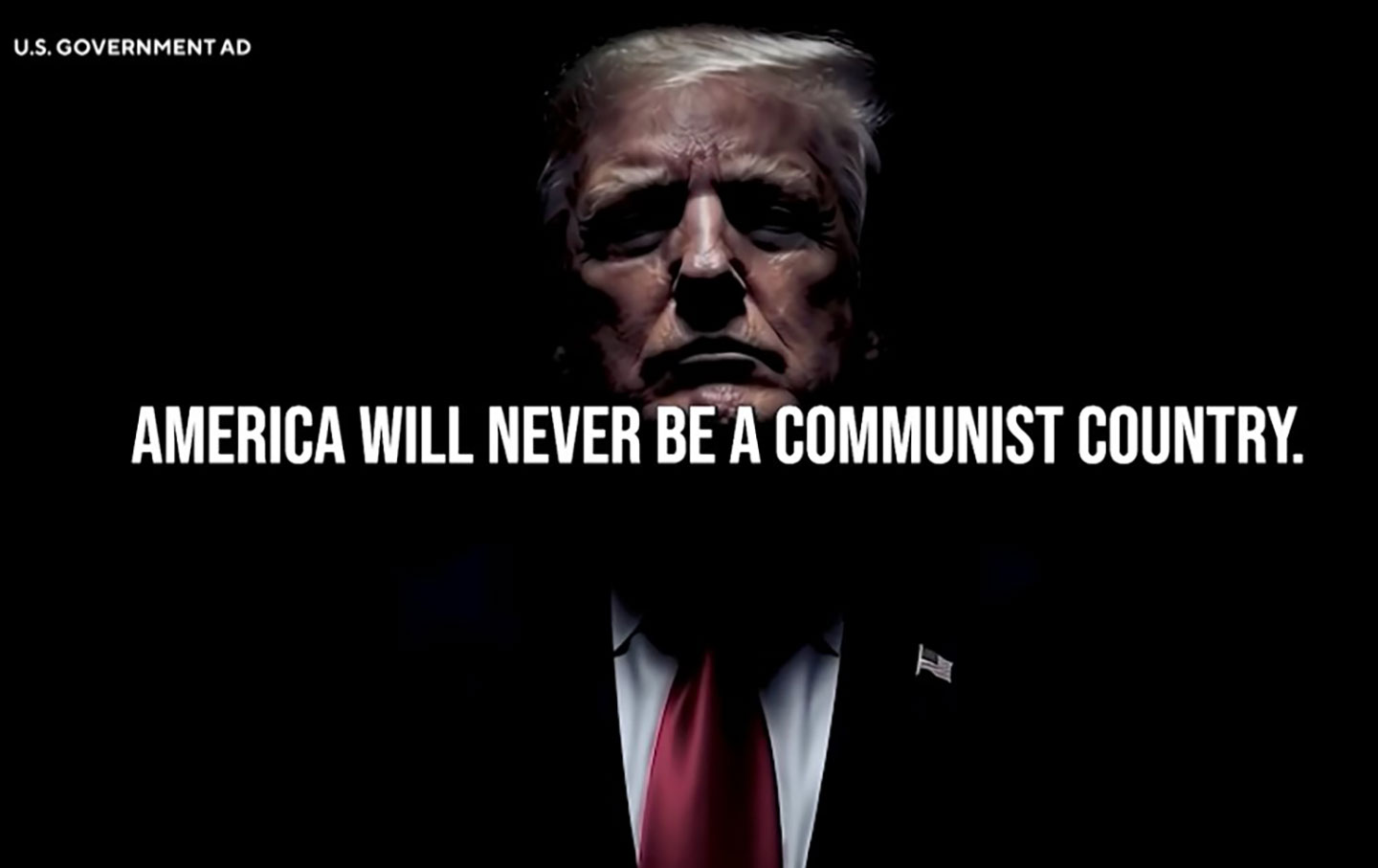
Trump Is Using Your Taxpayer Money to Pay for Illegal Election Propaganda Trump Is Using Your Taxpayer Money to Pay for Illegal Election Propaganda
But as brazen and authoritarian as these ad spots are, they seem likely to backfire.