
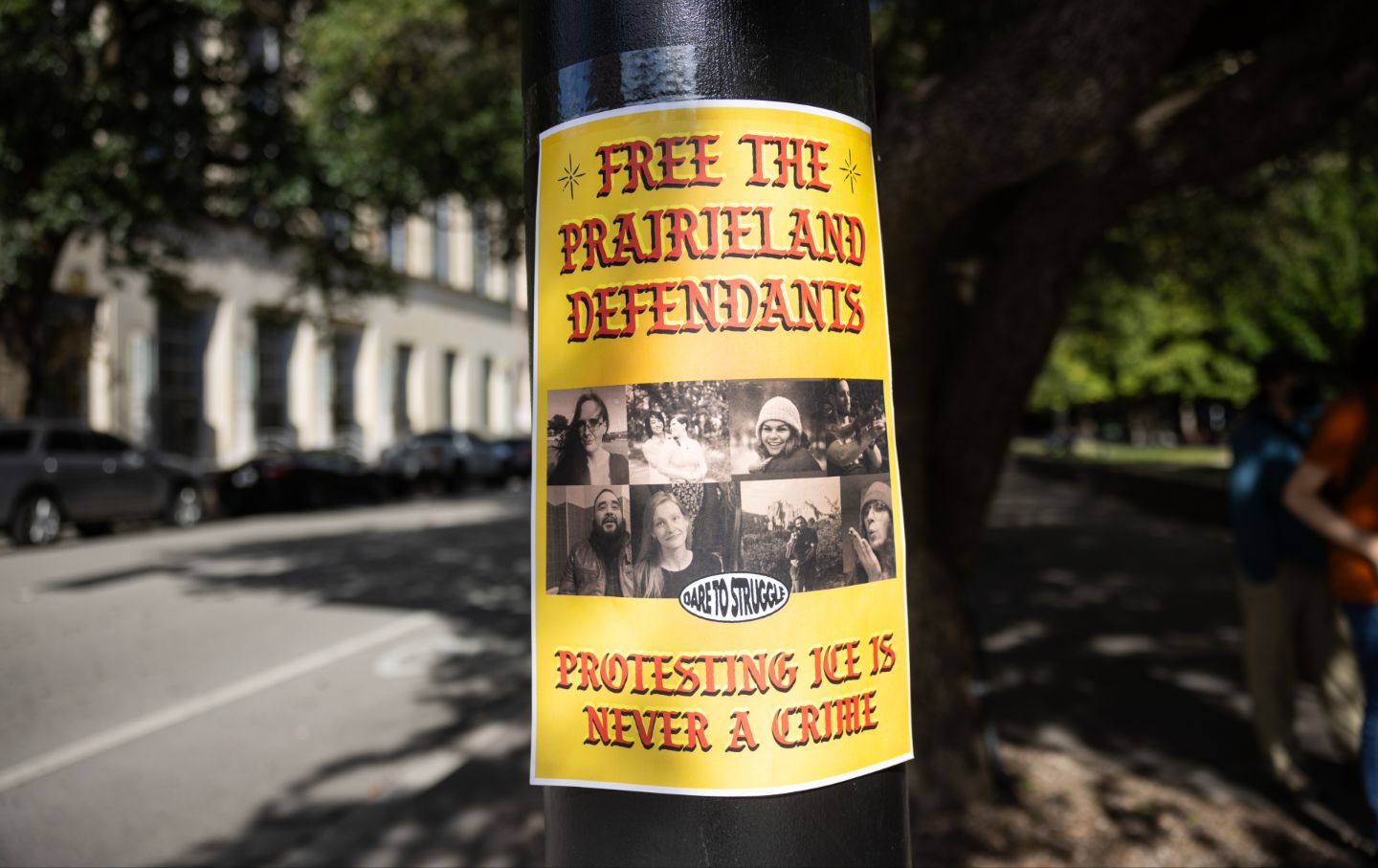
A sign that reads “FREE THE PRAIRIELAND DEFENDANTS” is taped to a post outside of the Eldon B. Mahon US Courthouse in Fort Worth, Texas, Wednesday, July 1, 2026.
(Juan Figueroa / The Dallas Morning News via Getty Images)Last year, Autumn Hill was among those arrested for protesting outside the Prairieland ICE Detention Center in Texas. After a noise demonstration, Hill left the scene. But some stayed behind, and after a police officer pulled a gun on the crowd, a protester fired their own weapon. The officer was hit in the shoulder. While no one died from the violence, Trump treated the protest as an incident of “Antifa” violence, a term he has used to criminalize dissent, arguing that there is an organized terrorist cell behind similar incidents across the country. For simply being present at the demonstration, even before the shooting occurred, Hill was sentenced to 50 years in prison. While she is a trans woman, she has been serving her time in a men’s prison.
When I caught up with her, Hill was in good spirits. She had spent the morning reading a chemistry textbook. Over the phone, we spoke about nonviolence, Thich Nhat Hanh, Martin Luther King Jr., and more. We dug into what a politics of love looks like, ICE, free speech, and whether antifa is an ideology.
This conversation has been edited and condensed for clarity.
—Grace Byron
Grace Byron: How are you doing today? How are you spending your days?
Autumn Hill: I get up in the morning, often earlier than other people in the unit, and I read communications. I get anywhere from two to four letters a day. I have a bunch of people that I talk to over the jail communications app, and I have a lot of phone correspondence as well. In that respect, compared to a lot of people in a similar situation, I’m very blessed because I’m not really lonely at all.
GB: What happened last year that you were later arrested for?
AH: On the night of July 4th, some friends and I went to the Prairieland Detention Center to protest the unjust abduction of people by ICE. We wanted to make some noise. We wanted to get [the detainees’] attention and let them know that we were out here and supportive of them and that we knew that what was happening to them wasn’t right. I actually went home before the violence occurred, so I can’t really speak directly to what happened at the end of the protest. But I’ve said before that I know the alleged shooter. They are a close friend of mine, and even after they’ve been found guilty, I certainly do not believe the government’s narrative because that’s just not in the character of my friend.
GB: I think it was the Democracy Now! interview where you said that that night on the Fourth of July was a radical act of love for you. I’m curious what that means to you.
AH: The concept of radical love is very spiritual to me. It’s a matter of faith. I don’t follow any organized religion, but I grew up in a Christian fundamentalist household and my spirituality has been central to my life for a very long time. A significant part of the reason why I didn’t come out of the closet was because I wanted to try to find some way to bridge the gap between my sexuality and my gender presentation in a way that was going to allow me to stay with my community of faith. And unfortunately, there just was nothing that I ever could have done.
A lot of our media today centers the experiences of queer people and their reconciliation with their families. Stuff like Steven Universe and Everything Everywhere All At Once wants this angle of, sure, you’re queer, and you have homophobic relatives, but the love that you share with your family is ultimately going to overcome that. Unfortunately, I have had to learn that that isn’t always the case, that what we think of as natural affection isn’t always going to be able to overwrite people’s extremist ideology. But at the same time, I have maintained a very strong foundation of, I guess, you might call it unorganized spirituality.
When you love all people in this way, you want the same thing for other people’s babies and for other people’s loved ones that you would want for your own babies and your own loved ones. You want food and water and good housing for them and access to healthcare, and you want them to be esteemed by their neighbors. My whole life is driven by this radical love and by this urgent need to see justice done. I think that in the United States of America, justice is not done.
We are one of the wealthiest countries in the world, and at the same time, we also have one of the most extensive prison systems, and we incarcerate a greater percentage of our population and a greater numerical number of people than almost any other country in the world. It doesn’t have to be that way.
GB: In a similar vein to talking about your beliefs and where you stand on these things, I’m curious what language or labels you would apply to your political beliefs. Obviously, the term “antifa” has been politicized and co-opted by the current administration and used almost like a slur.
AH: I still have a relationship with my mother, and she is a conservative, right-wing Christian. She would agree that she thinks of herself as an anti-fascist. So I think that an anti-fascist is anybody who is not directly or secretly committed to the ideals of fascism. You want to be anti-fascist. We don’t want to have strong relationships between big business and authoritarian governments that allow the rich and the powerful to completely control the terms on which the weak and the poor live, and that’s really what fascism is about. So in that respect, I’m an anti-fascist. I haven’t really ever called myself antifa, but that’s just because I am not a big anti-person. I think that when you bend your whole energy on being anti-something, there’s a strange thing that happens, which is that you kind of end up, I think, a lot of the time, reinforcing what you’re against. Ursula K. Le Guin talks about this in her book The Left Hand of Darkness.
I like to be pro-something instead of anti-something. I am radically pro-hospitality. That is one of the first things that I think of. We live in a culture that has a very poor hospitality culture. Throughout history, people have had an understanding that everybody has the right to shelter and that when a stranger comes into your community, comes into your nation, it’s your responsibility as a host to ensure that that person has the things that they need to live and need to survive. I think that you have to be a good host. These relationships of hosts and guests that have been historical have been deeply eroded by the proliferation of capitalism.
GB: In one interview you said that you were targeted because you are trans, and I’m wondering how being incarcerated right now and being trans is. I think you said you’re still able to get hormone replacement therapy (HRT).
AH: Yeah, that’s right. I have had my HRT the entire time that I have been incarcerated. People in here are largely respectful or curious. They want to know what’s going on with me. They want to understand. They’re often afraid of asking questions. I think they’re often afraid of offending, but I think that for the most part, the worst thing that happens to me is that some people really want to focus on the angle of, “Well, things are all right for you right now, but when you get to TDC or when you get to whatever federal prison you’re going to, things are going to be a lot worse.”
I see a good motive in that they want to prepare me for hardship, but at the same time, I can’t help but feel like when dealing with that kind of energy, what’s this really about? Am I supposed to be afraid? I have suffered deep grief in my life. I have suffered incredible loss and systemic violence. And one of my big takeaways from that has been that there’s just nothing to fear. There is nothing in this world to fear: discomfort, pain, sickness, death, none of it. Don’t be afraid of any of it.
All states are playable and you can be yourself and accomplish whatever you set your mind to. You have one minute remaining. Other than that, there’s the day-to-day presence of misogyny and masculinity. Men’s prisons, men’s jails are a very hyper-masculine environment. Everybody faces continuous pressure from everybody else to be as masculine as possible.
GB: Do you feel like, after losing this case and being sentenced to so many years, you’ve lost faith in the system? I know your lawyer was very disappointed by the outcome.
Popular
“swipe left below to view more authors”Swipe →AH: I never had faith in the system. Even when I was being brought up by conservative fundamentalist Christians, they were deeply mistrustful of the government. I actually think that that is an extremely common sentiment on both the right and the left. I think that the big thing that changed for me as I was growing up and as I was coming into my adulthood and meeting people who did not enjoy the privilege of being white and male and fairly wealthy is like, wait a minute, these people can’t count on the police, and realizing that the United States military is deeply implicated in massive exploitation around the world.
GB: I was shocked to hear your sentence was so much longer than some rioters on January 6th.
AH: That didn’t surprise us at all. We all knew that this whole thing has been a political show designed to frighten people and make an example of them.
GB: Is there anything you want people to know or take away from your story?
AH: Don’t be afraid. That is what the people who are responsible for my suffering want out of other people. And it would please me greatly if people didn’t fall prey to that. There’s nothing to be afraid of. My life bears witness to that. You can survive any state of discomfort, any state of suffering, and remain intact and continue living. You can find new friendship and new love even in circumstances of hardship. Don’t be cowed into silence. Stand, act up, speak out, because that is the only way that this situation is going to come to an end.
They wouldn’t be acting the way that they are acting, the administration, if they weren’t afraid. It’s fear that drives authoritarians to do the things that they do. It is fear of the loss of control. It is fear of the loss of power and security. When we stand up to our fear, we have the ability to stand up to those authoritarians and to bring an end to the violence and cruelty that they do.
Become a Sustaining Donor This September
Between the reemergence of right-wing red-baiting and Donald Trump’s use of the chilling National Security Presidential Memorandum–7 to criminalize left political organizing, we’re seeing McCarthyism reborn before our eyes.
This assault on democracy cannot be ignored or wished away. Resisting it requires bravery in the face of threats and repression, a steadfast commitment to the truth, and the unwavering belief that we can—and will—overcome this darkness.
We must have an independent media that sets the record straight, unearths corruption and abuses of power, and advances a politics of justice and dignity for all if we’re to win this fight.
That’s why I’m writing to you today. This September, The Nation needs to add 100 monthly donors to sustain our progressive journalism. Your contribution makes the next investigative report, the next truth-speaking column, and the next pathbreaking essay all possible.
I hope you’ll support our work with a recurring donation today. If you donate $10 or more a month, we’ll send you a brand new “Hands Off the Free Press!” sticker to recognise your commitment to our cause. Please, donate today.
Onward,
Katrina vanden Heuvel
Editor and Publisher, The Nation
More from The Nation
The Impossible Will Take a Little While: The Power of Persistence The Impossible Will Take a Little While: The Power of Persistence
In troubled times, history offers a lesson: Seemingly impossible change can begin with ordinary people who refuse to give up.
Gloria Steinem’s Many-Splendored Feminist Life Gloria Steinem’s Many-Splendored Feminist Life
The feminist icon lived the struggle for gender equality and always found time to lend support and solidarity to other women leaders, even in her final days.
No, Woke 1 Was Not Crazy No, Woke 1 Was Not Crazy
AOC and others are laughing off 2020 as a wild, isolated moment. None of that is true.
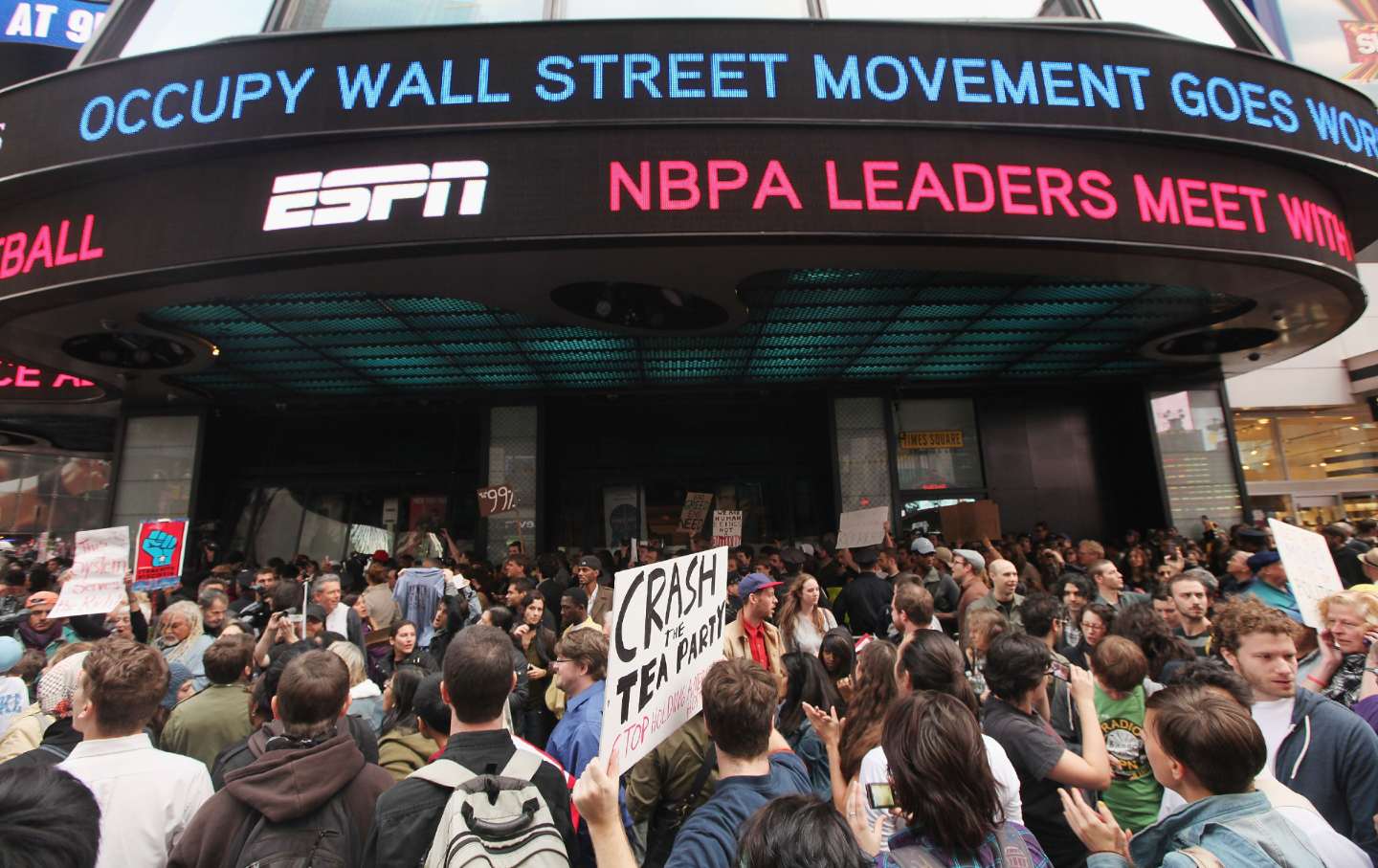
How Occupy Wall Street Still Explains Politics Today How Occupy Wall Street Still Explains Politics Today
It sowed the seeds for a new era of social movements—but its politics of powerlessness should act as a cautionary tale.
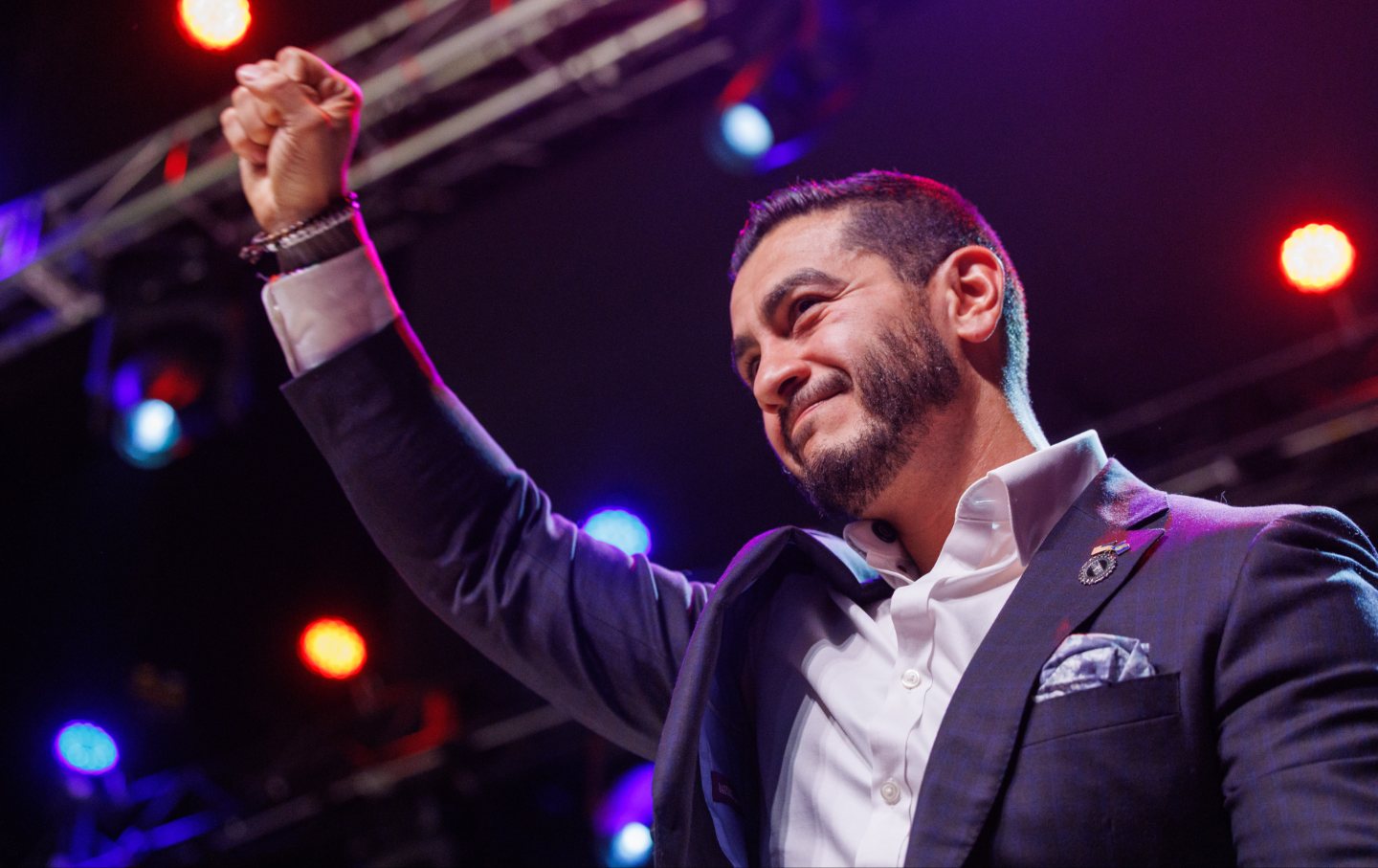
Abdul El-Sayed’s Win Is a Landmark. But the Fight Is Far From Over. Abdul El-Sayed’s Win Is a Landmark. But the Fight Is Far From Over.
Even though the Palestine movement is on the march, we can’t afford any complacency.
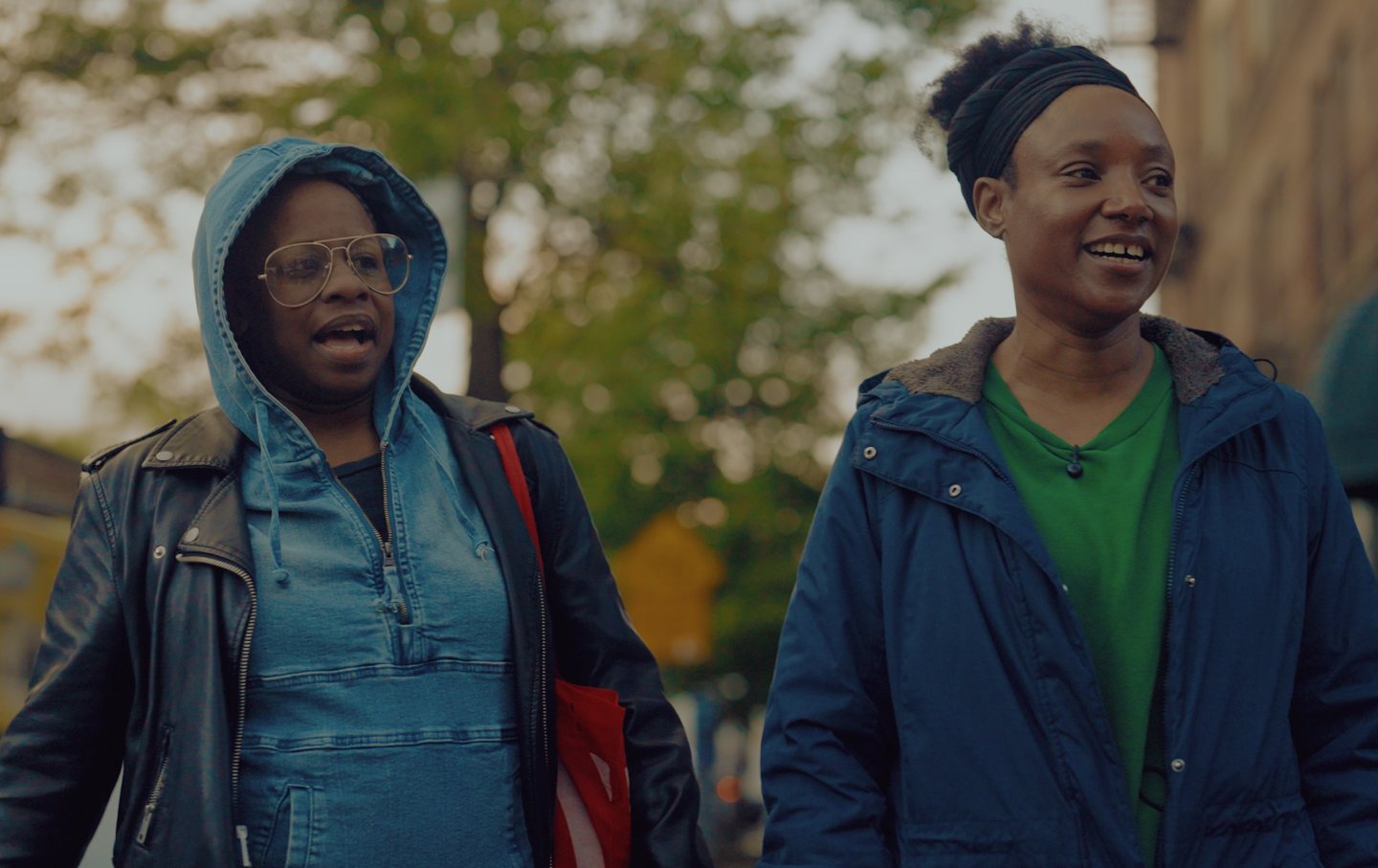
Mamdani’s Team Redefined Political Video. Now They’re Betting on Short Films. Mamdani’s Team Redefined Political Video. Now They’re Betting on Short Films.
Premiering exclusively in The Nation, a new short film produced by City Hall and narrated by Morgan Spector highlights the efforts of the biggest tenant-led union in New York City...

