
When Texas Sex Ed Falls Short, Gen Z Women Turn to Social Media
A 2025 study found that 70 percent of adolescents sought reproductive health information through social media platforms.
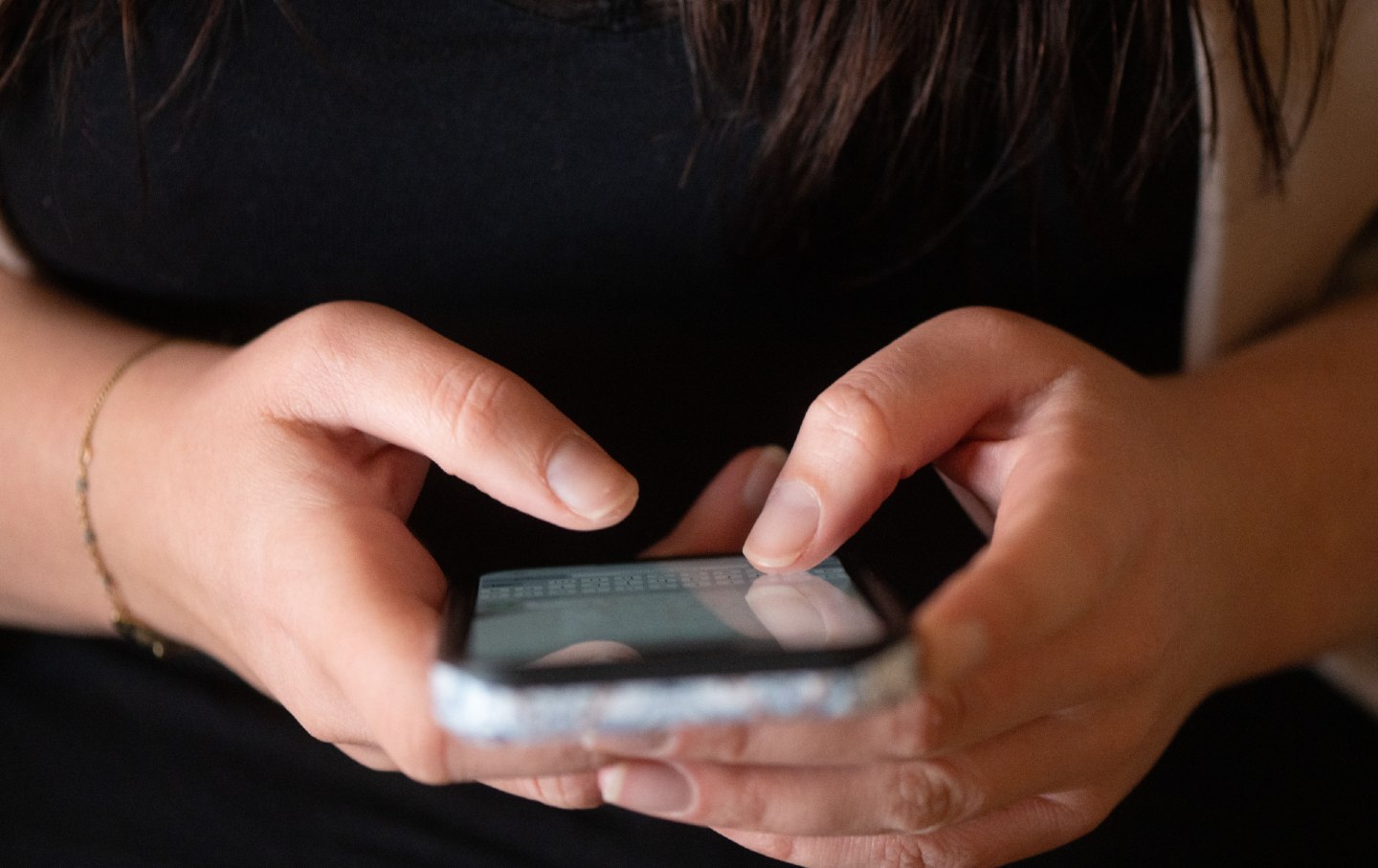
TikTok is the most popular app among young people, with 68 percent of teens using the app and about one in five reporting they are on it “almost constantly.” On the platform, almost all young women encounter health information.
(Sebastian Kahnert / picture alliance via Getty Images)When University of Texas at Dallas graduate Avishi Handoo first started college, a series of urinary tract infections left her searching for menstrual products that would not irritate her already sensitive skin. While she had heard of tampons and menstrual cups, the idea of using one seemed frightening.
So Handoo turned to YouTube shorts. Scrolling through videos, she found ob-gyns using diagrams of female anatomy to demonstrate how to insert a tampon, alongside influencers sharing personal stories describing how tampons were beneficial to them.
“Without social media, I wouldn’t have been comfortable using a tampon.”
She isn’t alone. TikTok is the most popular app among young people, with 68 percent of teens using the app and about one in five reporting that they are on it “almost constantly.” On the platform, almost all young women encounter health information—whether unintentionally (92.4 percent) or by actively searching for it (65.5 percent). Although they favor advice from medical professionals, a whopping 94 percent have relied on content from general users.
Many Gen Z women say it is through short-form video content that they are first learning about menstrual and reproductive health. In fact, a 2025 study found that 70 percent of adolescents sought reproductive health information through social media platforms.
The growing reliance on short reels-based content highlights long-standing gaps in reproductive health education. For University of Texas at Austin sophomore Khushee Vora, healthcare professionals on video platforms provide an opportunity for young women to receive evidence-based information in states where access may be limited.
“Having women’s health professionals on Tiktok—whether that’s a nurse practitioner or physician assistant or actual physician—is good for women who are living in redder or more conservative areas,” Vora said. While 39 states and the District of Columbia offer HIV and/or sex education, fewer than half of those states require that the information provided in schools be medically accurate.
In Texas, where neither HIV nor sex education are statutorily mandated, informational gaps abound. If schools opt to broach themes of sexual health, they are obligated to adhere to the Texas Abstinence Education Program that teaches students in grades five through 12 a sexual risk-avoidance approach that encourages abstinence before marriage. Topics such as consent, sexual orientation, and gender are excluded, and exposure even to such limited information requires parental consent.
Texas resident and Texas A&M student Alisha Oberoi recalls that the curriculum left her with an incomplete understanding of the range of contraceptive options available.
“They kind of just press that abstinence is the only way to prevent pregnancies,” Oberoi said. “There wasn’t really much talk of any other forms of birth control.”
When Vora and Oberoi first learned about the informational lacuna for high schoolers, they decided to create a program called Let’s Talk Sex Ed where they educate other Gen Z students about forms of contraceptives and body literacy through presentations in school as well as Instagram reels. According to Vora, short-form content broadened their audience.
“Whether this is a good or a bad thing, social media drives the kind of beliefs that a lot of us hold these days,” Vora said. “Everybody gets everything from social media.”
In her research, University of Michigan PhD student Marielynn Herrera found that queer youth and students of color turn to social media to find a community when one wasn’t available in their current lives. She believes short-form reels and personalized algorithms can play a similar role for young women seeking information about their bodies.
“Narratives are very powerful,” Herrera said. “We connect well when we hear the stories of others and what they went through. With women’s health in particular, there’s so much that is not discussed. Social media can be a good vehicle for women to connect with each other.”
Herrera emphasizes that more than just community, short-form videos can give young women the language to understand their bodies and advocate their concerns to healthcare providers.
“Hearing other women’s stories can give a vocabulary to your own experience,” Herrera said. “There is a power imbalance between physician and patient and [hearing that someone else has gone through a similar ordeal] might give you that boost that you need to kind of tip the scale in that conversation.”
Handoo saw firsthand how this might be helpful while working as a medical assistant in an ob-gyn clinic where she watched patients undergo IUD insertions that were at times visibly painful. “I came across this one ob-gyn on YouTube, Dr. Ali Rodriguez, and she mentioned that usually when IUD insertions or removals are done, pain medication isn’t provided,” Handoo said. “But Ali said there can be pain management done about IUDs and you should speak to your physician about it.”
Popular
“swipe left below to view more authors”Swipe →For Handoo, learning about pain-management options for IUD insertions changed how she viewed the information women receive about contraception.
“Women should be able to lead healthy, comfortable lives,” Handoo said. “If we are able to provide certain helpful resources on social media, it gives women a sense of peace and the knowledge that they don’t just have to put up with pain.”
However, the same features that make these platforms effective at spreading information can also make it difficult to distinguish between credible medical information and misinformation. As more health-related content enters these platforms, Herrera emphasizes the importance of understanding who is providing the information and whether they have the appropriate expertise.
“Some reputable sources may not have the flashiest social media presence,” Herrera said. “Maybe their social media game isn’t as strong as that of a social media influencer who is trained to promote things that will catch your attention. We don’t expect everyone to be completely literate about these things, but we do have to consider the source of that information.”
While experts encourage users to critically evaluate the credibility of online health information, Vora believes that some short-form videos provide access to potentially useful reproductive health information that health professionals refrain from sharing
“There are people that talk about how you can force an abortion with some [non-approved abortion] pills,” Vora said. “Because social media isn’t regulated per state, it’s easier to get some information that maybe the authorities in red states wouldn’t always want you to know. Obviously, no healthcare provider is going to say that it’s a tried and true thing because it’s not. Heeding the advice is at your own risk.”
Rather than replacing traditional sex education, Handoo sees reliable short-form videos as another way to make women’s health information more accessible.
“Physicians and content creators need to be able to make a platform where they advocate for women’s health by providing scientific accuracy and a space for other women to talk about their feelings and conditions,” Handoo said.
For Handoo, that combination is what makes social media a powerful tool for closing gaps in women’s health education.
“You cannot have one person make a change,” Handoo said. “You need a group to come together.”
Become a Sustaining Donor This September
Between the reemergence of right-wing red-baiting and Donald Trump’s use of the chilling National Security Presidential Memorandum–7 to criminalize left political organizing, we’re seeing McCarthyism reborn before our eyes.
This assault on democracy cannot be ignored or wished away. Resisting it requires bravery in the face of threats and repression, a steadfast commitment to the truth, and the unwavering belief that we can—and will—overcome this darkness.
We must have an independent media that sets the record straight, unearths corruption and abuses of power, and advances a politics of justice and dignity for all if we’re to win this fight.
That’s why I’m writing to you today. This September, The Nation needs to add 100 monthly donors to sustain our progressive journalism. Your contribution makes the next investigative report, the next truth-speaking column, and the next pathbreaking essay all possible.
I hope you’ll support our work with a recurring donation today. If you donate $10 or more a month, we’ll send you a brand new “Hands Off the Free Press!” sticker to recognise your commitment to our cause. Please, donate today.
Onward,
Katrina vanden Heuvel
Editor and Publisher, The Nation
More from The Nation

Justice for Macklemore Justice for Macklemore
The rapper has been dumped from Ed Sheeran’s tour for saying “free Palestine.” That’s a disgrace.

We Are Living Under Roy Cohnian Logic We Are Living Under Roy Cohnian Logic
The political fixer created a career for himself as a self-promoting, ubiquitous hustler. Like Trump, he got away with it by having the right friends.

Time Has Run Out for AI Risk Deniers Time Has Run Out for AI Risk Deniers
The recent spate of reports about the technology’s destructive power underline two prime directives: Be afraid, and regulate aggressively.
Yale’s President Has Become a Shameful Collaborator With Trump Yale’s President Has Become a Shameful Collaborator With Trump
Maurie McInnis has the power to stand up to the administration. Instead, she’s caving.

The Fissures and Fractures Behind the Right’s Pink Facade The Fissures and Fractures Behind the Right’s Pink Facade
After Roe was overturned, some young women are turning more hard-line on abortion—but others are fleeing conservatism altogether.

Notes From Evictionland Notes From Evictionland
Eviction is practically baked into the way Britain manages its tenanted homes. Here’s how it played out—over and over again—for my parents.

