There’s Nothing Traditional About Tradwives
Propagandists for stay-at-home domesticity are monetizing a fantasy—and they’re not really staying at home.
A tradwife influencer with millions of followers wakes up in the mid-19th century and has to be a farmwife for real. That’s Caro Claire Burke’s best-selling novel Yesteryear in a nutshell. The time travel doesn’t make a lot of sense (no spoilers), but it doesn’t matter—by the time the totally unconvincing switcheroo arrives, you’ll be in too deep to care.
No wonder Anne Hathaway is making it into a movie.
As many have noted, Yesteryear’s protagonist, Natalie Heller Mills, Idaho mother of six, tireless content creator for her millions of fans on social media, and one very sharp businesswoman, bears a resemblance to Hannah Neeleman, slim and beautiful Utah mother of nine and proprietor of Ballerina Farm, from which she portrays a picture-perfect life of adorable blond children, cows, chickens, and homemade bread while selling overpriced kitchen supplies to her approximately 23 million followers on Instagram, TikTok, and YouTube. Skeptics tear her down for selling raw milk (ceased after health authorities found E. coli in a batch of it) and $259 cutting boards (Walmart sells a virtually identical board for around $17), and of course for kowtowing to her husband, Daniel, despite obviously being the brains of the operation. (In her videos, he has all the alertness of a stunned ox.) While she’s idolized by Christian nationalists as the perfect white obedient super-fertile butter-churning Mormon mom, she only occasionally touches on her religious beliefs and does not mention politics. If you want to keep your numbers in the multimillions, you probably want to keep things a bit vague.
Natalie is Hannah’s id. Warped by fundamentalist Christianity, taught by her mother that a woman’s job is to be sweet and uncomplaining, frightened of venturing beyond her rural background, she drops out of Harvard and marries a young man she barely knows, who has no ambition, the IQ of a rock, and is impotent in bed. In return for producing lots of babies, her rich right-wing father-in-law bankrolls Yesteryear Ranch, which Natalie reverse-renovates to look like a 19th-century farm: The modern conveniences are tucked away behind wood cabinetry; the two nannies and Mexican farm workers are never shown on-screen. Trouble arrives when she hires a savvy young video producer, and that’s all I’m going to tell you.
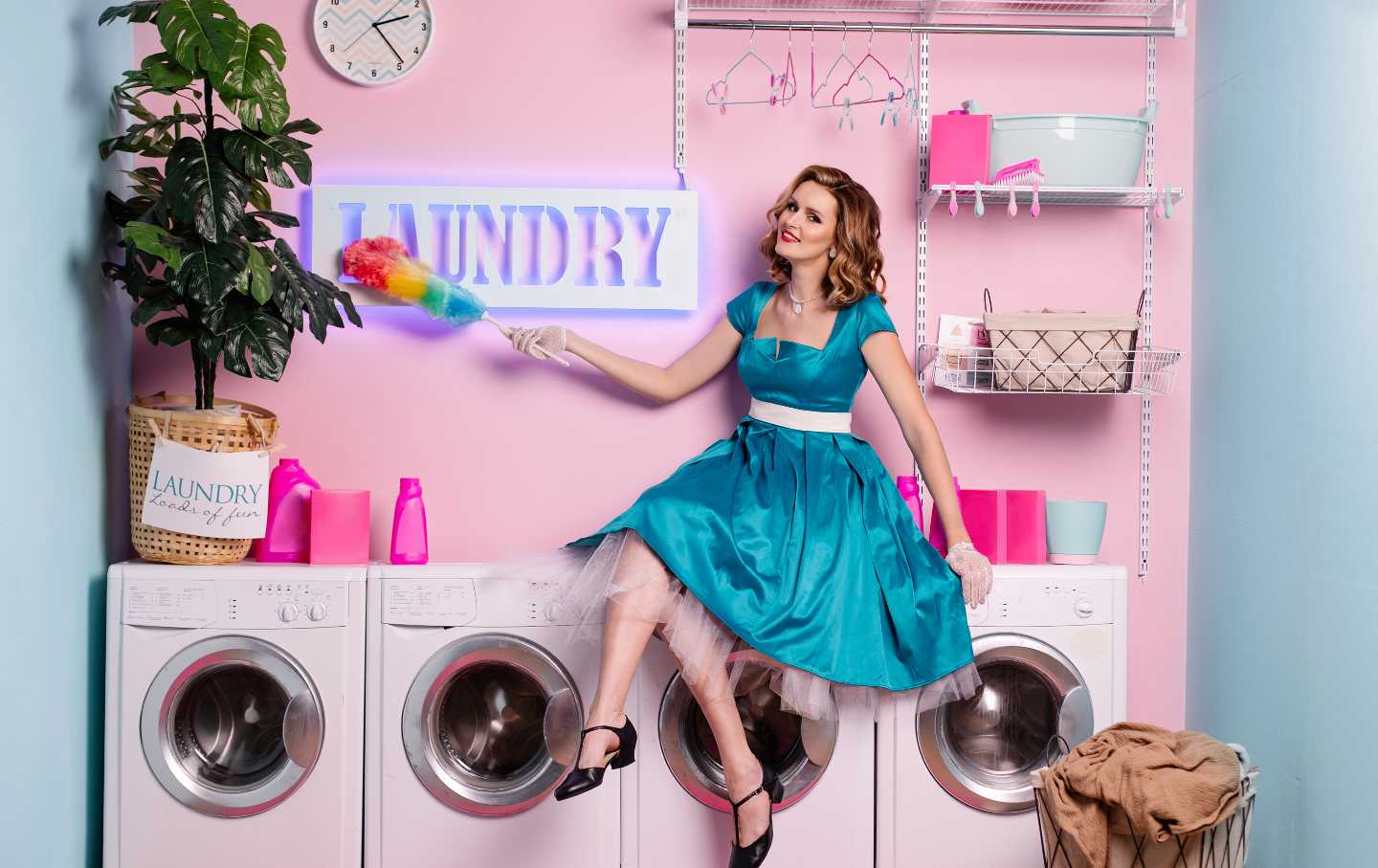
What is a tradwife, anyway? The linguist Amanda Montell traces the term to the manosphere, in which the ideal woman is a fecund “traditional” housewife who marries young and submits to her man. But it was when women started to buy in that the concept really took off. Today, the face of tradwifery is a beautiful young mom who wears prairie dresses with full makeup, cooks a lot, and wants to please her husband more than he deserves. Nara Smith, a 24-year-old South African–born biracial fashion model and mother of five married to Lucky Blue Smith, another model, makes industrial food in her kitchen (bubble gum? Seriously?) while speaking in a babyish voice. Gwen the Milkmaid, a former feminist bisexual and OnlyFans performer who found Jesus and says that “men are better,” makes Cinnamon Toast Crunch from scratch.
Actually, there is nothing traditional about tradwives. What’s traditional about constantly filming your personal life and putting it on the Internet for the world to see? Women leading a true traditional life—ultra-Orthodox Jews in Brooklyn, say—are very private. Online tradwives are doing something else: They are monetizing a fantasy, in which the exhausting labor of housework and childcare is hidden from view and the results are made to seem effortless and relaxing. No slaving over a hot stove, no scrubbing the toilet, no fussy children having meltdowns, no wondering how the heck you ended up like this after graduating with honors. Even childbirth—Neeleman posted clips of her most recent unmedicated home birth—looks easy, practically painless, with no complications. Who do they think they’re kidding? In fact, Neeleman told The Times of London that for her sixth birth, her husband was absent and she had an epidural: It was “kinda great.”
Much has been written about the exhausting, unfulfilling lives of women in the corporate world—told to lean in but overworked, denied the rewards bestowed on their male coworkers, and still doing way more than their share at home. But seriously, how many real-life converts to tradwifery are there? There have always been women whose goal was to marry a breadwinner and stay home with kids, but the statistics show young women forging ahead—getting their degrees, entering the workforce, using birth control, leaving organized religion, moving left. The revolt of women from conservative lifestyles is so pronounced that the Trump administration is doing its best to push them back into the kitchen. Unplanned pregnancy, particularly among teenagers, is just what society needs to get the birth rate up: Ergo, cut funding for sex ed and contraception, ban abortion, mock single women as miserable cat ladies, and get rid of DEI so women remain in the lower ranks of the workplace. Maybe they’ll get frustrated and quit.
There’s a catch, though: To live the tradwife life depicted online, you need to have a lot of money. Neeleman’s father-in-law founded JetBlue. Smith’s net worth is estimated to be $6 million (her husband only has $1 million). These women don’t have to worry about ending up divorced and poor with no marketable skills, chasing their ex-husbands through family court for child support. Like Phyllis Schlafly and other propagandists for stay-home domesticity, they’re not staying home: They’re working.
Has tradwifery peaked? The success of Yesteryear suggests it may be passing its sell-by date. After a brief return to posting lingerie and ASMR, Gwen the Milkmaid has wiped all her public videos. And true to form, despite all evidence to the contrary, Smith and Neeleman now deny they were ever tradwives—they are just women choosing their choice. In other words, feminists.