
On the Eve of the NATO Summit, Is Europe Rearming Against a Phantom Russia?
Inflating Russia’s military threat could divert resources from social needs while fueling Europe’s far right.
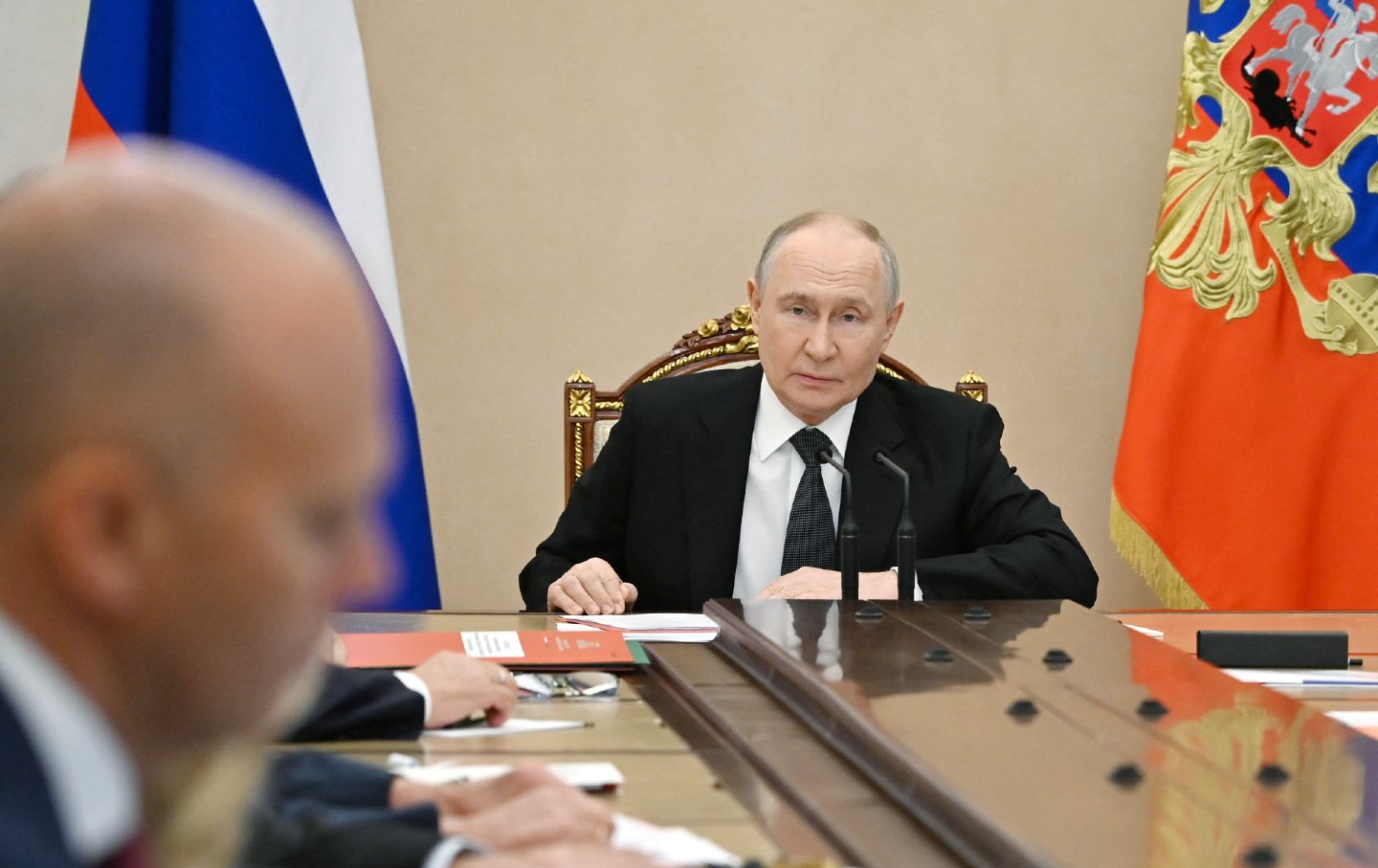
On the eve of the NATO summit in Istanbul, with Russia’s full-scale invasion of Ukraine now in its fifth year, and the Trump administration pulling back its support for the military alliance, European leaders are raising the alarm about the Russian threat. Despite “surging European military spending” prompted by Russia’s war, UK Prime Minister Keir Starmer recently echoed the view of others that Russia could attack NATO within four years. A week later, in a “shock resignation,” Defense Secretary John Healey sharply criticized the government’s inadequate military spending, prompting Starmer’s own subsequent resignation. Healey’s “blistering resignation letter” accused Starmer of failing to adequately “defend the country at this time of rising threats.”
Yet what exactly is the threat from Russia? A sober assessment must account not only for military capabilities, but also the country’s internal dynamics. Putin, for all his dictatorial powers, has proven himself reluctant—or incapable—of demanding the sacrifices that would be needed from the Russian people to fight yet another war.
Trump’s disparagement of NATO has prompted fears that Europe would be left to fight Russia on its own, with Polish Prime Minister Donald Tusk warning of NATO’s “disintegration.” Germany is rearming at levels not seen since the end of World War II, while military leaders in the Baltics and elsewhere argue that “the slow pace of European rearmament” could prompt Russia to attack as soon as 2028. Others push for nuclear-capable “dual-use” weapons to be deployed closer to Russia’s border. Some propose that the UK should issue “war bonds,” while others are calling for a “NATO bank” modeled on the World Bank, albeit with a mission of increasing military spending rather than reducing poverty.
The actual military threat to Europe is far from clear. Rather than seizing Kyiv in days following its 2022 invasion, Russian forces have been stuck for years in WWI-style trench warfare, albeit with advanced drone technology, unable to fully capture the coveted Donbas. Ukrainian drones have been able to push back Russian forces at the front and even reach oil refineries outside of Moscow and are now creating blackouts in Crimea.
However, there is a greater obstacle to further fighting for Russia: the Kremlin’s inability to mobilize its population for war. For a time, the war demanded little from large segments of society, as many Russians were only mildly inconvenienced by it and the resulting sanctions. Years on, however, “special military operation”—the term the government continues to insist on—now sounds like a cruel euphemism, and not only to the people of Ukraine.
Russia’s economy is stagnating. Most telling, however, are the reasons behind that stagnation. As Nigel Gould-Davies makes clear, Russia’s leaders chose to wage a major war, now in its fifth year, without fully mobilizing society. The Kremlin has done everything it can to avoid compulsory conscription. And for good reason—according to surveys by the independent Levada Center, when Putin issued his limited military mobilization in September 2022 “the public mood drastically deteriorated,” so much so that “the country had not seen such a dramatic and swift decline in public mood in thirty years of regular polls.”
Rather than enticing young men with patriotic fervor, the Russian authorities engaged in what Vladislav Inozemtsev has called “deathonomics,” that is offering huge signing bonuses and death benefits to attract (often poor and desperate) soldiers to the front. The Kremlin’s decision of a mercenary approach to fighting a war—to pay rather than compel recruits—has had deep consequences.
The payouts increase with every casualty. That fuels inflation, leading to consumer discontent, while businesses, from oligarch-owned to small enterprises, suffer under crushing interest rates. The price rises are worsened by a huge labor shortage, stemming from the hundreds of thousands of working-age males who have been sent to the front (or returned due to death or injury) and those who have fled the country since the war began. With war recruitment now foundering, the Russian economy is reaching hard structural limits.
Gould-Davies concludes that should Russia continue to prosecute the war, “it will likely have to extract resources far more coercively, with far-reaching economic and social consequences.” Those consequences could threaten regime stability, a primary goal, it is safe to assume, of Putin and his close associates. As it is, Putin’s popularity is sagging, with economic hardship made worse by a crackdown on basic Internet services, adversely impacting every Russian with a cell phone.
Putin may well decide to prolong the fighting in Ukraine. As Michael Kimmage has argued, the Russian leader may find himself in a war with “no exit.” Yet as many as half a million Russian soldiers have died in a futile war with a much smaller neighbor. Nevertheless, European nations are undertaking a massive military buildup under the assumption that within the next few years Russia could attack NATO—an alliance with vastly greater economic and military resources (with or without the United States). Given the costs—human as well as economic—from the Ukraine war, such assumptions are indeed heroic.
Assumptions have consequences. The German government alone is taking on “hundreds of billions of euros in debt to fund its ballooning military budget.” Throughout Europe, that debt will crowd out resources that could be used to meet other, more credible challenges. With temperatures reaching 104ºF in Paris in June, might it not make more sense to invest in combating climate change rather than tanks?
If there is a threat from Russia, it stems less from the likelihood of a revitalized Russian Army sweeping across the Baltic states than from the Kremlin’s pouring fuel on the flames of European social discontent. At a time of austerity measures and job losses—with Volkswagen alone planning to cut 100,000 jobs—that discontent is growing. A recent analysis finds that nearly a quarter of European voters back far-right parties.
That suggests that the real danger to Europe comes not from outside, but from within. Indeed, inflating Russia’s military threat carries a peril of a different kind: that massive military spending gets diverted from funding critical social needs, energizing the right-wing populist movements throughout Europe that all too often embrace Putin’s Russia.
More from The Nation
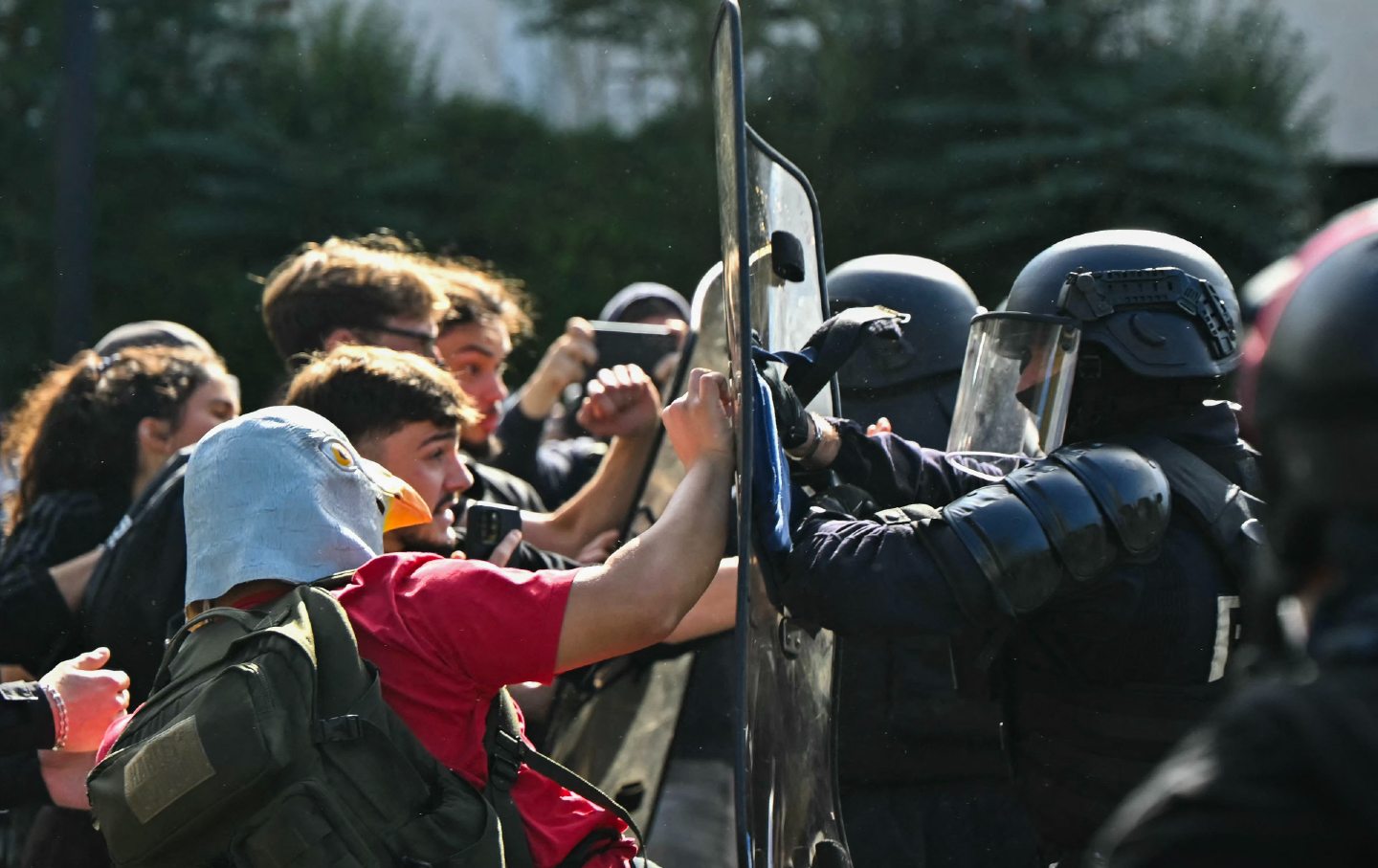
Has France’s Government Overplayed Its Hand? Has France’s Government Overplayed Its Hand?
The speed and scale of the police response mark a dangerous new normal.
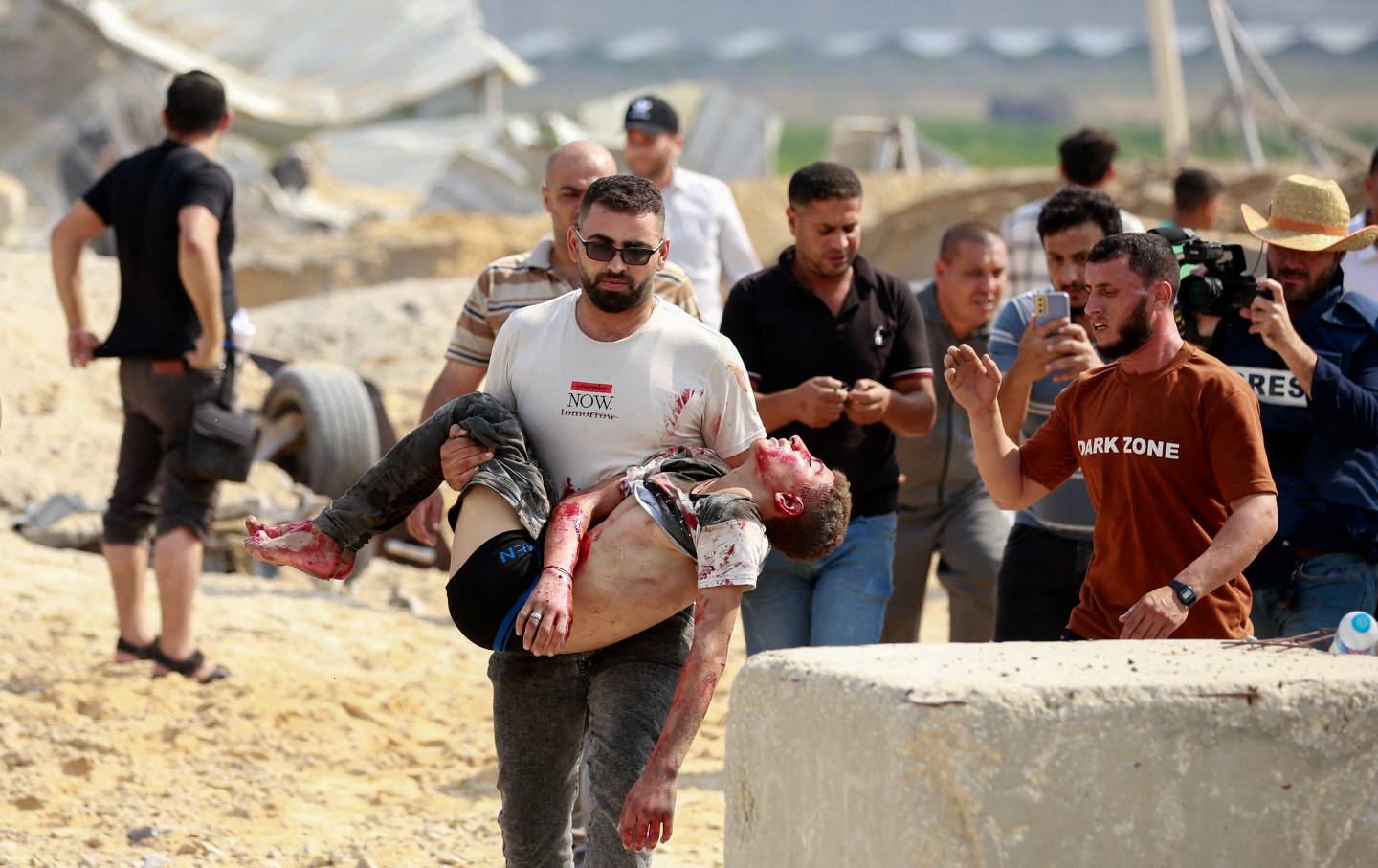
This Is Not an Anniversary This Is Not an Anniversary
Does remembering the date of October 7 make it easier to name?
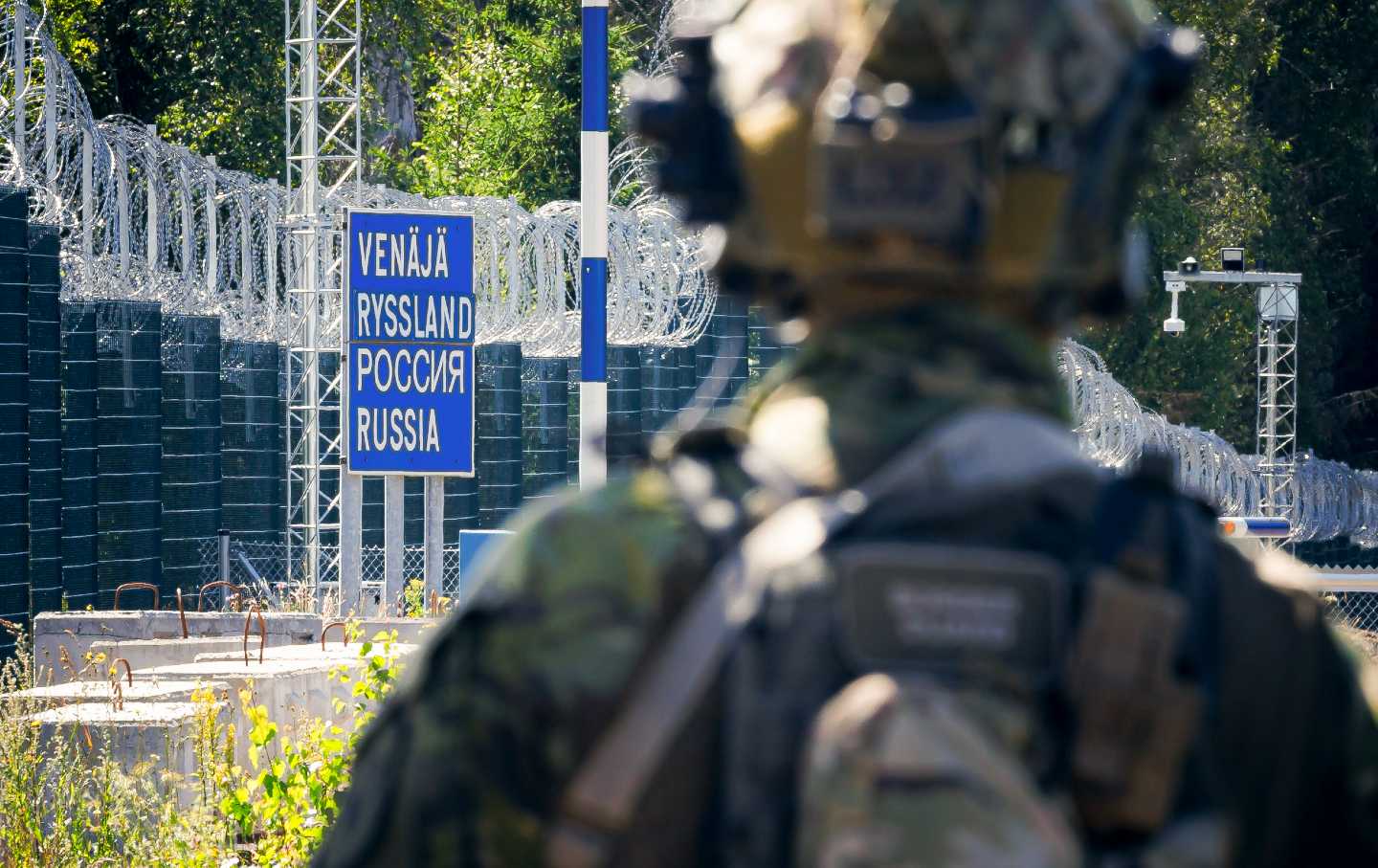
Are Europe and Russia Slow-Walking to World War III? Are Europe and Russia Slow-Walking to World War III?
Dangerous rhetoric has been escalating on both sides for some time now.

This Village Has Been Fighting Israel’s Demolition Orders for Years. It May Be on Its Last Stand. This Village Has Been Fighting Israel’s Demolition Orders for Years. It May Be on Its Last Stand.
A new order for Khan al-Ahmar’s destruction failed to attract the international attention that had protected it in the past, and residents fear they can no longer stop the bulldoz...
The Year I Taught in a Former Coal Mining Town The Year I Taught in a Former Coal Mining Town
Teaching in the South of France, I learned that equality was just a story teachers told about themselves.
Why French Students Are Revolting Why French Students Are Revolting
France’s education system is stretched to its limits, as student anger kicks off a hot fall protest season.

