The Iran Disaster Is an Opportunity to Turn Away From Hawkish Idiocy and Reset Our Relationship With the Region
The amount of time spent in DC obsessing over Iran compared to the actual threat it poses to our country’s security is insane.
A few years ago, I was in Berlin as part of a congressional staff delegation to meet with some of our European counterparts to discuss the issue of Iran. Trump had become president the previous year but was still a few months away from following through on his threatened withdrawal from the Joint Comprehensive Plan of Action, the nuclear agreement negotiated by the Obama administration in 2015. The conversations in Berlin were about how to sustain the agreement, and the implications and consequences of a possible US withdrawal.
As the discussion went on, with some of my American colleagues making some of the usual claims about the threat posed by Iran, a German analyst spoke up. “Excuse me, I don’t mean to be disrespectful, but I have to say: The way you in Washington talk about Iran just seems crazy.”
“Thank you for saying that,” I immediately responded. “I totally agree.”
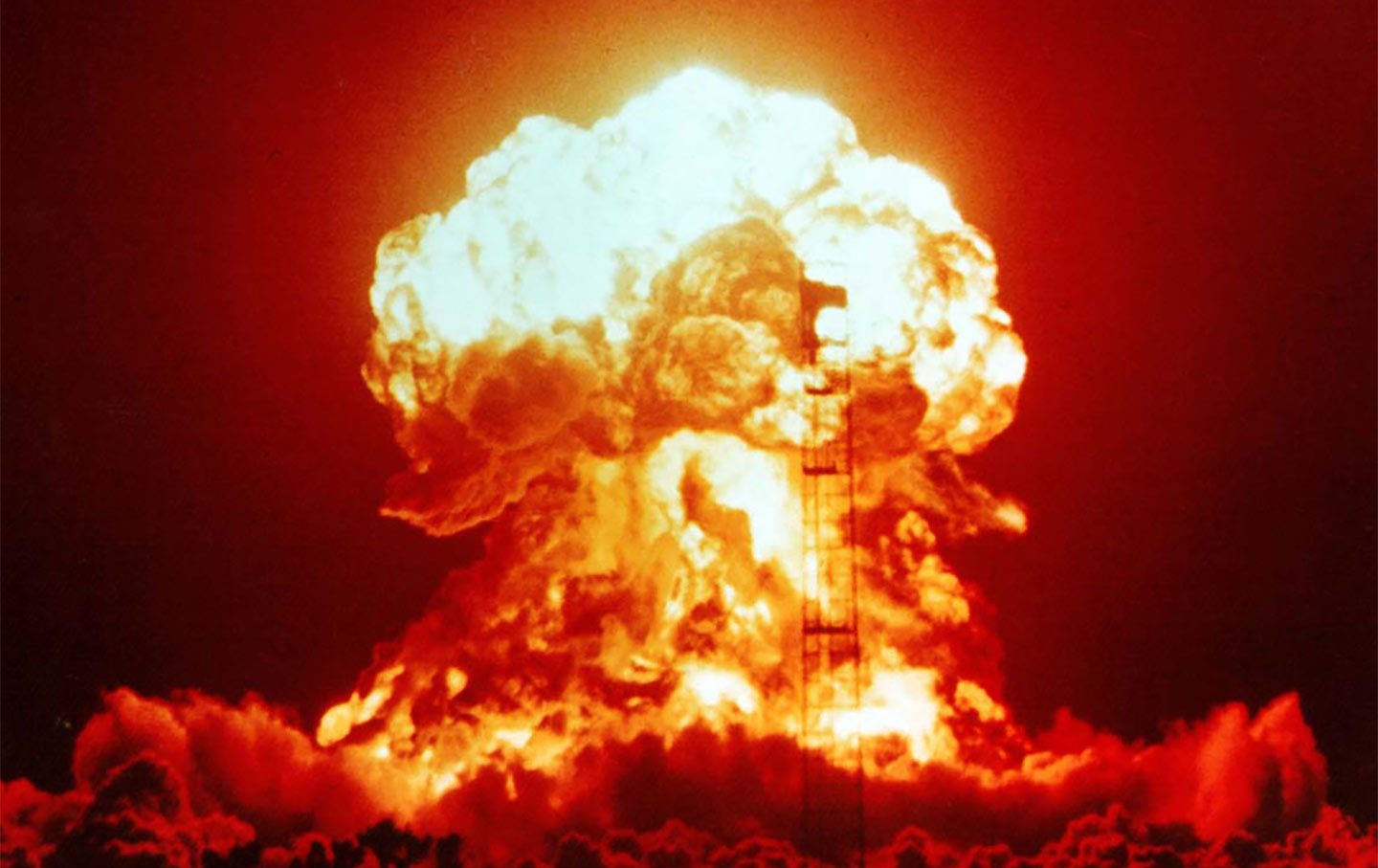
The way we talk about Iran in Washington is crazy. Look no further than Secretary of State Marco Rubio’s recent comment to reporters: “Every problem in the Middle East tracks back to Iran.” This is obviously absurd. Yes, the Iranian regime poses challenges. Yes, it has done, and continues to do, very bad things in the region and to its own people. We don’t need to rehearse all those arguments here; you’ve no doubt heard the talking points more than enough times to repeat them yourself, verbatim. But the fact is that the amount of time spent in Washington obsessing over Iran compared to the actual threat it poses to our country’s safety and prosperity is insane. Donald Trump’s catastrophically stupid, and now hopefully concluded, war on Iran is a vivid display of how that obsession has distorted our foreign policy and ended up dramatically diminishing, rather than advancing, Americans’ safety and prosperity, and the safety and prosperity of the world.
To state the obvious, this problem did not begin with Trump. As with so much else in his corrupt and reckless presidency, Trump is the most blatant expression of pathologies that have infected our politics and policy for a long time. The war on Iran is no different. For decades, Washington’s Iran obsession, accompanied by exaggerated and often blatantly bigoted claims about the uniquely evil nature of the Iranian regime, has constrained efforts at rapprochement and kept us inexorably on a path to conflict. Consider the amount of time and energy that President Barack Obama had to waste fighting with his own party over an objectively good nonproliferation agreement—a domestic political struggle none of his European counterparts had to face. Consider that President Joe Biden broke his promise to rejoin that agreement in part because of his own calculation of the political costs of keeping it. Trump is the one who launched the war, but the road to it was paved by decades of bipartisan hawkish idiocy. Revisit the 2024 Democratic platform’s section on Iran and realize it could’ve been written by John Bolton.
Enough already.
I am extremely hesitant to suggest that there are any upsides to Trump’s war on Iran, but there are a few. One of them is that the neocons once again have been utterly discredited; the question is whether we’ll finally learn to ignore them before they’re allowed to shit the bed again. But another is that the humiliating defeat Trump and the neocons brought on our country provides an opportunity to turn away from hawkish idiocy, for us to take a hard look at the US’s relationship to the Middle East, to finally question many of the assumptions that guided us repeatedly into disaster there, and hopefully to reset our relationship with and policy toward the region in a way that is rooted in a more realistic assessment of US goals, interests, and values.
This will obviously require an overhaul of the US relationship with Israel, whose advocates in Washington have long sought to discipline and punish anyone who dares suggest that the threat posed by Iran might be a wee bit overstated. Israeli Prime Minister Benjamin Netanyahu has claimed for decades that Iran is on the brink of building a nuclear weapon, despite the US intelligence community’s assessment, consistent since 2007, that Iran has not made that decision. (If Iran truly were “racing” toward a bomb, it would be the longest race in recorded history.) There’s no doubt that, however much Netanyahu and his allies may or may not believe their own claims about Iran, they also see it as a useful distraction from Israel’s ongoing efforts to remove the Palestinians from both their own land and from the international agenda. The “Maximum pressure” campaign of pro-Israel think tanks like the comically misnamed Foundation for Defense of Democracies isn’t primarily about improving Iranian behavior (if it was, it’s been a colossal failure) but about keeping American behavior in line with Israeli preferences.
Much has been made of Vice President JD Vance’s recent criticisms of Israel’s continued bombing of Lebanon in breach of US commitments to Iran as part of the MOU, but until the Trump administration shows a willingness to impose actual consequences, those criticisms mean about as much as Joe Biden leaking that he’s upset with Bibi for the 100th time. It’s still not clear that Trump is prepared to take the necessary steps to curb Netanyahu. A better approach will require being willing to cut off arms supplies, to withdraw the US diplomatic cover that has unfairly protected Israel at the United Nations, and to impose sanctions on Israeli government officials involved in human rights abuses, just as we would with any other habitually offending country.
The last decade and a half have been a series of harsh lessons for the United States, which has neither the capacity nor the right to transform the Middle East to its liking. Decades of economic strangulation, proxy conflict, and direct military interventions have not produced better Iranian government behavior. Only sustained, engaged diplomacy has done that. The idiotic 2026 Trump-Netanyahu war on Iran can be the moment when we finally choose to learn these lessons.
Become a Sustaining Donor This September
Between the reemergence of right-wing red-baiting and Donald Trump’s use of the chilling National Security Presidential Memorandum–7 to criminalize left political organizing, we’re seeing McCarthyism reborn before our eyes.
This assault on democracy cannot be ignored or wished away. Resisting it requires bravery in the face of threats and repression, a steadfast commitment to the truth, and the unwavering belief that we can—and will—overcome this darkness.
We must have an independent media that sets the record straight, unearths corruption and abuses of power, and advances a politics of justice and dignity for all if we’re to win this fight.
That’s why I’m writing to you today. This September, The Nation needs to add 100 monthly donors to sustain our progressive journalism. Your contribution makes the next investigative report, the next truth-speaking column, and the next pathbreaking essay all possible.
I hope you’ll support our work with a recurring donation today. If you donate $10 or more a month, we’ll send you a brand new “Hands Off the Free Press!” sticker to recognise your commitment to our cause. Please, donate today.
Onward,
Katrina vanden Heuvel
Editor and Publisher, The Nation