
Emily LaBarge’s Life Stories
In Dog Days, LaBarge blurs the lines between memoir and criticism
Emily LaBarge’s Life Stories
In “Dog Days,” LaBarge blurs the lines between memoir and criticism.
Over the course of a career, what a critic trains her eye on and the manner and method in which she does so reveals an essential fact about the writer herself. Her recursive references, preoccupations with a milieu, persuasions toward certain themes, and so on can suggest something of her life—her anxieties and desires—without giving much in the way of divulgence. For example: If she tends to write about women artists and writers who worked in the latter half of the 20th century, around the time of feminism’s second wave, then readers can infer a set of inclinations and affiliations. This is to say that criticism is personal, close to the bone, even if it’s written in a distant tone. For some critics, however, anecdotes inflect their work, the autobiographical items necessary to then stage arguments about the object before them. There is, I think, a thin line between the critic who uses her life’s stories to assist in her reading of a novel and the memoirist who uses a novel to give shape to the story of her life.
Emily LaBarge is a critic who toes this line in her first book-length project, Dog Days. So far in her career, she has written about the work of many female artists and writers born in the last century and associated with various strains of feminism, including Helen Frankenthaler, Rosemary Mayer, Francesca Woodman, Chantal Akerman, Ana Mendieta, Vivian Gornick, Natalia Ginzburg, Susan Howe, and Sandra Lahire. In Dog Days, LaBarge expands her critical scope in length and subject, assessing the task of the nonfiction writer. Blending experimental memoir techniques with critical analysis, the result is something that would best be described as metacriticism by way of auto-theory: LaBarge uses her own life and her subjective encounters with art to consider the state of criticism and memoir. Other contemporary practitioners of metacriticism and auto-theory include Maggie Nelson, who in The Argonauts surveyed her marriage, sexuality, and pregnancy through readings of Eve Kosofsky Sedgwick and Judith Butler, and Olivia Laing, who in The Lonely City: Adventures in the Art of Living Alone reckons with her decision to move to Manhattan through encounters with the work of New York artists like Edward Hopper, Andy Warhol, Henry Darger, and David Wojnarowicz. In Dog Days, LaBarge briefly references both Nelson’s The Red Parts: Autobiography of a Trial and a book by the Scottish psychiatrist R.D. Laing, The Divided Self, to which Olivia Laing (no relation) often refers in her work.
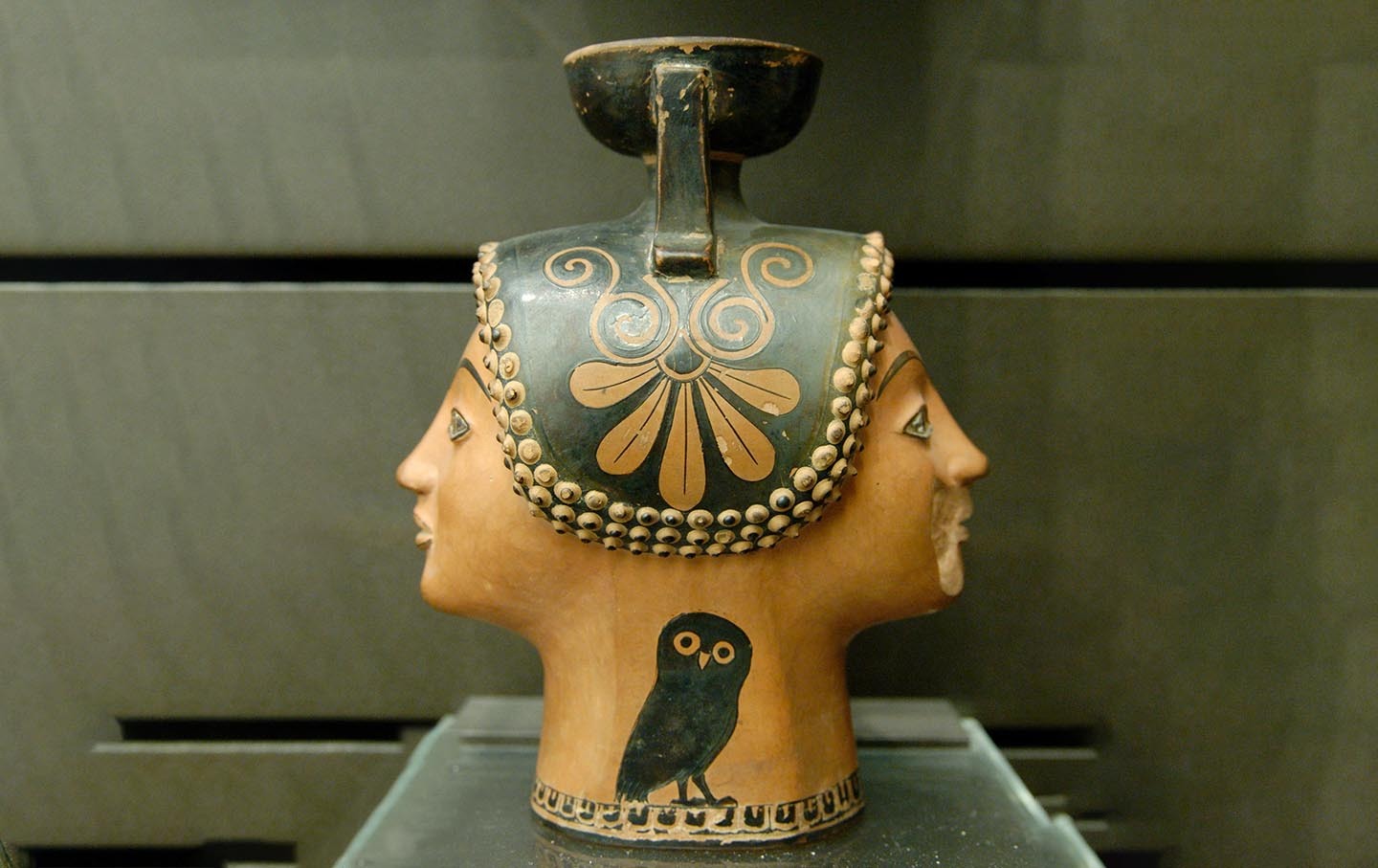
The forebears of this practice include the critics and memoirists Joan Didion and Vivian Gornick, both of whom are included in Dog Days’ epigraphs alongside one from Butler. Neither Didion nor Gornick fit into a singular label, be it “critic” or “memoirist.” Although transmitted in opposing modes and styles, their work creates a third thing from the admixture of criticism and memoir: the insight into both life and art that only a deeply feeling yet shrewdly intellectual mind can produce. In Dog Days, LaBarge circles the mysteries of Didion’s writing more persistently than Gornick’s. However, I would argue that Gornick casts a wider, if more implicit, shadow over Dog Days: Gornick’s tireless circling of certain literary passages throughout her life resembles LaBarge’s own dogged persistence throughout the book. In LaBarge’s review of Gornick’s 2021 memoir, Unfinished Business: Notes of a Chronic Re-Reader, a sentence from its concluding paragraph reads like a prescient summary of her own book: “We are all patchwork and collage, haunted for better or worse by our experiences and ideas, and how we have tried to reckon with them—in life and in writing.” LaBarge briefly returns to Unfinished Business in her book as a touchstone of “what keeps a work of non-fiction alive and meaningful: the risk of self-knowledge, with its Janus faces both appealing and grotesque.”
For a period of time, LaBarge writes, she suffered from sensory delusions. As she descended underground for the train, she discerned strains of classical music. When she woke up, she heard whispers. In London, where she moved after growing up in Canada, she implausibly spotted a series of figures from her childhood on the streets. “Their faces melt as soon as I turn to look, they pretend it was not them, here to spy on me, to see what I have become, but I know,” she writes. LaBarge diagnoses this phenomenon as pareidolia, “the tendency to perceive specific, often meaningful images or patterns in random or amorphous data.” She argues that her uncanny hallucinations—making patterns from delusions and then making meaning from these patterns—resembles the task of the nonfiction writer.
To prove this, she takes the reader on a vertiginous literary and artistic survey, from obscure studies to seminal texts. In effect, her book constructs a multidisciplinary definition of pareidolia, finding examples in Leonardo da Vinci’s notebooks, Virginia Woolf’s essay “The Cinema,” Charlotte Perkins Gilman’s story “The Yellow Wallpaper,” Sigmund Freud’s interpretation of “referential delusions,” Carl Jung’s definition of “synchronicity,” the psychoanalyst Melanie Klein’s definition of the “bizarre object,” the psychologist Leonore Terr’s study of the 1976 Chowchilla kidnapping, and Vladimir Nabokov’s story “Signs and Symbols.” This definitional exercise culminates in her reading of Didion’s grief-centered memoirs A Year of Magical Thinking and Blue Nights. “There are to be no answers to the sudden death of a husband and, just a year later, a daughter, nor to the many other deaths and losses that course through these two spare memoirs,” LaBarge writes. “We miss important messages, symbols and signs, signs and symbols, because they can only be recognised later. Because meaning is accrued not bestowed, and this is the work of time and narrative.”
It is a dizzying amount of references, challenging to summarize by virtue of their number and diverging styles and disciplines, traditions and themes. And yet LaBarge spins out from them connections that form the crux of her book’s philosophy:
The non-fiction writer has a Faustian bargain with the page, which promises meaning if life—sometimes her own—is adequately harvested for experience…. To imagine how disparate things fit together, to produce coincidence, alignment, parallelism, are the goals of the writer, and the essayist in particular. To imply that one thing follows another, to make you believe it because of the way I say or write or show it. Every piece of writing is a wager about how things may or may not hold together, on the page and off.
This section on pareidolia exemplifies Dog Days’ conceit: Beginning with LaBarge’s own mental state, it then makes sense of it through literature, art, and psychoanalytic theory, concluding with a broader thesis about the task of representing life in art. In the end, though, I ask myself: Where did all of this critical analysis get her? LaBarge seldom returns to the analysis of herself. And when she does, it is nowhere near the level of the critical attention that she affords to, say, Didion’s work. Once she tells the reader precisely what, in her estimation, a writer should aim toward, the work takes on a self-conscious edge. After setting up the reader’s expectations, Dog Days can proceed down one of two paths: mimic the formula set by those essayists before her, or break the genre apart.
So far, it may be unclear that Dog Days is a response to a traumatic event in LaBarge’s life. In 2009, during a Christmas holiday, armed robbers held her and her family hostage for nearly seven hours in their vacation home in the Caribbean. But Dog Days is not about the robbery, or her life after the robbery. Instead, it is about the pain of recounting this event in her everyday life: each Christmas; on subsequent family holidays; when she learns that one of the robbers lives in London; while newly encountering the misunderstood women in the short stories of Amy Hempel, Lorrie Moore, Alice Munro, and Joy Williams. But, even more so, it is about the struggle to straightforwardly transpose her experience into language.
Like a Brecht play, LaBarge lays bare the unforgiving, unseen, painful labor involved in writing about a real event in a real life. For her, much of this looks like turning away from herself, or, rather, fractalizing herself so as to embed her subjectivity into the scaffolding of theory, literature, science, and art.
The robbery is an inexplicable event, and LaBarge struggles to make sense of it. She recalls concrete details: the feeling of the gun pressed to the base of her head, the contorted position of her body, the sounds of the Robin Williams comedy Mrs. Doubtfire playing in the background, her father’s hands all tied up, heads smothered in pillowcases, urinating, pinching, screwdrivers, the CD of religious choral music that one of the men chose to play over and over. After the ordeal, she remembers the odd expression on her sister’s face, giving a statement to a woman with acrylic nails who misspells the word yelling, officials’ profuse apologies, returning to Canada, acquaintances staring at her for too long, and her mother’s friend suggesting this will be a good story to write about one day.
In order to file a report for her stolen items—a passport, a health card, a driver’s license, a replacement visa to the United Kingdom—LaBarge completed a form called the “Schedule of Loss,” a portentous name for a banal sheet of paper that is submitted to insurance companies, courts, or tribunals for victims to receive compensation. When she visits the Ontario Health Care Office, a desk clerk, bewildered by LaBarge’s lack of identification and her inability to prove her own identity, accuses her of committing health-insurance fraud. “You burst into inconsolable tears for the first time since It happened, petty bureaucracy truly the last dehumanising straw,” she writes, relating the experience in the second person. LaBarge’s reconstruction of the incident cements her estrangement from her immediate post-traumatic memories, as if the thing didn’t happen to the version of herself who is writing the book, as if multiple Emily LaBarges exist at once.
This splicing of identity hints at a later section in the book, where she burrows into David Lynch’s oeuvre, particularly his attention to time and trauma and his use of doppelgängers in Mulholland Drive and the television series Twin Peaks, in which Maddy Ferguson, Laura Palmer’s identical cousin, is also killed by the same man. It seems impossible that it could happen again, and to a girl who looks almost exactly like her murdered cousin. But it does, and it will. “The Lynchian event is ongoing, protracted, diffuse. The event is happening again, it is happening all the time,” LaBarge concludes. The connection is implicit to her own life: The Lynchian event is a filter to make sense of her traumatic event. Battling symptoms of post-traumatic stress while composing a book connected to the traumatic event makes it possible for the memory to seem present everywhere and in everything.
In a bureaucratic context, schedule means “list,” but as LaBarge multiplies the Schedules of Loss in her life, the word’s more pedestrian meaning, “a procedural plan that indicates the time and sequence of each operation,” comes to the fore. It relates to a sense of time and order. As she layers these schedules on top of each other, LaBarge muddies the linear time frame. “The real Schedule of Loss,” she writes, “is its other side, boundless, an endless tally, what you cannot find words for, what you are too afraid to say—as if it might conjure something awful—what feels like a dark hole in your heart beating through your throat or tar pouring out of your eyes.” It is dreadful because she has foisted an impossible task upon herself: to write what cannot be written.
The Schedule of Loss is a useful narrative framing device, connected to the traumatic experience but also a prism through which to structure her story. Still, one wonders if the Schedule, or another structural principle, could ever sustain Dog Days, as LaBarge is determined to deviate from the book’s initial intention: to understand the traumatic event through her encounters with art, literature, and theory. The avoidance of a legible personal narrative, and the insight its construction may bring, is central to her project. “Death is the ultimate unreadable event,” she writes, “unassimilable to meaning for the living no matter how we theorize its passage in time, its deprivation as full or void of meaning, past or future.” LaBarge, who has escaped death, cannot bear to “read” the event, because in doing so, she faces death. So she returns to what she knows: writing about books and art.
Dog Days begins with her therapist, Pierre, urging her to lie in the same contorted position that she lay in during the attack, for the same amount of time. This, he insists, will purge her of the bad feelings. Skeptical, LaBarge never attempts this physical exercise. However, several paragraphs later, she finds mimetic versions of this traumatic pose through music and art. The robbers played religious choral music during the event, an effort to mask any incriminating noise. The disc in the CD player happened to be Agnes Dei, a compilation of classic religious choral music sung by prepubescent boys. This soundtrack, which played over and over in her head after the fact, leads LaBarge to a reading of Francisco de Zurbarán’s painting of the same name, Agnus Dei (circa 1635–40). The painting, one of several he completed on the subject, portrays a lamb lying down, hooves tucked uncomfortably beneath its torso, and near death. “Maybe he is too human or not human enough or somewhere in between, somewhere impossible and protracted, where someone else makes the ultimate decision about life and death,” she writes of Zurburán’s creature.
This is where LaBarge is at her best: Her literary and artistic mind flickers with unlikely associations, alighting on one that illuminates meaning for her traumatized self. After the robbery, she sees this painting of the lamb differently; its title forever links it to the event’s soundtrack, while the lamb’s pose mirrors her own experience within the event, perpetually hovering between death and life. This accrual of post-traumatic experiences provides her with a unique perspective: Only LaBarge could take us down this particular associative thread, and in so doing derives fresh meaning from a painting composed in the 17th century. And that, in the end, is the stuff of great criticism.
Popular
“swipe left below to view more authors”Swipe →In moments of close reading, as with Zurburán’s painting, LaBarge’s critical prowess emerges. Reading Woolf’s novel To the Lighthouse, she fixates on a sentence: “Mr. Ramsay stumbling along the passage stretched his arms out one dark morning, but, Mrs. Ramsay having died rather suddenly the night before, he stretched his arms out.” The repetition in the sentence, LaBarge evocatively writes, “is the stutter of language, like life, marked by grief.” The “but,” segmenting the near-identical clauses, is a reminder of an absence, a gap in time or circumstance, the lack. This formulation is enticing to LaBarge, so she tries Woolf’s “haunting syntax” on for size: “She sits down at her desk to write, but, she sits down at her desk to write.” Will this sentence do the trick? she asks herself. Does this particular gap fit my particular grief? In this fashion, LaBarge enters the work of writers, painters, musicians, and filmmakers to find, like Goldilocks, what feels just right about their particular methods.
While reading and thinking about Dog Days, I remembered an illustration from an elementary-school science textbook explaining the concept of refraction, which occurs when light passes from one medium to another. The illustration depicted a pencil suspended in a clear glass of water, and it appeared to be broken, warped, or impossibly bent. Like the pencil in the water, LaBarge refracts herself through critical analysis. And the result is a book filled with intriguing, even brilliant, moments that inspire innocent awe not unlike that which comes from beholding one of the mysteries of perception. But in the end, by definition, Dog Days cannot cohere. And this lack of wholeness makes for a discouraging experience for the reader, as the sections of critical writing crescendo toward conclusions that never sound.
LaBarge concludes the book with a string of sentences in the double negative: “It matters that I didn’t not survive, I didn’t not confront the conundrum of life, I won’t not go on, I didn’t not find a way to use language, even if I didn’t quite not die, didn’t quite not live on the 22nd day of December, 2009, at 2am of the clock, Eastern Standard Time,” and so on. Grammatically, each clause leaves both realities open for consideration, for critical analysis, for further connections to art objects. Dog Days refuses the traditional argumentative structure that criticism provides; similarly, it defers the promise of self-knowledge that comes with a memoir. (“I am looking, it seems, for aesthetic correspondences to a sense of both desolation and supplication, though it is not clear to whom my entreaties are directed or even what they are,” she admits.) It is not not a book of critical essays; it is not not a literary memoir; it is not not a mystery novel where we never find the killer; it is not not an ex-voto on the altar of literary criticism. But, and I can say this with certainty, it is the representation of a luminous, well-read mind relinquishing the need to make sense of life through a conventional narrative.
Become a Sustaining Donor This September
Between the reemergence of right-wing red-baiting and Donald Trump’s use of the chilling National Security Presidential Memorandum–7 to criminalize left political organizing, we’re seeing McCarthyism reborn before our eyes.
This assault on democracy cannot be ignored or wished away. Resisting it requires bravery in the face of threats and repression, a steadfast commitment to the truth, and the unwavering belief that we can—and will—overcome this darkness.
We must have an independent media that sets the record straight, unearths corruption and abuses of power, and advances a politics of justice and dignity for all if we’re to win this fight.
That’s why I’m writing to you today. This September, The Nation needs to add 100 monthly donors to sustain our progressive journalism. Your contribution makes the next investigative report, the next truth-speaking column, and the next pathbreaking essay all possible.
I hope you’ll support our work with a recurring donation today. If you donate $10 or more a month, we’ll send you a brand new “Hands Off the Free Press!” sticker to recognise your commitment to our cause. Please, donate today.
Onward,
Katrina vanden Heuvel
Editor and Publisher, The Nation
More from The Nation

Edward Said: Between Worlds Edward Said: Between Worlds
A new film biography depicts the Palestinian writer as still out of place—and ahead of his time.
Imani Thompson’s Grad-School Thriller Imani Thompson’s Grad-School Thriller
In Honey, the novelist offers a different take on the campus satire.

Love and Literature in Leslie Fiedler’s America Love and Literature in Leslie Fiedler’s America
When will the American novel grow up?

What’s Behind the Dubai-ification of America’s Yemeni Cafés? What’s Behind the Dubai-ification of America’s Yemeni Cafés?
Over the years, Yemeni cafés have become beloved establishments for students and coffee lovers alike. But recently they have undergone a conspicuous aesthetic makeover.

