Aren’t Billionaires People, Too? Yes, but…
When ordinary Americans are forced to skip meals to afford healthcare, it’s vital that the Democratic Party resist retreating from small “d” populist policies.

How much has anti-billionaire sentiment pervaded the Democratic Party? Even the billionaires are getting in on the action.
In the ultra-competitive primary for California governor, businessman Tom Steyer has sold himself as “the billionaire who wants to tax billionaires.” He has spent much of the campaign touting the plutocrats and corporations who oppose him as a signal of credibility. And he has emphasized his commitment to the Giving Pledge, meaning he and his wife intend to give up most of their money while they’re alive; as he put it, “I will not die a billionaire.” (That makes 342 million of us.)
Steyer and his team recognize where the energy can increasingly be found in progressive politics. In a nation reared on Horatio Alger myths of self-made tycoons, 18 percent of Americans see being a billionaire as “morally wrong;” that figure is one in three among young people. Over half of American adults now believe billionaires are a threat to democracy. And as more blue states consider wealth taxes, it’s clear the public is increasingly demanding a reckoning with extreme inequality.
Yet right now, the person who may be best positioned to lead the charge against billionaires—in the state where the highest number live—is one of their own.
It’s a reflection of a catch-22 that’s long challenged progressives: For the long-term health of democracy, the systems that have allowed the ultra-wealthy to exert unlimited financial influence over politics must be dismantled. But can those systems be toppled without the help of their billionaire beneficiaries?
Excessive wealth inequality in the United States isn’t new; we’re not heading into season four of The Gilded Age for nothing. Yet it continues to soar to record highs. The top 1 percent of Americans now hold over 40 percent of the nation’s wealth; in no other industrialized country is that number greater than 28 percent. There are now roughly a thousand billionaires in America, with a collective net worth of around $6.9 trillion. Meanwhile, the median American’s wealth now lags behind their peers’ in countries like Australia, Canada, and the United Kingdom.
No matter how you measure it, the richest Americans are jealously accumulating more wealth every day at the public’s expense. But the hoarders might finally be due for an intervention.
As the political analyst and Pitchfork Populism author Bradford Kane has described, America has a long-standing split personality: “rugged individualists on the one side, and communal collectivists on the other.” Over the centuries, the tension between those two groups has boiled over, time and again, into populist movements.
Kane argues that in 2016 and 2024, Trump successfully channeled this resentment into a kind of faux populism that empowered himself over the masses. (The true progressive populism of Bernie Sanders also energized broad swaths of the public but faced an uphill battle against the Democratic establishment.) Now, as Trump approaches his final midterm election as a historically unpopular president, he’s dropped the veneer and no longer even pretends to care about the economic struggles of everyday Americans. Progressives, meanwhile, are running and winning with platforms laser-focused on affordability and inequality.
In states like California, New York, Washington, and Maine, lawmakers are pushing for new taxes on millionaires, ultra-millionaires, billionaires, and owners of pieds-à-terre. This has led to cries from some oligarchs that such taxes will cause the so-called job creators in liberal havens to flee to DeSantis Country.
This has not happened. Nearly six months into the mayoralty of Zohran Mamdani, departure threats from his wealthy detractors have proven, thus far, empty. You can also look at a state like Massachusetts—which passed a 4 percent tax on income over $1 million in 2022—where the millionaires have largely stayed put. With that revenue, the state has been able to bolster its transportation infrastructure and education, making it easier for young, working families to remain as well. As my colleague Michael Massing has written for The Nation, the only lifestyle change that the ultrarich might experience from this sort of policy would be giving up a private plane, yacht, or 12th home.
As the democracy-undermining effects of highly concentrated wealth become a staple of American political discourse, a plaintive counter-response is often invoked: Aren’t billionaires people, too? Must we bash and blame the 0.1 percent? But, as Americans are forced to skip meals in order to afford healthcare, it’s vital that the Democratic Party resist retreating from small-“d” populist policies when discussing wealth and class.
That doesn’t mean that Steyer and the Patriotic Millionaires have no role to play in those discussions. In his endorsement of Steyer, Robert Reich recalled: “We’ve had wealthy Democratic politicians before. FDR and JFK had tremendous fortunes, yet they enacted some of the most progressive policies in American history.”
If anything, Steyer’s willingness to seek higher taxes for himself and his peers makes him a strong messenger—immune to the accusation that advocates for wealth redistribution are merely suffering from class resentment. Instead, he has just as much credibility as anyone to call for the disruption of the structures that allowed billionaires (like him) to consolidate vast amounts of money and power in the first place.
As the Bernie Sanders–affiliated PAC Our Revolution explained in their tweet endorsing Steyer: “We’ve never endorsed a billionaire—but [he] is using his position to upset the system.”
Popular
“swipe left below to view more authors”Swipe →That said, as Inequality.org’s Chuck Collins wrote in an incisive column for Inside Philanthropy, “If we’re waiting for the billionaire class to summon their urgency to step up and solve the pressing problems of our day, we are in trouble.” Instead, undoing extreme inequality requires mass mobilization, and responsive electeds more accountable to the public than to big donors.
Higher taxes on the ultrarich and redistributive policies may seem like an uphill fight in a nation that has long mythologized free enterprise and sky’s-the-limit ambition. But the heyday of middle-class America has been just as mythologized. And at that time, the top federal tax rate was 90 percent, antitrust enforcement was robust, and a third of the workforce was unionized.
Seeking a truly fair share from the ultra-wealthy isn’t contrary to the American dream. It’s what allows the rest of us to pursue it.
Become a Sustaining Donor This September
Between the reemergence of right-wing red-baiting and Donald Trump’s use of the chilling National Security Presidential Memorandum–7 to criminalize left political organizing, we’re seeing McCarthyism reborn before our eyes.
This assault on democracy cannot be ignored or wished away. Resisting it requires bravery in the face of threats and repression, a steadfast commitment to the truth, and the unwavering belief that we can—and will—overcome this darkness.
We must have an independent media that sets the record straight, unearths corruption and abuses of power, and advances a politics of justice and dignity for all if we’re to win this fight.
That’s why I’m writing to you today. This September, The Nation needs to add 100 monthly donors to sustain our progressive journalism. Your contribution makes the next investigative report, the next truth-speaking column, and the next pathbreaking essay all possible.
I hope you’ll support our work with a recurring donation today. If you donate $10 or more a month, we’ll send you a brand new “Hands Off the Free Press!” sticker to recognise your commitment to our cause. Please, donate today.
Onward,
Katrina vanden Heuvel
Editor and Publisher, The Nation
More from The Nation
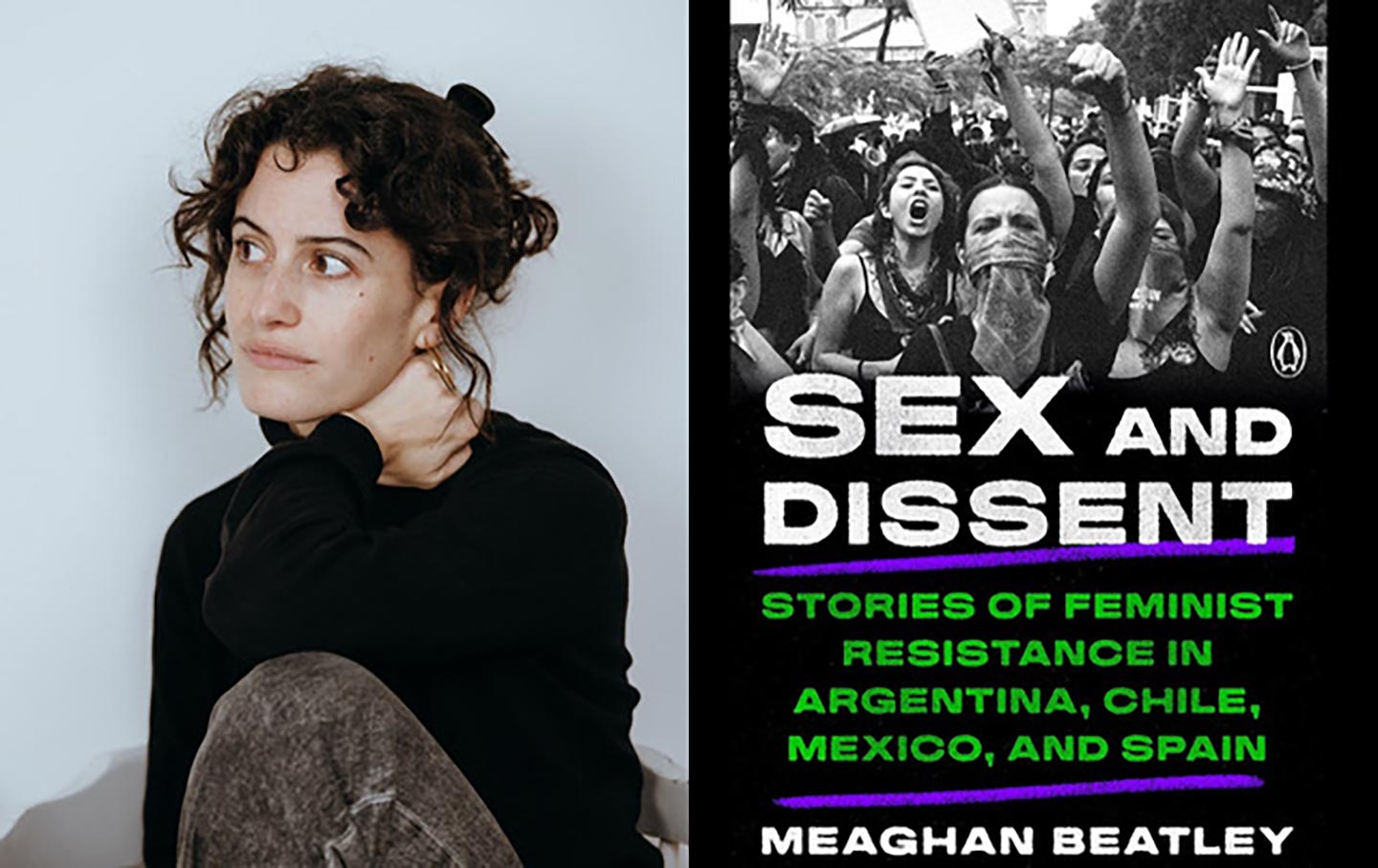
Journalist Meaghan Beatley on Latin America’s Feminist Resistance Journalist Meaghan Beatley on Latin America’s Feminist Resistance
A conversation with the author of Sex and Dissent about what American feminists can learn from the Green Wave movement.

As Cornell’s Rape Case Draws National Attention, Students Want Accountability. As Cornell’s Rape Case Draws National Attention, Students Want Accountability.
A new lawsuit alleging that a former student was drugged and gang-raped by Chi Phi fraternity members is sparking outrage in the Cornell community.

Irish Goalkeeper Gavin Bazunu’s Refusal to Play Against Israel Puts Him on the Right Side of History Irish Goalkeeper Gavin Bazunu’s Refusal to Play Against Israel Puts Him on the Right Side of History
Bazunu’s decision raises the perennial question: Why is a country that is currently committing a genocide allowed to compete in the first place?
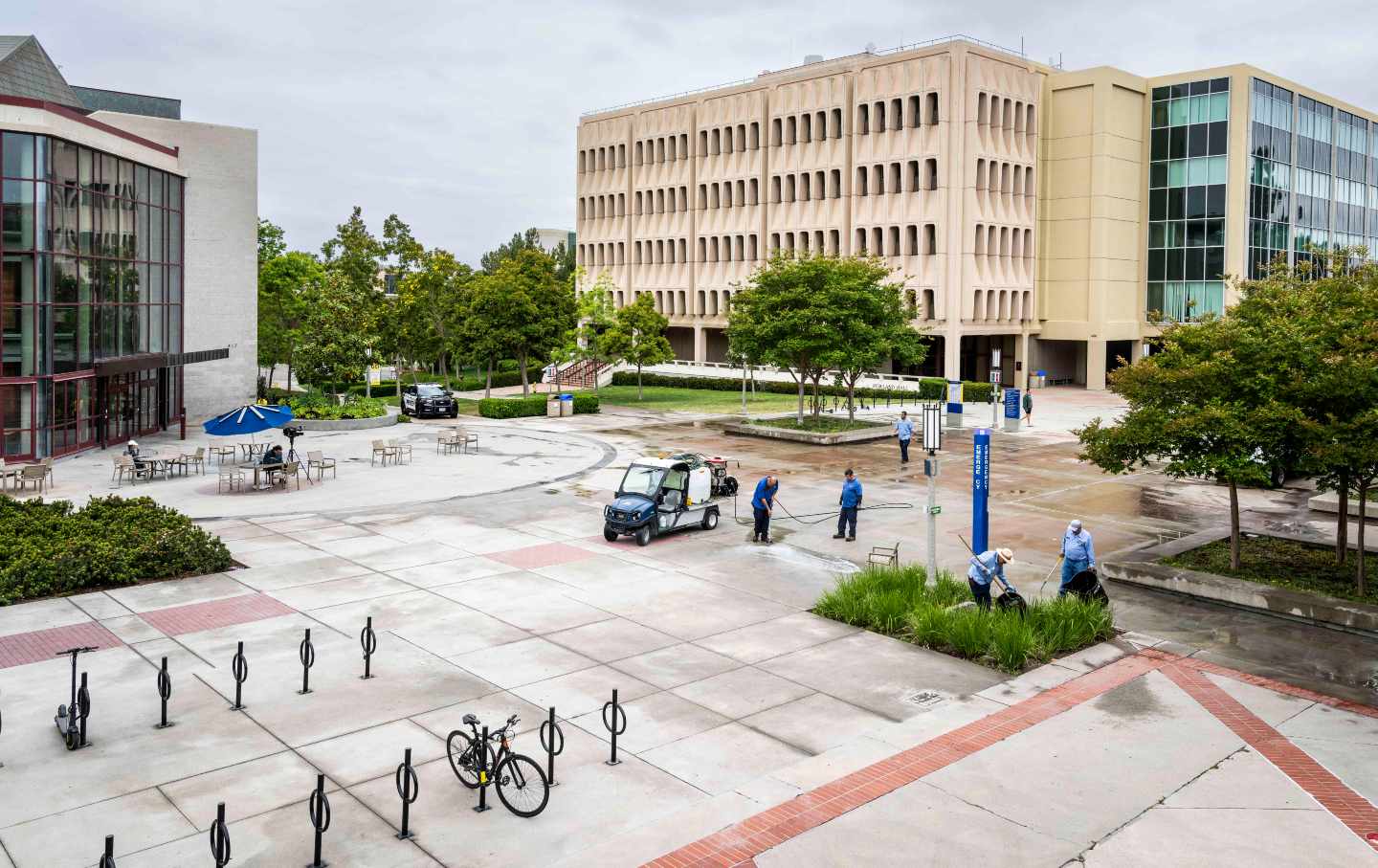
The Promises and Compromises of the University of California The Promises and Compromises of the University of California
I grew up in a neighborhood manufactured by the University of California, Irvine. It felt like a utopia for academics—until the university forsook its mission of serving the publi...

Is Platonic Co-Parenting the Future of the Family? Is Platonic Co-Parenting the Future of the Family?
Disillusioned with the nuclear family and apprehensive of tethering their reproductive futures to the bleak hellscape of modern love, young people are seeking a different way.