
Trump Risks a Greater Catastrophe in the Iran Conflict
Considering the costs so far as we wait on the precipice of another round of fighting.
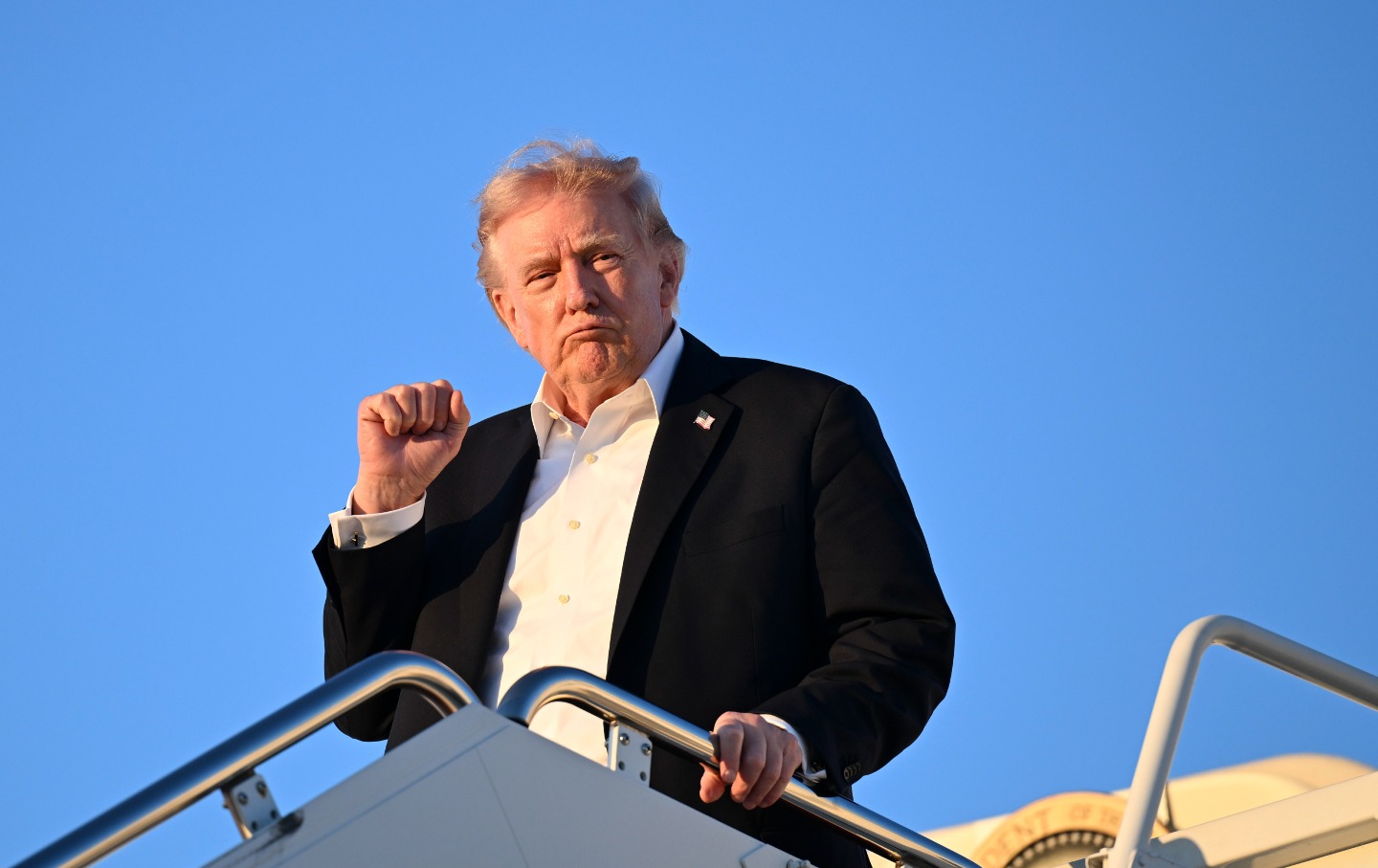
On February 28, President Trump undertook what can best be described as a cosmic roll of the dice: prompted by Prime Minister Benjamin Netanyahu of Israel and defense hawks in Washington, he commenced an intense air and missile campaign at Iran, seeking to topple its clerical regime and destroy its nuclear facilities and conventional war-making capability. In placing his bet, Trump reportedly disregarded concerns expressed by Vice President JD Vance and Gen. Dan Caine, the chairman of the Joint Chiefs of Staff, about the dangers of becoming trapped in yet another extended Middle Eastern conflict. Evidently flushed with success from his January 3 gambit in Venezuela—where US forces overcame minimal resistance to kidnap President Nicolás Maduro—Trump assumed that the Iran venture would proceed just as smoothly, and reap even greater rewards. “It’s going to work very easily. It’s going to work like it did in Venezuela,” he told CNN shortly after the war began.
With every subsequent press appearance, Trump insisted that the war was succeeding brilliantly and that Iran’s leaders (or what was left of them) were preparing to surrender at any moment. “Thanks to the progress we’ve made, I can say tonight that we are on track and the country has been eviscerated and essentially is really no longer a threat,” he told a nationwide television audience on April 1.
But the gamble did not pay off as Trump imagined it would. Despite being subjected to 13,000 air and missile strikes in just five weeks, Iran was not “eviscerated” but proved capable of attacking US military facilities throughout the Persian Gulf area and obstructing oil traffic through the vital Strait of Hormuz, precipitating a global energy crisis. Nor has Trump been able to coerce Iran’s surviving leaders into succumbing to his demands for the cessation of all nuclear enrichment activities and the surrender of the country’s remaining stockpile of highly enriched uranium. The United States “is being humiliated by the Iranian leadership,” German Chancellor Friedrich Merz declared on April 27, speaking of Tehran’s continuing resistance to Trump’s demands.
Humiliation is, of course, the condition Trump most detests (for himself, that is, not for those he chooses to humiliate). He has sought retribution against all those members of Congress and public officials who, he believes, contributed to the public humiliation of being impeached—not once, but twice—or found guilty of assorted crimes. We can assume, then, that he will not accept “humiliation” as the outcome in Iran and will seek some way to force Tehran to accept his terms for surrender. “They have not yet paid a big enough price for what they have done to Humanity,” he wrote in a May 2 post on Truth Social. Seeing that a naval blockade of Iranian shipping has not achieved that outcome, he is likely to roll the dice again and resume active military attacks on Iran—an outcome bound to prove catastrophic for all involved.
The War So Far
Before reckoning the potential costs of a renewed assault on Iran, it is useful to summarize the outcome of the first 38-day installment of Operation Epic Fury. What was accomplished and what was lost?
On the positive side of the ledger, Trump can claim the decimation of Iran’s conventional military forces and significant impairment of its military-industrial capacity. In a fact sheet released by the White House on April 8, the administration claimed that “Iran’s air forces have been functionally neutered,” “Iran’s navy has been obliterated,” and that “more than 85% of the regime’s defense industrial base, including the majority of its ballistic missiles, launcher vehicles, and long-range attack drones, has been destroyed.” This, no doubt, represents a significant blow to Iran’s military power and renders it even more vulnerable to future US (and Israeli) strikes. (It does, however, overlook the fact that Iran possesses substantial unconventional capabilities, including lethal drones that can be launched from the back of a truck and strike targets throughout the Gulf area.)
What was not achieved: From the start, Trump insisted that his goals in Iran included the incapacitation (if not outright elimination) of its clerical regime and the permanent eradication of its capacity to manufacture nuclear weapons. “We will ensure that Iran does not obtain a nuclear weapon,” he said on February 28 when announcing the onset of Epic Fury. When the US assault was over, he told the Iranian people, “Take over your government. It will be yours to take.” But neither of these goals has yet been accomplished. Iran’s clerical/military regime remains in power, and its nuclear know-how remains undiminished, though many of its aboveground uranium-enrichment facilities were damaged or destroyed during Operation Midnight Hammer on June 22, 2025. Most importantly, the Iranians are still thought to possess an estimated 970 pounds of 60 percent highly enriched uranium—enough, some experts believe, to build several nuclear weapons if upgraded to 90 percent HEU—thought to be contained in a dozen or so canisters stored in an underground complex near Isfahan that was heavily bombed during that June 2025 operation. Trump has demanded that the Iranians deliver the canisters to the US and promise to desist from enriching uranium for 20 years or more, but the leadership has, as yet, refused to do either.
What was lost: A full accounting of Epic Fury’s losses—to Iran, the US, and the world—will probably take years to assemble, but here are some key data points. For Iranians, the war has been utterly devastating. According to the White House, the US struck 13,000 targets in Iran during Epic Fury’s first 38-day installment, including more than 2,000 “command and control” targets and 1,450 “defense and industrial base targets.” These were all said to be legitimate military or regime targets, but reports in The New York Times and other sources claim that many were, in fact, civilian structures, including schools, mosques, hospitals, and apartment buildings. Not surprisingly, then, many of the casualties of the war have been civilians: according to an assessment by Human Rights Activists in Iran, a US-based nongovernmental organization, 3,636 Iranians died during the war, including 1,701 civilians, 1,221 military personnel, and 714 unclassified.
On the US side, human casualties have so far been contained to 14 servicemembers killed and approximately 300 wounded—relatively light numbers in comparison to Iranian losses, but painful, nonetheless. The Iranians also succeeded in inflicting substantial damage to US bases and military assets in the region. An investigation by CNN has revealed “unprecedented destruction” to US facilities, including the obliteration of numerous radar installations and other critical facilities. One Iranian strike, at Prince Sultan Air Base in Saudi Arabia, destroyed an E-3 Sentry air defense aircraft worth half a billion dollars. In defending against these attacks, moreover, the Pentagon consumed a significant share of the costly interceptors it had stockpiled for a possible war with China or Russia, including over 1,200 Patriot air-defense missiles.
Other countries in the region have also suffered significant loss of life and destruction of property due to US and Israeli attacks and Iranian retaliation. At least 2,500 people (and probably many more) have died in Lebanon because of Israel’s ongoing campaign against Hezbollah, and some four dozen Israelis and three dozen residents of the Arab Gulf states died due to Iranian drone and missile attacks. Many apartment blocks and farming communities in southern Lebanon were also destroyed by Israeli bombing, while energy facilities throughout the Gulf area have been damaged by Iranian attacks. Most notable in this regard is the damage to the Ras Laffan liquified natural gas (LNG) facility in Qatar, knocking out two LNG “trains” that cost $26 billion to construct.
Iran’s success in blocking tanker traffic through the Strait of Hormuz has effectively shut down one-fifth of the world’s daily oil and LNG supply, causing severe energy shortages to develop in Asia and many other parts of the world. In the Philippines, President Ferdinand Marcos Jr. has declared a “national energy emergency” and ordered government agencies to adopt a four-day week. Other Asian countries have closed schools and factories or shortened their working weeks, and some, like South Korea, have capped fuel prices to calm discontented consumers. The Strait’s closure has also blocked access to the Gulf’s vital supplies of jet fuel and chemical fertilizers, causing massive flight cancellations and rising food prices across the planet. Even the United States has experienced some consequences: Gasoline prices are now their highest in four years while rising jet fuel costs sparked the shutdown of Spirit Airlines, with the loss of 17,000 jobs.
The Fire Next Time
It is important to tally all these losses, I believe, to consider what would be risked by another round of fighting. The first installment of Operation Epic Fury destroyed much of Iran’s military and military-industrial infrastructure and throttled energy deliveries from the Gulf to countries around the world. What could possibly come next?
Let’s start with Trump’s potential military options. As best as can be determined from outside the White House, Trump could order one or more of the following moves: (1) another round of punishing air and missile strikes, designed to pulverize what is left of Iran’s economic and industrial capacity; (2) a naval protection fleet for vessels attempting to traverse the Strait of Hormuz and/or a land assault on the Iranian side of the strait; (3) a Special Forces operation to seize the canisters of highly enriched uranium buried in that mountain near Isfahan.
A resumption of US air and missile attacks on Iran will surely result in increased human casualties, perhaps in far larger numbers than before. Trump has repeatedly threatened to destroy Iran’s economic and transportation infrastructure, a move that would undoubtedly result in numerous civilian losses and widespread suffering. “We’re going to bring them back to the Stone Ages, where they belong,” he threatened on April 1. However satisfying this might appear to the denizens of the White House, it will turn the United States into a global pariah, much as Israel’s leveling of Gaza has produced that unwelcome outcome.
Any such move, moreover, is certain to precipitate a new barrage of Iranian drone and missile strikes on vital infrastructure throughout the Gulf area, ensuring that the current energy crisis persists for an indefinite length of time, inflation rises worldwide, and global growth slows to a crawl—if not turns downward.
Using US naval vessels to escort oil and gas tankers through the Strait of Hormuz might look like a simple solution to all this, but any such move is certain to invite multiple Iranian countermoves, including missile and drone strikes by coastal forces and hit-and-run attacks by Iran’s so-called “mosquito fleet” of small, missile-armed gunboats. Naval escorts might enable a handful of ships to get through, but it is hard to imagine that this would induce most shipowners to undertake such a voyage, ensuring a continued shortage of oil supplies. Any attempt to address these risks by physically occupying the Iranian side of the Strait of Hormuz would undoubtedly prove even more hazardous. Just to move Army and Marine troops into position off these targets would expose US forces to intense enemy fire, and any amphibious landings would no doubt prove even more perilous. To ensure safe passage through the strait, moreover, such an operation would probably require a long-term US military presence, inviting ever more casualties and entrapping this country into exactly the sort of Middle Eastern “quagmire” that Trump promised never to allow.
Even more hazardous would be an attempt to seize the canisters of highly enriched uranium buried under tons of rubble in a mountain complex near Isfahan, located some 492 road miles from the nearest port on the Persian Gulf coastline. To gain access to the uranium, the US would probably need to airlift 1,000 or more Special Forces operators to secure the area along with specialized units to dig through the rubble and safely remove the canisters, which could release substantial radiation if mishandled. These forces would likely come under sustained Iranian attack while in the air and on the ground, possibly resulting in heavy US casualties—not to mention a radiological catastrophe.
A No-Win Wager
It is hard to imagine that any of these scenarios will play out in a way that advances long-term US interests. None of them is likely to result in the rapid resumption of oil and gas shipping through the Strait of Hormuz, and any attacks on Iran’s petroleum infrastructure—as threatened by Trump on March 30—will further reduce the long-term supply of oil, ensuring that the energy crisis will persist for years to come.
Popular
“swipe left below to view more authors”Swipe →Although the United States is relatively insulated from the immediate crisis, given that this country produces a large share of the oil and gas it consumes, it is not immune to the economic shock waves now rippling across the planet. As food and energy costs climb, inflation will grow and economic activity slow, putting more people out of work and causing increased hardship for poor and middle-class Americans. How this will play out in the midterm elections remains to be seen, but it does not portend well for Republican incumbents.
Increased fighting will also entail the further expenditure of critical US military matériel, especially precision-guided missiles that would be needed in any future war with China or Russia. Members of both parties in Congress have vowed to finance the rapid replenishment of US missile stocks, but it will likely take several years to replace all the weapons already consumed in the Iran conflict. A prolonged conflict will also require the continued presence of specialized intelligence-gathering, air-defense, and combat-support units in the Middle East, further depleting US military capabilities in East Asia and Europe. From a geopolitical perspective, this can only mean a diminished US capacity to deter future Chinese and Russian adventurism—say, perhaps, with respect to the Baltic Republics, Taiwan, or countries bordering the South China Sea.
No matter how you look at it, Trump made a very poor decision when igniting the war with Iran—for this country, the world, and his own party. He is now on the verge of doubling down on his bad judgment, by renewing or escalating the fighting. Trump is likely to prove one of the most conspicuous casualties of such a move—in reputation, if nothing else—but everyone on the planet is likely to suffer in one way or another, and some egregiously so.
Become a Sustaining Donor This September
Between the reemergence of right-wing red-baiting and Donald Trump’s use of the chilling National Security Presidential Memorandum–7 to criminalize left political organizing, we’re seeing McCarthyism reborn before our eyes.
This assault on democracy cannot be ignored or wished away. Resisting it requires bravery in the face of threats and repression, a steadfast commitment to the truth, and the unwavering belief that we can—and will—overcome this darkness.
We must have an independent media that sets the record straight, unearths corruption and abuses of power, and advances a politics of justice and dignity for all if we’re to win this fight.
That’s why I’m writing to you today. This September, The Nation needs to add 100 monthly donors to sustain our progressive journalism. Your contribution makes the next investigative report, the next truth-speaking column, and the next pathbreaking essay all possible.
I hope you’ll support our work with a recurring donation today. If you donate $10 or more a month, we’ll send you a brand new “Hands Off the Free Press!” sticker to recognise your commitment to our cause. Please, donate today.
Onward,
Katrina vanden Heuvel
Editor and Publisher, The Nation
More from The Nation
The Decades-Old Roots of Trump’s War on Iran The Decades-Old Roots of Trump’s War on Iran
An interview with historian Behrooz Ghamari-Tabrizi about the generations of US presidents who have tried to destroy the Iranian regime.
Emmanuel Macron’s Turbulent Exit Emmanuel Macron’s Turbulent Exit
Between a budget crisis and a cost-of-living squeeze, Macron is leaving a country feeling more insecure than ever—and ready to take to the streets.
Israel’s Election Can’t Fix What Netanyahu Broke Israel’s Election Can’t Fix What Netanyahu Broke
The fundamental problem is not the name of the prime minister, but rather the actions of the Israeli government and the urgent issues that need to be addressed.

The AfD’s Rise Isn’t Just About East Germany The AfD’s Rise Isn’t Just About East Germany
The Alternative für Deutschland has a stable national poll lead, including in the former West Germany. Its rise owes to much more than Eastern grievances.
Chinese Development Is the Betrayal Washington Cannot Forgive Chinese Development Is the Betrayal Washington Cannot Forgive
The prospects for Xi Jinping’s visit are dim because American leaders are blaming China for the failures of globalization.

Pinochet: The Verdict of History in the Letelier-Moffitt Case Pinochet: The Verdict of History in the Letelier-Moffitt Case
An act of international terrorism on the streets of Washington, DC, still reverberates 50 years later.

