
After Empires Die
The worlds of Jamaica Kincaid
The Worlds of Jamaica Kincaid
Memory pervades a new collection of nonfiction, and so do the ghosts of empire.
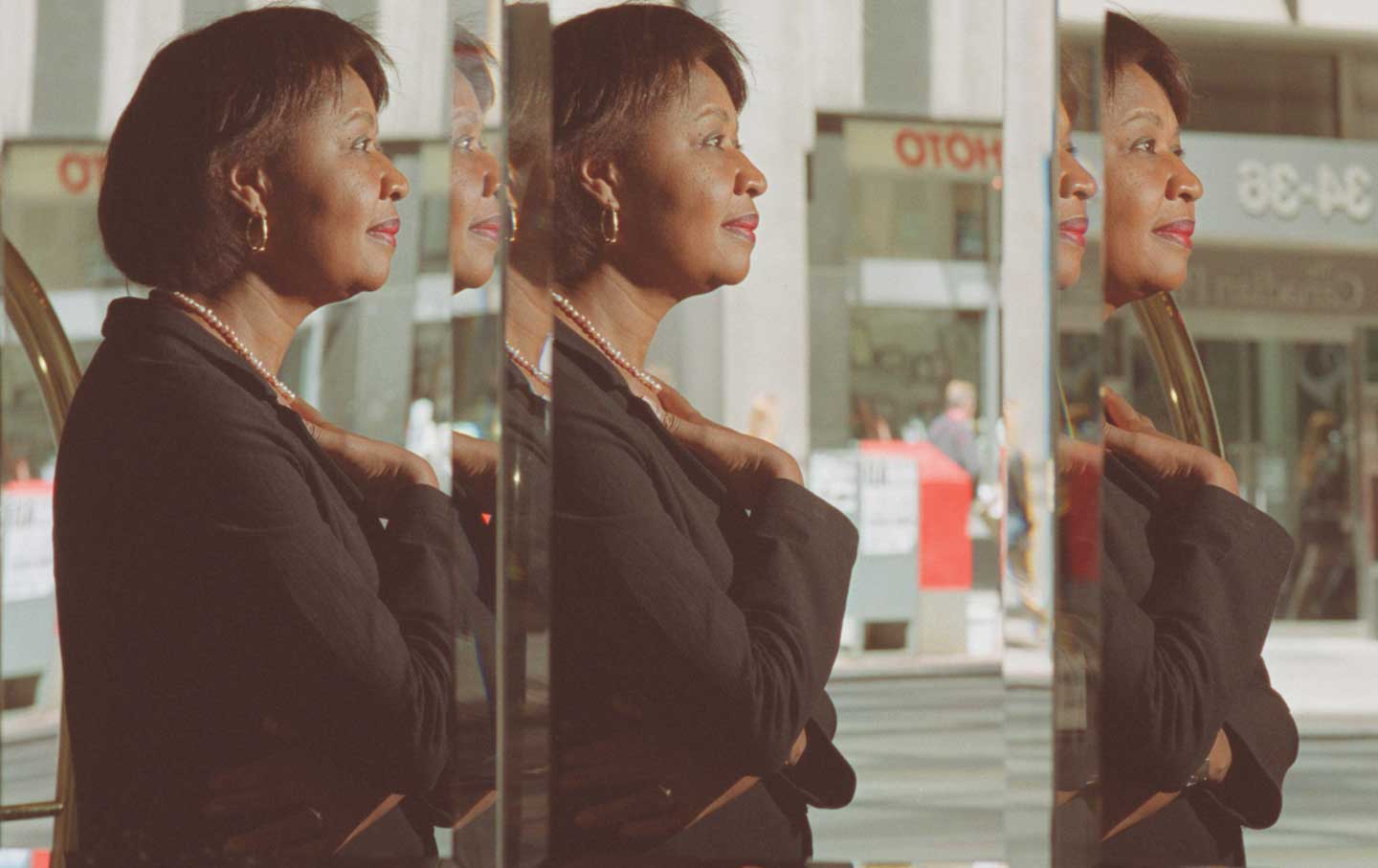
Jamaica Kincaid in Toronto.
(Lucas Oleniuk / Getty Images)
Jamaica Kincaid really hates England, and who could blame her? In her essay “On Seeing England for the First Time,” which was published in Transition during the early 1990s, she pithily expressed her views of the country: “I find England ugly…I hate England; the weather is like a jail sentence…the food in England is like a jail sentence.”
Books in review
Putting Myself Together: Writing 1974–
Buy this bookOne might dispute some or all of these assertions, but the anger derives from a history, a long, painful, gut-wrenching series of events involving what the British Empire did to Kincaid’s ancestors: possibly capturing, if not purchasing, her African forebears, transporting them across an ocean, and forcing most of these individuals and their descendants to work in the sugarcane fields of Antigua. Even long after the country’s emancipation and independence, Britain maintained a strong political and social connection to Antigua, as it did with many of its former colonies, mainly under the banner of the Commonwealth. For anyone from Antigua, and for anyone whose ancestors were affected by the British Empire in similar ways, it is difficult to see English society and culture without some feeling of bitterness and indignation.
For Kincaid, the tentacles of British imperialism have long been a theme in her novels. In Annie John, England appears in the background of nearly every social encounter, through symbols and hymns. One notable childhood scene shows that close relationship:
We began our [Brownie] meetings with the whole troop standing in the yard of the Methodist church, forming a circle around the flagpole, our eyes following the Union Jack as it was raised up; then we swore allegiance to our country, by which was meant England.
In At the Bottom of the River, we get a collection of short stories in which England features as a faraway land that provides luxury items. Now, in a new collection of Kincaid’s essays and cultural writing, Putting Myself Together, much of her animus toward England can be found once more, along with many other things. As in her fiction, the themes of British imperialism, life in the Caribbean, and the long shadow of slavery and colonialism are central, but they are no longer conveyed through characters—instead, we get them directly from Kincaid herself. Yet there is much more in this collection. Her body of writing is filled with musings and missives, witticism and humor. Spanning Kincaid’s career from the early 1970s until 2020, the essays here include everything from features on celebrities to insights on her garden. Yet many of the themes circle back to the main idea of “On Seeing England for the First Time,” which serves as a sharp parable as well as a wry provocation: that when push comes to shove, you can’t escape history—it makes you.
Jamaica Kincaid was born in 1949 as Elaine Cynthia Potter Richardson. The daughter of a sharp-tongued housewife and an illiterate chauffeur, she spent her first 16 years as a British colonial subject, absorbing the heavy influences of the monarchical government. Even as late as the 1950s, Antigua was still in a state of transition away from a plantation economy, where unpaid and later poorly paid Africans and their descendants worked the land to produce sugar, cotton, and harvests for the British Empire. Antiguans were free, in that they were no longer slaves, but they were not, in Kincaid’s experience, all that liberated.
“For about one hundred years after emancipation,” Kincaid notes in one essay, “Antiguans were neither slaves nor people.” Even in their alleged liberation, the Black residents of the island served the global elite. Most of the land when she was growing up, Kincaid noted, was owned by “people who had never seen Antigua.” Where did these people live? Mostly in Britain. Who were they? The descendants of slave owners. By the mid-20th century, the peaceful island had become appealing to the United States, which led to Antigua’s acquiring an American military base and gradually being transformed into a tourist destination for middle-class North American travelers seeking to escape to its beaches and turquoise waters. Even as the forms of hierarchy and rank changed, class and the exploitation of Antiguans remained constant.
In 1965, Kincaid migrated to the United States. As the eldest child, she was expected to provide financial assistance to her impoverished family. Leaving Antigua was a significant step, but embracing the person she wanted to become was even more critical. In the US, Kincaid temporarily worked as an au pair at her mother’s request to send remittances back to the Caribbean. But after a tumultuous start, she severed ties with her family in Antigua and, with meticulous detail, adopted a new persona. From then on, she would no longer be Elaine Cynthia Potter Richardson; by taking her new first name from another British colony in the Caribbean and her surname from a Scottish clan that rebelled against the English and recaptured Edinburgh Castle in the 13th century, Kincaid signaled both her Afro-Caribbean roots and her anti-English resistance.
Now equipped with a new identity, Kincaid briefly attended Westchester Community College, Franconia College, and the New School. Although she never finished a college degree, she started writing regularly for Ms. and The Village Voice. She also began contributing consistently to The New Yorker, including brief pieces in “Talk of the Town.” There, she developed a casual prose style with a touch of sharp humor.
By 1978, all of Kincaid’s hard work as a writer had begun paying off: After writing “Girl,” a short story in The New Yorker that offers a vivid portrait of female life with memorable concision, she got a publishing contract and expanded the piece into her first book, At the Bottom of the River. From that point on, Kincaid continued shifting between fiction and nonfiction. Often revisiting her own biography, her novels would try to do both.
At the Bottom of the River was a thoughtful book about close observation, with the narrators habitually highlighting the ordinariness of domestic life. However, the works of fiction and nonfiction that followed continued to dwell on many of the same themes: Kincaid’s West Indian upbringing, her marriage to a composer, her two children, and her horticultural journey. This decision to write about her life was not made merely because it was the subject most immediately available to her; it also offered Kincaid a way to work through and reflect on that life—a way to find out how her past had influenced and shaped the present.
Alongside her novels, Kincaid continued to write cultural and literary criticism. Putting Myself Together offers a chronicle of these writings, collecting her opinions on political figures, her commentaries on public life, her profiles of celebrities, her letters concerning colonialism, and her critiques of Western society’s obsession with race. The volume does not include every work of nonfiction she’s written, but it tracks her evolution as a public thinker.
One noticeable aspect of many of these essays is not only her political insight but also her sharp wit and humor. While Kincaid established her reputation as a fiction writer, she also shows significant versatility in her nonfiction, shifting from widely read publications like Architectural Digest to more highbrow outlets like The Paris Review.
From the beginning of her writing career, her polyphonic prose was infused with a mix of comedic and historical sensibilities—an infectious sense of tittering and mirth in confronting history’s challenges and injustices—that I have also observed in my Afro-Caribbean aunts during family gatherings. By the early 2000s, Kincaid had transformed this range of feelings and styles into a mode of writing that, along with her fiction, made her a literary powerhouse. Everyone wanted to read and publish Kincaid.
During these years, Kincaid’s disdain for the British Empire’s stain on Antigua and, more broadly, much of the world was often secondary to other subjects she addressed; her writing also contains many nuanced and pointed remarks about identity. Whether profiling the stars of blaxploitation films, such as Pam Grier, or discussing literary figures like Robinson Crusoe, Kincaid was always careful to consider how history intersected with personality, politics with art and culture, world-historical events with everyday desires and happenings.
Reporting from a public broadcast at a Harlem theater, Kincaid watched George Foreman fight Muhammad Ali in Zaire (now the Democratic Republic of the Congo)—and despite all the history swirling around her, she took the time to pause and offer a somewhat steamy and wry description of Ali. “He looked like a movie star,” Kincaid wrote, “the way he strode into the ring. His face looked smooth as a peach, his hair was nicely done—no split ends. Then he took off his robe and flexed the muscles in his arms. Gosh! He has the best pair of collarbones you have ever seen on any screen.”
Even when getting lost in the beautiful physique of a world champion boxer, Kincaid never forgets the dynamics of power and empire all around her—and in particular the residues of that one kingdom she was most familiar with. When Kincaid writes about Britain, she is unequivocal. For her, the British Empire was and, in many ways, continues to be a globe-trotting ruffian who, for centuries, bullied and stole from the world, never apologized, and always explained away its violence and extractive tendencies as being to the benefit of all.
Kincaid articulates her frustration with the United Kingdom with statements of intentional provocation, but she also supplements these with detailed accountings of the British Empire. For instance, she notes, the Barclays brothers founded Barclays Bank with wealth amassed through slave trading and, after the Slavery Abolition Act, extracted profit from the descendants of those same enslaved people. In fact, in exchange for abolition, Britain paid 47,000 slave owners, like the Barclays brothers, through the Slavery Compensation Act. These payments continued until 2015. In practice, this has meant that as much as 20 percent of Britain’s wealthy population has financial wealth connected to the transatlantic slave trade. As Kincaid writes, “I may be capable of prejudice, but my prejudices have no weight to them, my prejudices have no force behind them, my prejudices remain opinions, my prejudices remain my personal opinion.”
But her partialities are also rooted in fact. For example, of the 17 non-self-governing territories, 10 are still administered by the UK, which some point to as proof that British colonialism never died. Moreover, the UK maintains military bases in its former colonies, along with mining companies and tax havens, which leads one to think that Kincaid’s antipathy is justified. When she was born, Antigua was a British colony, and like several newly independent nations that had been ruled by this empire, it slowly transitioned to Commonwealth status. By 1981, Antigua had become a member of the Commonwealth, and to this day, the British monarch remains its head of state (unlike in Barbados, which finally divorced itself from the monarch in 2021).
For Kincaid, after empires die, the consequences of their rule endure for many years. These were present in every aspect of the Antiguan society in which she grew up—from the street names and the school curriculum to the official language. On this, there was no ideological middle ground or any way to find the good in the bad. Freed from alleged English civility, Kincaid was going to say exactly what she thought about Britain.
Popular
“swipe left below to view more authors”Swipe →Much of Kincaid’s writing on the British Empire brings to mind another seminal Afro-Caribbean intellectual, Stuart Hall. He, too, did not pull any punches concerning the role that his adopted home played in the formation of his original one. “The very notion of Great Britain’s ‘greatness’ is bound up in the empire,” Hall once wrote. “Euro-skepticism and Little Englander nationalism could hardly survive if people understood whose sugar flowed through English blood and rotted English teeth.” For Kincaid, too, the rottenness of British society originated in the way Britain had treated much of the rest of the world. Perhaps no country should ever be considered “great,” but for Kincaid, certainly no imperial power could be described with such a term.
And yet despite all this, Kincaid can also be a writer of hope. If history created despair and anger, then memory offered inspiration. In her svelte novel Annie John, Kincaid revisited her own life in Antigua with unbridled clarity. In At the Bottom of the River, the remembered past is often a place of respite and possibility, as is also the case in Lucy, a novel about a West Indian girl working as an au pair for an American family.
Memory pervades Putting Myself Together as well. A capacious and wide-ranging collection, it furnishes a portrait of Kincaid as a thinker and writer as she evolves over time and even her own self-perceptions change. There are some noticeable interstices, however. Reading the collection, I kept wondering about what seemed to be missing: an engagement with the political turmoil of the present day. Perhaps nonfiction was never the perfect vehicle for this, or Kincaid shouldn’t necessarily be the person to do this, but I am confident that she would do it well. Another area I would have liked to see explored further is how we understand the process of racialization in contemporary society and its relationship to the United States, a similarly vast empire. While Britain often comes under fire in Kincaid’s essays, there is far less about how the United States also operates around the world as an empire and how its violence abroad comes back home.
Yet even if some of these aspects are missing, Putting Myself Together does offer us a picture of Kincaid putting herself, well, together. In its witty social observations, sardonic humor, and purposeful provocations, it captures one of America’s most lively and wide-ranging literary voices. In its critiques of the British Empire and its studies of Caribbean life, it also offers a blueprint for the postcolonial pundit—showing how violence and exploitation abroad are connected to how they show up at home.
In her 2019 “letter” to Robinson Crusoe, Kincaid wrote, “Dear Mr. Crusoe, Please stay home. There’s no need for this ruse of going on a trading journey, in which more often than not the goods you are trading are people like me, Friday.” The letter is poignant, and it’s a directive that we should address to anyone who exercises unconscious cruelty toward the oppressed. May everyone reprimand their own colonizer with confident calculation, and if we dare, we can also be a bit spiteful.
Become a Sustaining Donor This September
Between the reemergence of right-wing red-baiting and Donald Trump’s use of the chilling National Security Presidential Memorandum–7 to criminalize left political organizing, we’re seeing McCarthyism reborn before our eyes.
This assault on democracy cannot be ignored or wished away. Resisting it requires bravery in the face of threats and repression, a steadfast commitment to the truth, and the unwavering belief that we can—and will—overcome this darkness.
We must have an independent media that sets the record straight, unearths corruption and abuses of power, and advances a politics of justice and dignity for all if we’re to win this fight.
That’s why I’m writing to you today. This September, The Nation needs to add 100 monthly donors to sustain our progressive journalism. Your contribution makes the next investigative report, the next truth-speaking column, and the next pathbreaking essay all possible.
I hope you’ll support our work with a recurring donation today. If you donate $10 or more a month, we’ll send you a brand new “Hands Off the Free Press!” sticker to recognise your commitment to our cause. Please, donate today.
Onward,
Katrina vanden Heuvel
Editor and Publisher, The Nation
More from The Nation

America Without the NFL America Without the NFL
Chuck Klosterman’s Football is a eulogy for the sport on the eve of its decline.
Edward Said: Between Worlds Edward Said: Between Worlds
A new film biography depicts the Palestinian writer as still out of place—and ahead of his time.
Imani Thompson’s Grad-School Thriller Imani Thompson’s Grad-School Thriller
In Honey, the novelist offers a different take on the campus satire.
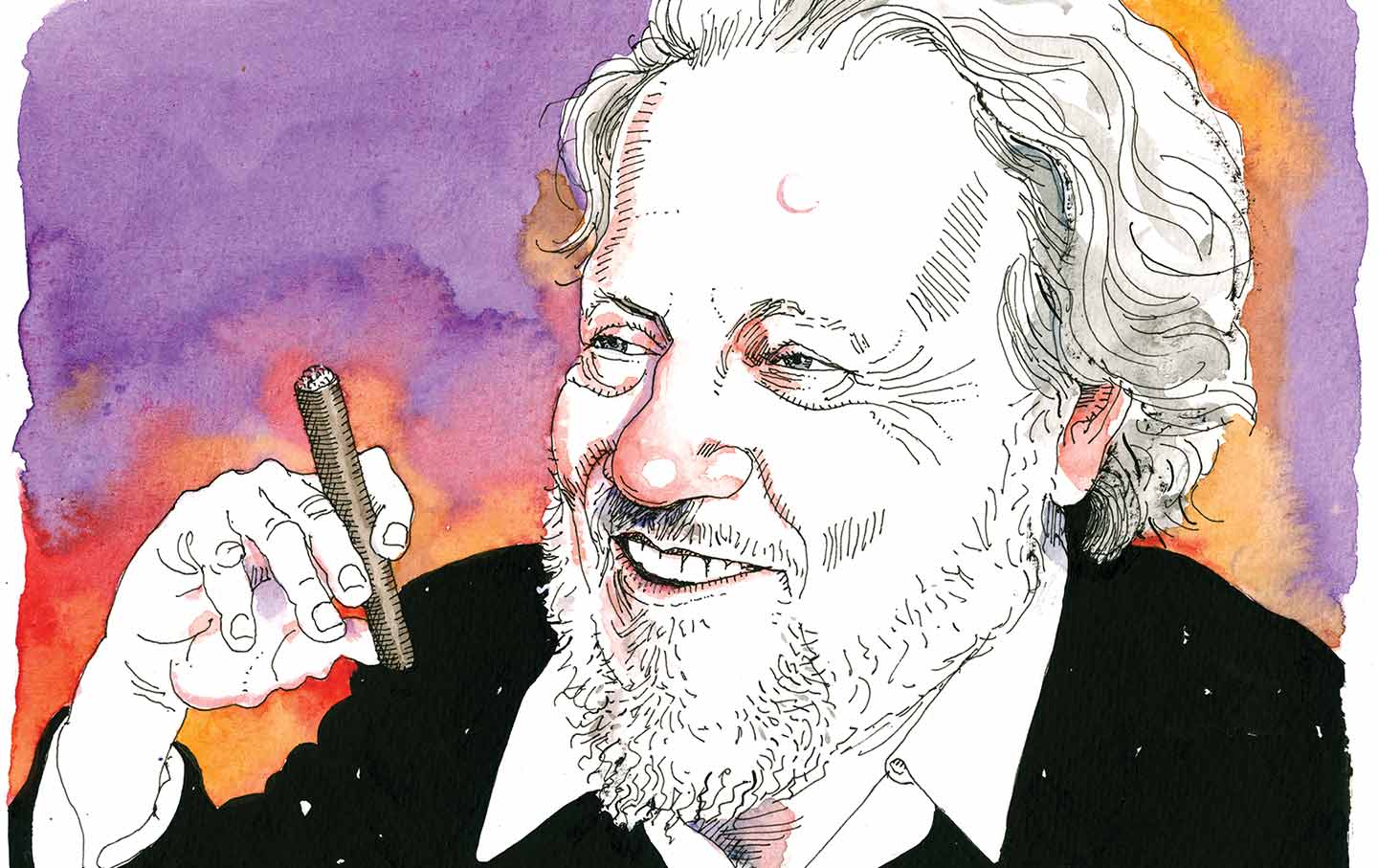
Love and Literature in Leslie Fiedler’s America Love and Literature in Leslie Fiedler’s America
When will the American novel grow up?

