
How Trump’s Economy Is Crushing Everyday Americans
As costs surge and safety nets shrink, millions of Americans are struggling to afford the basics.
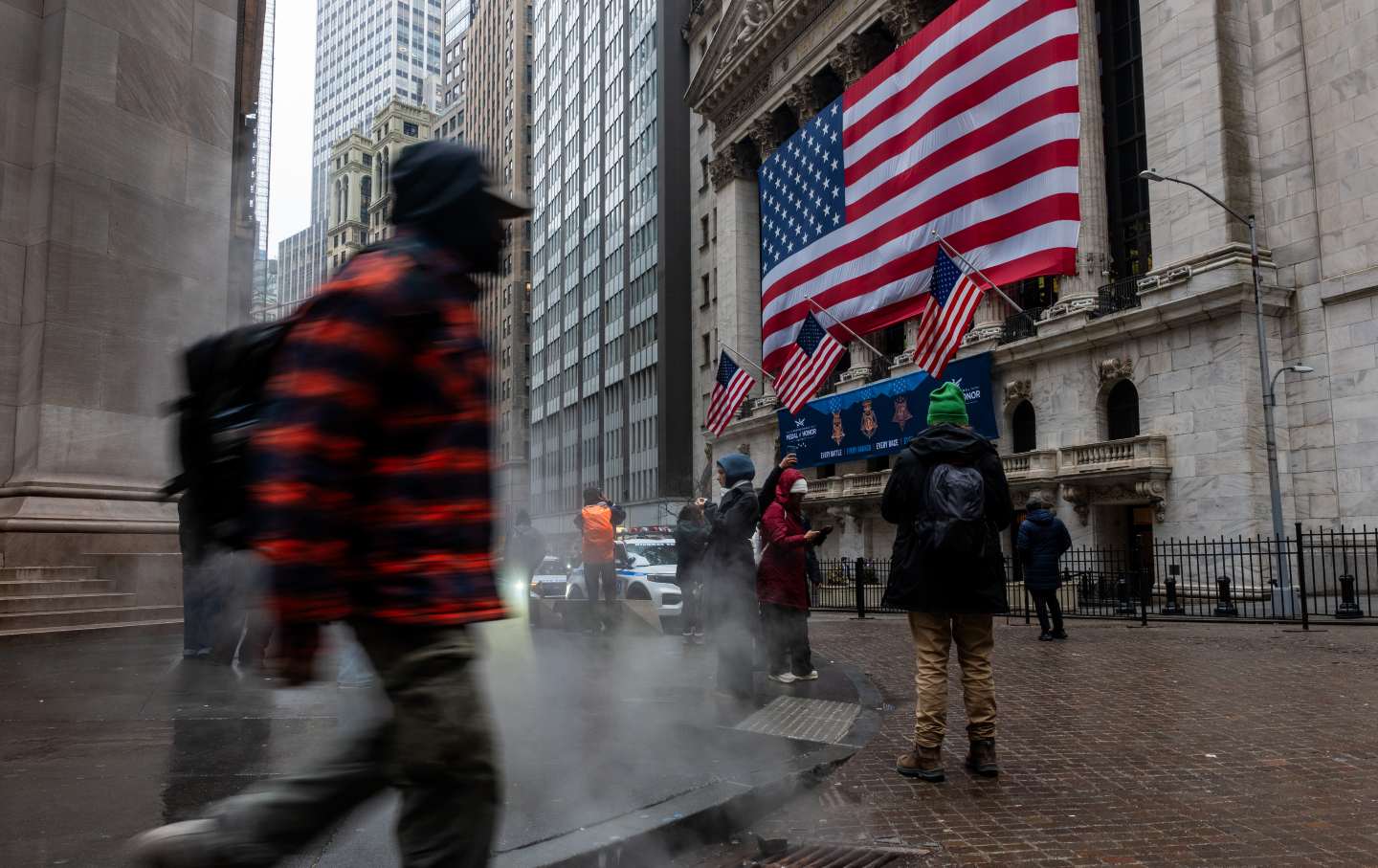
Surprising pantry staples have seen spiking sales in recent months: Hamburger Helper and canned sardines. Rice and beans.
Americans aren’t just hankering for comfort food. Instead, they’re doing everything possible to stretch their dollars, choosing cheap, shelf-stable options as the rising cost of living strains household budgets. Borrowers are also increasingly falling behind on their car payments and student loans; renters are turning to “Buy Now, Pay Later” services to cover housing costs; and blood plasma sales are booming.
Yet President Donald Trump has deemed the affordability crisis a “hoax,” and he continuously boasts about the strength of the economy. All the while, an array of alarming metrics suggest that his reckless approach to domestic and foreign policy has worsened the existing strain on working people, pushing millions closer to the brink and pulling the promise of economic mobility ever further out of reach.
Farmers were already contending with high costs and plummeting sales thanks to Trump’s unprovoked trade war with China. Now that he’s instigated an actual war with Iran, prices for fuel and fertilizer are sharply rising, too, with the potential to set off a cascade of inflation that spreads from the cost of feed to prices at the butcher counter. Gas, which averaged $2.90 per gallon in February, swelled to $3.70 four weeks later—the second-largest monthly jump in 30 years.
On the domestic policy front, municipalities are bracing for the fallout from Trump’s One Big Beautiful Bill. Already-insufficient SNAP funding is being pared to the bone, placing millions of Americans in danger of having their food assistance slashed or eliminated altogether. These reductions are projected to contribute to 70,000 preventable deaths by 2040, while Medicaid cuts are poised to deprive millions of insurance coverage. New polling also reveals that a third of Americans have already been forced to cut back on essentials or borrow money to afford healthcare.
This is all unfolding as the unemployment rate ticks upward, with hiring stalled and the likelihood of a recession in the next 12 months approaching even odds. Trump and his allies crow over the market’s resilience—when he’s not sending stocks tumbling by starting armed conflicts or levying crippling tariffs, that is—but the economy is being propped up by a handful of tech companies and their fire hose of investment in AI, which may prove to be a market-crashing bubble or a job-killing engine of mass immiseration.
Rampant inequality helps mask these grim financial forecasts. Cash-strapped families may be turning to recipes originally popularized during the Great Depression, but the rich are spending with abandon. And even as the fate of America’s wealthy diverges ever more starkly from the circumstances of the working class, Trump’s upwardly redistributive tax cuts and interventionist foreign policy threaten to further entrench this K-shaped economy. Consumer debt reached a record $18.8 trillion as of the end of last year—an average of over $100,000 per household—while a majority of adults say they can now afford to purchase only the bare essentials. Trump, for his part, claimed at Davos that “America will not become a nation of renters.” If that’s true, it’s because we already are.
Americans see the numbers at the pump and the till, and won’t be convinced to disbelieve their lying eyes: 59 percent say that the economy is getting worse, and many of Trump’s own voters now blame him for the downturn.
Democrats are capitalizing on the potency of affordability messaging ahead of the midterms. But messaging isn’t enough—if the party returns to power, it’s vital that it pursue policies that effectively pull working people’s finances back from the brink.
Representative Ro Khanna, who backs a proposed 5 percent billionaire tax in his home state of California, has partnered with Senator Bernie Sanders to introduce legislation that would take the measure nationwide, raising over $4 trillion. This money would be used to provide a $3,000 annual payment to members of households earning less than $150,000, fund healthcare and childcare, and guarantee public school teachers a minimum salary of $60,000.
It’s a bold proposal, befitting a moment when half-measures won’t cut it. Earlier this month, The New York Times reported on a 67-year-old Bronx woman who, despite receiving SNAP, still can’t always afford three daily meals. So she skips lunch and drinks water during the day to cover the cost of dinner. She has diabetes and manages her blood sugar with the help of Milky Way candy squares—healthier alternatives can be too expensive.
Helping Americans like these afford the essentials for a decent life may not rank among this president’s priorities, but there’s at least one consumer good that the Trump administration is determined to provide. Last week, a federal commission passed a vote urging the US Mint to create a commemorative coin featuring the president’s likeness. It will be up to three inches in diameter, and made of 24-carat gold.
More from The Nation
The School Behind the Billionaires and the Billionaire Tax The School Behind the Billionaires and the Billionaire Tax
UC Berkeley will inevitably be behind the defeat or victory of Proposition 40.
Dolly Parton Was a Proud Union Sister Dolly Parton Was a Proud Union Sister
Organized labor is celebrating the life and legacy of an artist who championed working women and carried a union card for almost 60 years.
Of Debt and Deficits and the Dollar System Of Debt and Deficits and the Dollar System
By force of preset agendas, conservatives and liberals react to debt headlines like Pavlov’s dogs.

What Happens When 8 Million People Lose Their Student Loan Repayment Plan? What Happens When 8 Million People Lose Their Student Loan Repayment Plan?
As the Biden-era SAVE plan ends, borrowers are facing unaffordable bills, lost payment records, and errors that have falsely put some into default.
David Ellison’s Delusional Stab at Self-Justification David Ellison’s Delusional Stab at Self-Justification
While the Skydance–Warner Bros. merger is in legal limbo, the CEO seeking to pull it off makes a disingenuous case for it in the court of public opinion.
The War on the UAW The War on the UAW
The United Auto Workers called for a ceasefire in Gaza. The union’s federal monitor didn’t like it—and now he’s investigating Shawn Fain, just weeks before union elections.

