Deadline Poet / March 10, 2026

A Briefing on the War in Iran
Calvin Trillin
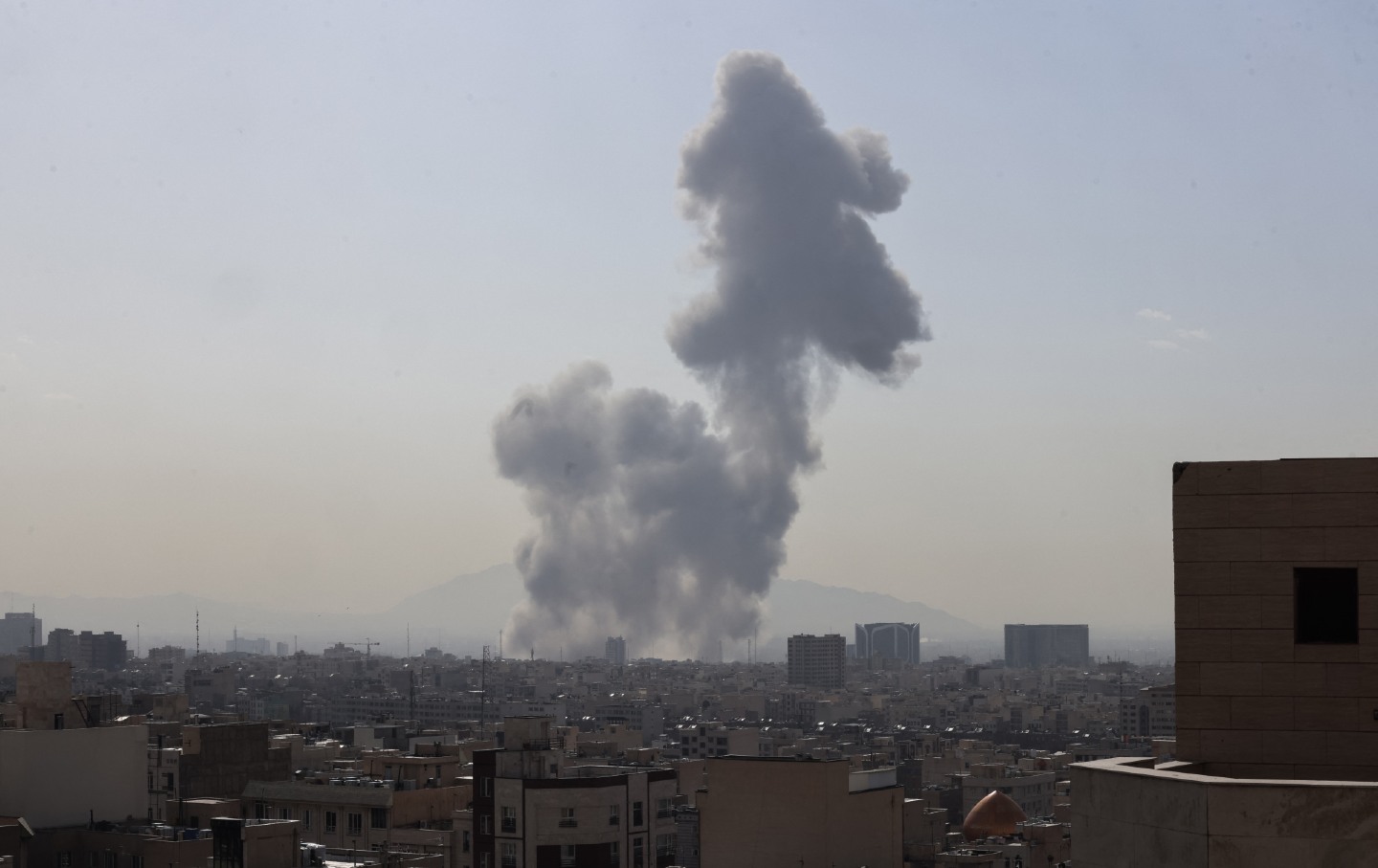
A plume of smoke rises following a reported explosion in Tehran on February 28, 2026. (Atta Kenare / AFP via Getty Images)

In case the briefer really knows,
There is a question I would pose—
A single question, if I dare:
The question is, Why are we there?
Support independent journalism that does not fall in line

Even before February 28, the reasons for Donald Trump’s imploding approval rating were abundantly clear: untrammeled corruption and personal enrichment to the tune of billions of dollars during an affordability crisis, a foreign policy guided only by his own derelict sense of morality, and the deployment of a murderous campaign of occupation, detention, and deportation on American streets. 

Now an undeclared, unauthorized, unpopular, and unconstitutional war of aggression against Iran has spread like wildfire through the region and into Europe. A new “forever war”—with an ever-increasing likelihood of American troops on the ground—may very well be upon us.  

As we’ve seen over and over, this administration uses lies, misdirection, and attempts to flood the zone to justify its abuses of power at home and abroad. Just as Trump, Marco Rubio, and Pete Hegseth offer erratic and contradictory rationales for the attacks on Iran, the administration is also spreading the lie that the upcoming midterm elections are under threat from noncitizens on voter rolls. When these lies go unchecked, they become the basis for further authoritarian encroachment and war. 

In these dark times, independent journalism is uniquely able to uncover the falsehoods that threaten our republic—and civilians around the world—and shine a bright light on the truth. 

The Nation’s experienced team of writers, editors, and fact-checkers understands the scale of what we’re up against and the urgency with which we have to act. That’s why we’re publishing critical reporting and analysis of the war on Iran, ICE violence at home, new forms of voter suppression emerging in the courts, and much more. 

But this journalism is possible only with your support.

This March, The Nation needs to raise $50,000 to ensure that we have the resources for reporting and analysis that sets the record straight and empowers people of conscience to organize. Will you donate today?

Calvin Trillin

Calvin Trillin is The Nation’s “deadline poet.”

More from The Nation

What Is Mark Carney Really Offering the World?

What Is Mark Carney Really Offering the World? What Is Mark Carney Really Offering the World?

The Canadian prime minister has put himself forward as a bold critic of Trump’s neo-imperial order, but his actions have been far more muted.

Feature / Jeet Heer

The “Rules-Based Order” Is Gone

The “Rules-Based Order” Is Gone The “Rules-Based Order” Is Gone

Trump has destroyed a global system that mostly benefited the rich and powerful. We need to create something completely different in its wake.

Feature / Robert L. Borosage

People attend a protest against US-Israeli attacks on Iran in New York on February 28, 2026.

The Urgent Search for an Alternative World Order The Urgent Search for an Alternative World Order

The horrors of Trump’s unchecked global aggression call for a truly visionary foreign policy—not a return to the failed status quo.

Katrina vanden Heuvel and The Nation

US-Israeli joint bombings near Azadi Tower in Tehran, on March 7, 2026.

America’s Gaza America’s Gaza

The bombing of Tehran.

Michael T. Klare

Kwame Nkrumah and other leaders of non-aligned countries in 1960.

The Global Politics of Kwame Nkrumah The Global Politics of Kwame Nkrumah

Through Nkrumah’s story, Howard French charts the history of African decolonization and the American civil rights movement.

Books & the Arts / Adom Getachew

A charity organization distributes meals to displaced Palestinians during the holy month of Ramadan, as food shortages continue amid Israeli attacks and ongoing restrictions on the entry of aid in Beit Lahia, Gaza, on March 08, 2026.

The Iran War Is a Disaster for Gaza The Iran War Is a Disaster for Gaza

How the crisis leaves Gaza’s 2 million people more friendless, isolated, and vulnerable than ever before.

Mohammed R. Mhawish