Inside the Iran War Industry
Using an old playbook with powerful new tools, it may be closer than ever to turning a US–Iran war into reality.
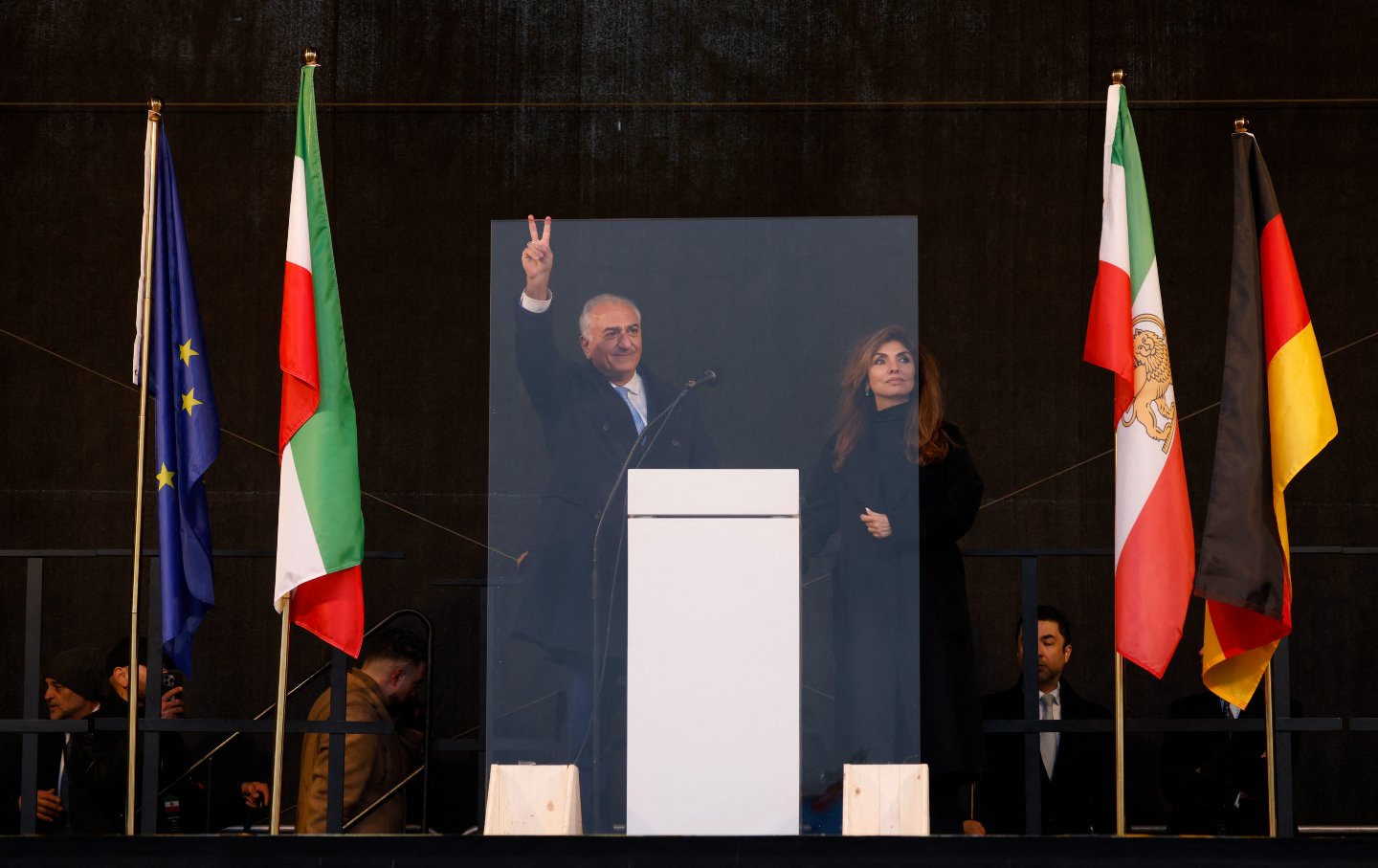
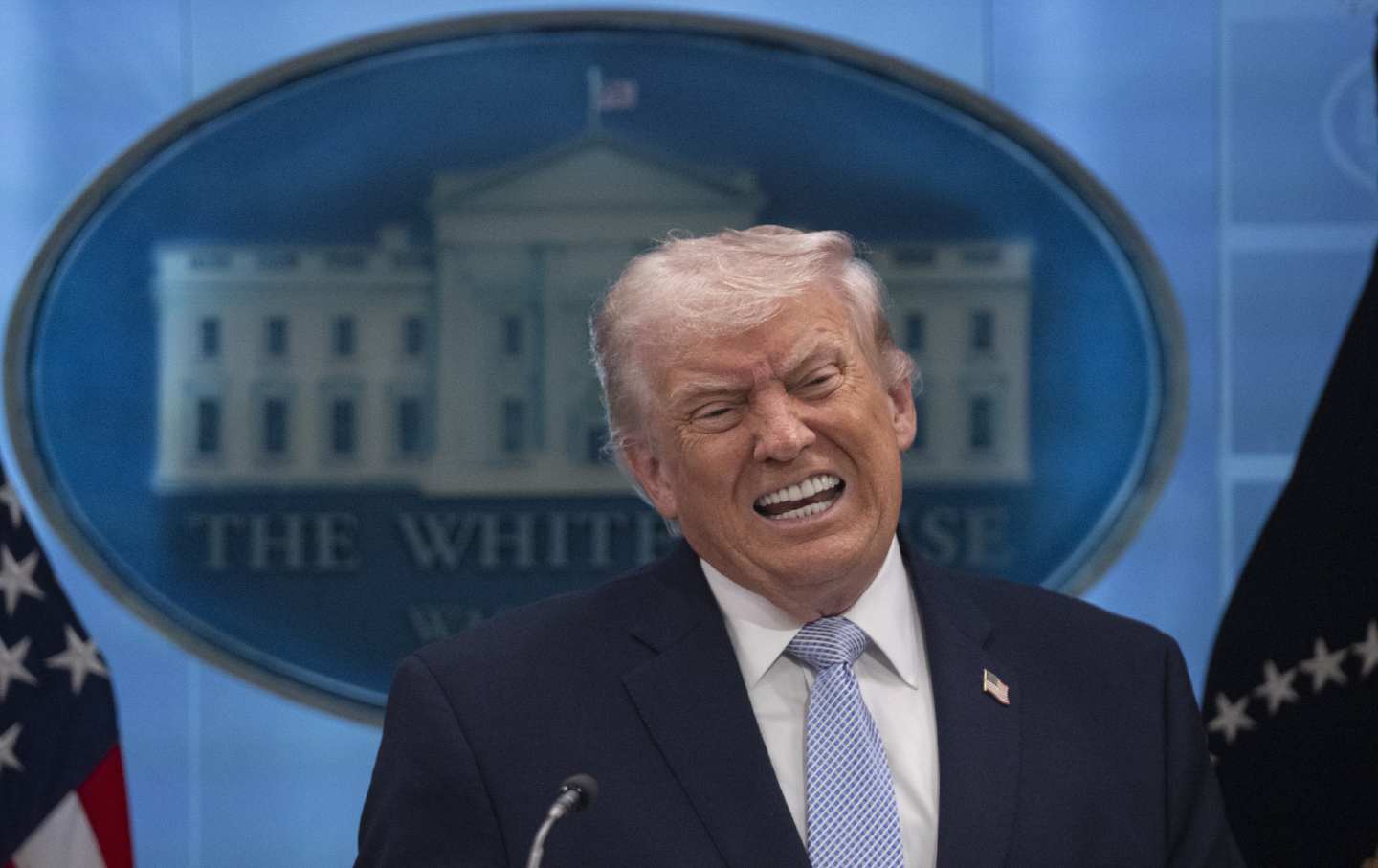
As President Trump continues assembling an “armada” in the Middle East, decades of political efforts to maneuver the United States into war with Iran may finally be coming to fruition. Yet rather than delivering “help” to Iranians in the form of American bombs—and pulling the US into a potentially open-ended conflict that many experts say would make the invasion of Iraq look like a cakewalk—Trump has, for now, pivoted to negotiations. While the possibility of an agreement remains a long shot, the Iran war industry is pulling out all the stops to ensure its long-sought window for another regime-change war does not close.
US policy on Iran is one of the most aggressively one-sided political contests in Washington. The sprawling ecosystem pushing for war includes foreign leaders like Israeli Prime Minister Benjamin Netanyahu, who rushed to Washington this past week to run interference as US talks with Iran showed signs of promise. It also includes the lobbying power of groups like AIPAC and their affiliated dark-money political operations like Democratic Majority for Israel and United Democracy Project. And it includes think tanks like the Washington Institute for Near East Policy and the Foundation for Defense of Democracies, which frequently dominate the roster of expert witnesses invited to testify at Iran-related congressional hearings.
Campaigns for regime-change wars often follow a familiar playbook, and there is no shortage of actors vying to play the role of Ahmad Chalabi, who fed the George W. Bush administration false intelligence and promises that the United States could create democracy on the cheap to justify the 2003 invasion of Iraq. Today, the leading candidate may be the US-based son of the deposed shah, Reza Pahlavi, who has openly aligned with the Netanyahu government, defended Israel’s June war on Iran, and is now appealing to Donald Trump for US military intervention.
In the social-media age, the ability to promote an agenda, amplify certain voices, and ostracize others has ensured the push for war is not confined to the halls of power in Washington. It is also being fought aggressively in the digital sphere, where influence operations and coordinated harassment are reshaping debate within the Iranian diaspora. Anyone who has waded into Iran discussions online is familiar with the organized harassment—including threats, intimidation, and accusations against anyone seen as too dovish or insufficiently loyal to a particular opposition figure as being an agent of the Islamic Republic. Independent investigations have shown that this phenomenon is far from organic. Reporting by Haaretz and Citizen Lab last year found that Israel’s intelligence minister facilitated cyber operations promoting regime change in Iran and elevating Reza Pahlavi as a viable governing alternative. There is significant evidence that Israel, the United States, and the Islamic Republic itself are artificially shaping online debates and posing as a radical opposition to police allegiances and fuel division.
These efforts are not isolated—they are part of a broader strategy to eliminate voices that could prevent conflict and sustain diplomacy. The threats and harassment have intimidated many in the Iranian diaspora into silence, particularly those opposed to sanctions that have impoverished ordinary Iranians while enriching corrupt elites and those who reject the notion that liberation can be delivered by American missiles.
In turn, some mainstream media outlets have been happy to launder online conspiracy theories through more reputable channels. This dynamic was on display in a recent Wall Street Journal editorial published just as renewed US-Iran negotiations were set to begin. The piece, which attacked my organization and separately Human Rights Watch, relied on a clip from Iranian state television featuring a hard-line professor and students discussing whether there should be an “Iranian lobby” in the United States. One student falsely suggests that Iranian reformists—rather than Iranian Americans who favor peace—had created NIAC to serve as Iran’s lobby. Prominent accounts began circulating the clip not as idle speculation by uninformed sources but instead as a smoking gun against us, and eventually the Journal decided to amplify the claim. In so doing, the Journal lent credibility to a conspiracy theory that originated two decades ago among Iranian hard-liners who sought to discredit their domestic opponents who supported engagement with the West as American toadies.
Some may find it ironic that avowed opponents of the Islamic Republic and advocates for bombing Iran are channeling conspiracies from Iranian hard-liners to silence their opponents here. Or that rival governments are both fueling online influence campaigns while claiming to represent authentic voices of the Iranian people. But this dynamic is not new: Hard-liners here and hard-liners there have long formed a feedback loop, each using the other to justify their agendas at home. Now, with social media, their efforts are more connected—and powerful actors are hard at work to manipulate the medium to reshape views of reality.
Now, as the United States and Iran sit on the precipice of all-out military confrontation and a second US aircraft carrier heads to the region, the durability of diplomacy remains uncertain. Forces on all sides determined to derail negotiations will continue working to silence moderate voices that threaten a march toward war. The greatest danger to diplomacy is not simply governments themselves—it is the mutually reinforcing political ecosystems that depend on perpetual confrontation. Using an old playbook with powerful new tools, they may be closer than ever to turning a US–Iran war into reality.
Become a Sustaining Donor This September
Between the reemergence of right-wing red-baiting and Donald Trump’s use of the chilling National Security Presidential Memorandum–7 to criminalize left political organizing, we’re seeing McCarthyism reborn before our eyes.
This assault on democracy cannot be ignored or wished away. Resisting it requires bravery in the face of threats and repression, a steadfast commitment to the truth, and the unwavering belief that we can—and will—overcome this darkness.
We must have an independent media that sets the record straight, unearths corruption and abuses of power, and advances a politics of justice and dignity for all if we’re to win this fight.
That’s why I’m writing to you today. This September, The Nation needs to add 100 monthly donors to sustain our progressive journalism. Your contribution makes the next investigative report, the next truth-speaking column, and the next pathbreaking essay all possible.
I hope you’ll support our work with a recurring donation today. If you donate $10 or more a month, we’ll send you a brand new “Hands Off the Free Press!” sticker to recognise your commitment to our cause. Please, donate today.
Onward,
Katrina vanden Heuvel
Editor and Publisher, The Nation