The Bill to End the Shutdown Is Full of Giveaways to Republicans
The alleged “compromise” is a boon for the GOP, and especially those who helped Trump dispute the 2020 election results.
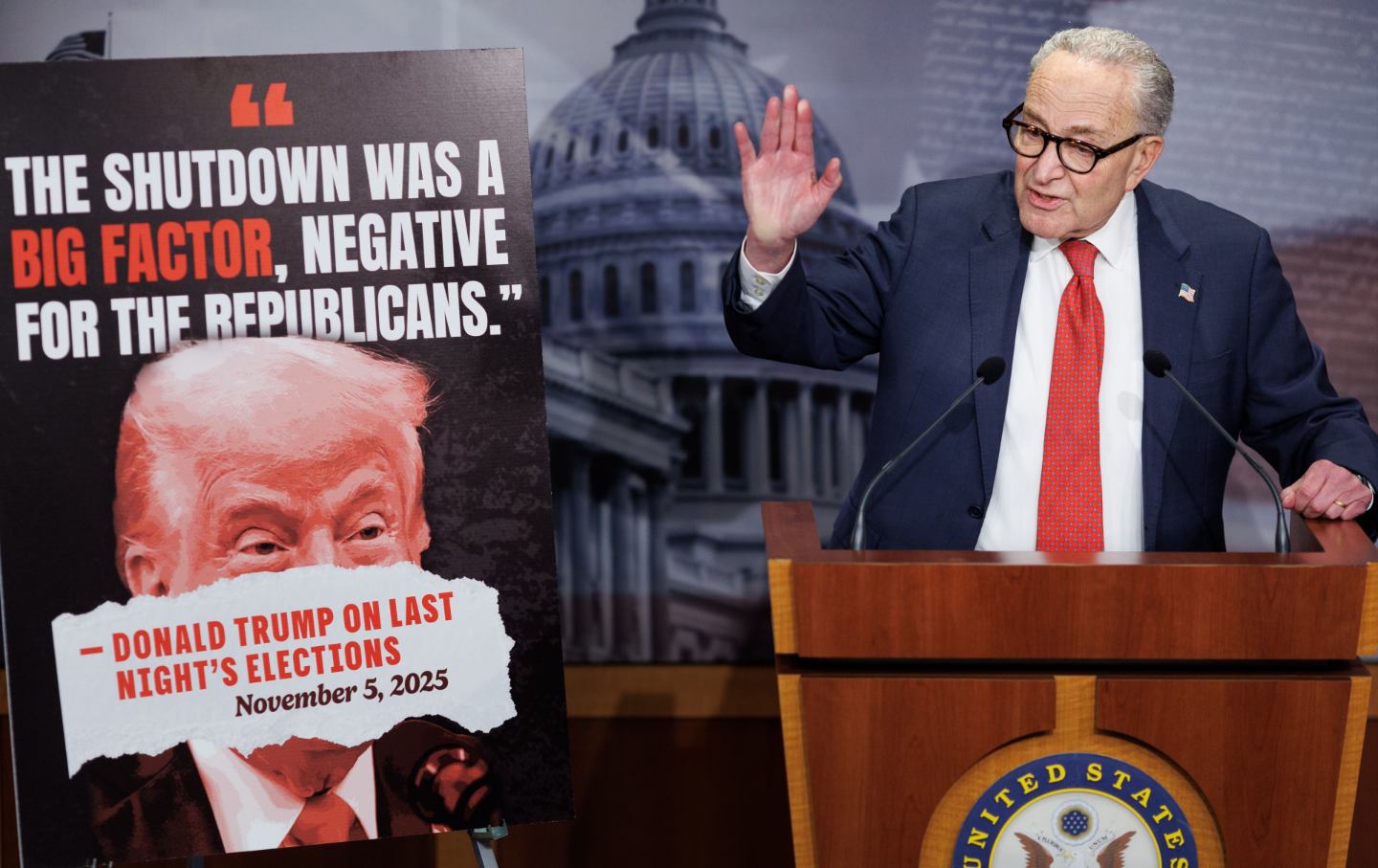
Last night, eight Democratic senators caved and voted for a bill to open the government without restoring the Affordable Care Act subsidies they’d promised to fight for. You might think Donald Trump would appreciate the olive branch, but you’d be wrong. That very same night, Trump’s Justice Department announced a mass pardon for almost 80 individuals involved in Trump’s campaign to overturn the 2020 election. This list included Rudy Giuliani, Sidney Powell, and John Eastman.
But that’s not the only gift to the Republicans who tried to help Trump overturn the 2020 election. Tucked inside the bill is a measure that would create a slush fund to enable senators who’ve had their phone records subpoenaed, without their knowledge, to sue over invasion of privacy, for at least half a million dollars. It’s basically free money for Lindsey Graham, Marsha Blackburn, Bill Hagerty, Josh Hawley, Dan Sullivan, Tommy Tuberville, Ron Johnson, and Cynthia Lummis, all of whom had their metadata subpoenaed by Jack Smith. (No messages were included.) If they all won in court, they’d pocket at least $4 million collectively.
The bill would limit the government’s defense against such claims, removing qualified or sovereign immunity as grounds for such a move to fight a lawsuit over the issue.
In last-minute maneuvers, Senate majority leader John Thune, who has called Smith’s phone subpoenas “Biden’s Watergate,” added the provision personally. “Leader Thune inserted that in the bill to provide real teeth to the prohibition on the Department of Justice targeting senators,” Texas Senator Ted Cruz declared.
“I am furious that the Senate Minority and Majority Leaders chose to airdrop this provision into this bill at the eleventh hour,” New Mexico Democratic Senator Martin Heinrich said in a statement. “This is precisely what’s wrong with the Senate.” In case you missed it, that’s a slap at Senate minority leader Chuck Schumer, who presided over last-minute negotiations on the package but voted against it. Oregon Senator Ron Wyden, a privacy advocate, nonetheless slammed the provision as “very troubling” to Politico.
There are obviously other troubling provisions in this alleged compromise, which, remember, keeps the government open only until January. The good news is that it funds SNAP through next year—recipients don’t have to worry about losing food benefits during another stalemate in at the beginning of 2026. Other measures touted as victories—furloughed workers getting back pay, some fired workers getting their jobs back—likely would have happened anyway. Senate Dems did get a promise from Thune to hold a stand-alone vote on restoring ACA subsidies, but there’s no guarantee he’ll do it; even if he does, it’s unlikely to pass; and House Speaker Mike Johnson has already announced that he won’t bring the measure up for a vote. So it’s DOA.
Another problem with the cave-in was its timing, coming only days after Democrats won huge election victories in Virginia, New Jersey, California, Pennsylvania, and Georgia. Schumer is reportedly claiming he got the Democratic defectors to hold off until after the elections, to avoid depressing turnout (a sign Democratic leaders knew the cave-in would be unpopular with their base). He couldn’t have asked them to take maybe another week, to avoid snubbing the Democratic activists who worked so hard on those election victories?
Meanwhile, Zeteo reports that Trump officials are celebrating the Democratic surrender, calling party leaders “losers” and “pussies,” after Trump himself already admitted that the shutdown contributed to GOP losses last Tuesday.
The bill still has to pass the House. Is it possible outraged Democrats will be joined by some Republicans and reject the Senate GOP’s self-protection? Or will House GOP leaders add a similar provision for their members—at least one, Pennsylvania Representative Mike Kelly, also had his phone metadata released to Smith. Anything is possible in Johnson’s caucus circus. The bill could fail for other reasons, even though Johnson claims he has the votes. We’ll find out Wednesday, when House members return from their long vacation to vote.