
The French Center Plays Brinkmanship With Fiscal Crisis
Prime Minister François Bayrou is gambling his political survival on a confidence vote, in a probably doomed attempt to force France’s hung parliament to accept an austerity budget.
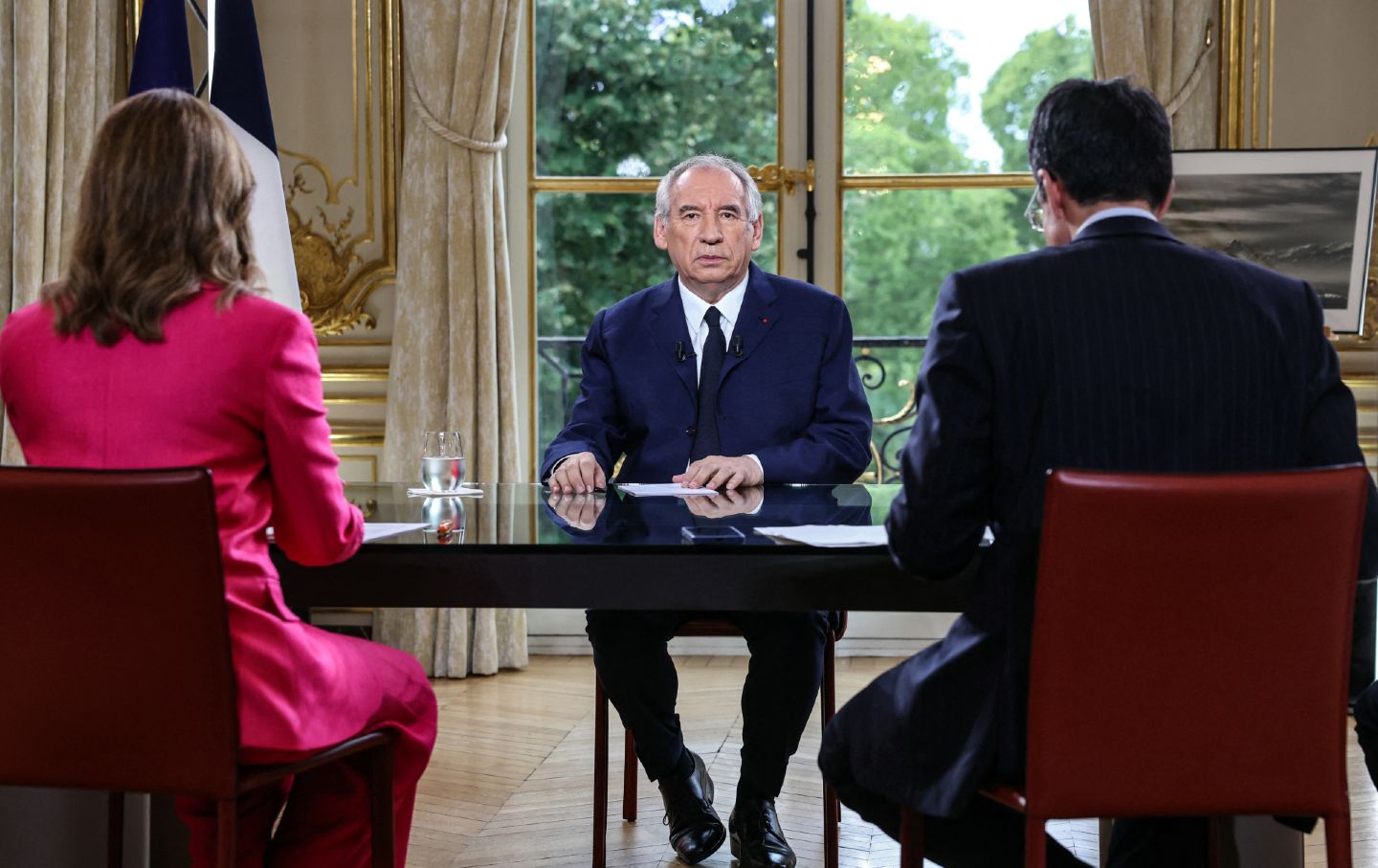
French Prime Minister François Bayrou is backed into a corner, without a majority in parliament and facing stiff opposition to his economic program. In a risky opening move of the autumn budget season, the premier announced last week that he will wager the survival of his government by calling a confidence vote on September 8. It’s a long-shot attempt to regain the initiative in France’s hung parliament as Bayrou seeks support for a deficit-slashing 2026 budget.
In the prime minister’s telling, his government is the last rampart of stability in a country hurtling toward fiscal crisis. Speaking to allies in a dramatic August 25 address, Bayrou laid out his case, asking, “is there or is there not a sense of national urgency for rebalancing our public finances and averting the scourge of massive indebtedness while there’s still time?”
France’s deficit as a percentage of GDP is expected to total 5.4 percent in 2025, well above the European Union’s official three percent cap. The budget shortfall is the result of the large Covid and inflation-crisis spending programs of the early 2020s, as well as the drop in revenues caused by the pro-business tax cuts enacted during President Emmanuel Macron’s tenure since 2017. The cost of interest payments on French debt is slated to swell to €55 billion in 2025—double the rate in 2020.
In response, Bayrou is seeking to enforce a protracted diet of austerity, largely at the expense of the lower and middle classes. In July, he unveiled a budget plan to extract nearly €44 billion in savings for the 2026 fiscal year. Barring exceptional and temporary revenue increases, the major part of the savings would come through public service cuts, freezes to welfare payments, and increased payroll receipts from workers. The government’s goal is to reduce the deficit to 4.6 percent of GDP next year, before reaching the 3 percent target in 2029. One of the most controversial elements of Bayrou’s budget would see the scrapping of two public bank holidays, on Easter Monday and May 8, VE Day.
In an August 26 meeting with union representatives, the prime minister said that the September 8 vote would force members of the National Assembly to choose between “chaos or responsibility.” For Bayrou, who leads a minority centrist-conservative governing coalition, the goal is to present the left-wing and far-right oppositions as responsible for the parliamentary paralysis—and the turbulence that would likely ensue from another governmental collapse. Michel Barnier, who preceded Bayrou as premier between September and early December 2024, was defeated in a no-confidence vote late last year.
Counting some 150 more MPs than the governing coalition, the combined votes of the opposition caucuses can easily bring down the government. A vote of no confidence in Bayrou would force the PM’s resignation and perhaps even snap elections, in a possible replay of the June 2024 dissolution of the National Assembly ordered by Macron.
For their part, opposition parties look ready to call the premier’s bluff.
Otherwise beset by internal divisions, the parties of the left-wing New Popular Front coalition have all called to vote for Bayrou’s ouster. Most importantly, that marks a shift for the center-left Parti Socialiste, the second largest caucus in the NFP. The PS abstained from two no-confidence votes in January and February, allowing Bayrou’s government an initial respite to scrape through a 2025 budget.
“[The premier] has made the decision to leave,” Parti Socialiste first secretary Olivier Faure told Le Monde last week. “How could he imagine for one instant that the forces opposed to everything his government stands for would now rally behind him?”
What the left would do next is far less clear, and in that regard Bayrou’s move to accelerate the political calendar comes at a point of maximum tension in the NFP.
The right wing of the PS, staunchly opposed to its pact with the far-left La France Insoumise, will likely push for negotiations with the center. This weekend, PS officials unveiled a governing platform for more modest spending cuts coupled with new taxation, urging the Macronists to give the center left a chance at governing. In the event of snap legislative elections, both LFI and the PS are dismissing talk of any pact on the scale of the 2024 NFP alliance, which allowed the left to emerge as the largest bloc in the lower house.
The far right, led by Marine Le Pen’s Rassemblement National, is also set to sink Bayrou. After a final round of negotiations on September 2, Jordan Bardella, the RN’s official president, confirmed that the party was in “total disagreement” with the prime minister. Le Pen, for her part, called for an “ultrarapid dissolution” of the National Assembly once the government falls and for new elections.
That position has the far-right pulling back the short leash it granted the centrist bloc this winter, when, like the PS, it also abstained from censuring Bayrou. The premier’s decision to call a vote of confidence again puts pressure on a central point of tension in the RN’s position. As it seeks governing credibility, the far-right force is desperate to impress business interests horrified by the prospect of renewed political uncertainty.
But those considerations need to be leveled with the fact of Bayrou’s gaping unpopularity—the key factor pushing the PS and the RN to eject the government. As many as seven in 10 French people want parliament to reject Bayrou, according to an August 26 opinion poll for BFMTV. Another poll in Late July, for the business daily Les Échos, had the premier scraping the bottom of the barrel at 12 percent in approval ratings.
Bayrou is also looking warily ahead at the risk that opposition could soon boil over onto the streets. It was lost on nobody that the special parliamentary session scheduled for September 8 comes two days ahead of the expected September 10 launch of a grassroots protest movement to “block everything”—an as-of-now nebulous call for marches and strikes that has spread on social media since the beginning of the summer.
Popular
“swipe left below to view more authors”Swipe →“The growing popular mobilization will have won,” rejoiced LFI leader Jean-Luc Mélenchon of the hypothetical protest movement. Though France’s leading trade unions have diverged on explicitly supporting the “block everything” campaign, they have scheduled a day of demonstrations and strikes on September 18.
The least that can be said is that France is set to enter a new chapter in the on-again, off-again crisis that’s become the norm since Macron made the disastrous decision to dissolve parliament in June 2024.
In the short term, a vote of no-confidence in Bayrou would once again hurl the ball back into the president’s court, leaving Macron with the task of assembling a new government out of a paralyzed National Assembly. Yet any Macron-appointed successor—one likely to come from the president’s camp—would face the same math as Bayrou.
Since spurning the New Popular Front’s nominee for premier in September 2024, Macron and his allies have refused any serious overtures to the left. They berate the left-wing opposition for its rigidness on nonnegotiables, namely spending cuts. But the center is just as unwilling to budge on its own red line: enacting serious revenue-increasing measures targeting France’s wealthiest citizens. Bayrou, or any replacement, could try to give even more rope to the Rassemblement National. But then again, Le Pen and her allies would ultimately prefer to be in power.
In the nearly 14 months since the election of France’s hung parliament, the governing center has sought to portray itself as the party of order—a reasoned, mature hand in a time of crisis. Bayrou and his allies have warned of the restlessness of financial markets. Government ministers have beat the drums of coming fiscal calamity, including feeding speculation that France will soon find itself on the unsparing chopping block of the International Monetary Fund. The irony now is that it’s Bayrou’s brinkmanship, coupled with the center’s stubborn refusal to compromise, that looks like the greatest aggravating risk.
More from The Nation

Progressives Are Backing Puerto Rican Independence. It’s About Time. Progressives Are Backing Puerto Rican Independence. It’s About Time.
More and more leftists are concluding that statehood for the island is not enough.
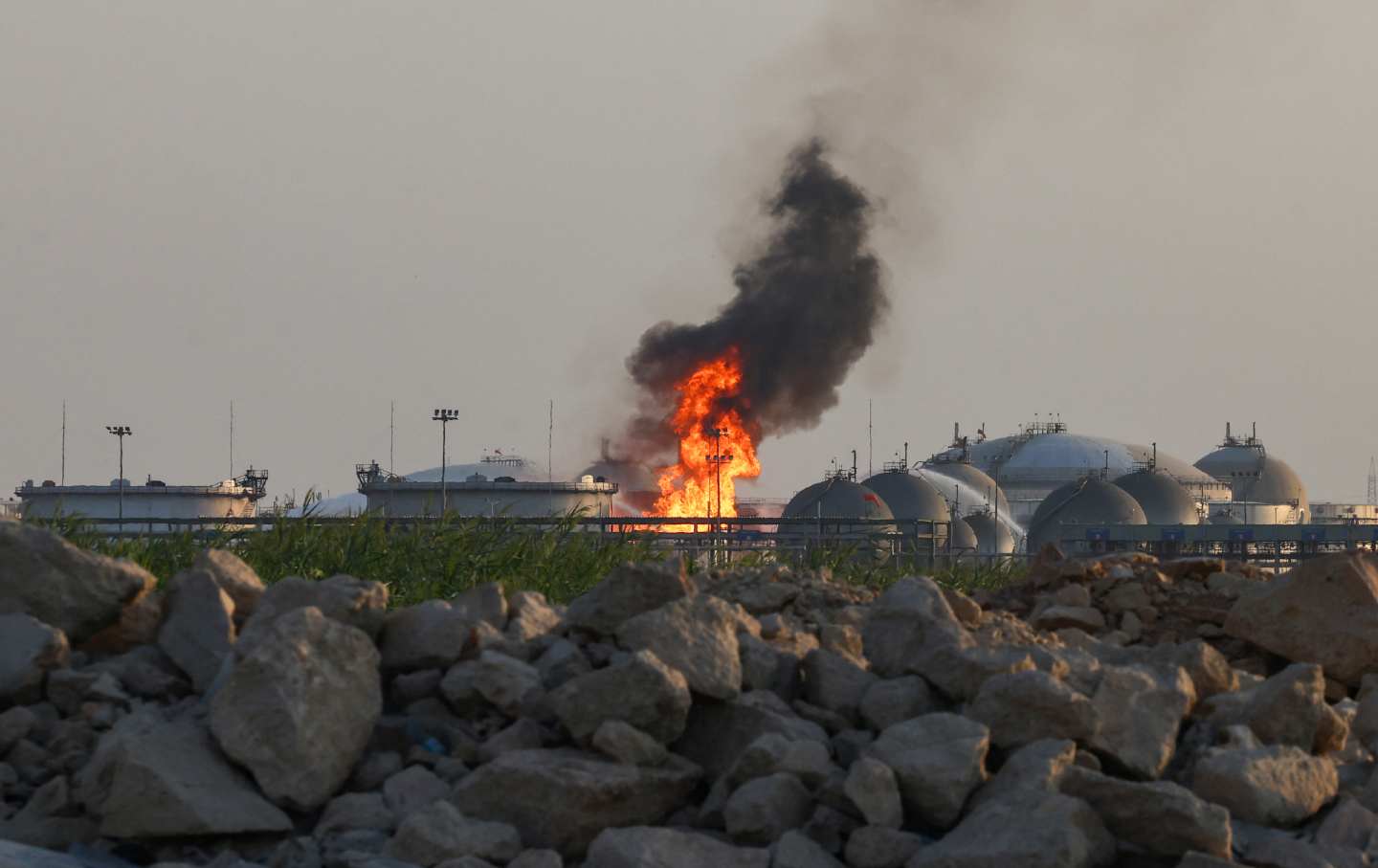
The Saudi Phase of the Iran War Signals More Chaos to Come The Saudi Phase of the Iran War Signals More Chaos to Come
The conflict that Donald Trump has repeatedly proclaimed an unequivocal American victory keeps spiraling out of control.
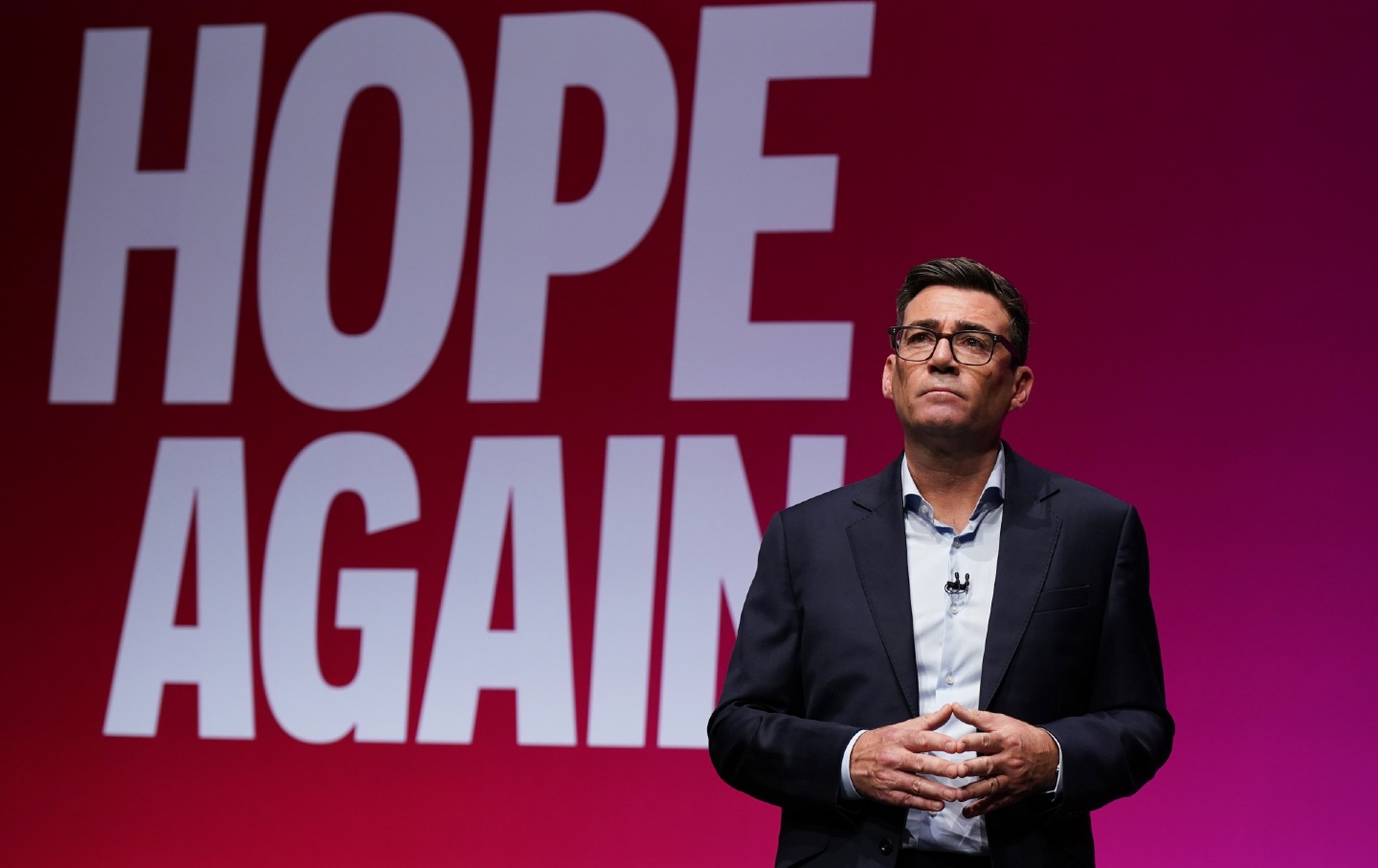
Andy Burnham’s Speech to the Labour Party Conference Could Be the Start of a Positive Social-Democratic Politics Andy Burnham’s Speech to the Labour Party Conference Could Be the Start of a Positive Social-Democratic Politics
But the autumn budget to be released at the end of October will offer needed details.

Why Navi Pillay’s Receiving the Nobel Peace Prize Is So Important Why Navi Pillay’s Receiving the Nobel Peace Prize Is So Important
She believes that human rights and international law are universal principles that must be enforced regardless of violator’s ideology, ethnicity, or geostrategic alignment.
Writing About War as Bombs Fall Writing About War as Bombs Fall
While the Israeli government launched a well-orchestrated offensive of disinformation and hyperbole that would make the illegal permissible in the war on Gaza.

