
As Federal Support Wanes, States Must Reinvest in Higher Education
Our education system faces a crisis of affordability and access only amplified by the passage of the Big, Beautiful Bill and Trump’s attempted cuts. States need to step up.
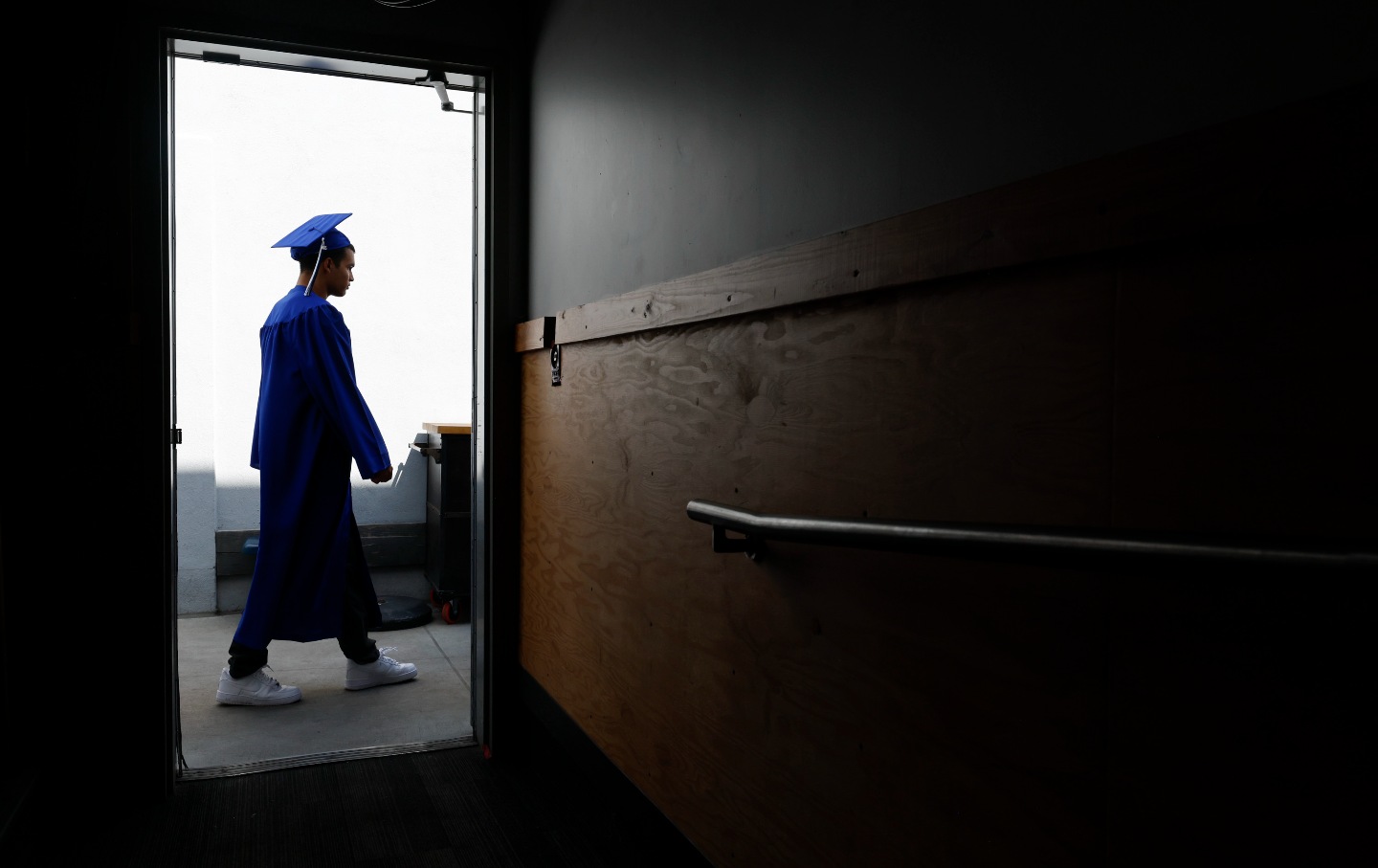
A student walks towards the entrance of their graduation ceremony in Los Angeles, California.
(Carlin Stiehl / Getty)In May, I joined more than a million Americans in walking across the graduation stage—150 years after John Houston Burrus did the same.
Burrus was one of the first African American students to graduate college in this country because of the Morrill Land-Grant Act of 1862. Endorsed by President Abraham Lincoln, the act expanded access to higher education by funding and establishing public colleges and universities. It paved the way for many institutions that still shape our country today, including the University of California system.
Yet today the promise of public higher education is facing a crisis of affordability and access, amplified by the recent passage of the Big, Beautiful Bill and the Trump administration’s attempted cuts to programs like Gaining Early Awareness and Readiness for Undergraduate Programs, which threatens to widen opportunity gaps even further. As federal support wanes, states must step in and take the lead in reinvesting in public institutions.
As a first-generation college student, I didn’t truly hit my stride until I enrolled in a public university. I grew up in a zip code where fewer than one-third of residents hold a college degree. Research shows that, in general, socioeconomic mobility is influenced more by residential location than by almost any other factor.
It wasn’t until college that I came into contact with educators and mentors who saw my potential and supported my growth. I became involved in campus groups where we discussed the true purpose of graduate school, beyond just being a buzzword, and I learned the important distinction between a job and a career. Without access to affordable public higher education, I wouldn’t have had access to these kinds of guidance and opportunities.
The opportunities I received can be traced back to Lincoln’s Morrill Act, which established a powerful partnership between the federal and state governments. The former provided the land, while the latter built the institutions by providing the necessary capital to grow and nurture these colleges.
Unfortunately, in our current era, federal support is shrinking even as tuition costs and student debt soar. Rural and community colleges, often vital community hubs, are underfunded and overlooked. Community colleges receive $8,800 less per student than four-year institutions, according to a 2020 analysis by the Center for American Progress. A study by the National Education Association found that 32 states spent nearly $1,500 less per student on public colleges and universities in 2020 than they did in 2008. This disinvestment has disproportionately harmed students from under-resourced communities, including my own, many of whom rely on public institutions as their only viable path to higher education.
But as the dream of equitable public education comes under greater assault, states have the power to push back and reverse the trend. Programs like the Tennessee Promise Program and New York’s Tuition Assistance Program and strong public systems like State University of New York and City University of New York demonstrate that state investments can yield significant returns. Research from the Rockefeller Institute of Government shows that every dollar invested in SUNY generates $8.67 in economic returns.
Most Pell Grants already go to students attending public institutions. When states bolster those institutions, they maximize the impact of federal aid and provide lifelines for low-income, first-generation, and working-class students. In other words, state investment in higher education is not just a moral imperative, it’s a smart economic strategy.
Some may argue that shifting greater responsibility to the states risks widening inequalities between wealthier and poorer states. But the solution is not to pull back; it is to invest more, especially in communities facing the greatest barriers.
Mississippi, for example, struggles with double-digit poverty rates and underperforming schools. It receives the highest average Pell Grant in the country, yet its state Tuition Assistance Grant offers minimal relief. Without targeted state action, the situation will only grow more dire. While federal-state collaboration remains ideal, today’s political climate demands that states act now.
As I turned my tassel at graduation, my gaze swept across the first-generation students, single parents, and working-class classmates standing beside me. Our stories are tied to the actions of the leaders and changemakers who came before us. Burrus, after graduating from Fisk University, became a leading voice demanding equal funding for schools serving marginalized communities. His plea that every child deserves the same quality of education remains unanswered more than a century later.
To continue what both of these historical figures started, states must act to lower costs, expand access, and restore public investment. That is how we honor Burrus’s legacy and fulfill Lincoln’s vision of a public higher education for all.
Disobey authoritarians, support The Nation
Over the past year you’ve read Nation writers like Elie Mystal, Kaveh Akbar, John Nichols, Joan Walsh, Bryce Covert, Dave Zirin, Jeet Heer, Michael T. Klare, Katha Pollitt, Amy Littlefield, Gregg Gonsalves, and Sasha Abramsky take on the Trump family’s corruption, set the record straight about Robert F. Kennedy Jr.’s catastrophic Make America Healthy Again movement, survey the fallout and human cost of the DOGE wrecking ball, anticipate the Supreme Court’s dangerous antidemocratic rulings, and amplify successful tactics of resistance on the streets and in Congress.
We publish these stories because when members of our communities are being abducted, household debt is climbing, and AI data centers are causing water and electricity shortages, we have a duty as journalists to do all we can to inform the public.
In 2026, our aim is to do more than ever before—but we need your support to make that happen.
Through December 31, a generous donor will match all donations up to $75,000. That means that your contribution will be doubled, dollar for dollar. If we hit the full match, we’ll be starting 2026 with $150,000 to invest in the stories that impact real people’s lives—the kinds of stories that billionaire-owned, corporate-backed outlets aren’t covering.
With your support, our team will publish major stories that the president and his allies won’t want you to read. We’ll cover the emerging military-tech industrial complex and matters of war, peace, and surveillance, as well as the affordability crisis, hunger, housing, healthcare, the environment, attacks on reproductive rights, and much more. At the same time, we’ll imagine alternatives to Trumpian rule and uplift efforts to create a better world, here and now.
While your gift has twice the impact, I’m asking you to support The Nation with a donation today. You’ll empower the journalists, editors, and fact-checkers best equipped to hold this authoritarian administration to account.
I hope you won’t miss this moment—donate to The Nation today.
Onward,
Katrina vanden Heuvel
Editor and publisher, The Nation
More from The Nation
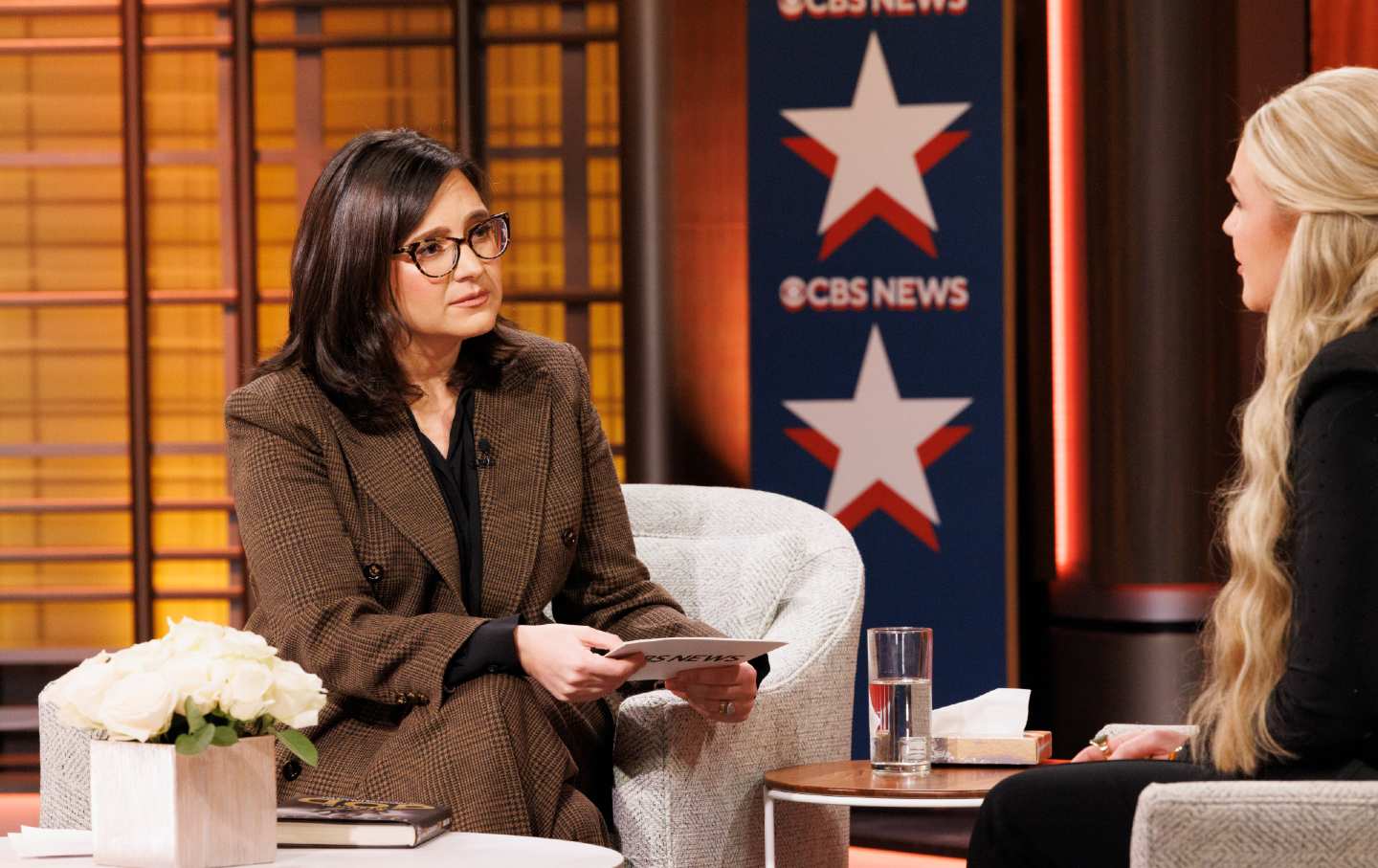
Bari Weiss's Counter-Journalistic Crusade Targets "60 Minutes" Bari Weiss's Counter-Journalistic Crusade Targets "60 Minutes"
The new editor-in-chief at CBS News has shown she's not merely stupendously unqualified--she's ideologically opposed to the practice of good journalism.
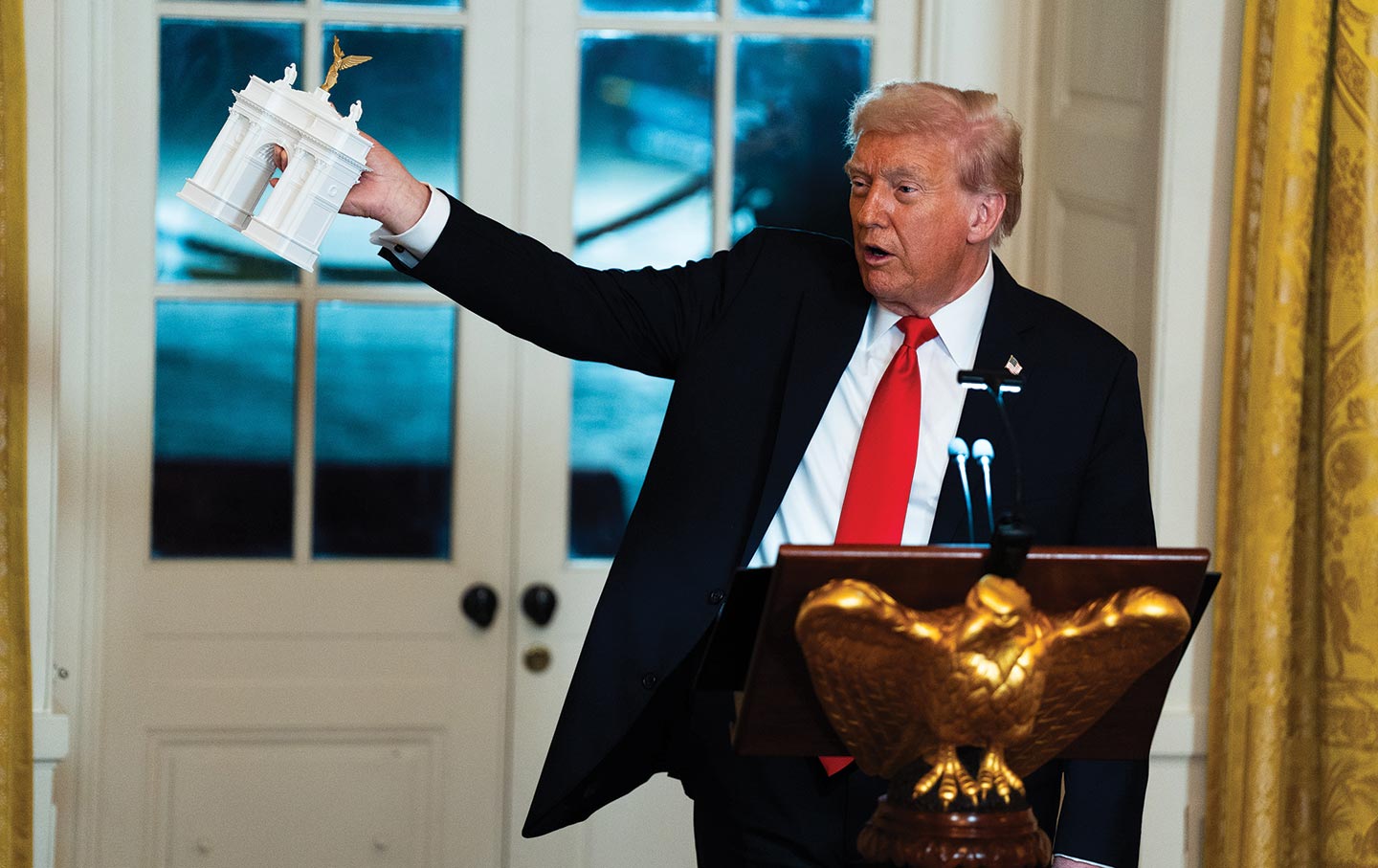
The Remaking of Trump’s Washington, DC The Remaking of Trump’s Washington, DC
The ballroom and his other proposed building projects are many things, but they are not exactly works of architecture.

Are Cell Phones to Blame for the Youth Loneliness Epidemic? Are Cell Phones to Blame for the Youth Loneliness Epidemic?
David Landes argues that cell phones represent an isolated life whereas Kimberly Hassel blames the loneliness crisis on a society unable to support or protect its youth.
Student Journalism’s Momentous Year Student Journalism’s Momentous Year
In 2025, StudentNation published more than 100 original articles. Here are 20 highlights.
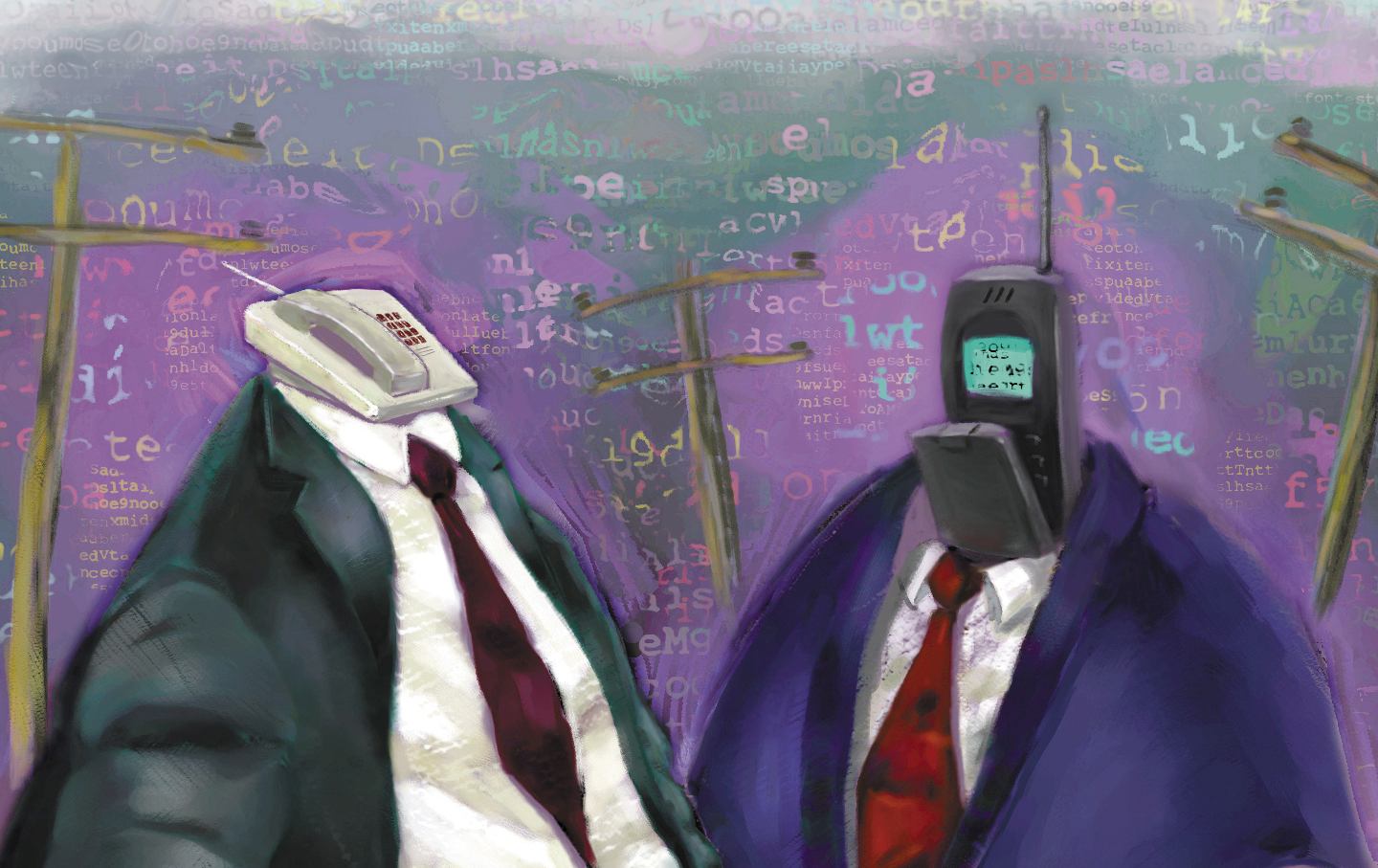
My Dumb Journey Through a Smartphone World My Dumb Journey Through a Smartphone World
I spent six months with a flip phone. I learned that a more conscious technological future will require much more than just unplugging.
How the Border Patrol Moved Inland—and Created a Police State How the Border Patrol Moved Inland—and Created a Police State
In 1994, the writer Leslie Marmon Silko wrote a piece for The Nation warning of a frightening new immigration regime.

