Americans Are Concerned About Climate Change—but They Should Be Afraid
Americans still don’t comprehend how imminent, dangerous, and far-reaching the threat is—and journalists are partly to blame.
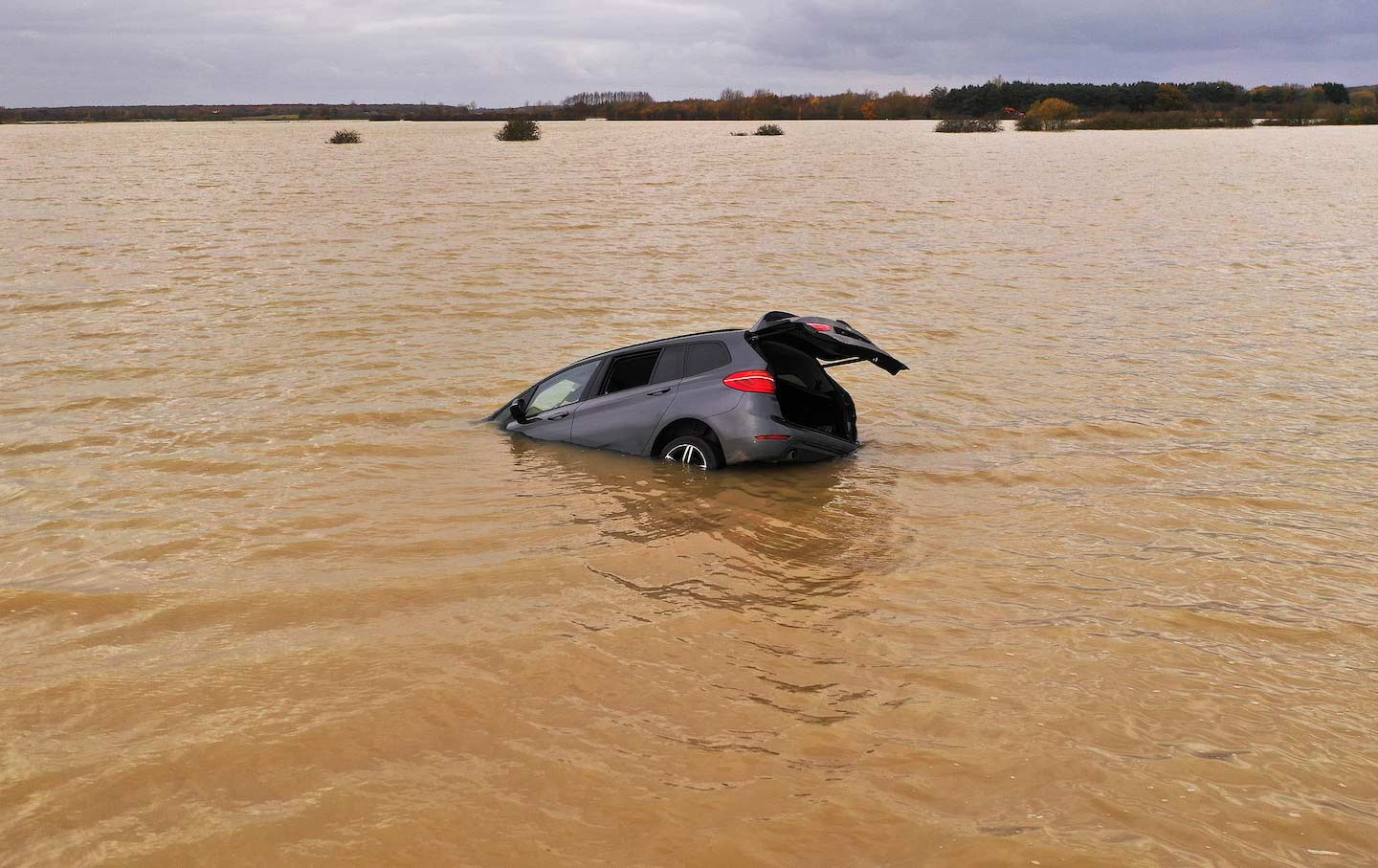
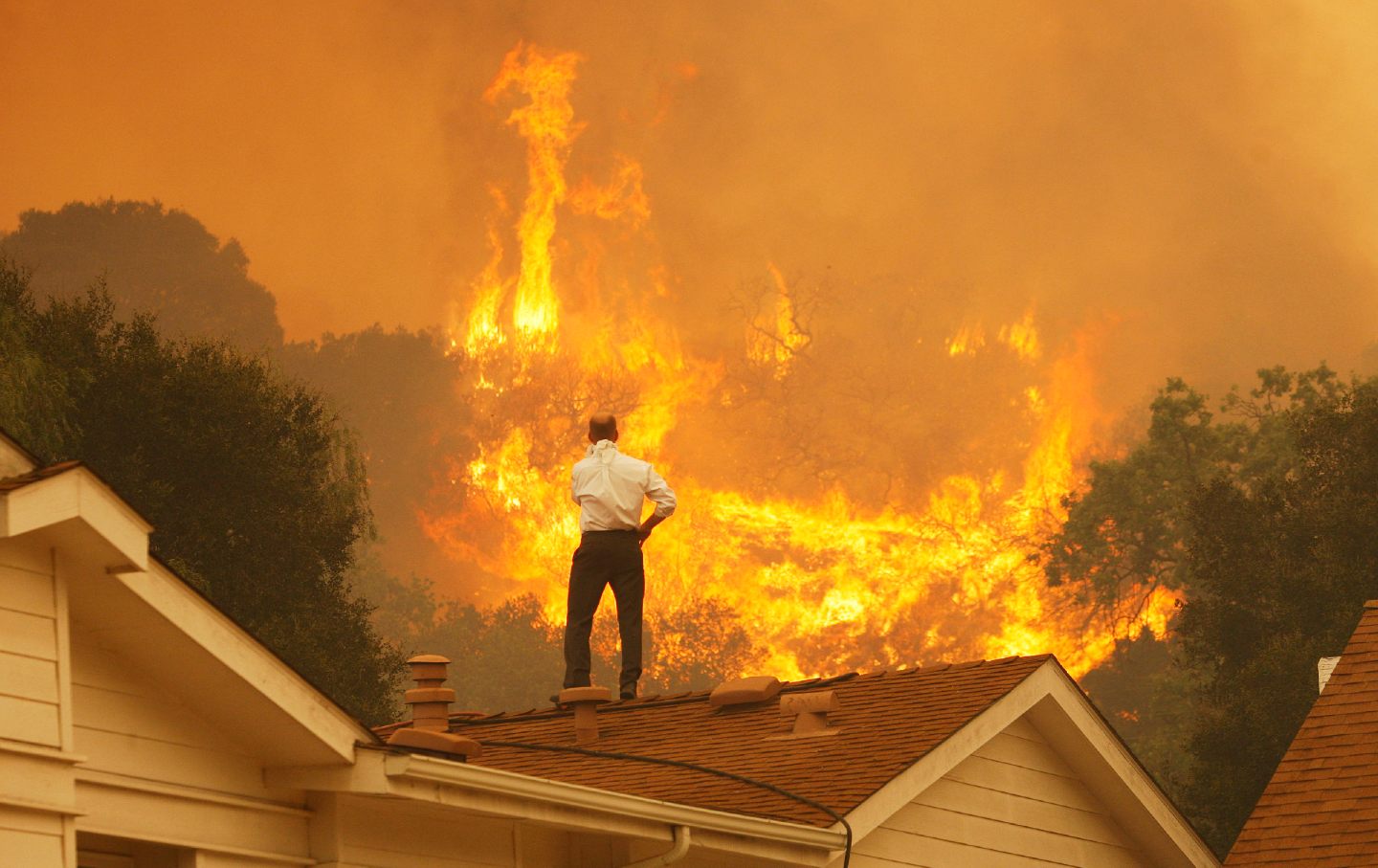
Last Thursday, CNN ran a story that inadvertently underscored the fact that most journalism is still not getting across the full truth about climate change. Harry Enten, CNN’s polling analyst, displayed Gallup data showing that 40 percent of Americans are “greatly worried” about climate change. But this 40 percent is “the exact same percentage as [were worried] back in 2000,” he pointed out, “despite everything we see [today] on our television screens, our computer screens…the hurricanes, the tornados, the flooding.”
“Americans aren’t afraid of climate change,” Enten concluded. “Climate activists have not successfully made the case to the American people.”
Perhaps not, but neither have most journalists. The extreme weather events Enten cited have gotten extensive news coverage, but most of that coverage did not make the climate connection. As we noted last month, “In the summer of 2024, for example, when record high temperatures brutalized outdoor workers, withered crops, and worsened hurricanes, only 12 percent of US national TV news segments mentioned climate change, though its role in driving such extreme heat has long been scientifically indisputable.”
Anthony Leiserowitz, the executive director of the Yale Program on Climate Change Communication, said Yale’s latest survey found that only 29 percent of Americans are “very worried” about climate change—a remarkably low number, considering that climate change is already killing people and devastating communities around the world and threatens much worse if left unchecked.
“I constantly make the point that only 29 percent are very worried, when it should be 100 percent,” Leiserowitz told Covering Climate Now. “This reflects [climate change’s] lack of salience for most Americans. There are many who are not deniers, but do not adequately understand the risks, that the impacts are here and now, and the urgency of action.”
These numbers also shed light on The 89 Percent Project that CCNow and dozens of news outlets have been reporting this year. The project is grounded in a cluster of scientific studies finding that 80 to 89 percent of the world’s people want governments to “do more” about climate change.
In the United States, the percentage of people supporting stronger climate action is 74 percent. Why, then, are significantly smaller percentages “greatly worried” about climate change?
“There’s a big difference between general support for stronger climate action and prioritizing climate action,” Leiserowitz said. He invoked a concept from political science, the issue public, defined as “a relatively small proportion of the general public that is both passionate about an issue and directly engaged in taking political and personal action.” He added, “While it’s important to have a large majority of the public supporting action (e.g., 89 percent), most issues also need an organized, powerful ‘issue public’ that is loudly demanding policy change and implementing personal change.”
The fact that less than half of the public is “greatly worried” about climate change shows that most Americans still don’t comprehend how imminent, dangerous, and far-reaching the threat is. There is a “critical need for better climate communications,” Leiserowitz said, “especially quality media reporting.”
Disobey authoritarians, support The Nation
Over the past year you’ve read Nation writers like Elie Mystal, Kaveh Akbar, John Nichols, Joan Walsh, Bryce Covert, Dave Zirin, Jeet Heer, Michael T. Klare, Katha Pollitt, Amy Littlefield, Gregg Gonsalves, and Sasha Abramsky take on the Trump family’s corruption, set the record straight about Robert F. Kennedy Jr.’s catastrophic Make America Healthy Again movement, survey the fallout and human cost of the DOGE wrecking ball, anticipate the Supreme Court’s dangerous antidemocratic rulings, and amplify successful tactics of resistance on the streets and in Congress.
We publish these stories because when members of our communities are being abducted, household debt is climbing, and AI data centers are causing water and electricity shortages, we have a duty as journalists to do all we can to inform the public.
In 2026, our aim is to do more than ever before—but we need your support to make that happen.
Through December 31, a generous donor will match all donations up to $75,000. That means that your contribution will be doubled, dollar for dollar. If we hit the full match, we’ll be starting 2026 with $150,000 to invest in the stories that impact real people’s lives—the kinds of stories that billionaire-owned, corporate-backed outlets aren’t covering.
With your support, our team will publish major stories that the president and his allies won’t want you to read. We’ll cover the emerging military-tech industrial complex and matters of war, peace, and surveillance, as well as the affordability crisis, hunger, housing, healthcare, the environment, attacks on reproductive rights, and much more. At the same time, we’ll imagine alternatives to Trumpian rule and uplift efforts to create a better world, here and now.
While your gift has twice the impact, I’m asking you to support The Nation with a donation today. You’ll empower the journalists, editors, and fact-checkers best equipped to hold this authoritarian administration to account.
I hope you won’t miss this moment—donate to The Nation today.
Onward,
Katrina vanden Heuvel
Editor and publisher, The Nation