King Donald and His Vassals
The NATO secretary general had one mission: Keep Trump happy. And to keep Trump happy, you sacrifice your dignity and treat him like a monarch.
NATO Rolls Out the Red Carpet for Trump, the President Who Would Be King
The NATO secretary general had one mission: Keep Trump happy. And to keep Trump happy, you sacrifice your dignity and play the vassal.
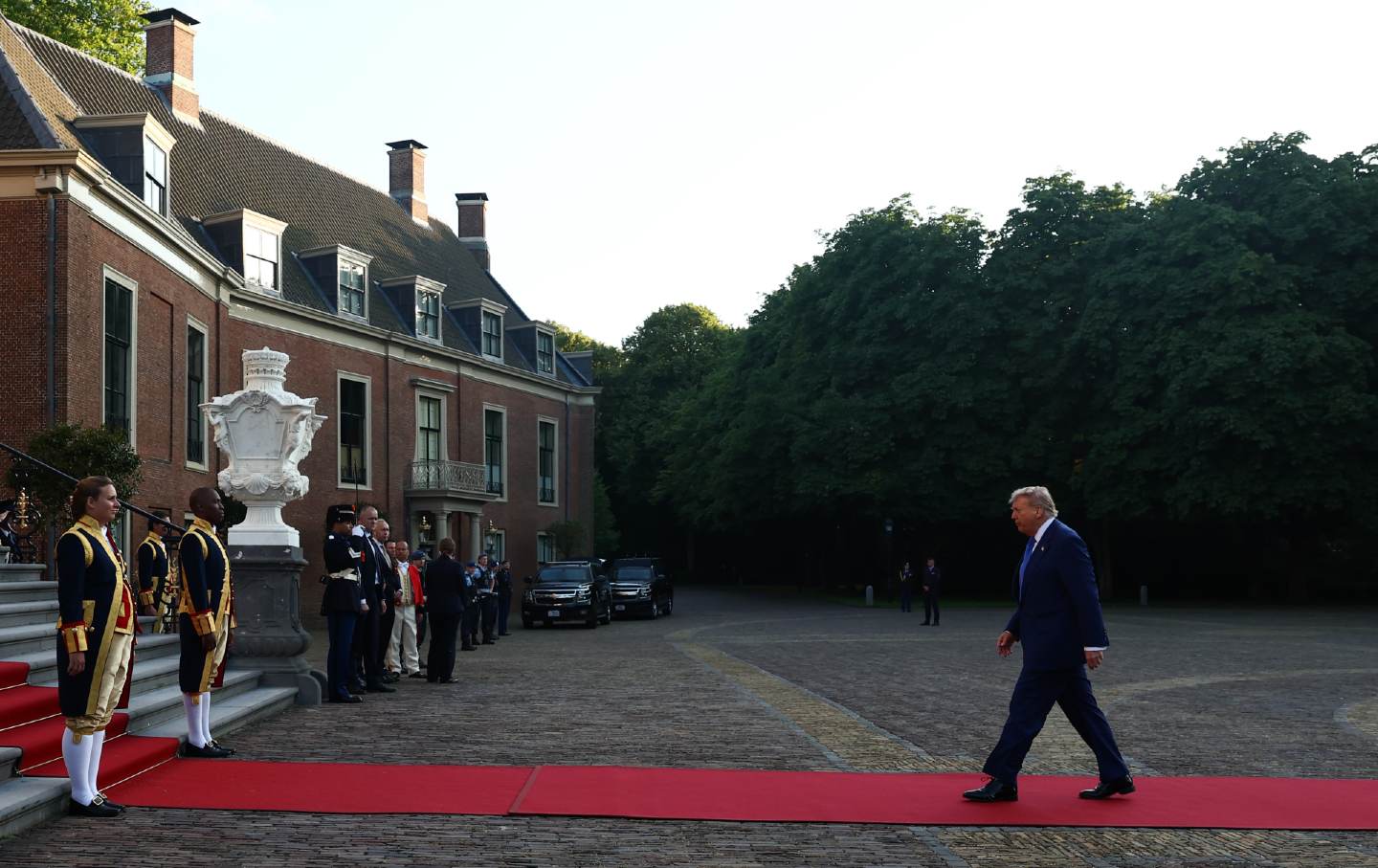
President Donald Trump arrives for a NATO Summit dinner at Huis ten Bosch Palace in The Hague, Netherlands, on June 24, 2025.
(Jakub Porzycki / NurPhoto via Getty Images)
The Hague, Netherlands—The Huis ten Bosch Palace sits just east of The Hague’s city center, nestled in the Haagse Bos woods like a fairytale relic. Its manicured gardens stretch toward a private lake; its marble foyers, lacquered panels, and baroque ceilings glint beneath chandeliers. The residence of the Dutch royal family is normally reserved for quiet ceremonies, seasonal portraits, and the occasional diplomatic courtesy. And on the opening night of the NATO summit, it was the stage for a kind of old-world pageantry of long-lost monarchs but remade for Donald Trump, the president who would be king.
While European heads of state gathered on the first day of the summit to finalize a controversial 5 percent spending pledge, Trump was late to the statecraft. But he was on time to dine with the royal family and other heads of state. He spent the night in the palace and awoke to breakfast with the king and queen.
When Trump showed up at NATO’s formal sessions the next day, NATO Secretary General Mark Rutte enthusiastically praised Trump for his show of strength in Iran and for forcing NATO members to each agree to 5 percent spending on defense. “I just want to recognize your decisive action on Iran. You are a man of strength, but you are also a man of peace,” Rutte told Trump in front of reporters.
Before flying home later that day, Trump opened his closing remarks not by thanking Rutte, but by gushing about the Dutch royal family. “I want to thank them for the royal treatment they’ve given us,” he said, hitting the word “royal” hard, smiling. “Couldn’t have been nicer.”
Trump has never hidden his admiration for monarchy. But this moment was about more than personal taste—it was about projection. Trump had come to play king himself, and the summit was structured to oblige. And Rutte, once the Netherland’s longest-serving prime minister and mild-mannered center-right technocrat and now NATO’s secretary general, played the role of vassal with unnerving enthusiasm.
At a time when the transatlantic alliance is under its greatest strain since the Cold War, Rutte had one mission: Avoid a rupture. That meant keeping Trump happy, and to keep Trump happy, you treat him like a monarch.
Rutte made sure this summit was stripped of surprises. There would be no replay of 2018, when Trump publicly dressed down Germany’s then-Chancellor Angela Merkel for her country’s military spending and dependence on Russian gas. That scene, where Trump accused NATO’s members of being essentially freeloaders and threatening to go his “own way,” had stunned European leaders. Not least because it revealed Trump’s contempt not only for diplomacy but for the idea of alliance itself.
Back then, Trump demanded that members spend 4 percent of GDP on defense, double the agreed NATO target. At the time, it seemed absurd. Most countries were still falling short of their agreed 2 percent mandate.
But at this summit, Rutte pulled off the seemingly impossible. He rallied NATO’s European members to commit to a 5 percent target by 2030. The move was a stunning diplomatic feat, and Rutte was widely praised in Brussels and Washington policy circles. German Chancellor Friedrich Merz said, “It is no exaggeration to call this summit historic,” given its importance to raising defense spending, which has long been considered an out-of-reach goal. But it came at a cost: public, cartoonish obsequiousness toward Trump.
A text Rutte sent to Trump was leaked by Trump himself on Truth Social. “You’re flying into another big success in The Hague this evening,” it read. “Europe is going to pay in a BIG way, as they should, and it will be your win.” Later on, Rutte referred to Trump as “Daddy” when responding to reporters’ questions about Trump’s expletive-laden remarks to rebuke Iran on Tuesday.
“I think Secretary General Rutte has unlocked the secret to dealing with Trump. But it unfortunately requires him to flatter Trump to such an extent that it’s embarrassing,” said Rachel Rizzo, senior nonresident fellow at the Atlantic Council. “I don’t think it necessarily undermines the alliance, but I do think it highlights the fact that there really isn’t a sense of a shared transatlantic destiny anymore. At least not with the current US administration. Perhaps the future will more resemble the past, but I doubt it. I think we’ve entered a new era of transatlanticism, whereby the US approach is far more transactional and will require Europe to take on the responsibility for its own security.”
Transactional is perhaps generous. Trump doesn’t engage with NATO as a coalition of democratic equals but rather as a medieval fiefdom. The other members are his vassals, and their job is not to deliberate but to pay tribute.
It’s no secret that Trump has long questioned the US commitment to NATO’s mutual defense clause, Article 5. Even on Air Force One en route to the summit, he continued to cast doubt. When reporters asked about his obligation to Article 5, he responded that it “depends on your definition. There are numerous definitions of Article 5. You know that, right? But I’m committed to being their friends.”
That ambiguity was not new, but it nevertheless sent chills through the member delegations. There are few who would challenge that US participation in NATO is essential to the organization’s credibility. Even after defense spending hikes, a NATO without the United States might not be able to repel a full-scale Russian assault.
“Despite all the talk about greater European responsibility and higher defense expenditure—even if there’s now more political will for that—it still takes time, and Europe or European NATO member states can’t afford to alienate the US or Trump,” said Hendrik Ohnesorge, managing director of the Center for Global Studies at the University of Bonn. “So overall, I think Rutte’s is a good strategy, even if it comes at a cost.”
And to see where Rutte may have been strategic here, one need only to look at the threats Trump made to Spain, who is the sole member state to not commit to the 5 percent GDP spending target. Prior to the summit, Spain wrote in a blistering letter to Rutte that said committing to 5 percent spending “would not only be unreasonable, but also counterproductive.” Spain is flatly refusing to share that target, instead remaining at 2.1 percent spending goals. Spain ultimately signed off on the pledge but was granted an exemption, which infuriated Trump. At his closing press conference, he interrupted and berated reporters from Spain, threatening a trade deal that would force them to “pay twice as much.” (As a member of the European Union, Spain does not negotiate directly with the United States on trade; rather, the European Commission handles those negotiations on behalf of all 27 EU member states.)
And so, Rutte made a choice: He sacrificed dignity for unity.
Historically, NATO has always been deferential to the United States. As NATO’s first general secretary, Hastings Ismay, once put it, the alliance was created “to keep the Americans in, the Russians out, and the Germans down.” But in 2025, that logic has become scrambled. Germany is now being asked to be one of the alliance’s largest spenders. Russia remains a threat, but for Trump, the real concern is China rather than Putin, whom Trump has repeatedly referred to as a friend.
Popular
“swipe left below to view more authors”Swipe →Rutte knows how to navigate power. As the Netherland’s prime minister, he was famous for his political and ideological flexibility. He resigned in 2023 amid public backlash over his government’s migration policy, a crisis that ultimately catapulted the far-right Geert Wilders, often dubbed the “Dutch Trump,” into first place in national elections. (Wilders, unable to form a coalition, gave way to Dick Schoof, a technocrat widely seen as a proxy for Wilders.) In that political environment, Rutte’s NATO appointment was understood as a return to establishment credibility. But in The Hague, Rutte didn’t and probably couldn’t restore the old order; he had to adapt to the new one.
Trump responds to hard power, and Rutte has effectively conceded that NATO has little of it without the United States. The soft power that the United States has cultivated since the end of World War II—like respect for rules, norms, and long-game diplomacy—is meaningless to Trump. That means soft power must be made legible through rituals of praise, and so allies must become supplicants.
To the extent that NATO survives under Trump, it will do so because its members have agreed to this new reality. For now, it’s working. NATO is holding itself together—but increasingly on Trump’s terms. But the danger of treating Trump like a king is that it could help him become one. And those coronation costs would be incalculable.
Trump’s behavior in The Hague underscored not just a shift in tone but a shift in the structural logic of the alliance. NATO is no longer animated by at least the principles of consensus and continuity; it now revolves around mood management. Its traditional purpose, mutual defense, is being eclipsed by the short-term priority of keeping the US president engaged.
Even that might not last.
In this environment, Rutte’s performance may well be remembered as pragmatic. His theatrics kept the summit on track, secured Trump’s fleeting approval, and helped NATO secure a rare agreement on future spending.
But kings, unlike presidents, don’t ask for power. They don’t campaign or negotiate. They simply rule, because others let them. And in The Hague, the crown wasn’t seized by Trump. NATO handed it to him.
Time is running out to have your gift matched
In this time of unrelenting, often unprecedented cruelty and lawlessness, I’m grateful for Nation readers like you.
So many of you have taken to the streets, organized in your neighborhood and with your union, and showed up at the ballot box to vote for progressive candidates. You’re proving that it is possible—to paraphrase the legendary Patti Smith—to redeem the work of the fools running our government.
And as we head into 2026, I promise that The Nation will fight like never before for justice, humanity, and dignity in these United States.
At a time when most news organizations are either cutting budgets or cozying up to Trump by bringing in right-wing propagandists, The Nation’s writers, editors, copy editors, fact-checkers, and illustrators confront head-on the administration’s deadly abuses of power, blatant corruption, and deconstruction of both government and civil society.
We couldn’t do this crucial work without you.
Through the end of the year, a generous donor is matching all donations to The Nation’s independent journalism up to $75,000. But the end of the year is now only days away.
Time is running out to have your gift doubled. Don’t wait—donate now to ensure that our newsroom has the full $150,000 to start the new year.
Another world really is possible. Together, we can and will win it!
Love and Solidarity,
John Nichols
Executive Editor, The Nation
More from The Nation
Brace Yourselves for Trump’s New Monroe Doctrine Brace Yourselves for Trump’s New Monroe Doctrine
Trump's latest exploits in Latin America are just the latest expression of a bloody ideological project to entrench US power and protect the profits of Western multinationals.
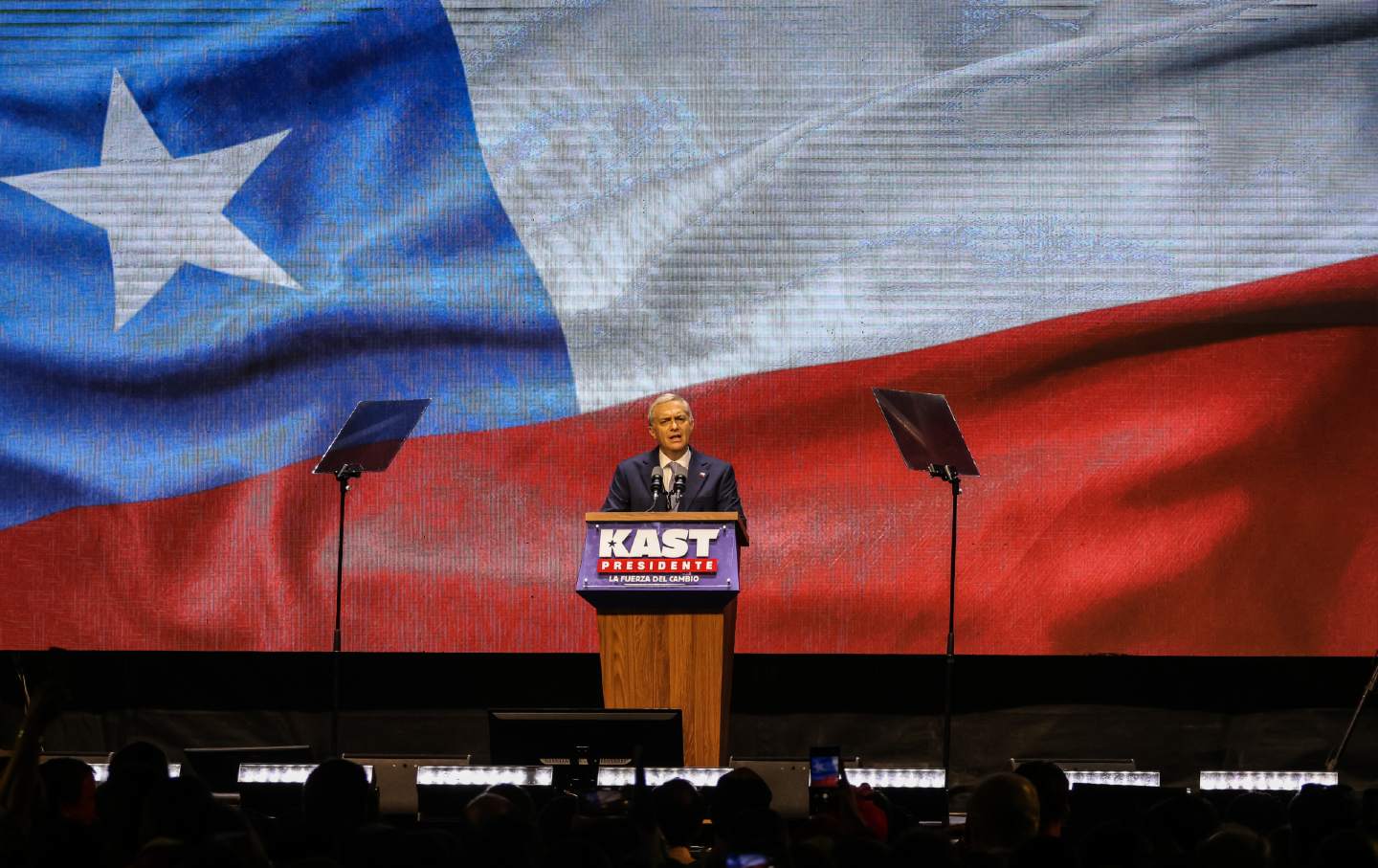
Chile at the Crossroads Chile at the Crossroads
A dramatic shift to the extreme right threatens the future—and past—for human rights and accountability.
The New Europeans, Trump-Style The New Europeans, Trump-Style
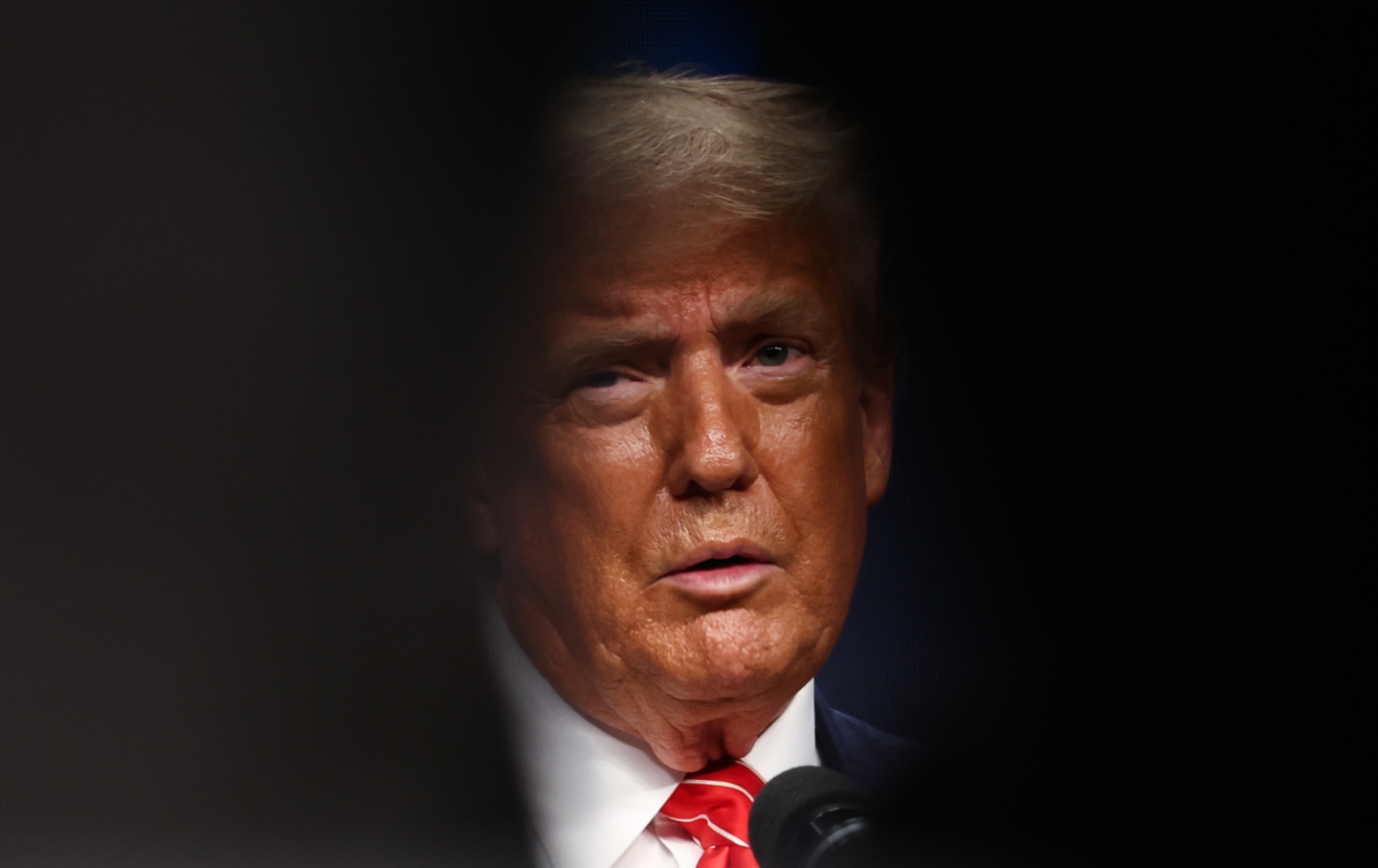
Donald Trump is sowing division in the European Union, even as he calls on it to spend more on defense.

The United States’ Hidden History of Regime Change—Revisited The United States’ Hidden History of Regime Change—Revisited
The truculent trio—Trump, Hegseth, and Rubio—do Venezuela.
Mahmood Mamdani’s Uganda Mahmood Mamdani’s Uganda
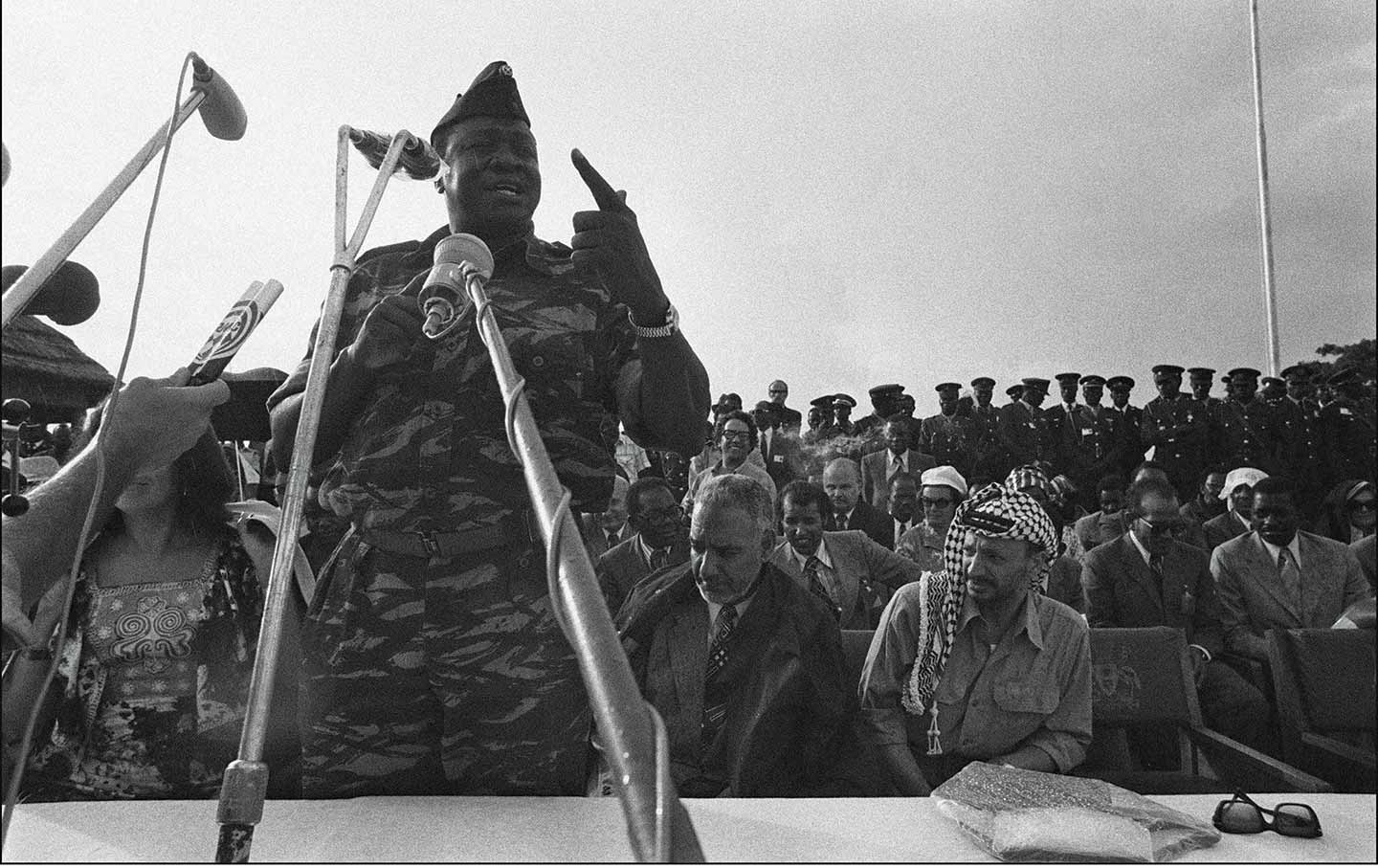
In his new book Slow Poison, the accomplished anthropologist revisits the Idi Amin and Yoweri Museveni years.

The US Is Looking More Like Putin’s Russia Every Day The US Is Looking More Like Putin’s Russia Every Day
We may already be on a superhighway to the sort of class- and race-stratified autocracy that it took Russia so many years to become after the Soviet Union collapsed.

