
Why Congress Needs to Vote on My Bipartisan War Powers Resolution
America cannot afford another endless war in the Middle East.
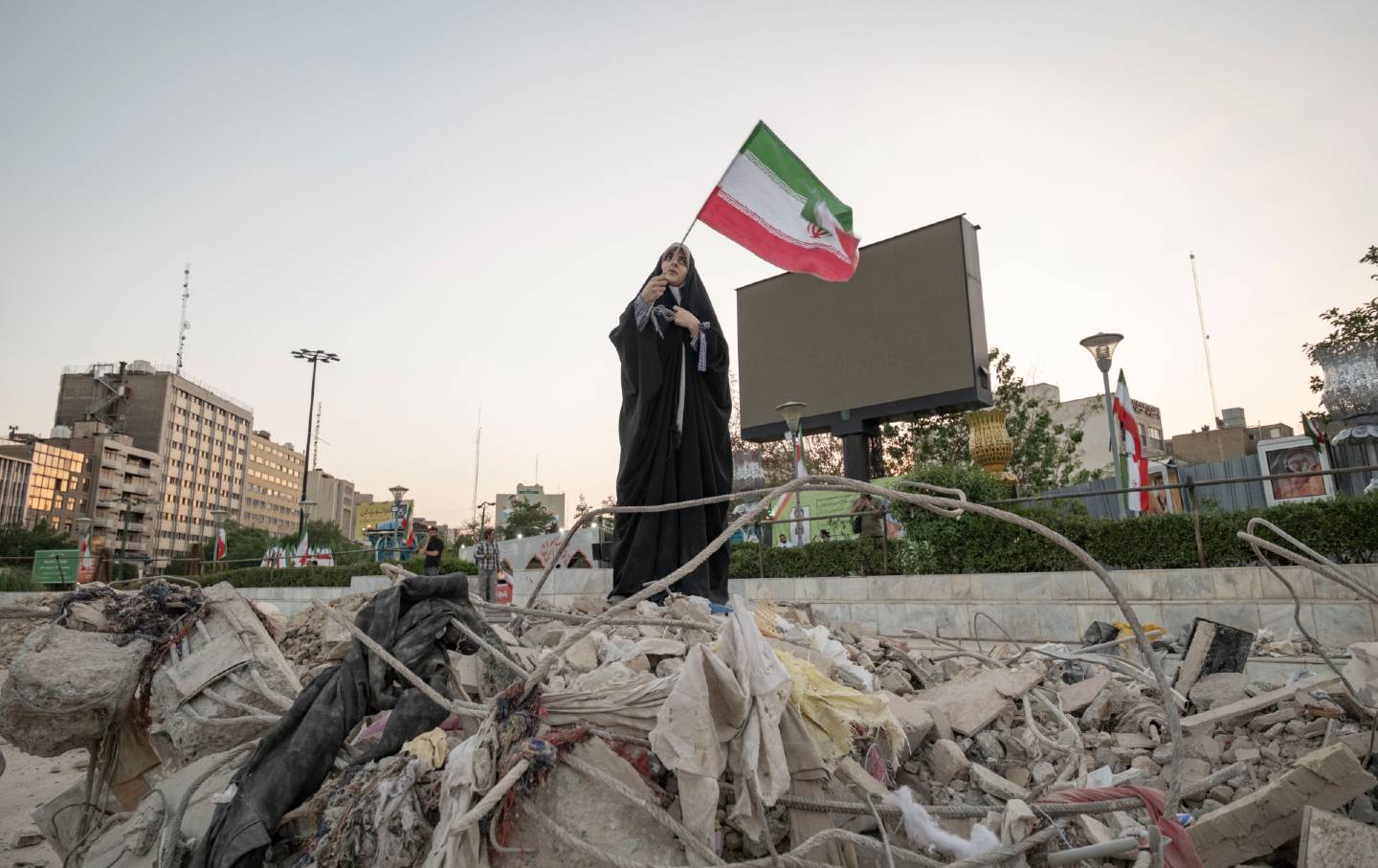
Americans do not want a war with Iran. The threat of a nuclear-armed Iran is real, but dragging the United States into another conflict in the Middle East is not the solution.
President Trump’s military strikes on Iran’s nuclear facilities this week put Americans, our troops, and embassies at risk. And this is only the beginning. If Trump continues down this path, the financial and human toll will rise sharply—especially if Iran follows through on its warnings that it will retaliate against US forces stationed in the region.
Congress needs to vote immediately on my bipartisan War Powers Resolution with Representative Thomas Massie to ensure that President Trump does not unilaterally escalate military action without congressional approval. Article I of the Constitution gives Congress—not the president—the sole power to declare war. It is structured as a privileged resolution, meaning it will receive a vote. Every member of Congress will have to decide whether they stand for diplomacy and the Constitution, or for endless war and executive overreach.
We have used this authority to rein in US militarism before. When I came to Congress, I worked with Senator Bernie Sanders to introduce the first War Powers Resolution in US history to pass both chambers. It aimed to end unauthorized US support for the Saudi-led war in Yemen, which had senselessly taken hundreds of thousands of innocent Yemeni lives. The resolution succeeded. It passed Congress with bipartisan support. And President Trump, faced with congressional opposition, slashed US support for the Saudi war machine, ultimately leading to their exit from the brutal conflict.
Situations such as this are exactly why our Constitution prohibits presidents from launching attacks without congressional authorization. The framers understood that once a war begins, public and political pressures often force escalation. We have proved that Congress can reassert its constitutional role—and we can do it again. But we have to act fast.
For Americans exhausted by decades of war, this week’s events feel like a bad dream. After months of direct diplomacy between the United States and Iran, President Trump’s emissaries were preparing for another round of nuclear negotiations.
The prospects were real: A deal to constrain Iran’s nuclear program was achievable. A diplomatic deal to avert war and bring benefits to both Americans and the Iranian people was in sight.
What made this more stunning is that just weeks earlier, Trump had reportedly told Netanyahu not to launch a strike that could undermine diplomacy. Yet, following the Israeli operation, Trump reversed course—praising the attacks, leveraging them to threaten Iran, and abandoning his focus on being an elite diplomatic dealmaker.
Entrenching the US in another Middle East war is exactly what Trump had promised American voters he wouldn’t do. He campaigned against regime change wars, which he has now signaled he would support. He pledged to bring our troops home, to put “America First,” and to reduce our military footprint in the Middle East. Americans expected a focus on ending waste and lowering prices, but a conflict with Iran would explode our deficits. Ten percent of our $36 trillion national debt is from the Iraq War. Many Americans took Trump at his word. But even his own supporters are now speaking out against the strikes and further escalation with Iran.
A majority of Americans want Trump to pursue peace and diplomacy over another costly war. A new Economist/YouGov survey shows that just 16 percent of Americans support joining Israel’s conflict with Iran and a majority support US negotiations with Iran over its nuclear program. Among Trump’s own 2024 voters, most oppose US military intervention in the conflict.
And we know that diplomacy is effective. President Obama’s JCPOA limited enrichment to 3.67 percent and only in Natanz. Since Trump ripped up the agreement, there has been 60 percent enrichment in Fordo and high levels of enrichment scattered across Iran. Even if Trump’s strikes caused a temporary disruption, it would not eliminate Iran’s capacity. In reality, Iran could simply rebuild—this time with no international inspectors.
It’s not too late for Trump to reverse course and get back to the negotiating table to stop Iran from having a nuclear bomb. But if he insists on continuing down the path of war and regime change, our War Powers Resolution will ensure that the American people will know which representatives stood for peace and who voted to prolong America’s disastrous experiment with endless war that has created a generation of hate.
We cannot let the Beltway push us into another costly and disastrous conflict against the will of the American people. We need to urgently pass our bipartisan War Powers Resolution and mobilize the millions of Americans on both the left and the right who want de-escalation and a path of tough diplomacy and peace.
More from The Nation
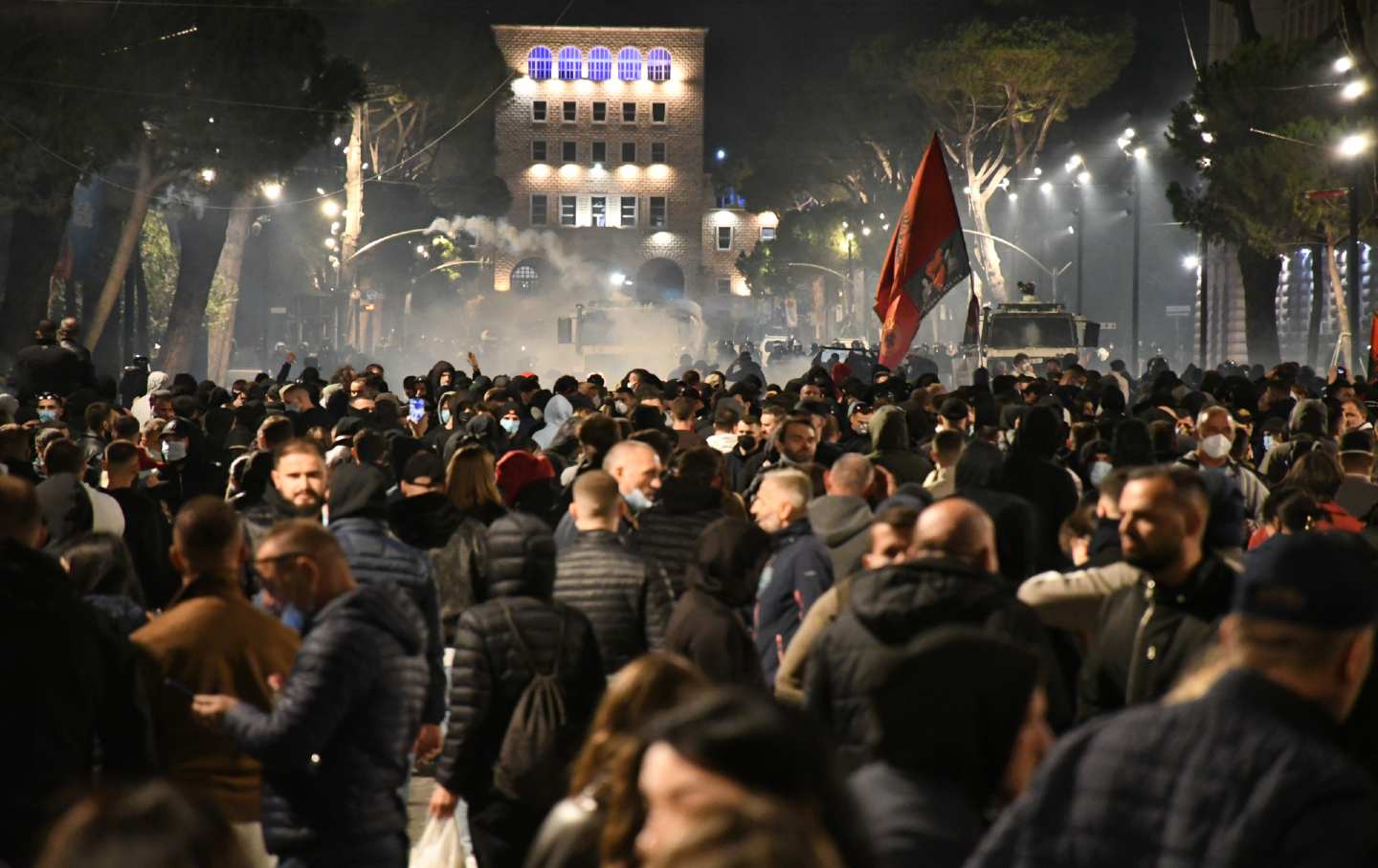
Albanian Student Strikes Spur a Political Crisis Albanian Student Strikes Spur a Political Crisis
A new round of protests against the ruling party’s corruption has Prime Minister Edi Rama giving cops bonuses to crack down on dissent.
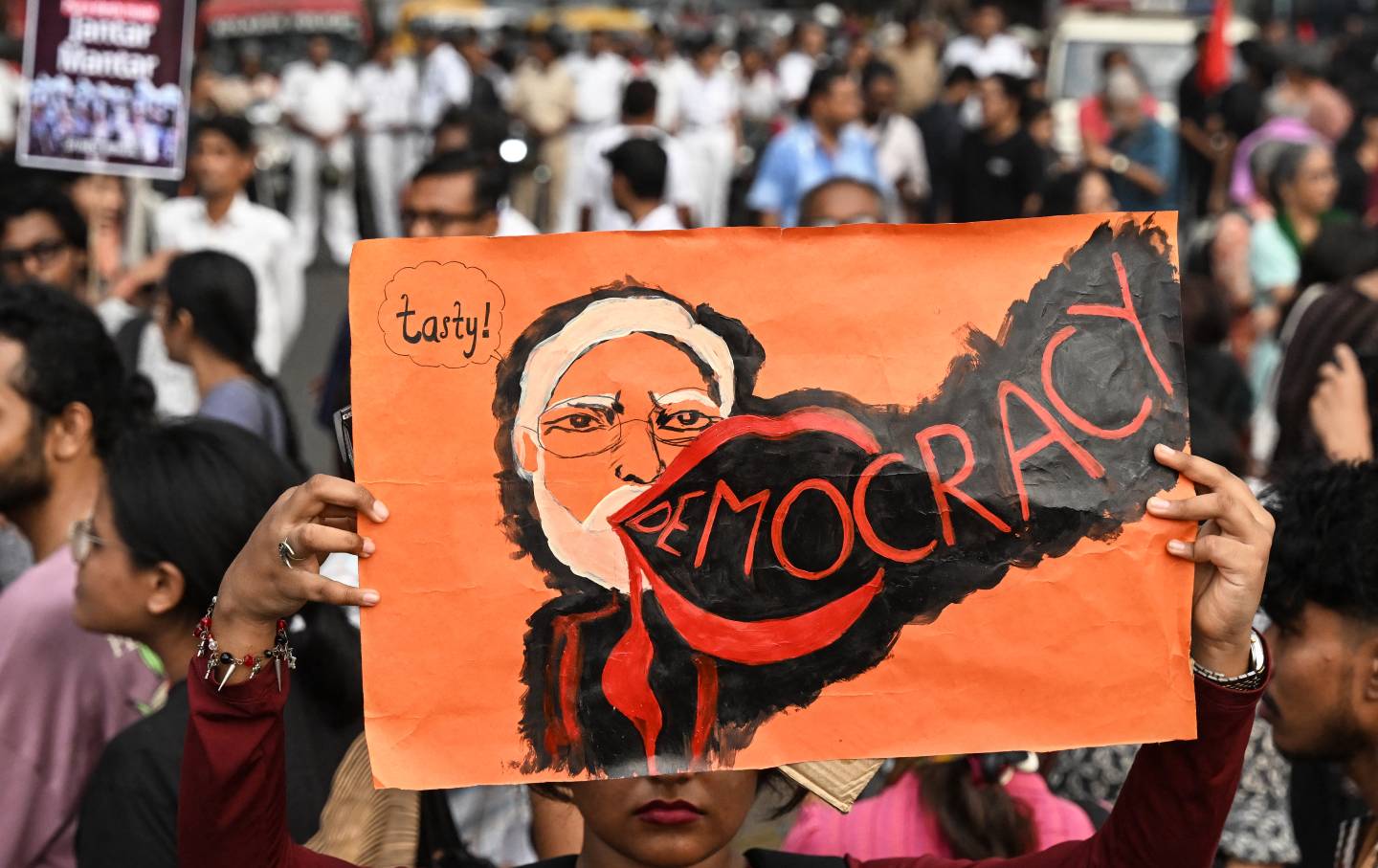
Inside India’s Gen Z Cockroach Janta Movement Inside India’s Gen Z Cockroach Janta Movement
Young Indians are challenging the purge of voter rolls by Modi’s right-wing government. Shrishti Khanna, who was detained by Delhi police while covering the protests, explains.

The Clarion Call of “NAZA” The Clarion Call of “NAZA”
Yuval Abraham and Rachel Szor’s new film not only documents the horrors of the present but give us a glimpse of a possible future too.
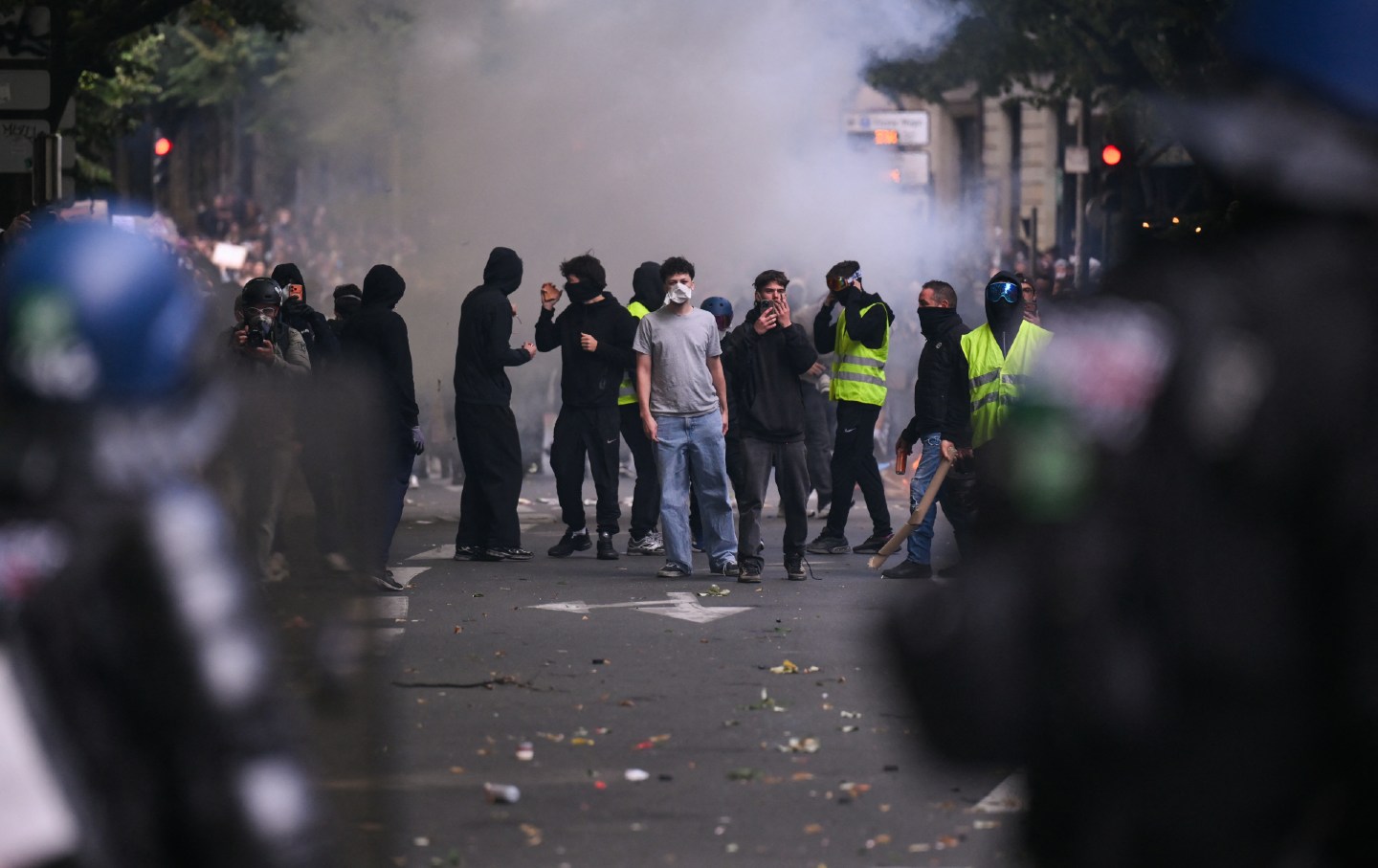
The Specter of Lepenism Looms Over France’s Social Crisis The Specter of Lepenism Looms Over France’s Social Crisis
Joining forces with the “yellow vests,” youth demonstrators are raising the alarm in a country falling to the far right.

Progressives Are Backing Puerto Rican Independence. It’s About Time. Progressives Are Backing Puerto Rican Independence. It’s About Time.
More and more leftists are concluding that statehood for the island is not enough.
The Saudi Phase of the Iran War Signals More Chaos to Come The Saudi Phase of the Iran War Signals More Chaos to Come
The conflict that Donald Trump has repeatedly proclaimed an unequivocal American victory keeps spiraling out of control.

