Iran, Israel, and the Crisis of Legitimacy
An interview with Richard Falk.
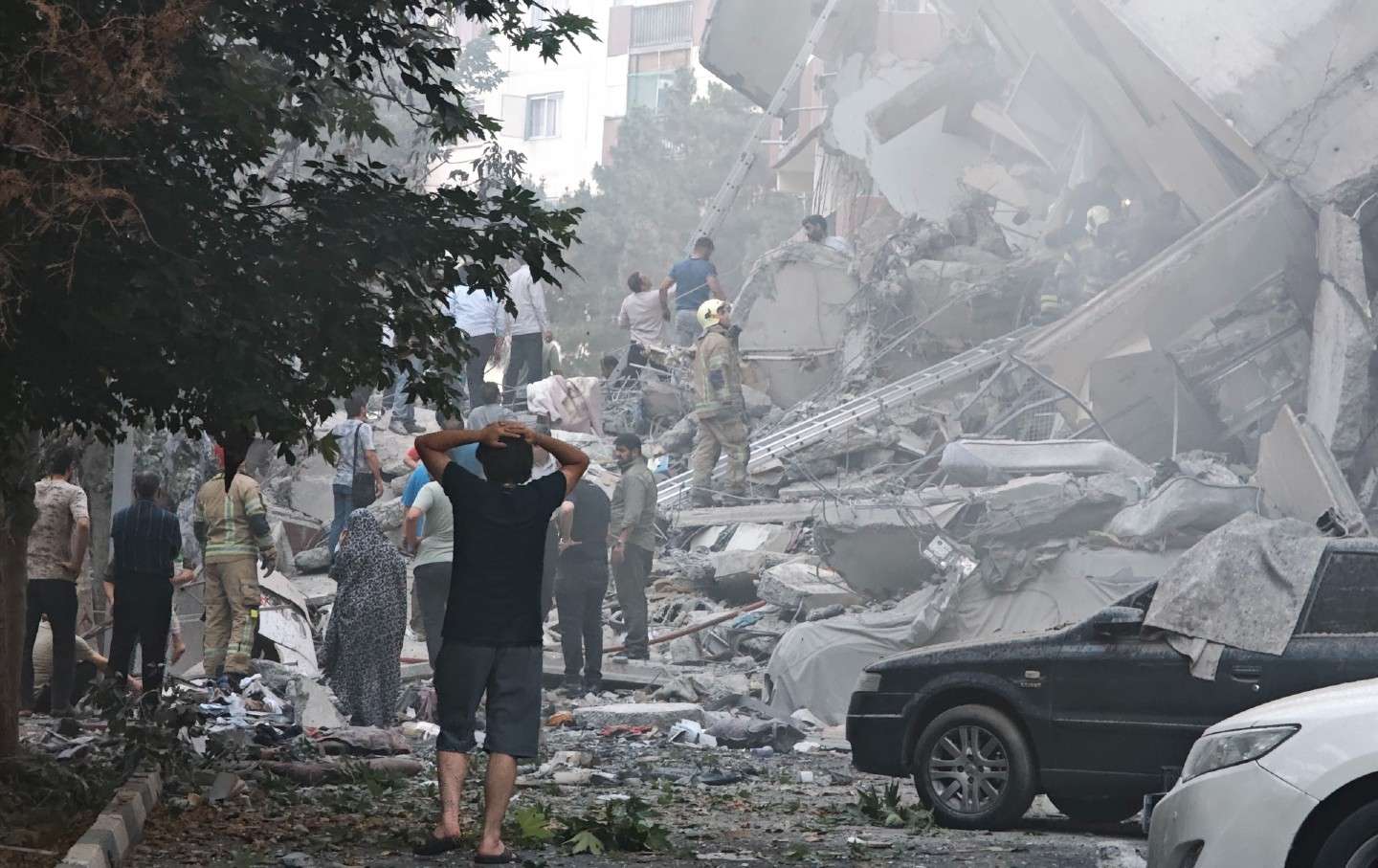
In this exclusive and timely interview for The Nation, international law scholar and former UN special rapporteur Richard Falk speaks with journalist Daniel Falcone about the consequences of Operation Rising Lion, and Israel’s recent unilateral strike on Iran. Coming at a moment of heightened regional volatility, amid stalled negotiations over Iran’s nuclear program and an ongoing humanitarian catastrophe in Gaza, the operation raises urgent concerns about international law, regional stability, and the future of diplomacy in the Middle East.
Falk discusses how the strike weakens negotiations, reflects Israel’s extensive strategy of deflection, and indicates a larger crisis of legitimacy for both Israel and allies. Falk argues that the strike may deepen the entrenchment of US-Israel ties while eroding international norms and escalating civilian suffering.
Daniel Falcone: What are the immediate and long-term implications of Israel’s unilateral Operation Rising Lion on regional stability and human rights in the Middle East? How might this impact existing diplomatic efforts involving Iran’s nuclear program?
Richard Falk: It is too early to evaluate the wider implications of Israel’s unprovoked aggression against Iran occurring amid international negotiations on Iran’s nuclear program. This attack by Israel on nuclear facilities disrupts efforts to find a peaceful solution to underlying tensions between Israel/United States and Iran. The timing of the attack, and the attempted disengagement of the US from Israel’s new military operation, suggests that the Netanyahu government opposed a peaceful settlement and normalization of relations with Iran.
A key question is whether Israel’s disregard of Trump’s public request against attacking Iran might weaken US unconditional support. But given reports that the US was fully informed, serious tension in the US-Israel relationship seems unlikely.
In fact, the official American disavowals of involvement by Rubio and others now seem intended to mislead Iranian retaliation planning from targeting American forces in the region. Trump has now confirmed that the US endorses, even admires, the Israeli aggression, describing it as “excellent” on ABC News, referring to the negotiations over Iran’s nuclear program in a very different post-attack manner: “We gave them a chance and they didn’t take it.” Given the extreme US proposal of ending all Iranian enrichment, this is more of an ultimatum than a give-and-take of negotiations between equals.
In the US, the bipartisan support of Israel’s war-making contra Iran seemed an automatic reflex, with congressional figures competing for top honors in associating US interests in relation to Iran with those of Israel and totally ignoring the lawlessness of this unilateral recourse to war-making and political assassinations—despite its disruptive effects on a supposedly diplomatic undertaking of an ultra-right leadership in the White House.
The timing may reflect Israel’s effort to divert attention from the ongoing crisis in Gaza, where mass starvation and a deeply unethical aid delivery system have intensified the humanitarian emergency. Israel’s loss in the Legitimacy War with Palestinians is further strained by the growing “Gazafication” of the West Bank. These trends have sparked global outrage, including in pro-Israel Western democracies. Civil society actions are rising, notably the recent Freedom Flotilla voyage of the Madleen, which included Greta Thunberg and European Parliament member Rima Hassan. Also noteworthy is the Sinai Walk, a protest march by Palestinian solidarity activists across the Egyptian desert toward Rafah.
Israel has long relied on a politics of deflection to divert attention from its controversial policies and practices, and this attack on Iran may partly go down as a supreme instance of such diversionary tactics. It seems to be enjoying immediate success in this regard, judging by media and governmental preoccupation with Iran’s war-making and virtual silence on Gaza.
Not to be overlooked is Netanyahu’s endless legacy quest as the Israeli leader who had the courage and foresight not only to pacify regional adversaries, but to eliminate the perceived threat to Israel of an incipient Iranian nuclear threat. Additionally, such an extension of the Zionist ultra-right agenda tended to minimize Israel’s failure after more than 600 days of genocidal violence to rescue the hostages, or defeat Hamas as a political actor. Further in the background are the outstanding fraud charges against Netanyahu that would be revived if “peace” emerged in relation to Occupied Palestine or if his politically fragile coalition government fell due to internal defection.
Key reactions will come from the Gulf monarchies, especially Saudi Arabia, along with Egypt, Turkey, China, and Russia. Given Trump’s unpredictable foreign policy, Operation Rising Lion could either escalate new Cold War tensions or unexpectedly shift toward cooperation and a peace-oriented alignment. The implications of Rising Lion are unclear, but Israel’s motivations to attack Iran are strong enough to override long-term risks, now downplayed by renewed support for its military actions tied to its long-term national security.
DF: With Gen. Hossein Salami reportedly killed in the strikes, how might this impact the command structure and retaliation strategy of the Islamic Revolutionary Guard Corps?
RF: My supposition is that the apparent assassination of Gen. Hossein Salami, Iran’s top military commander, will not alter Tehran’s retaliatory strategy, as its limited military options and prior expectations of such an attack likely led to prearranged response plans. It may have been slightly thrown off guard by the fake diplomatic discord between Washington and Tel Aviv as to the diplomacy versus militarism, but it seems safe to assume that Israel would enjoy US backing no matter how disguised.
The impact on Iran’s command structure after General Salami’s killing is hard to predict. Likely, a unified response would balance retaliation with caution, avoiding strikes on Israel’s population centers or near its nuclear arsenal.
DF: Given that the US has stated it was not involved in the strikes, how might this unilateral action by Israel affect US-Israel relations and greater Western alliances in the region?
RF: If civil society pressures increase and produce a variety of solidarity initiatives with the Palestinian struggle that reconfigure the political balance of forces in these countries, then it might lead governments to adopt a more law-oriented approach to Israel. Contrariwise, if Israel prevails in Iran and proceeds successfully with its plans for the political erasure of the Palestinian people, it could lead in the direction of reinvigorated support for Israel based on Western strategic interests that include a renewed narrative of “a clash of civilizations.” Given the antidemocratic orientation of Arab governments, it is also possible that important regional regimes in the Middle East would normalize with Israel in concurrence with the Abraham Accords and become geopolitical protectorates of US/Israel in the region for the indefinite future.
Trump has an agenda of undermining knowledge-based influence on climate or foreign policy, by defunding research centers, partly under the pretext of protecting Jewish students. This, along with Christian evangelism’s support for Israel, helps maintain the strong US-Israel bond in Middle East policy.
DF: What role do you foresee intergovernmental organizations, such the UN, or states like Russia, or China, playing in de-escalating this rapidly developing conflict?
Popular
“swipe left below to view more authors”Swipe →RF: The UN has been notably silent despite clear violations of Charter Articles 2(4) and 51 on the use of force. Its failure to call an emergency UN General Assembly and Security Council session has disillusioned those who believed in the charter’s war-prevention promise and post-1945 Hiroshima and Nagasaki diplomatic ideals shaped by fears of future nuclear war.
Yet, as with Israel in Gaza, Russian failure to achieve its goals in Ukraine may push Putin to divert attention by siding with Iran, risking a dangerous confrontation with the US. China generally displays caution with respect to involvement in violent conflict far from its geographic base. At the same time, China has been creatively active in creating a level of normalization in the relations between Saudi Arabia and Iran and has advocated a peaceful acceptance of Iran in the region. Not surprisingly, given the recent Beijing statecraft, China has strongly condemned Israel’s attack on Iran.
DF: What does this mean for Gaza in the long and short term in your estimation? Any hope for an interim solution?
RF: Israel will moderate its objectives in Gaza or will face pressure from the US to do so. The US government will likely continue shielding Israel from censure as it pushes toward a Zionist endgame, seizing parts of Gaza and the West Bank and coercing Palestinians to leave the Occupied Territories. The apartheid phase of the Zionist settler-colonial project is complete; the genocidal phase, focused on land seizure and ethnic cleansing, is nearing its end. Israel’s one-state reality, outlined in Israel’s 2018 Basic Law, hasn’t erased Palestinian resistance, however, and global pro-Palestinian solidarity and civil society activism is growing. The key question: Can Israel, backed by US political will and military capabilities, suppress this resistance and solidarity?
Disobey authoritarians, support The Nation
Over the past year you’ve read Nation writers like Elie Mystal, Kaveh Akbar, John Nichols, Joan Walsh, Bryce Covert, Dave Zirin, Jeet Heer, Michael T. Klare, Katha Pollitt, Amy Littlefield, Gregg Gonsalves, and Sasha Abramsky take on the Trump family’s corruption, set the record straight about Robert F. Kennedy Jr.’s catastrophic Make America Healthy Again movement, survey the fallout and human cost of the DOGE wrecking ball, anticipate the Supreme Court’s dangerous antidemocratic rulings, and amplify successful tactics of resistance on the streets and in Congress.
We publish these stories because when members of our communities are being abducted, household debt is climbing, and AI data centers are causing water and electricity shortages, we have a duty as journalists to do all we can to inform the public.
In 2026, our aim is to do more than ever before—but we need your support to make that happen.
Through December 31, a generous donor will match all donations up to $75,000. That means that your contribution will be doubled, dollar for dollar. If we hit the full match, we’ll be starting 2026 with $150,000 to invest in the stories that impact real people’s lives—the kinds of stories that billionaire-owned, corporate-backed outlets aren’t covering.
With your support, our team will publish major stories that the president and his allies won’t want you to read. We’ll cover the emerging military-tech industrial complex and matters of war, peace, and surveillance, as well as the affordability crisis, hunger, housing, healthcare, the environment, attacks on reproductive rights, and much more. At the same time, we’ll imagine alternatives to Trumpian rule and uplift efforts to create a better world, here and now.
While your gift has twice the impact, I’m asking you to support The Nation with a donation today. You’ll empower the journalists, editors, and fact-checkers best equipped to hold this authoritarian administration to account.
I hope you won’t miss this moment—donate to The Nation today.
Onward,
Katrina vanden Heuvel
Editor and publisher, The Nation
More from The Nation
Chile at the Crossroads Chile at the Crossroads
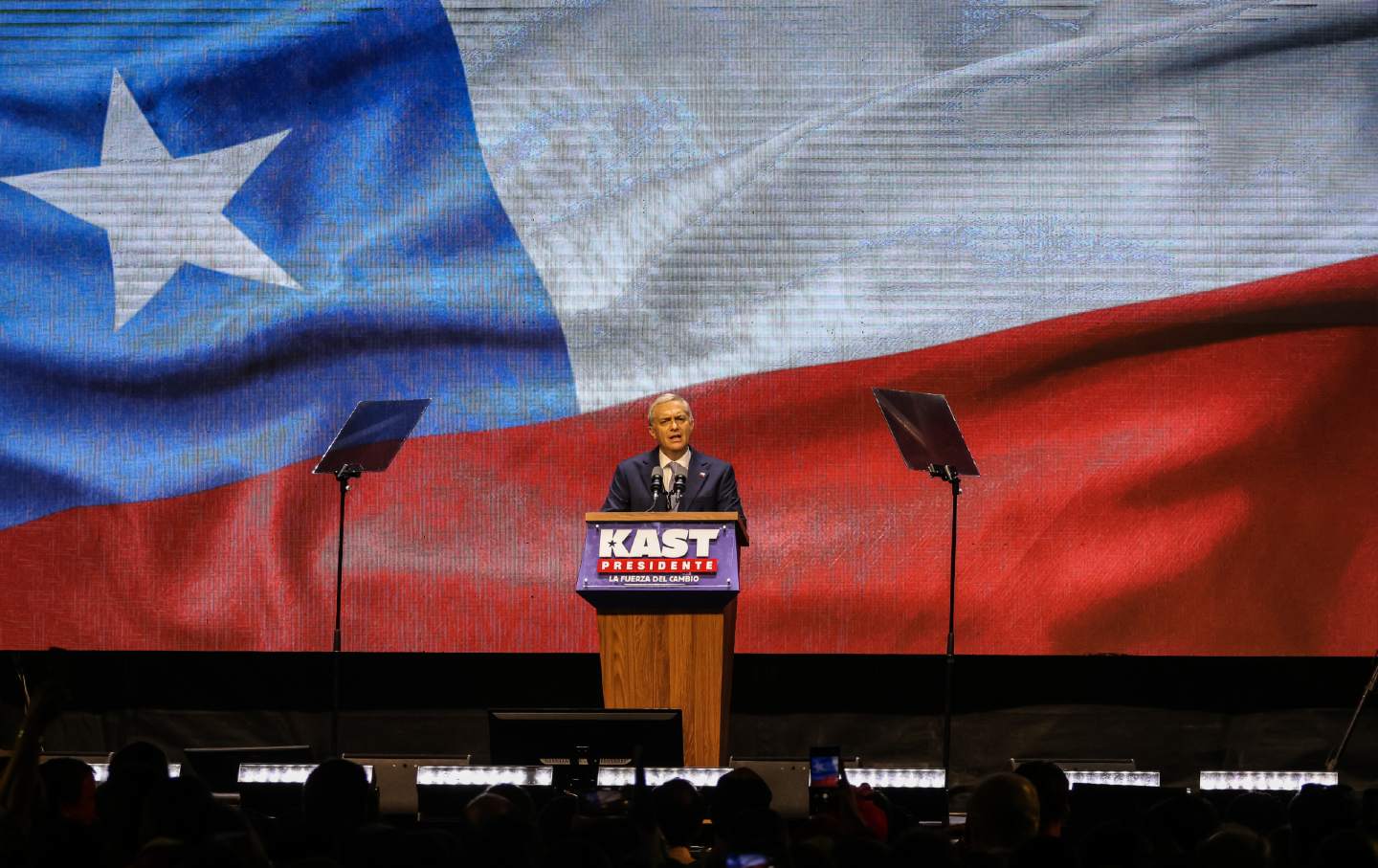
A dramatic shift to the extreme right threatens the future—and past—for human rights and accountability.
The New Europeans, Trump-Style The New Europeans, Trump-Style
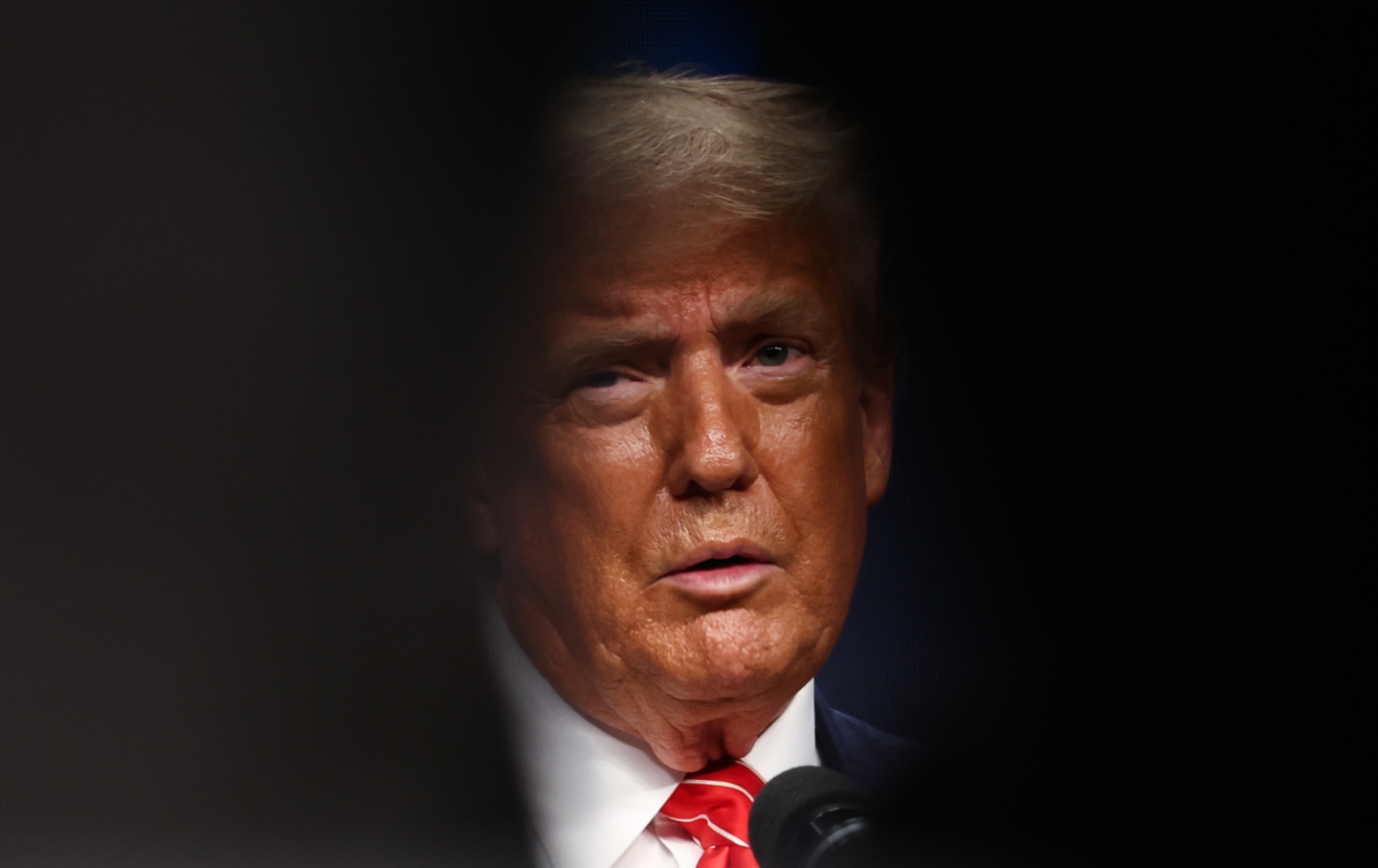
Donald Trump is sowing division in the European Union, even as he calls on it to spend more on defense.
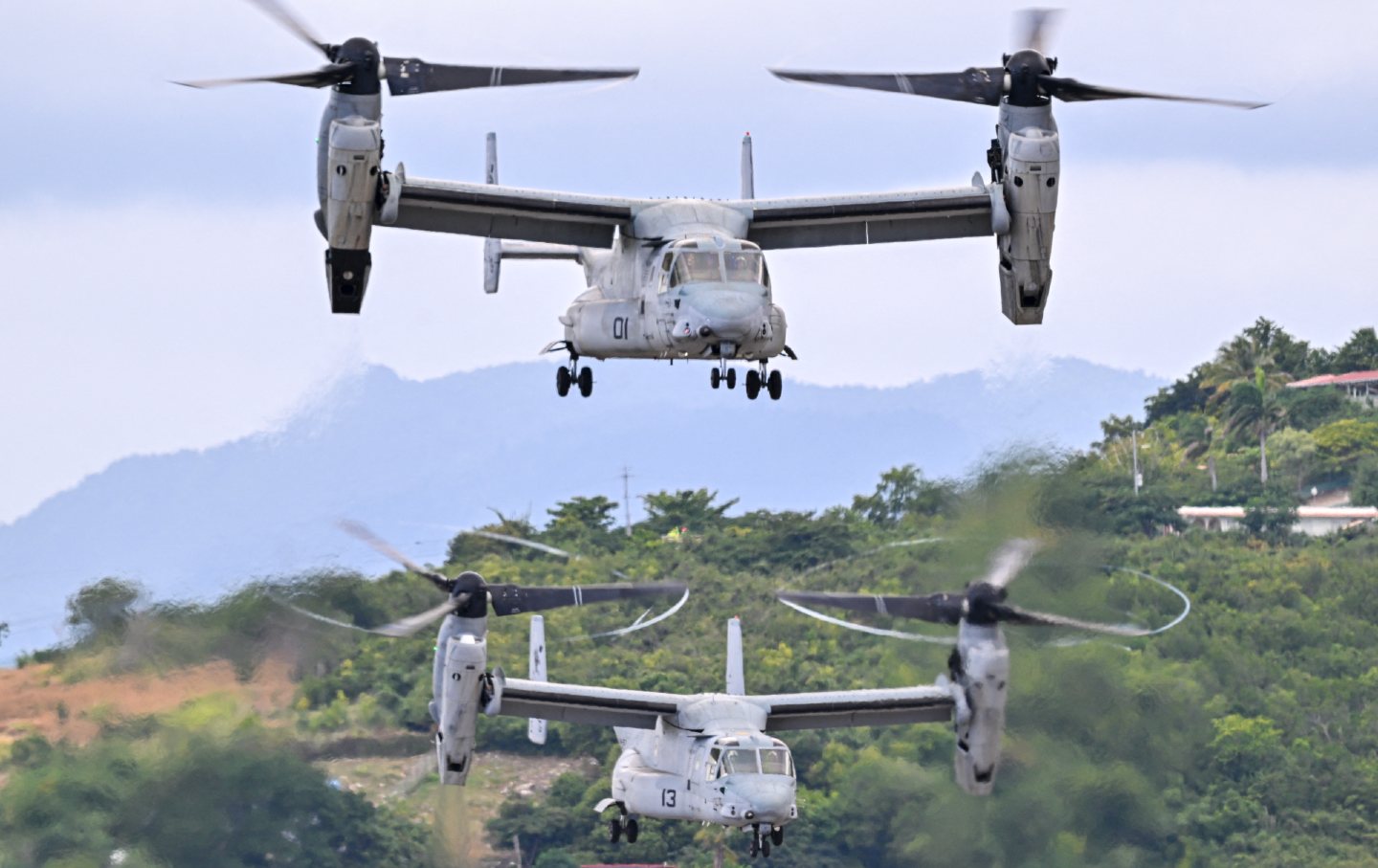
The United States’ Hidden History of Regime Change—Revisited The United States’ Hidden History of Regime Change—Revisited
The truculent trio—Trump, Hegseth, and Rubio—do Venezuela.
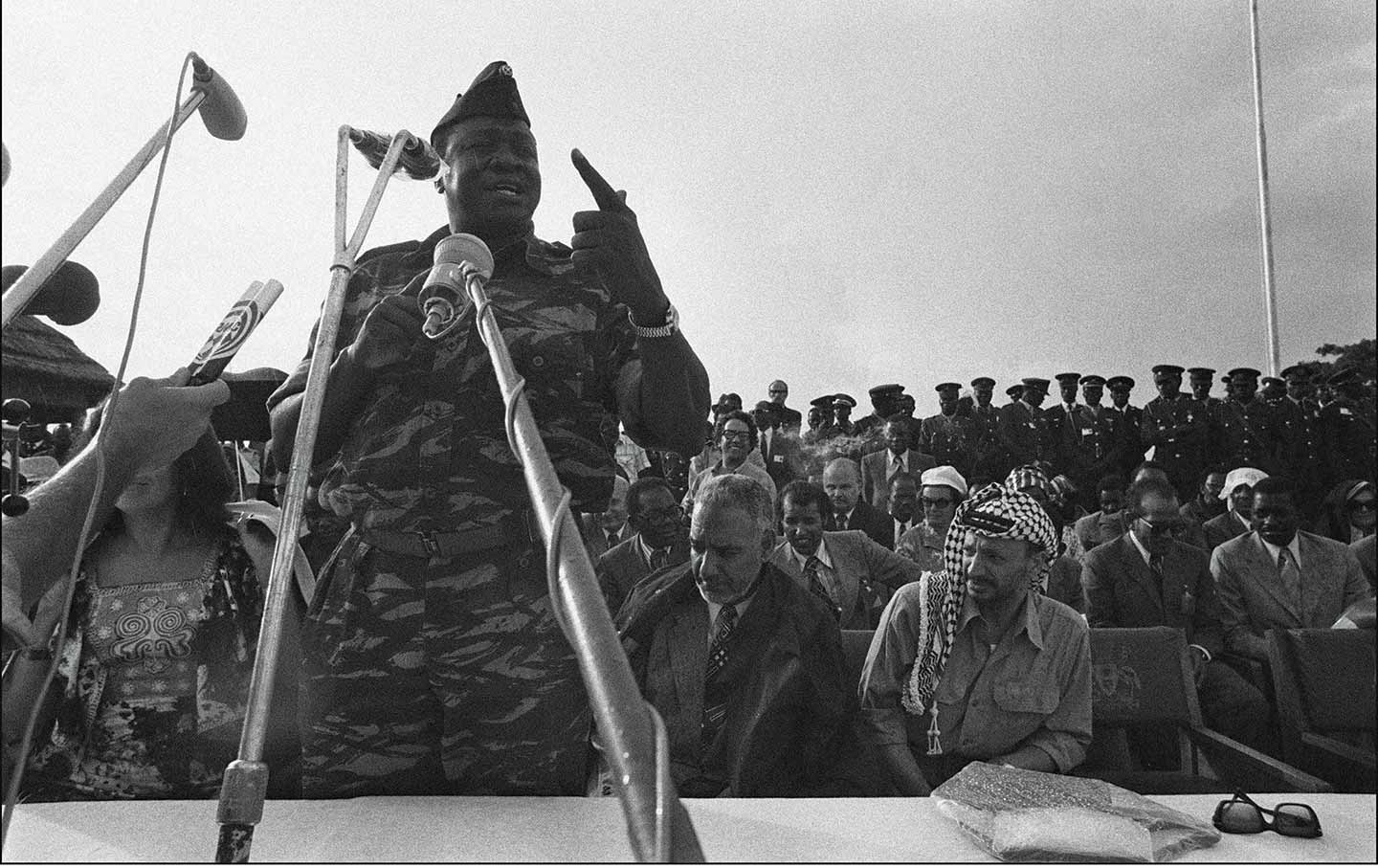
Mahmood Mamdani’s Uganda Mahmood Mamdani’s Uganda
In his new book Slow Poison, the accomplished anthropologist revisits the Idi Amin and Yoweri Museveni years.

The US Is Looking More Like Putin’s Russia Every Day The US Is Looking More Like Putin’s Russia Every Day
We may already be on a superhighway to the sort of class- and race-stratified autocracy that it took Russia so many years to become after the Soviet Union collapsed.
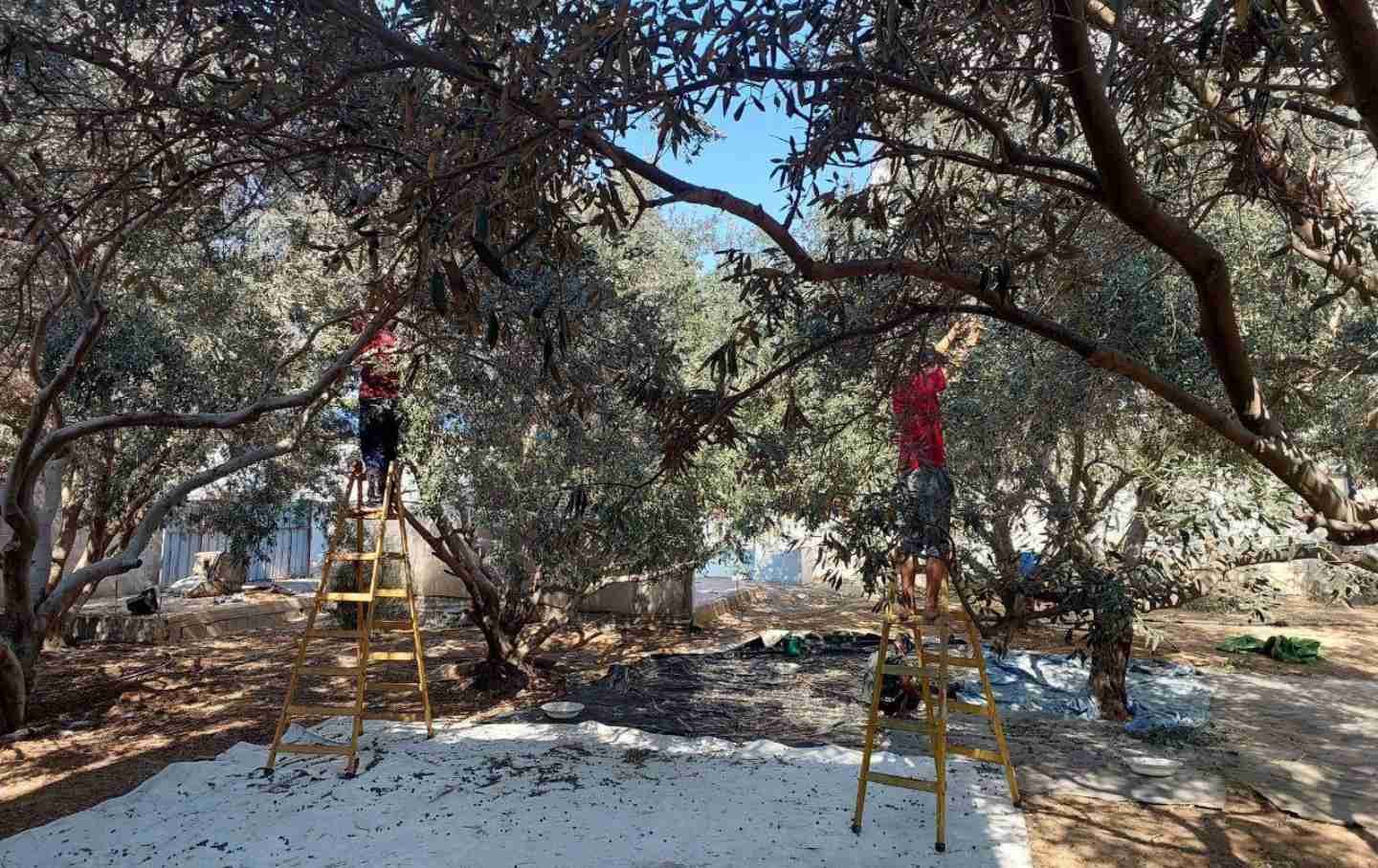
Israel Wants to Destroy My Family's Way of Life. We'll Never Give In. Israel Wants to Destroy My Family's Way of Life. We'll Never Give In.
My family's olive trees have stood in Gaza for decades. Despite genocide, drought, pollution, toxic mines, uprooting, bulldozing, and burning, they're still here—and so are we.

