Donald Trump Is Hurtling America Into a Catastrophic Middle Eastern War
The president is fickle, feckless, and easily swayed—which makes him an easy mark for militarists.
In the both the 2016 and 2024 presidential elections, Donald Trump cynically but effectively adopted the mantle of the anti-war candidate, accusing his rivals of a dangerous commitment to a policy of regime-change wars that threatened to usher in a new era of wars—and perhaps World War III. In October 2024, he specifically rejected the idea of regime change in Iran, saying, “We can’t get totally involved in all that. We can’t run ourselves, let’s face it.” In his Inaugural address in January, Trump promised to be a “a peacemaker” who would “stop all wars and bring a new spirit of unity to a world that has been angry, violent, and totally unpredictable.” In a major foreign policy address in Saudi Arabia in May, Trump reiterated his oft-repeated critique of “Western interventionalists [sic]” and “neocons” who have tried to remake the Middle East in America’s image.
As I’ve repeatedly argued, while Trump’s words are a salutary rejection of the hubris of the bipartisan foreign policy elite, there’s little in Trump’s record to show that he knows how to redirect American foreign policy toward a more peaceful direction. Quite the reverse is true: Trump’s own limitations as a leader—his fickleness, lack of deep commitments, and desire to placate different factions in his political coalition—make him an easy prey to militarists who want to push for new conflicts. The current outbreak of hostilities against Iran initiated by Israeli Prime Minister Benjamin Netanyahu is a clear case in point.
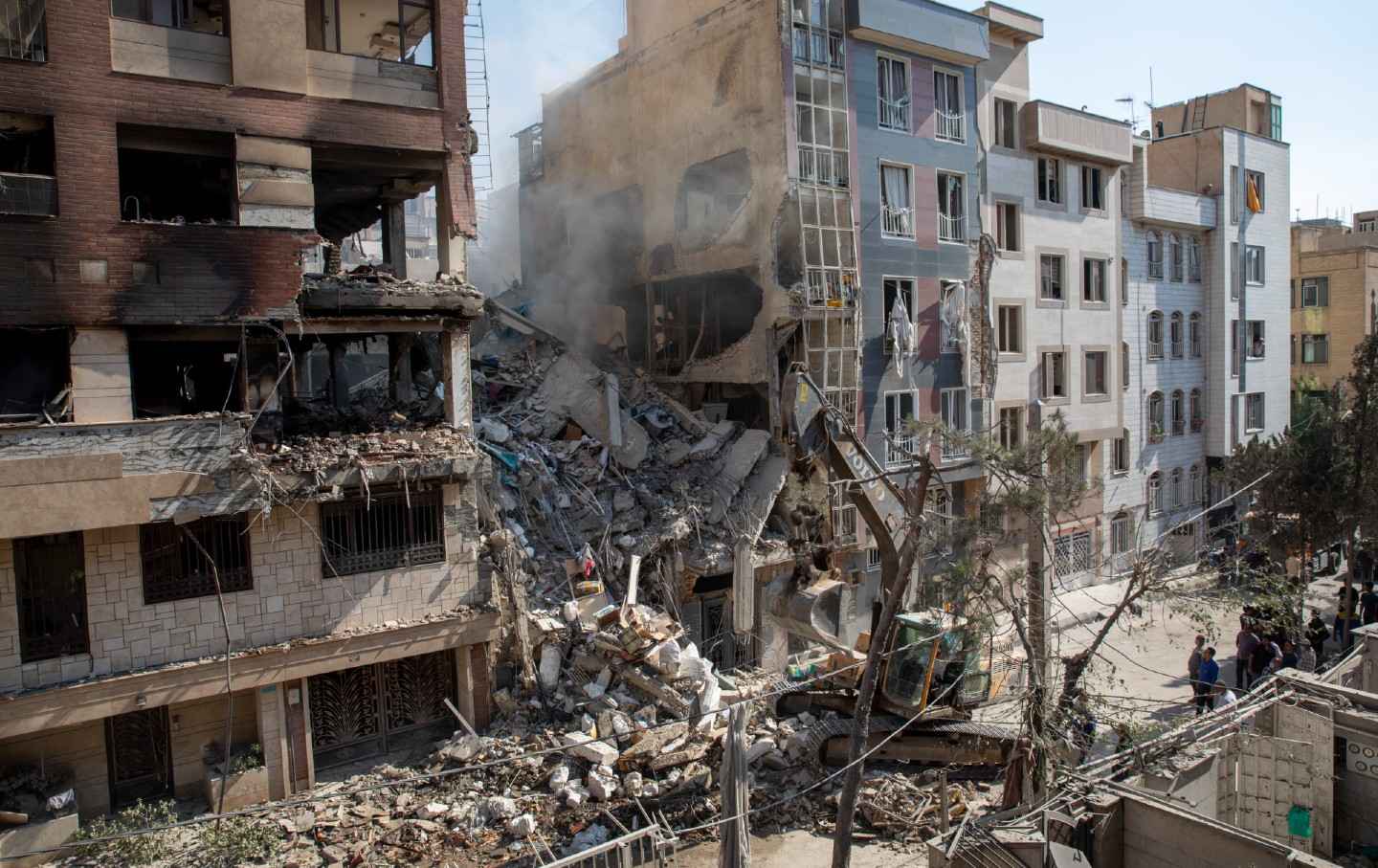
Trump gave the green light to Israel’s attack on Iran, which started on Friday. These attacks have led to open salivation by Netanyahu and leading congressional Republicans such as Ted Cruz at the prospect of regime change in Iran. They have derailed, as they were intended to do, Trump’s ongoing push for a nuclear deal with Iran. They also threaten to drag the United States into an escalating Middle Eastern war—something Trump has repeatedly promised to avoid.
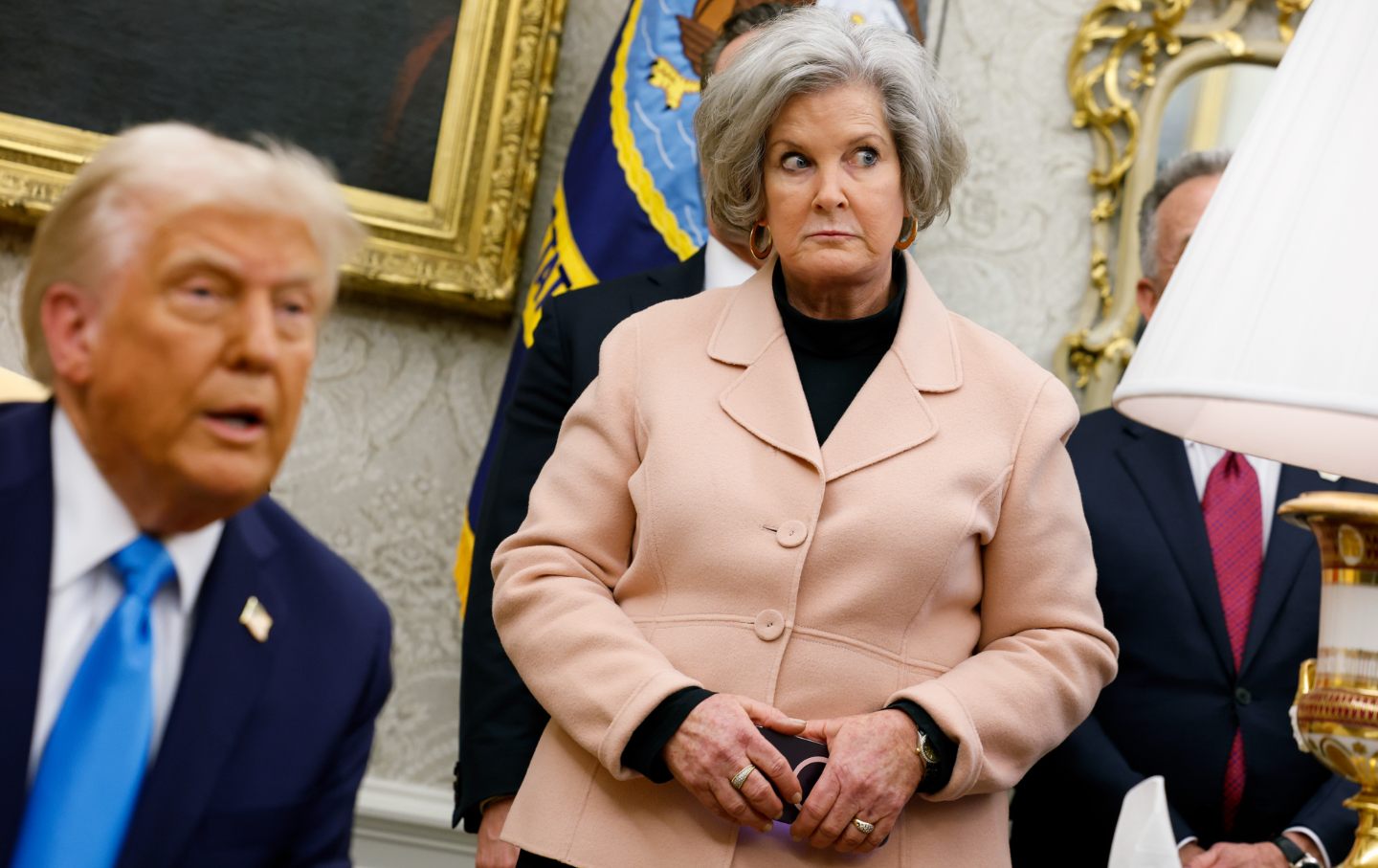
Why did Trump give the go-ahead to a policy that clearly undermines his stated objective of being a peacemaker in the Middle East and securing a new nuclear deal with Iran? The truth is that Trump’s commitment to a noninterventionist foreign policy was always compromised by conflicting impulses. Trump wants to be seen as a dealmaker—but he also wants to be seen as a tough guy. While he has bested the neoconservative faction to become the Republican standard-bearer, foreign-policy hawks remain a powerful constituency within the GOP and Trump himself is deeply indebted to pro-Israel hawks such as Miriam Adelson, who reportedly donated more than $100 million to the Trump campaign. During his first term, Trump repeatedly sidelined his own stated anti-interventionist positions to embrace hawkish advisers who advocated open competition with China, withdrawal from the Iran nuclear deal signed by Barack Obama, keeping troops in Syria, greater military spending, and arming Ukraine against Russia.
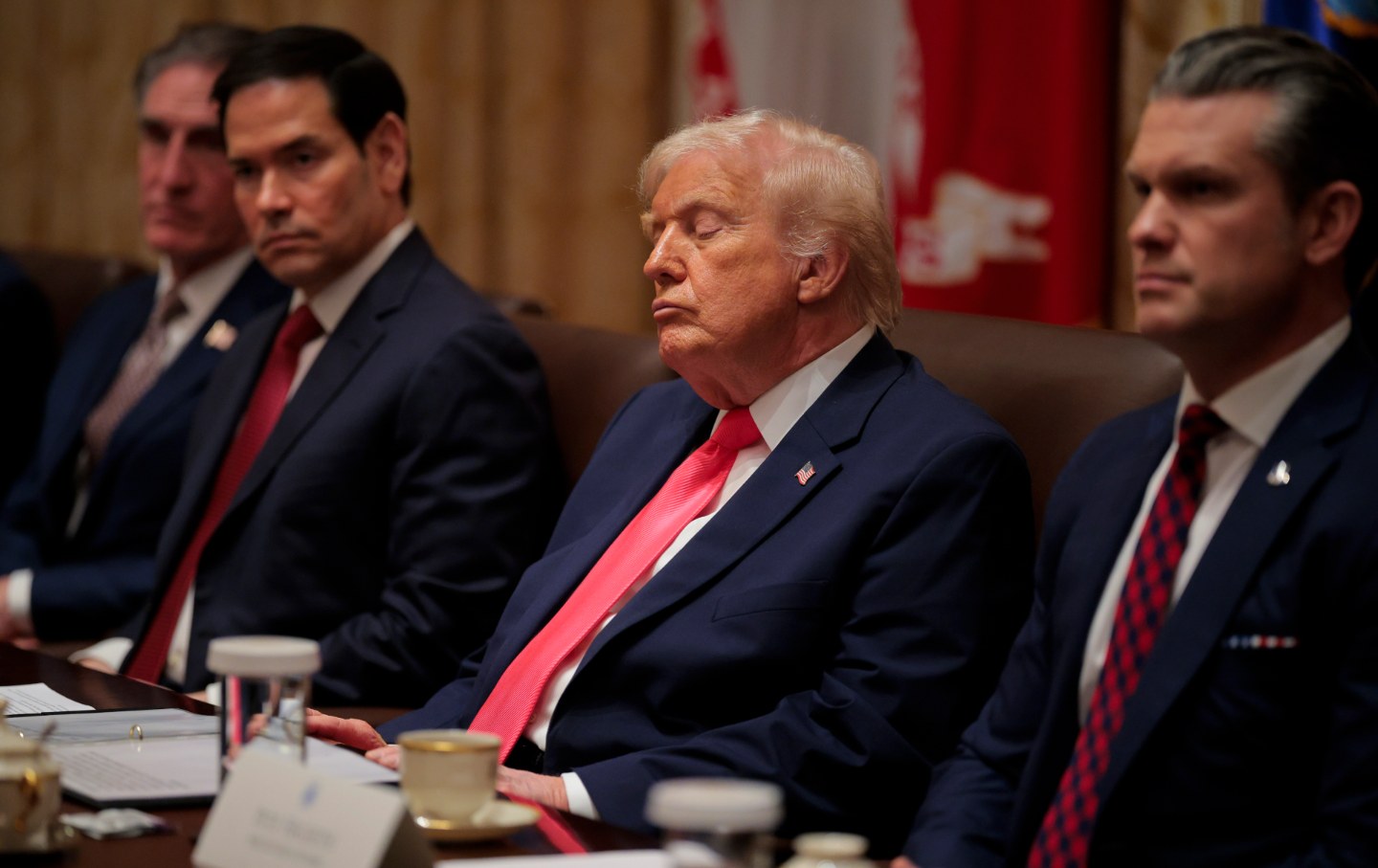
Trump has a weak character, easily swayed by pressure from powerful forces. This can be seen in his flip-flopping policies on trade (where dips in the stock market have led to rapid policy shifts) as well as the Russia/Ukraine war. Trump’s fickleness has led to the growing popularity of the phrase TACO (“Trump Always Chickens Out”).
In a characteristic bit of misdirection, Senate minority leader Chuck Schumer, who is a pro-Israel hawk, used the TACO smear to argue that Trump would be too soft on Iran. On June 2, Schumer warned that “TACO Trump” might be “folding” to Iran by making side deals. This was the exact opposite of what actually was happening. Precisely because the pro-Israel lobby is so powerful—and because Trump likes to take the path of least resistance—he was an easy mark for Netanyahu’s hawkish persuasion.
Netanyahu seems to have made the case to Trump that an Israeli bombing campaign would create an incentive for Iran to sign a nuclear deal. But this argument is belied by Netanyahu’s own appetite for regime change in Iran, as well as threats by Israeli politicians that they will “burn” Tehran and “turn it into Beirut.” Further, the bombing will only make Iran more resistant to negotiations and indeed seems to be making the idea of acquiring nuclear weapons more popular in Iran. The fact that Israel killed a leading Iranian arms negotiator, Ali Shamkhani, further makes clear that this war is designed to sabotage negotiations—not aid them.
Curtis Mills, executive director of The American Conservative, persuasively portrays Israel’s war as a successful undermining of Trump’s foreign policy agenda:
Just remains astonishing Israel assassinated Iran’s lead nuclear negotiator / adviser / consigliere to Khamenei. Trump posted videos of this man twice in recent weeks, with him underscoring Iran’s desire for a deal. Which is and was a key Trump admin goal. An utter humiliation—by an ally—of a presidential initiative. Credibility-eroding and could sunder Trump’s ability to effectively secure deals on immigration and trade around the world, and also handle Russia. One gets how this is Netanyahu first. America first?
Trita Parsi, vice president of the Quincy Institute, notes that Netanyahu is not satisfied with getting the green light for attacking Iran. While Israel made an impressive early strike, Iran is regrouping and has launched a counterattack. What was sold as a quick and easy war now threatens to become a quagmire, especially since Israel does not have the military means on its own of stopping or significantly slowing down Iran’s nuclear policy. Which is why Netanyahu is now returning to his long-held goal of getting the United States to fight Iran on behalf of Israel.
As Parsi writes:
Unsurprisingly, Israeli officials and their allies in Washington—including groups like the Foundation for Defense of Democracies—have begun lobbying President Trump to bring the U.S. into the war and to join them in offensive strikes. For Trump, this must be a serious letdown. Aware of his reluctance to launch another Middle East war, the Netanyahu government had recalibrated its approach when it pressed Trump earlier in January: rather than urging the U.S. to strike Iran directly, it sought a green light for Israel to act. Through an intense lobbying campaign, Israel appears to have secured at least tacit approval from Trump for this campaign.
Just 24 hours into its war of choice with Iran, Israel was already back in Washington, knocking on Trump’s door with new demands. What began as “Give us the green light and Israel will bomb Iran for America” quickly shifted to “Hurry up, America, and bomb Iran for Israel!”
So far, Trump has resisted Netanyahu’s more outrageous demands, such as killing Iranian Supreme Leader Ayatollah Ali Khamenei. While his position as a negotiator has been undermined, he could still turn off the spigot of arms to Israel and end the catastrophic rush to a regional war. But, alas, there’s little in Trump’s record to indicate he has the strength of character to do this. In the end, TACO Trump always chickens out—especially when he is being pressured by the militarists who dominate Washington, DC, and Israel.
Disobey authoritarians, support The Nation
Over the past year you’ve read Nation writers like Elie Mystal, Kaveh Akbar, John Nichols, Joan Walsh, Bryce Covert, Dave Zirin, Jeet Heer, Michael T. Klare, Katha Pollitt, Amy Littlefield, Gregg Gonsalves, and Sasha Abramsky take on the Trump family’s corruption, set the record straight about Robert F. Kennedy Jr.’s catastrophic Make America Healthy Again movement, survey the fallout and human cost of the DOGE wrecking ball, anticipate the Supreme Court’s dangerous antidemocratic rulings, and amplify successful tactics of resistance on the streets and in Congress.
We publish these stories because when members of our communities are being abducted, household debt is climbing, and AI data centers are causing water and electricity shortages, we have a duty as journalists to do all we can to inform the public.
In 2026, our aim is to do more than ever before—but we need your support to make that happen.
Through December 31, a generous donor will match all donations up to $75,000. That means that your contribution will be doubled, dollar for dollar. If we hit the full match, we’ll be starting 2026 with $150,000 to invest in the stories that impact real people’s lives—the kinds of stories that billionaire-owned, corporate-backed outlets aren’t covering.
With your support, our team will publish major stories that the president and his allies won’t want you to read. We’ll cover the emerging military-tech industrial complex and matters of war, peace, and surveillance, as well as the affordability crisis, hunger, housing, healthcare, the environment, attacks on reproductive rights, and much more. At the same time, we’ll imagine alternatives to Trumpian rule and uplift efforts to create a better world, here and now.
While your gift has twice the impact, I’m asking you to support The Nation with a donation today. You’ll empower the journalists, editors, and fact-checkers best equipped to hold this authoritarian administration to account.
I hope you won’t miss this moment—donate to The Nation today.
Onward,
Katrina vanden Heuvel
Editor and publisher, The Nation