The Nakba Has Never Ended
In Gaza, the boundary marking past and present has become indistinct. Nineteen forty-eight is not over—it is unfolding again, and in more violent and destructive ways.

Relatives in Gaza mourn after the bodies of Palestinians killed in Israeli air strikes were brought to a hospital.
(Ramez Habboub / GocherImagery/Future Publishing via Getty Images)Gaza—Every year on May 15, Palestinians around the world observe Nakba Day—the “Day of Catastrophe,” which marks the mass displacement and dispossession that followed the creation of the State of Israel in 1948. Nakba Day serves not only as a day of commemoration but also as a living testament to a deep wound that continues to bleed in every refugee camp, every obliterated home, and every child born under the shadow of occupation and war.
As we commemorate the Nakba, we do so under the unbearable weight of genocide and extermination in Gaza. The boundary marking past and present has become indistinct. Nineteen forty-eight is not over—it is unfolding again, and in more violent and destructive ways.
The Nakba of 1948 resulted in the systematic removal of more than 750,000 Palestinians and their homes during the Arab-Israeli War that followed the United Nations’ partition of Palestine and the declaration of the State of Israel. More than 500 Palestinian towns and villages suffered some degree of depopulation, destruction, or capture. The rest had to undergo forcible exile. Hundreds of thousands fled to the Gaza Strip, many of them believing they would be able to return to their homes within weeks. That expectation has yet to materialize even after 76 long years.
The Gaza Strip, one of the most densely populated areas on Earth, is now home to over 2 million people, the majority of whom are descendants of those who were expelled during the Nakba. Gaza was never meant to carry this many people. The refugees came with nothing but hope and memory, yet for decades they have been denied the right to return to their original homes.
In the eyes of Palestinians, the Nakba is not just an isolated event in history. It marks the start of an unending cycle of dispossession, erasure, and exile. The violence inflicted upon the Palestinians never changed, and they continue to live in the camps scattered all over Lebanon, Syria, Jordan, the West Bank, and Gaza.
When we look at Gaza today—the unprecedented violence, the starvation, the flattening of entire neighborhoods, the bombing of hospitals, the erasure of families, the horrific death toll, the slaughter of children—we are witnessing a continuation of the Nakba, a modern-day extension of the same policies of displacement, domination, and destruction that began in 1948. The same ideology that drove Palestinians from their homes then continues to drive the killing, bombing, and siege of Palestinians today.
As part of this genocide, Israel has issued multiple evacuation orders to residents of Gaza City and the northern regions of the Gaza Strip, displacing them to the so-called “safe zone” in the far south of the Gaza Strip—where they often end up being slaughtered and burnt alive. This is a Nakba in real time.
One of the most chilling aspects of both the Nakba and the present genocide in Gaza is the complicity and silence of the international community—the systematic erasure of Palestinian life and the relentless attempt to make us forget who we are. There is one key difference, though. In the 1948 Nakba, Palestinians were displaced in relative isolation from the rest of the world. But in this genocide, the whole world is watching the destruction of Gaza in real time. Our cries are not buried in forgotten refugee camps; they are shared live, in videos filmed between bombings. We beg the world not just to remember, but to act. And yet, the killings and bombings continue. The border crossings are still closed.
The United Nations, human rights organizations, and even the International Court of Justice have begun to speak in clearer terms. Still, the lack of meaningful intervention fuels the sense among Palestinians that their lives are disposable, their suffering normalized, their existence negotiable, and their stories marginalized.
Popular
“swipe left below to view more authors”Swipe →In school, there was a complete chapter about the Nakba in our history book. We studied maps that showed hundreds of Palestinian villages wiped off the face of the earth. We recited the names of places we could not visit but which still lived in our parents’ and grandparents’ hearts. The teacher explained the events of the past and vowed to us that the Israeli occupation will come to its end sooner or later, and the Palestinians will be free. Back in history class, I once asked my teacher why the world didn’t stop the Nakba when it happened. Now I understand: It wasn’t that they didn’t know. It was that they didn’t care enough.
For Palestinians, commemorating the Nakba is an act of resistance. It is a way of saying, We remember. We exist. We refuse to forget, and we refuse to be erased.
This year, as we mark yet another Nakba Day, we do so not in solemn silence but in global outrage and mourning for Gaza. It is a time to remember the elderly who were forced to flee in 1948 and the children now being buried under the rubble in Gaza City, Khan Younis, Rafah, and Jabalia. It is a time to connect the dots and call out injustice not just as a historical tragedy but as an ongoing crime.
The Palestinian demand has never changed: justice, dignity, and the right to return. These are not radical demands. They are human rights, enshrined in international law and grounded in moral clarity.
The world must no longer treat the Nakba as a historical footnote or the genocide in Gaza as a “complicated conflict.” This is not about ancient rivalries—it is about colonialism, occupation, and the denial of basic human rights. Recognizing the Nakba means understanding the context of Gaza. And standing with Gaza today means demanding an end to the Nakba that has never ended.
To commemorate the Nakba is to honor the memory of the past and commit to the liberation of the present. It is to recognize that the Palestinian struggle is not a cry for vengeance, but a plea for life, for return, for home. Under every rock and in the shadow of every tree, I see the memories of my grandparents. Home, which is summarized in olive and orange trees, family photos and gatherings, dabka and kufiya, Palestinian food, the aroma of the soil, and the very existence of Palestinians.
The Palestinian writer Ibrahim Nasrallah once said, “What is the homeland? It is not a question you answer and move on from—it is your life and your cause together.” The revered Palestinian poet Mahmoud Darwish said, “The makers of the Nakba were not able to break the will of the Palestinian people or erase their national identity—not through displacement, nor massacres, nor by turning illusion into reality, nor by falsifying history.” The Israeli occupation, through this genocide, seeks to erase all traces of Palestinian existence. It aims to uproot us, but it will fail because our land lives in our hearts.
On October 9, 2023, Ariel Kallner, an Israeli politician from the Likud Party, tweeted, “Right now, one goal: Nakba! A Nakba that will overshadow the Nakba of 48.” This is what those of us in Gaza are facing. But what Kallner doesn’t know is that Gazans will never leave Gaza, whatever Israel does; if we leave it, it’s only to heaven, as the Palestinian journalist Roshdi Sarraj, who was killed by an Israeli airstrike, once said. We, the Gazans, declare to Netanyahu, Trump, and the whole world that we will never leave Gaza, whatever it costs, and that we completely dismiss Trump’s proposal to expel us from our homes.
The Nakba of 1948 happened once. The Nakba of today happens every day. It is not an event. It is a continuous hell. But if 1948 failed to erase us, 2025 will fail too.
I’m not sure if I’ll survive this war, as the hands of death are so close, but if I do, I will remember everything and pass it to the next generation.
Disobey authoritarians, support The Nation
Over the past year you’ve read Nation writers like Elie Mystal, Kaveh Akbar, John Nichols, Joan Walsh, Bryce Covert, Dave Zirin, Jeet Heer, Michael T. Klare, Katha Pollitt, Amy Littlefield, Gregg Gonsalves, and Sasha Abramsky take on the Trump family’s corruption, set the record straight about Robert F. Kennedy Jr.’s catastrophic Make America Healthy Again movement, survey the fallout and human cost of the DOGE wrecking ball, anticipate the Supreme Court’s dangerous antidemocratic rulings, and amplify successful tactics of resistance on the streets and in Congress.
We publish these stories because when members of our communities are being abducted, household debt is climbing, and AI data centers are causing water and electricity shortages, we have a duty as journalists to do all we can to inform the public.
In 2026, our aim is to do more than ever before—but we need your support to make that happen.
Through December 31, a generous donor will match all donations up to $75,000. That means that your contribution will be doubled, dollar for dollar. If we hit the full match, we’ll be starting 2026 with $150,000 to invest in the stories that impact real people’s lives—the kinds of stories that billionaire-owned, corporate-backed outlets aren’t covering.
With your support, our team will publish major stories that the president and his allies won’t want you to read. We’ll cover the emerging military-tech industrial complex and matters of war, peace, and surveillance, as well as the affordability crisis, hunger, housing, healthcare, the environment, attacks on reproductive rights, and much more. At the same time, we’ll imagine alternatives to Trumpian rule and uplift efforts to create a better world, here and now.
While your gift has twice the impact, I’m asking you to support The Nation with a donation today. You’ll empower the journalists, editors, and fact-checkers best equipped to hold this authoritarian administration to account.
I hope you won’t miss this moment—donate to The Nation today.
Onward,
Katrina vanden Heuvel
Editor and publisher, The Nation
More from The Nation
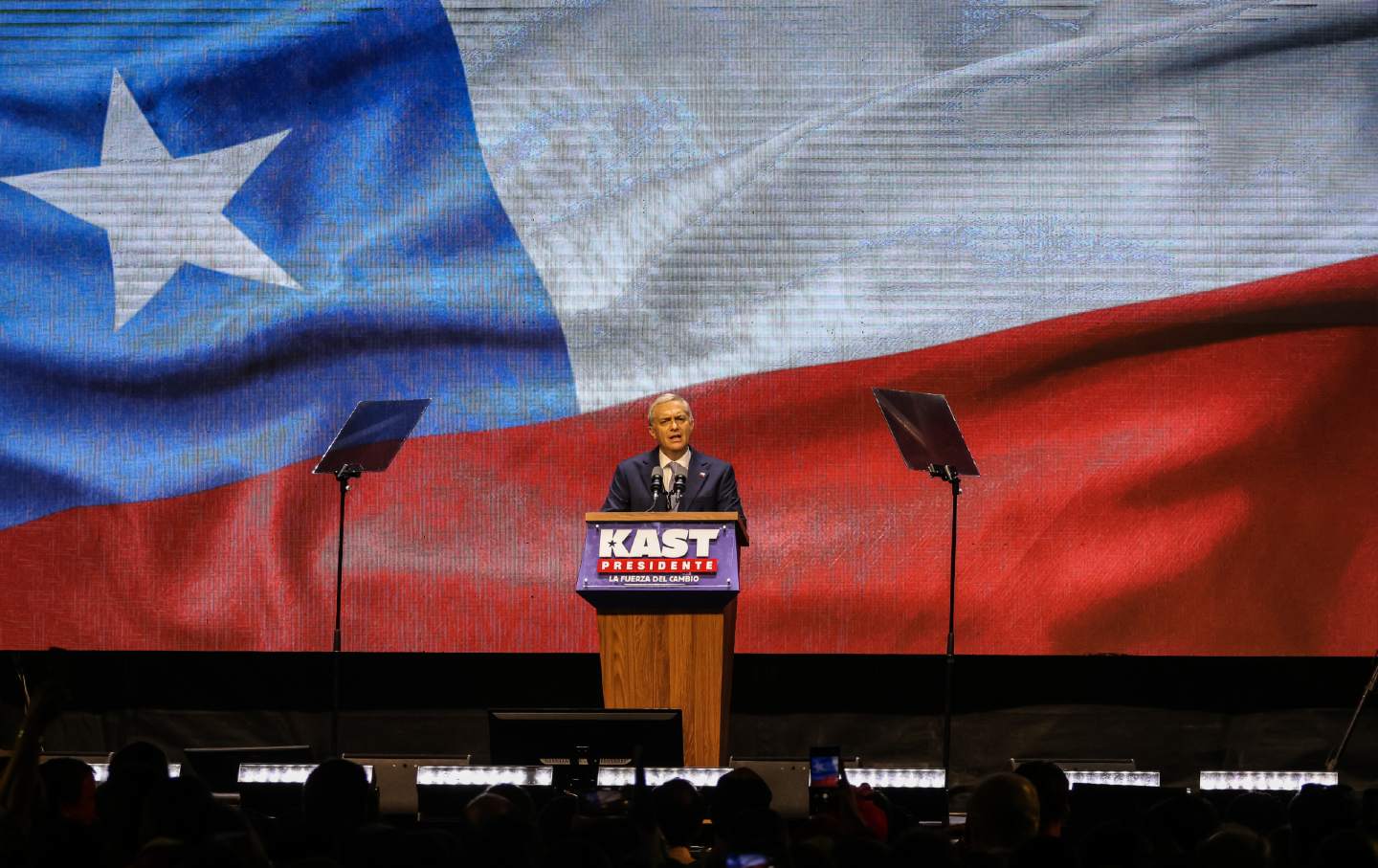
Chile at the Crossroads Chile at the Crossroads
A dramatic shift to the extreme right threatens the future—and past—for human rights and accountability.
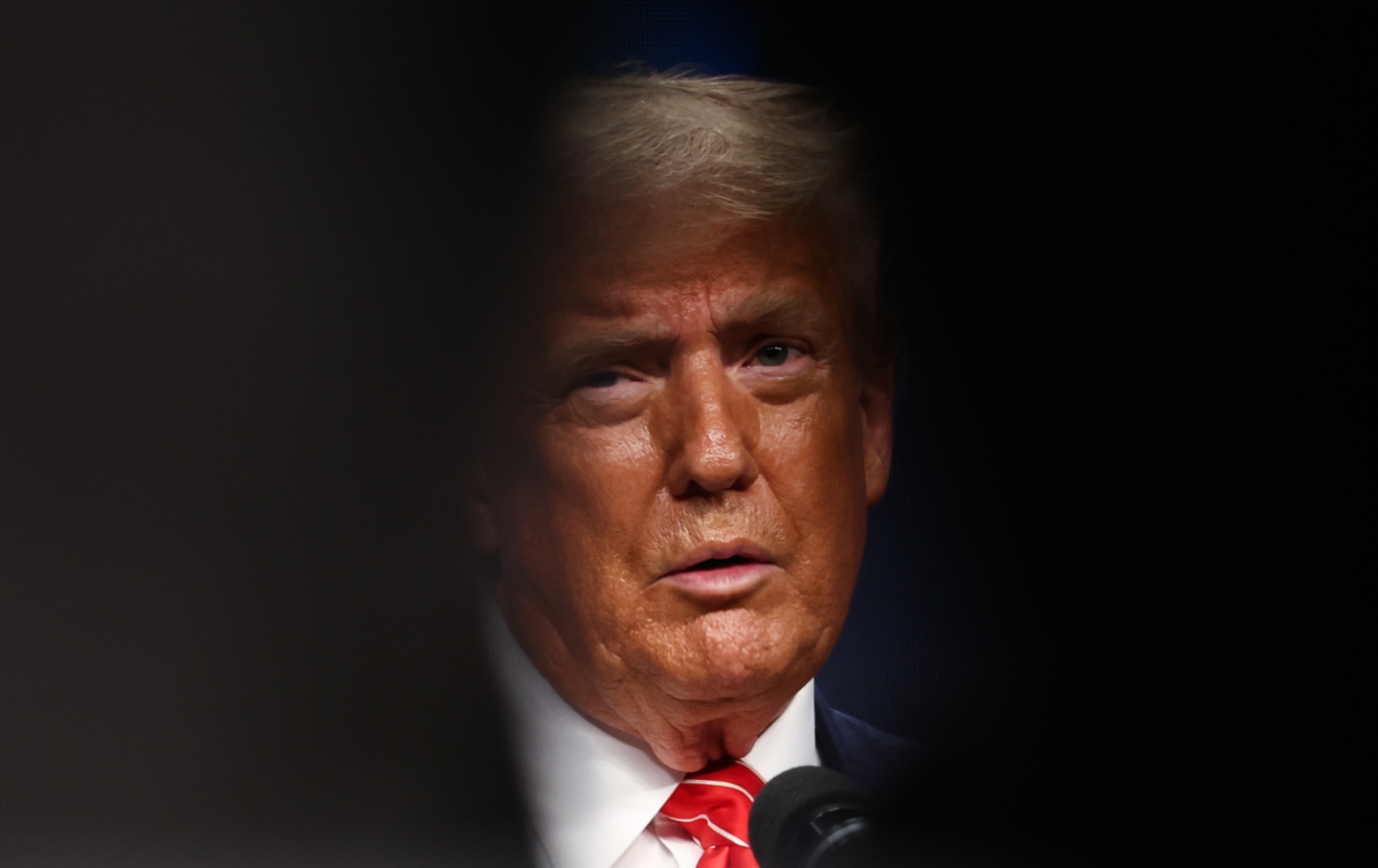
The New Europeans, Trump-Style The New Europeans, Trump-Style
Donald Trump is sowing division in the European Union, even as he calls on it to spend more on defense.
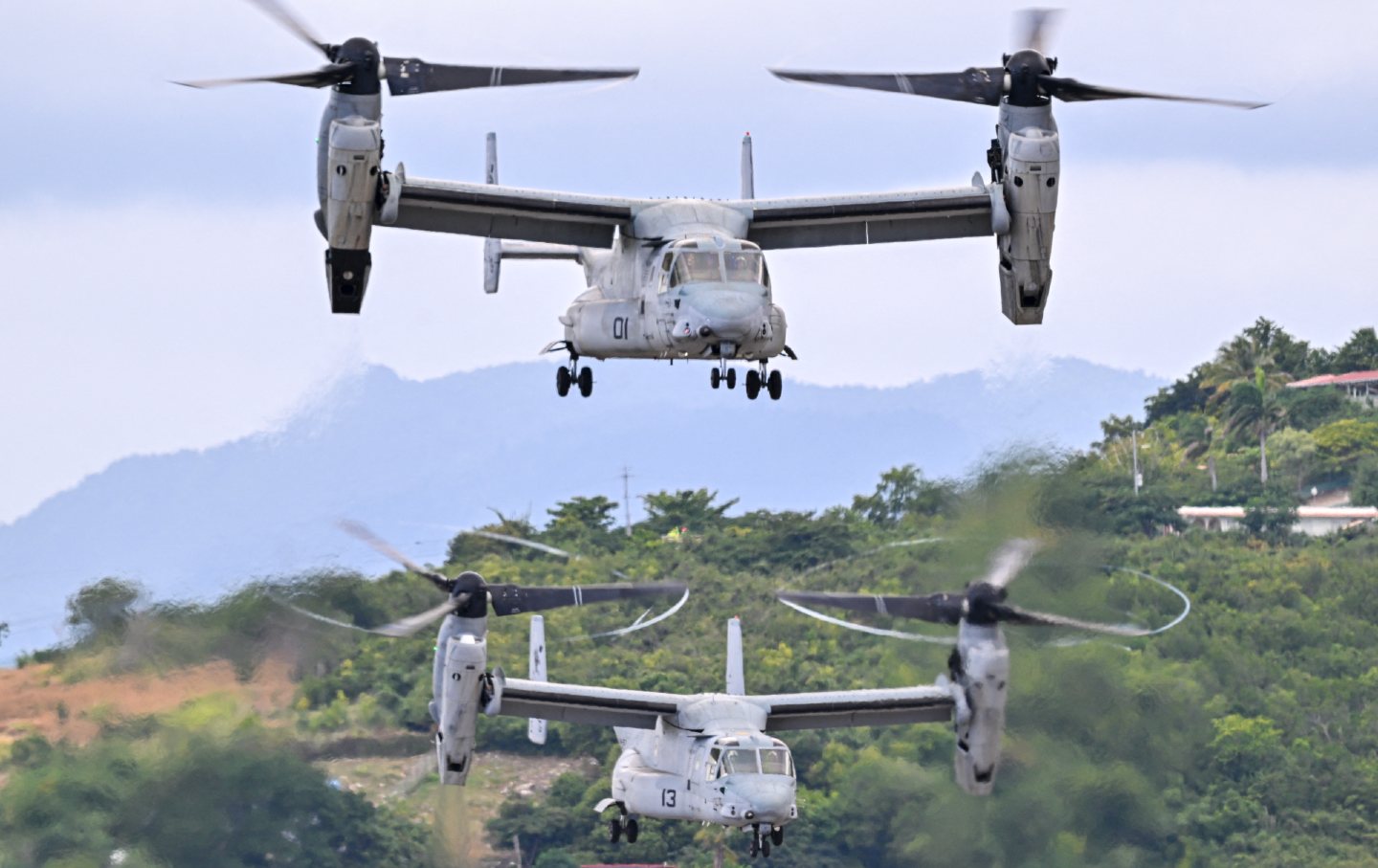
The United States’ Hidden History of Regime Change—Revisited The United States’ Hidden History of Regime Change—Revisited
The truculent trio—Trump, Hegseth, and Rubio—do Venezuela.
Mahmood Mamdani’s Uganda Mahmood Mamdani’s Uganda
In his new book Slow Poison, the accomplished anthropologist revisits the Idi Amin and Yoweri Museveni years.

The US Is Looking More Like Putin’s Russia Every Day The US Is Looking More Like Putin’s Russia Every Day
We may already be on a superhighway to the sort of class- and race-stratified autocracy that it took Russia so many years to become after the Soviet Union collapsed.
Israel Wants to Destroy My Family's Way of Life. We'll Never Give In. Israel Wants to Destroy My Family's Way of Life. We'll Never Give In.
My family's olive trees have stood in Gaza for decades. Despite genocide, drought, pollution, toxic mines, uprooting, bulldozing, and burning, they're still here—and so are we.

