
All Options Are Open in the Papal Conclave
The next leader of the Catholic Church is unlikely to be either a progressive reformer or a hard-line conservative.
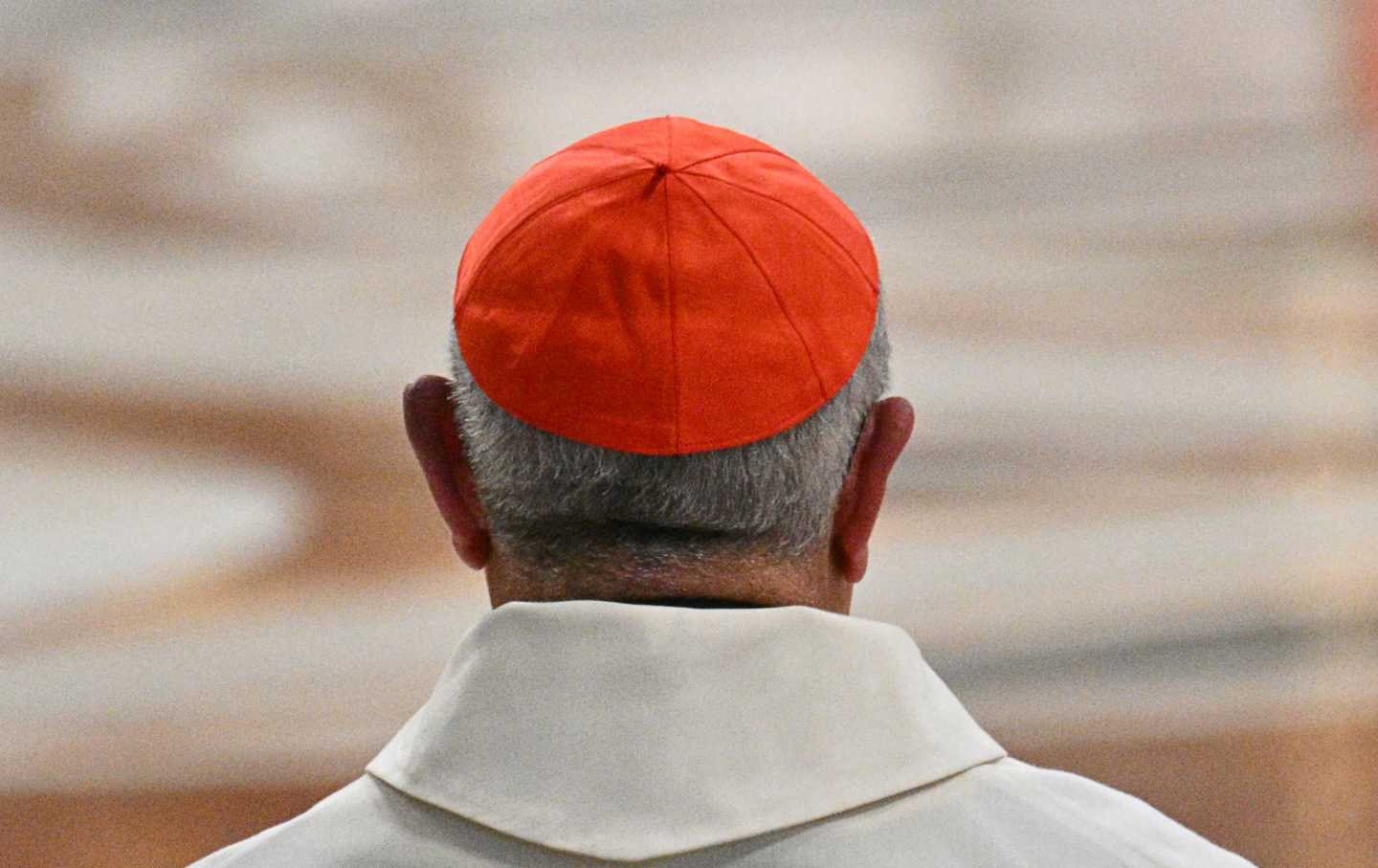
It’s anyone’s game.
(Andreas Solaro / Getty)
Vatican City—Parolin, Tagle, Zuppi, Pizzaballa, Tuckson, Erdö, Aveline, Romero… The flood of names of papabile cardinals (that is, those with plausible shot at the papacy) has grown as the start of the conclave that will elect the next leader of the Catholic Church approaches. This Wednesday the 133 cardinals with the right to vote are secluded in the Sistine Chapel and will not leave until they have selected a successor to Pope Francis, who died on April 21 after 12 years at the head of the Vatican. With no clear front-runners, the only certainty is that the next pope will not be as progressive as the Argentine Jorge Bergoglio, who pushed for reforms to democratize the Catholic Church, took firm measures against corruption and sexual abuse, led a relative openness toward women and LGBTQ people, and defended a clearly progressive discourse on immigration, inequalities, and the climate crisis.
This is the most international conclave in the long history of the Catholic Church, with cardinals from 66 countries, including some that had never had representation in the College of Cardinals, such as Mongolia, Haiti, Cape Verde, or South Sudan. It is the result of Francis’s commitment to opening the church to the “peripheries,” a term he used to refer to both to territories where the Catholic religion is less present and to the most marginalized social sectors, who were represented at his funeral by a group of prisoners, homeless people, refugees, and trans people.
Francis appointed eight out of every 10 of the prelates who will elect the next pontiff, but it is ambiguous how many of them follow Bergoglio’s progressive orientation. Many are outsiders in the Vatican, did not know each other until last week, and an undetermined number of them do not even speak Italian, the language used in the meetings the cardinals hold during the days before the conclave, called General Congregations.
The conclave, in its current form dating back to the 13th century, is a fascinating mix of liturgy and politics, full of historical curiosities and a veneer of secrecy that resists disappearing. In recent days, numerous cardinals have made statements to the press, which is a novelty in the church. One of the most vocal has been the ultraconservative Gerhard Müller, who called the next pope to stand up to the “gay lobby,” in a clear attempt to influence his fellow cardinals. Once they enter the Sistine Chapel, they are isolated from the outside world, but nothing prevents them from using personal opinions or information gathered before the conclave to determine who they want to lead the church in the coming years.
In the General Congregations, both prelates under 80 years old (the only ones with the right to vote in the conclave) and the older ones (who will be excluded from the Sistine Chapel), participate. This time, 12 Congregations have been held, the last on the morning of Tuesday, May 6. There, cardinals from all over the world spoke about the Vatican’s finances, the reforms promoted by Francis to democratize the church, sexual abuse, and other current issues like the climate crisis. Perhaps most importantly, the prelates got a chance to know one another—and to begin forging alliances.
As of the day before the conclave, two candidates seem slightly better positioned than the rest to assume the throne of Peter: the Italian Pietro Parolin and the Filipino Luis Antonio Tagle. The former was Francis’s secretary of state, a figure similar to a prime minister, while the former Archbishop of Manila is known as the “Asian Francis” for his closeness to the Argentine pope’s stances on social justice, migration, environment and—within the conservative standards of the Catholic Church—gender and sexuality. Parolin, known for being a skilled diplomat, was Bergoglio’s right hand, but has a less reformist disposition and in recent years they grew apart. Notably, Francis did not reserve an important role for Parolin during the past Holy Week celebrations nor did he receive him alone during his hospitalization at the Gemelli hospital in February. Seemingly minor gestures like these speak volumes in Vatican politics.
Parolin and Tagle are among the names most mentioned by the media—the Italian newspaper La Stampa claims that the Italian could already have around 40–45 votes—but this very centrality is earning them attacks that could undermine their candidacies. In the case of Parolin, besides the cooling of his relationship with Francis, a rumor has spread that he suffered a fainting spell, denied by Vatican spokespersons. This strategy is not new: Bergoglio himself revealed in an interview that, in the conclave that elected him in 2013, a cardinal approached him to ask if it was true that a lung had been removed—fake information someone had planted to reduce his support. For his part, Tagle has received criticism for his management of Caritas Internationalis, and his allegedly weak reaction to cases of sexual abuse.
Beyond specific names, the cracks in the usual Vatican secrecy allow for identifying some trends. Those in favor of a pope who would continue the path of reforms and openness marked by Francis have in their favor the diversity of origin of the electing cardinals, which in principle reduces the power of the Curia (the Vatican bureaucracy) that so strongly resisted Francis’s democratizing reforms. Their faction is strengthened by the massive turnout at the Argentine pope’s funeral: It is estimated that 400,000 people attended, in addition to the 200,000 who passed through the Church of Santa Maria Maggiore to bid him farewell during the three days the coffin was on display. These figures are comparable to those seen at John Paul II’s funeral, and show the great popularity of the Argentine pope, making it difficult for the cardinals to choose a pontiff who would impose an explicit break from his legacy.
Nevertheless, Bergoglio’s reformism faced combative and well-organized opposition, in which American cardinals like Raymond Burke played a central role. The most traditionalist sectors of Catholicism even called the pope a “heretic” for his relative openness on issues such as homosexuality or divorced couples. It is likely that ultraconservative cardinals like Burke, Müller, and the Guinean Robert Sarah have exerted considerable influence over their peers during the General Congregations and in the discreet meetings that have taken place in houses and restaurants in Rome since Francis’s death.
The only clearly conservative cardinal among the most mentioned papabile by the press is the Hungarian Peter Erdö, close to far-right Prime Minister Viktor Orban, while the rest of the candidates are supporters of Francis or occupy middle positions. This lack of visible conservative candidates has given rise to several hypotheses. According to one of them, the traditionalists would be willing to support the malleable Parolin in exchange for his appointing Erdö as secretary of state, an agreement that has been denied by the former. Another theory is that the conservatives are hiding their candidate to avoid his being burned—as is somewhat happening to Parolin and Tagle—and that they will reveal him only in the conclave, once it is verified that none of the current front-runners is able to gather the 89 votes (two-thirds of the total) necessary to be elected.
Amid so much uncertainty, only very general predictions can be made about the outcome of the conclave: Francis’s successor will be neither a clear continuer of his papacy, as disruptive as the Argentine, nor an explicit opponent. The cardinals will more likely choose a middle-profile candidate, who rhetorically acknowledges some advances of Bergoglio’s papacy while in practice moderates or even blocks the reforms and doctrinal openness promoted by the first Jesuit pope. It also seems unlikely that the next pontiff will have a discourse as openly political and progressive as Francis, who captivated a large part of the global left with his harsh attacks on “savage capitalism” or against the “grave sin” of “expelling immigrants.”
Donald Trump will not be pope, as he apparently would like, and probably will not have a pontiff fully aligned with his ultraconservative agenda either. However, everything indicates that the Vatican will cease to be a political actor actively opposed to the far right, as it was during Francis’s papacy.
Become a Sustaining Donor This September
Between the reemergence of right-wing red-baiting and Donald Trump’s use of the chilling National Security Presidential Memorandum–7 to criminalize left political organizing, we’re seeing McCarthyism reborn before our eyes.
This assault on democracy cannot be ignored or wished away. Resisting it requires bravery in the face of threats and repression, a steadfast commitment to the truth, and the unwavering belief that we can—and will—overcome this darkness.
We must have an independent media that sets the record straight, unearths corruption and abuses of power, and advances a politics of justice and dignity for all if we’re to win this fight.
That’s why I’m writing to you today. This September, The Nation needs to add 100 monthly donors to sustain our progressive journalism. Your contribution makes the next investigative report, the next truth-speaking column, and the next pathbreaking essay all possible.
I hope you’ll support our work with a recurring donation today. If you donate $10 or more a month, we’ll send you a brand new “Hands Off the Free Press!” sticker to recognise your commitment to our cause. Please, donate today.
Onward,
Katrina vanden Heuvel
Editor and Publisher, The Nation
More from The Nation
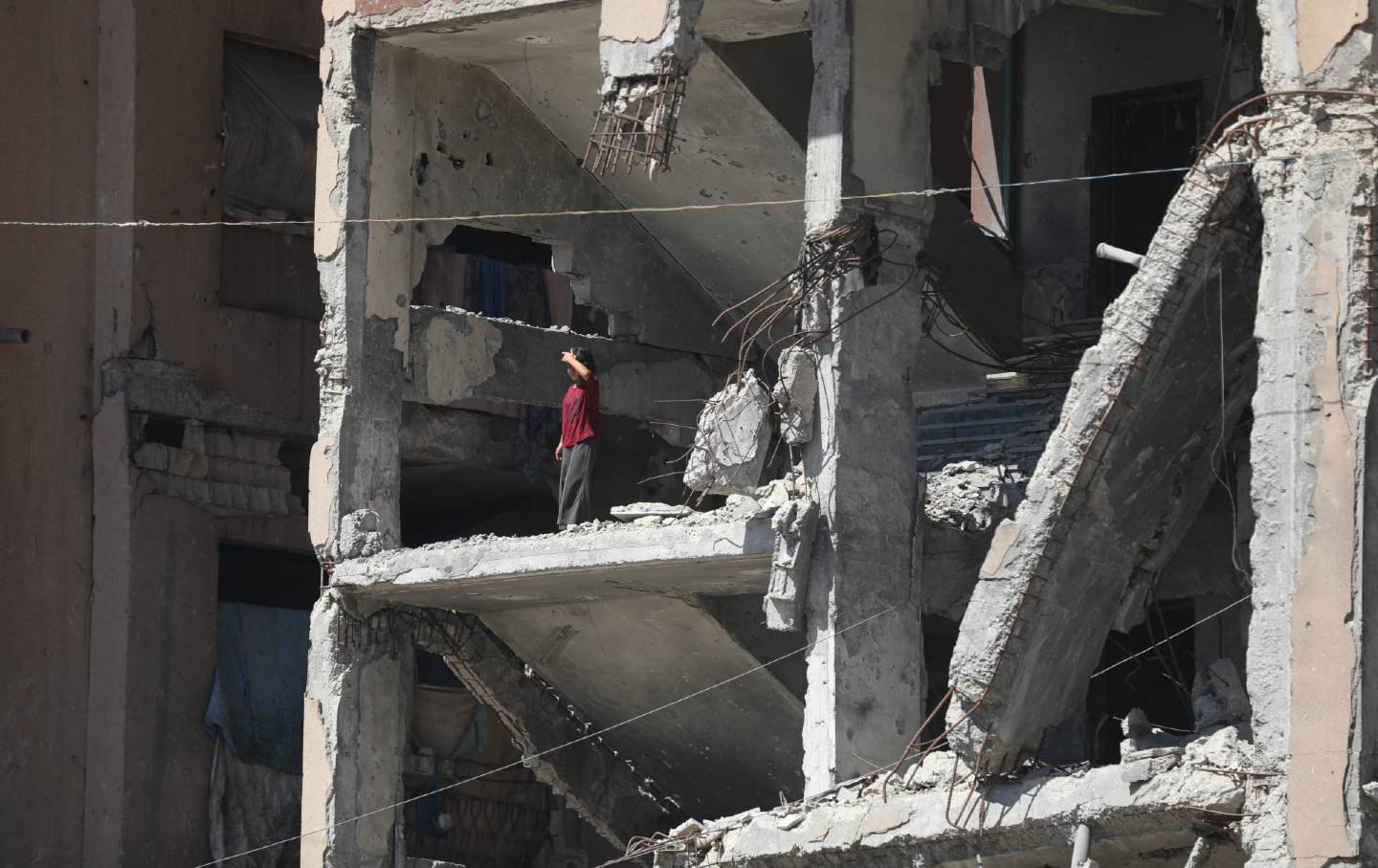
Israel’s Election Can’t Fix What Netanyahu Broke Israel’s Election Can’t Fix What Netanyahu Broke
The fundamental problem is not the name of the prime minister, but rather the actions of the Israeli government and the urgent issues that need to be addressed.
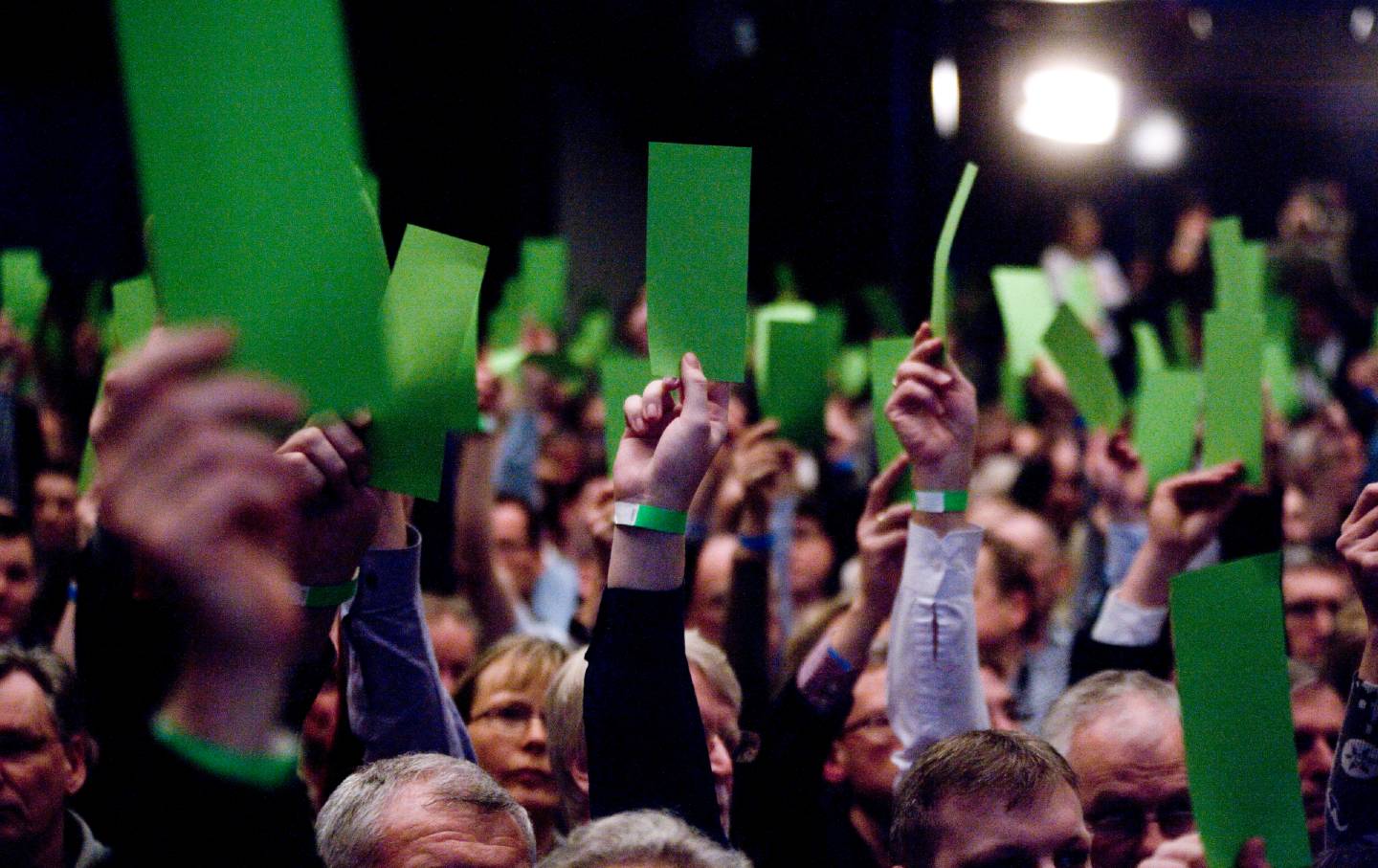
The AfD’s Rise Isn’t Just About East Germany The AfD’s Rise Isn’t Just About East Germany
The Alternative für Deutschland has a stable national poll lead, including in the former West Germany. Its rise owes to much more than Eastern grievances.
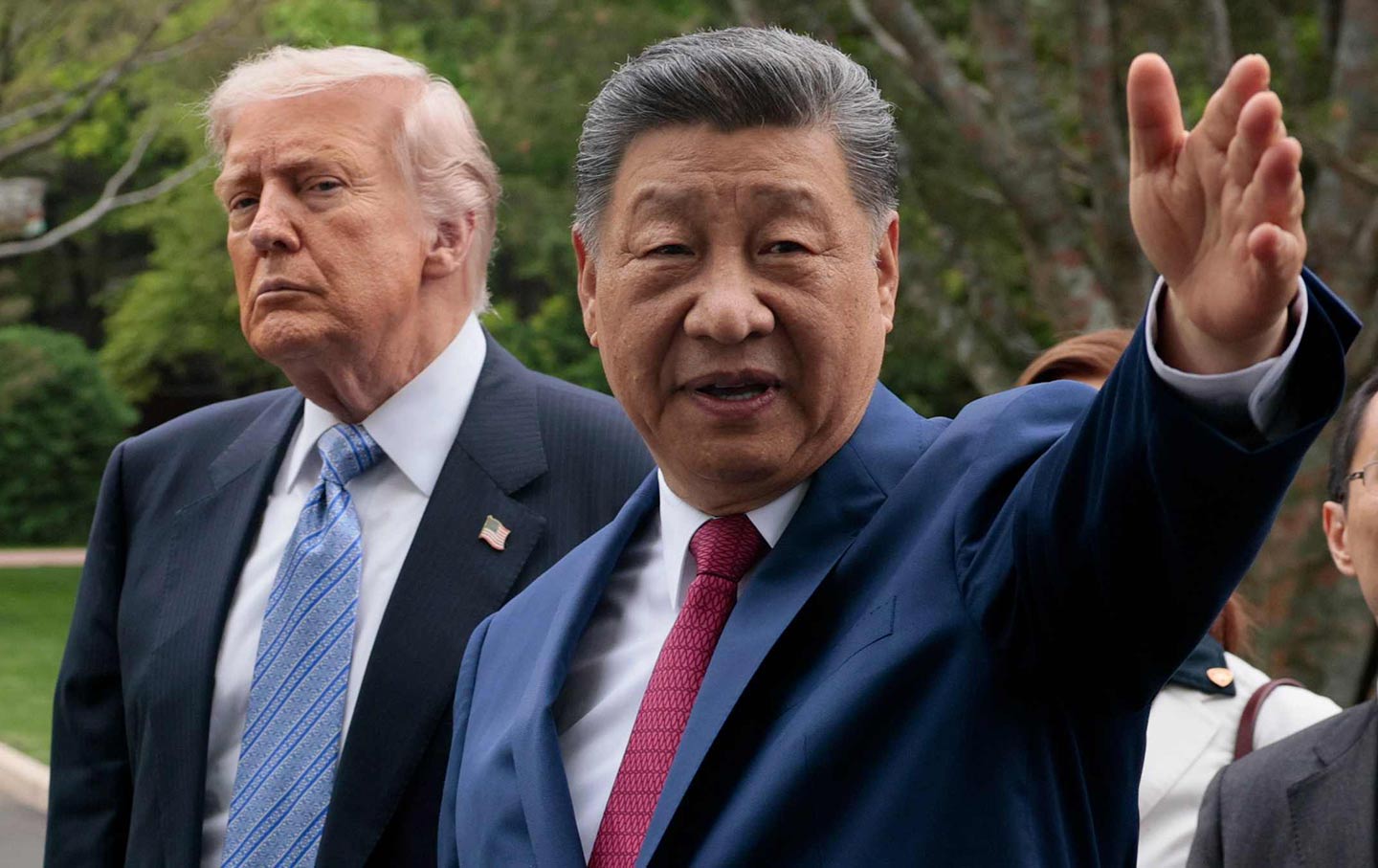
Chinese Development Is the Betrayal Washington Cannot Forgive Chinese Development Is the Betrayal Washington Cannot Forgive
The prospects for Xi Jinping’s visit are dim because American leaders are blaming China for the failures of globalization.
Pinochet: The Verdict of History in the Letelier-Moffitt Case Pinochet: The Verdict of History in the Letelier-Moffitt Case
An act of international terrorism on the streets of Washington, DC, still reverberates 50 years later.
How to Arrest Benjamin Netanyahu How to Arrest Benjamin Netanyahu
Make no mistake: The United States can seize Netanyahu for crimes under US law and prosecute him in US courts when he is in New York City this week.
In the Age of AI, Nuclear Weapons Abolition Is a Renewed Imperative In the Age of AI, Nuclear Weapons Abolition Is a Renewed Imperative
As long as we have nuclear weapons, the job of ending humanity will continue to be as easy as the push of a button—or an AI agent hacking into a nuclear command-and-control system...

