
Democracy Dies at “The Washington Post”
…and oligarchy lives.
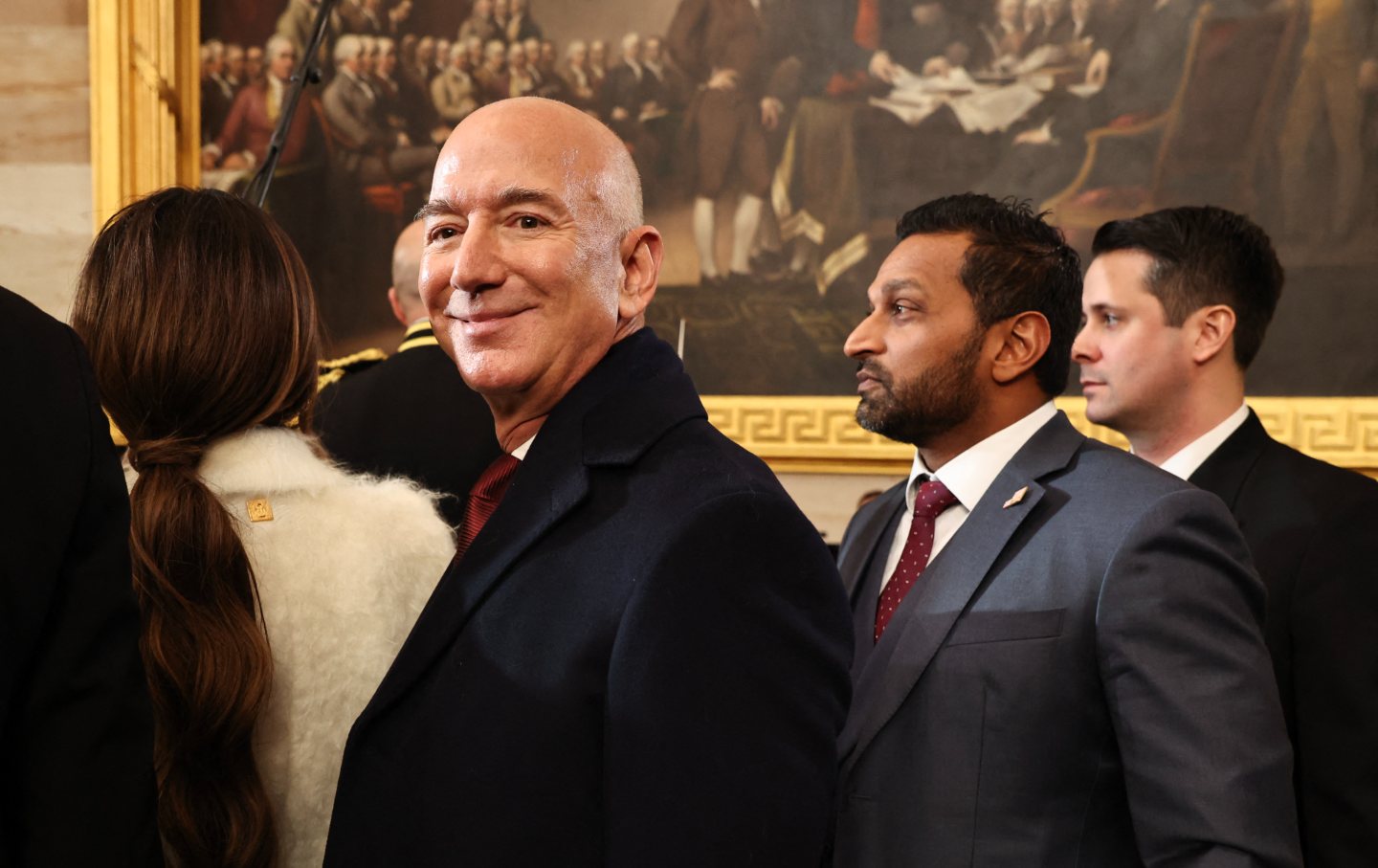
Jeff Bezos at the inauguration of Donald Trump on January 20, 2025.
(Chip Somodevilla / Pool / AFP via Getty Images)The third-wealthiest man in the world, fresh from his appreciative appearance at the presidential inauguration of a lesser billionaire whose policies would all but guarantee untold increases in the fortunes of an emerging American oligarchy, expressed frustration on Wednesday that viewpoints advocating for his brand of capitalism “are underserved in the current market of ideas and news opinion.”
Anyone who consumes America’s corporate-owned—and for the most part corporate-friendly—media with even minimal frequency will be excused for wondering what the heck Jeff Bezos was talking about. But that’s how the Amazon founder tried to justify his decision to turn his Washington Post into an engine of über-capitalist advocacy: by suggesting that the ideals of the billionaire class just don’t get enough attention in the national discourse.
Similarly, Americans who nostalgically embrace the nation’s historic record of skepticism toward what Thomas Jefferson dismissed as “tinsel-aristocracy” and Frankin Roosevelt decried as “economic royalism” may be forgiven for asking, with regard to a tycoon who is already worth more than $225 billion, “What more does Bezos want?”
But serious observers of the American crisis as it has been unfolding in recent decades will agree with the assessment from US Senator Bernie Sanders (I-VT), who explains, “These oligarchs are not only happy to have huge amounts of money. They want more. I know, we all know, that addiction in America—drug addiction, alcohol addiction, cigarette addiction, all that stuff, is a big deal. I’ll tell you about the most serious addiction problem we have in this country: That is the uncontrollable greed of this billionaire class.”
Say what you will about Bezos. But don’t fail to recognize that he is a savvy oligarch who—like his seat mate at Donald Trump’s inauguration, No. 1 billionaire Elon Musk—understands that information and ideas are valuable commodities, which can be manipulated to decide the direction of even quasi-democratic states.
Bezos knows that if voters are too aware of rampant inequality and what historian Timothy Snyder refers to as “the bait-and-switch” fraud of shadow president Musk’s Robin-Hood-in-reverse (take from the poor, give to the rich) restructuring of federal priorities, they might be inclined to reject the path of plutocracy. So Bezos has decided to put his thumb on the scales of the debate, as the owner of one of the most identifiable, and historically influential, newspapers in the United States.
In a memo to Post staffers on Wednesday morning, Bezos decreed that the paper’s opinion section would be reworked to exclusively serve as the mouthpiece for the sort of unrestricted monopoly capitalism that has allowed sons of privilege like Bezos, and Musk, and Trump to accumulate unimaginable wealth and power based on the “special privilege” that Theodore Roosevelt once warned could give “one man or class of men the right to enjoy power, or wealth, or position, or immunity” at the expense of society—and might see this economic elite “twist the methods of free government into machinery for defeating the popular will.”
In an effort to twist that machinery as only a media baron can, Bezos has initiated the sort of sweeping “change”—or should we say “abandonment of principles”—that Rupert Murdoch implemented when he bought the New York Post from its liberal publisher, Dorothy Schiff in 1976. Murdoch transformed a newspaper that had proudly endorsed George McGovern in 1972, because of “his consistent record of progressivism,” into a reactionary journal that from 1980 onward endorsed right-wing Republicans for the presidency.
The Washington Post was never quite as progressive as the old New York Post. But its opinion pages have for many decades featured a range of ideas, even going so far as to publish editorials that can be read as criticisms of über-capitalism and rampant inequality.
No longer. Now, Bezos says, “We are going to be writing every day in support and defense of two pillars: personal liberties and free markets. We’ll cover other topics too of course, but viewpoints opposing those pillars will be left to be published by others.”
“I am of America and for America, and proud to be so,” Bezos continued. “Our country did not get here by being typical. And a big part of America’s success has been freedom in the economic realm and everywhere else. Freedom is ethical— it minimizes coercion—and practical—it drives creativity, invention, and prosperity.”
Most Americans would surely agree that support for personal liberties is commendable, and defenders of the Post can point to a long record of editorial-board enthusiasm for constitutional rights and prerogatives in the face of governmental overreach—both when the newspaper tangled with Richard Nixon during the Watergate era, and more recently in its steady objection to the excess of Trump and Musk.
Never mind the glaring irony of extolling freedom in an announcement about your intention to take away the freedom of employees Bezos once encouraged to exercise editorial independence. What happens when personal liberties, such as the right to form a union at an Amazon warehouse, come into conflict with the sort of corporate overreach that is often championed as “freedom in the economic realm”? And what happens when the language of “free markets” is warped to defend monopoly capitalism as it is practiced by Bezos and his Amazon empire?
The answer to those questions, it appears, has come from David Shipley, the veteran journalist who had helmed the paper’s editorial pages since 2022—and who put up with Bezos’s bizarre decision in the fall of 2024 to not endorse the presidential bid of Democrat Kamala Harris, despite the fact that the paper’s editorials had for months outlined a range of policy arguments for embracing Harris’s bid and rejecting Trump’s campaign for a second term. “I offered David Shipley, whom I greatly admire, the opportunity to lead this new chapter,” wrote Bezos in his missive. “I suggested to him that if the answer wasn’t ‘hell yes,’ then it had to be ‘no.’ After careful consideration, David decided to step away. This is a significant shift, it won’t be easy, and it will require 100% commitment—I respect his decision. We’ll be searching for a new Opinion Editor to own this new direction.”
There will be plenty of candidates. Despite Bezos’s assertion that his viewpoints “are underserved in the current market of ideas and news opinion,” the American media landscape is populated by more than enough defenders of the billionaire class and its political agenda. The Wall Street Journal is still publishing. So are most of the daily newspapers that have over the years embarrassed themselves by championing neoliberalism at home—in the form of trade deals that harm workers and the environment, crooked schemes for the privatization of government services, and deficit-bloating tax cuts for the wealthy—and neoconservatism abroad. And then there are all the financial-network cable commentators, radio hosts, podcasters, and online personalities who have created a cacophony of cheerleading for precisely the program that Bezos, Musk, and Trump are peddling. America’s media platforms are awash in sycophantic advocacy for redistributing wealth upward, as is the White House and the Congress.
Popular
“swipe left below to view more authors”Swipe →The upending of the Washington Post opinion section will not free up or expand the economic debate in the United States. It will only remove the measure of skepticism that sometimes crept into the commentary from the Post editorial board.
What will happen now is that the billionaire class’s already well-amplified echo chamber will grow louder —as it seeks to outshout the voices of the union organizers, consumer activists, civil rights campaigners, and advocates for progressive taxation who aspire to make real the American promise of both political and economic democracy.
After Bezos purchased the Post in 2013—for a modest quarter billion dollars—he promised editorial independence. When Trump began his first presidential term in 2017, Bezos was by all accounts supportive of the decision of Post editors to adopt the slogan “Democracy Dies in Darkness.”
When Bezos ordered the paper to go dark with regard to its preference in the 2024 presidential election, critics from within the Post and without called into question the billionaire’s commitment to that journalistic worldview. Now that Bezos has forced the paper to adopt an editorial vision that extends from his own self-interest, and from his enthusiasm for second-term agenda of the Trump-Musk administration, surely it is time for a new slogan: “Oligarchy Lives at The Washington Post.”
Become a Sustaining Donor This September
Between the reemergence of right-wing red-baiting and Donald Trump’s use of the chilling National Security Presidential Memorandum–7 to criminalize left political organizing, we’re seeing McCarthyism reborn before our eyes.
This assault on democracy cannot be ignored or wished away. Resisting it requires bravery in the face of threats and repression, a steadfast commitment to the truth, and the unwavering belief that we can—and will—overcome this darkness.
We must have an independent media that sets the record straight, unearths corruption and abuses of power, and advances a politics of justice and dignity for all if we’re to win this fight.
That’s why I’m writing to you today. This September, The Nation needs to add 100 monthly donors to sustain our progressive journalism. Your contribution makes the next investigative report, the next truth-speaking column, and the next pathbreaking essay all possible.
I hope you’ll support our work with a recurring donation today. If you donate $10 or more a month, we’ll send you a brand new “Hands Off the Free Press!” sticker to recognise your commitment to our cause. Please, donate today.
Onward,
Katrina vanden Heuvel
Editor and Publisher, The Nation
More from The Nation
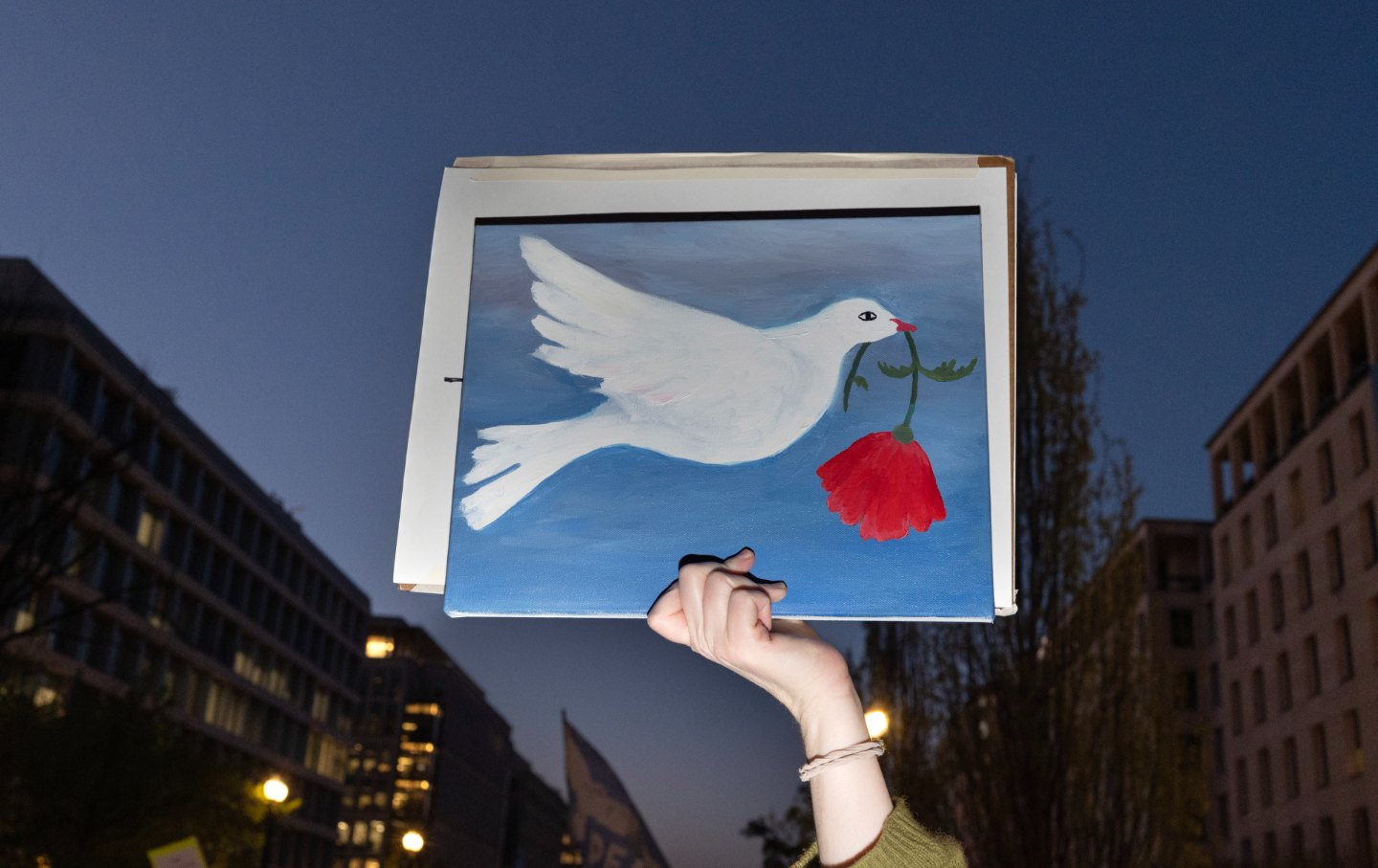
As Morale Sags, More Military Service Members Are Having a Crisis of Conscience As Morale Sags, More Military Service Members Are Having a Crisis of Conscience
According to multiple GI rights organizations, service members are inquiring in unprecedented numbers about seeking conscientious objector status.
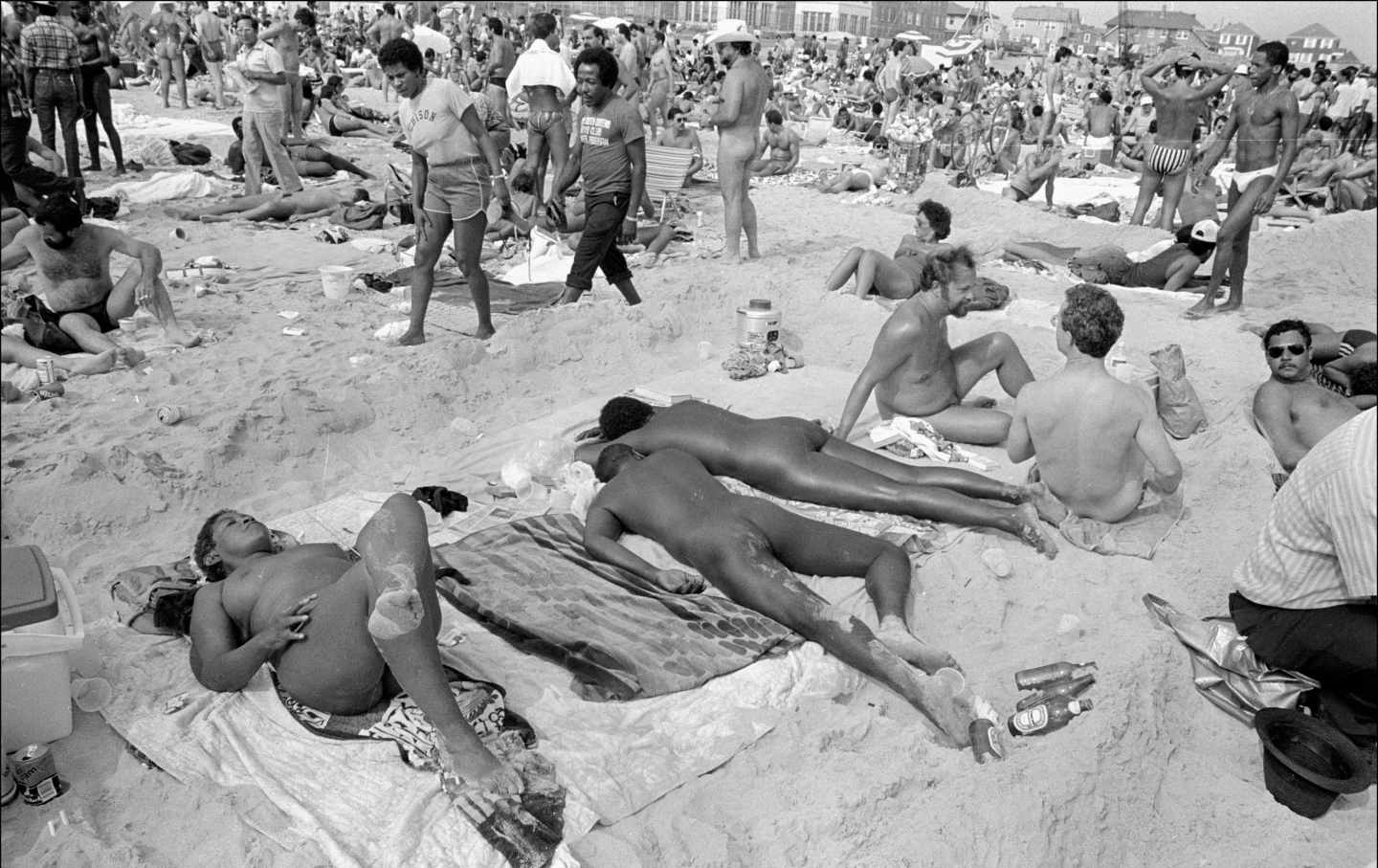
What Remains of Riis? What Remains of Riis?
A new members’ club has revived Riis Park’s long-vacant bathhouse, reopening old questions about whom the People’s Beach is really for.

When Texas Sex Ed Falls Short, Gen Z Women Turn to Social Media When Texas Sex Ed Falls Short, Gen Z Women Turn to Social Media
A 2025 study found that 70 percent of adolescents sought reproductive health information through social media platforms.
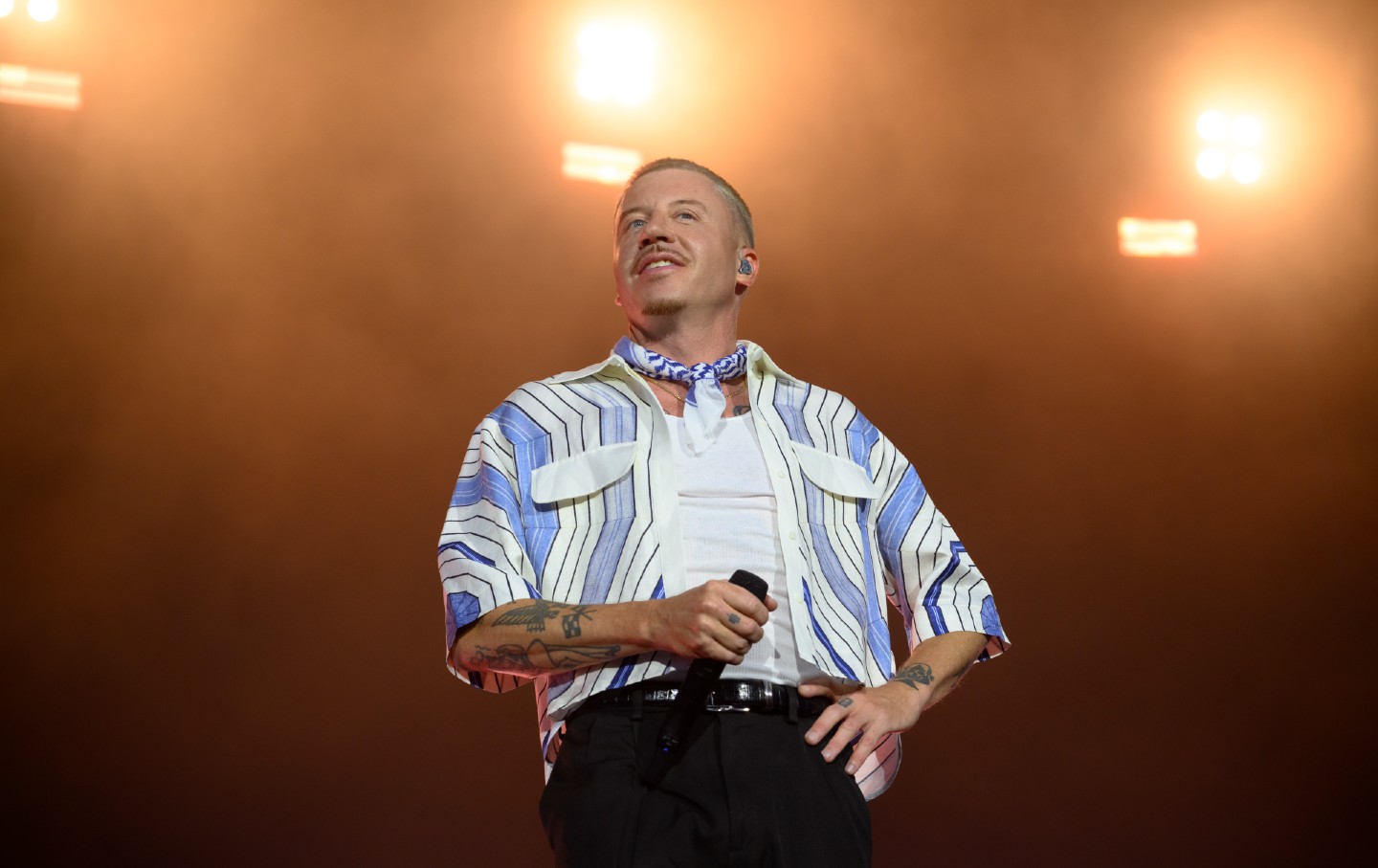
Justice for Macklemore Justice for Macklemore
The rapper has been dumped from Ed Sheeran’s tour for saying “free Palestine.” That’s a disgrace.
We Are Living Under Roy Cohnian Logic We Are Living Under Roy Cohnian Logic
The political fixer created a career for himself as a self-promoting, ubiquitous hustler. Like Trump, he got away with it by having the right friends.
Time Has Run Out for AI Risk Deniers Time Has Run Out for AI Risk Deniers
The recent spate of reports about the technology’s destructive power underline two prime directives: Be afraid, and regulate aggressively.

