
What Does the Future Hold for Syrian Kurds Post-Assad?
NATO ally Turkey has emerged as the dominant state power in a new Syria, and is seeking to press its advantage by bombing and occupying more Kurdish territory.
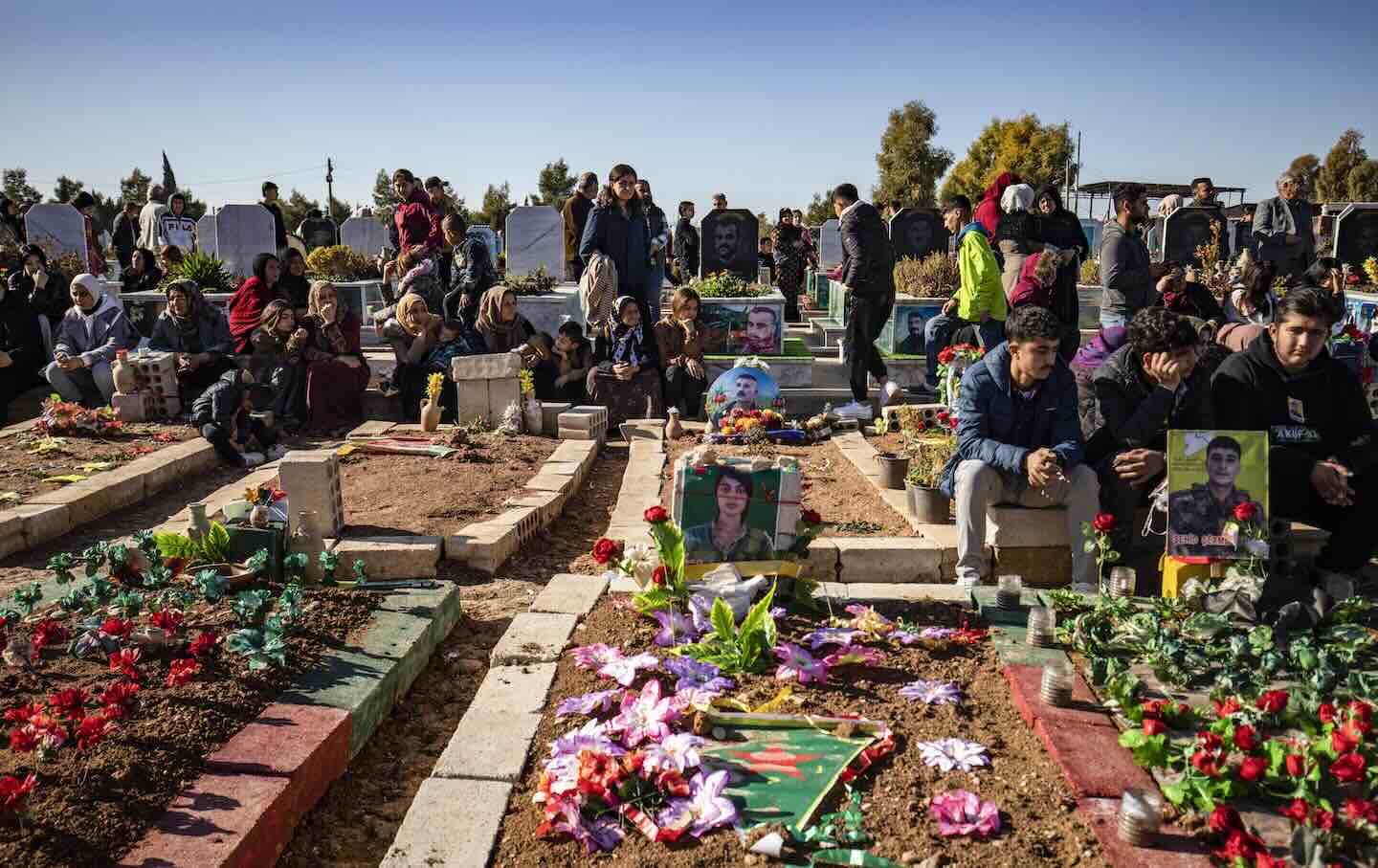
Mourners attend the funeral in Qamishly of two Kurdish Syrian Democratic Forces fighters, killed days earlier in battle with Turkish-backed Syrian forces in the northern city of Manbij, on January 2, 2025.
(Delil Souleiman / AFP)
The all-female Syrian Kurdish fighting force, the Women’s Protection Units (YPJ), achieved worldwide fame in 2014 as it began to win a series of unlikely victories against ISIS, launching an equally unexpected partnership between the United States–led International Coalition to Defeat ISIS and the leftist Kurdish movement. Ten years later, the Syrian crisis has suddenly roared back into global prominence, as the Al Qaeda offshoot Hay’at Tahrir al-Sham (HTS) launched a blitzkrieg assault beginning in late November of last year that culminated in the December 8 ouster of hated dictator Bashar al-Assad. The celebration was short-lived, however, as Turkey has sought to take advantage of a post-Assad power vacuum to ramp up attacks that it hopes will bring an end to the progressive Kurdish-led autonomous region on its southern border. “Thousands of our forces were killed and wounded to protect the world from ISIS,” said YPJ spokesperson Ruksen Mohammed, speaking to The Nation from the de facto Syrian Kurdish capital, Qamishlo, a week after Assad’s fall. “But now the world is silent in the face of attacks by Turkey and its proxy militias, allowing ISIS to strengthen once again.”
There was no love lost between Assad and the Kurds. Father and son both repressed the Kurdish identity and jailed, tortured, and killed many Kurdish activists over the years. Yet the Kurdish movement also suffered at the hands of the Islamist forces, which rapidly captured the pro-democratic Syrian revolution. The Kurds’ project long claimed to offer a third-way alternative in Syria, beyond both authoritarian Islamist forces like ISIS and HTS and the yet more brutal Assad regime. “We are the only example of a secular, multi-ethnic governing structure in Syria, and we have proven our model over the last ten years,” Sinam Mohammed, the top Syrian Kurdish diplomatic representative in Washington, told The Nation in a statement.
Spearheaded by the YPJ, the broader social and political movement has spent the past decade patiently building a tentative multiethnic coalition of millions of Arabs, Kurds, and other minorities in the so-called Autonomous Administration of North and East Syria (AANES). The coalition is guided by principles of municipal democracy, women’s autonomy, and minority representation. While not without its flaws, the project has weathered attacks by ISIS, Assad loyalists, and Turkey to guarantee relatively high standards of humanitarian provision, rule of law, and community self-determination.
As the dust settles on a half century of rule by the Assad family, it might seem the perfect opportunity for the AANES to link up with other opposition forces throughout Syria and continue the pragmatic approach it has demonstrated through reaching unexpected accommodations with conservative tribal forces in rural Arab regions that were previously ISIS strongholds. But Turkey—which has long repressed the Kurdish identity and fought a bloody war against militant Kurdish guerrillas, and is bitterly opposed to the project in Kurdish-led autonomy on its southern border—is determined to see the Kurdish-led administration reduced to dust.
Throughout HTS’s advance, Turkish air strikes pounded not Assad’s retreating army but rather the Syrian Kurds and their allies, killing whole civilian families and creating room for Turkish-funded, Turkish-directed, Turkish-armed militias united under the banner of the Syrian National Army (SNA) to seize territory from the AANES.
Militias in the SNA have long been accused by the United Nations, the US government, and Amnesty International of war crimes, including raping women, committing mass killings against Kurdish civilians, and torturing, electrocuting, and executing civilians. During prior Turkish military campaigns, these militias killed hundreds—and displaced hundreds of thousands—of civilians.
Now, Turkey sees an opportunity to finish what it started. In the city of Manbij, which Turkey captured in the days after Assad fell, “militiamen are storming civilian homes, particularly the homes of former employees of the AANES,” says a local still in the city, speaking anonymously for fear of armed reprisals. Many of these militiamen have never fired a shot in anger against Assad. Rather, key NATO ally Turkey has emerged as the dominant state power in a new Syria, and is seeking to press its advantage by bombing and occupying more Kurdish territory in the country’s north, in parallel with Israel’s land-grab over the southern border. Sixty-nine civilians have been killed and tens of thousands displaced in the ongoing offensive, with fighting currently concentrated at crossings over the Euphrates river, including the Tishrin Dam, a key piece of hydroelectric energy infrastructure that provides power to much of Syria’s northeast.
The Syrian Kurds have long relied on a fragile power balance between the United States, Russia, Turkey, and Iran to retain their autonomous project in the northeast. But there’s now only a small US presence in the region, part of the ongoing anti-ISIS mission, keeping Turkey from sweeping through and cementing its occupation. During his last presidency, Donald Trump greenlighted a prior Turkish invasion in a sop to Turkey’s autocratic President Tayyip Erdoğan, and is understood to have little interest in preserving the US mission on Syrian soil.
There are no easy answers in Syria.
Meanwhile, HTS’s rule will undoubtedly be an improvement on Assad, responsible for the vast bulk of the deaths in the Syrian conflict—but women, minority groups, and opposition figures all face marginalization and exclusion at the very least under a deeply authoritarian organization, which has jailed thousands of journalists and activists, and ruthlessly executed its internal rivals. It remains to be seen how serious HTS’s talk of respecting minorities and basic rights in the new Syria is, and Western powers may regret falling over themselves to recognize the new and supposedly technocratic administration in Damascus.
But amid the chaos and uncertainty, argues Syrian Kurdish diplomat Sinam Mohammed, there are several key steps the US authorities can take to guarantee the Kurds a place in a better Syria—none of which require further armed intervention. First, the AANES (which currently controls a third of Syrian territory) must be allowed to participate in negotiations over Syria’s future. Turkey has vetoed AANES participation in prior rounds of negotiations, but US-brokered HTS-AANES talks are entirely in line with the crucial UN Security Council Resolution 2254 and could be achieved as a condition of continued sanctions relief on Syria. Second, the US must “use all available levers to ensure a ceasefire with Turkey, and ideally a deal leading to a full cessation of Turkey’s cross border campaign,” for example by leveraging the threat of Magnitsky sanctions against Turkish officials. Third, Mohammed calls on the US to provide the Kurdish-led armed forces “with the necessary means to defend ourselves,” likely through increasing the annual provision allocated to the AANES military wing via the Pentagon. And fourth, use the same channel plus collaborate with the US’s European allies in the anti-ISIS Coalition to provide the AANES with the resources to deal with the tens of thousands of ISIS gunmen, female ISIS affiliates. and their innocent yet often deeply radicalized children whom the embattled and impoverished administration is currently holding on behalf of its nominal global allies.
And Ruksen Mohammed, the YPJ spokeswoman, argues that it would be sufficient to close the airspace over northern Syria, preventing NATO’s second-largest army from bringing its vastly superior airpower against the otherwise defenseless Kurds.
The Syrian Civil War was among the 21st century’s deadliest conflicts and worst humanitarian disasters. With Assad gone, there’s a golden opportunity for Syrians to work together and build a new country among the ruins. But though Turkey speaks of peace and Syrian-led solutions, its warplanes continue to circle over Kurdish regions of Syria, and the new Syria has already been bathed in blood.
Become a Sustaining Donor This September
Between the reemergence of right-wing red-baiting and Donald Trump’s use of the chilling National Security Presidential Memorandum–7 to criminalize left political organizing, we’re seeing McCarthyism reborn before our eyes.
This assault on democracy cannot be ignored or wished away. Resisting it requires bravery in the face of threats and repression, a steadfast commitment to the truth, and the unwavering belief that we can—and will—overcome this darkness.
We must have an independent media that sets the record straight, unearths corruption and abuses of power, and advances a politics of justice and dignity for all if we’re to win this fight.
That’s why I’m writing to you today. This September, The Nation needs to add 100 monthly donors to sustain our progressive journalism. Your contribution makes the next investigative report, the next truth-speaking column, and the next pathbreaking essay all possible.
I hope you’ll support our work with a recurring donation today. If you donate $10 or more a month, we’ll send you a brand new “Hands Off the Free Press!” sticker to recognise your commitment to our cause. Please, donate today.
Onward,
Katrina vanden Heuvel
Editor and Publisher, The Nation
More from The Nation

The AfD’s Rise Isn’t Just About East Germany The AfD’s Rise Isn’t Just About East Germany
The Alternative für Deutschland has a stable national poll lead, including in the former West Germany. Its rise owes to much more than Eastern grievances.
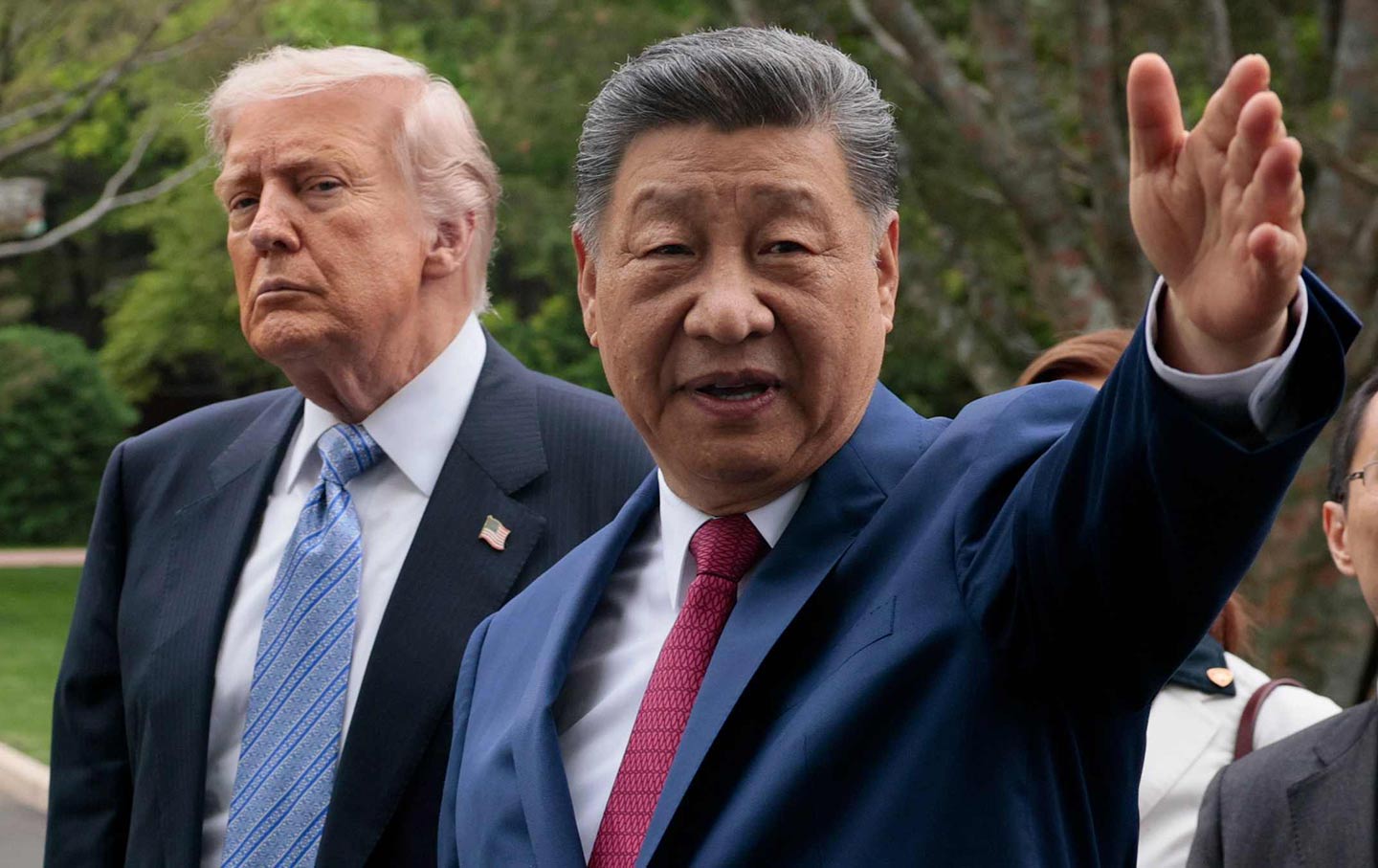
Chinese Development Is the Betrayal Washington Cannot Forgive Chinese Development Is the Betrayal Washington Cannot Forgive
The prospects for Xi Jinping’s visit are dim because American leaders are blaming China for the failures of globalization.

Pinochet: The Verdict of History in the Letelier-Moffitt Case Pinochet: The Verdict of History in the Letelier-Moffitt Case
An act of international terrorism on the streets of Washington, DC, still reverberates 50 years later.
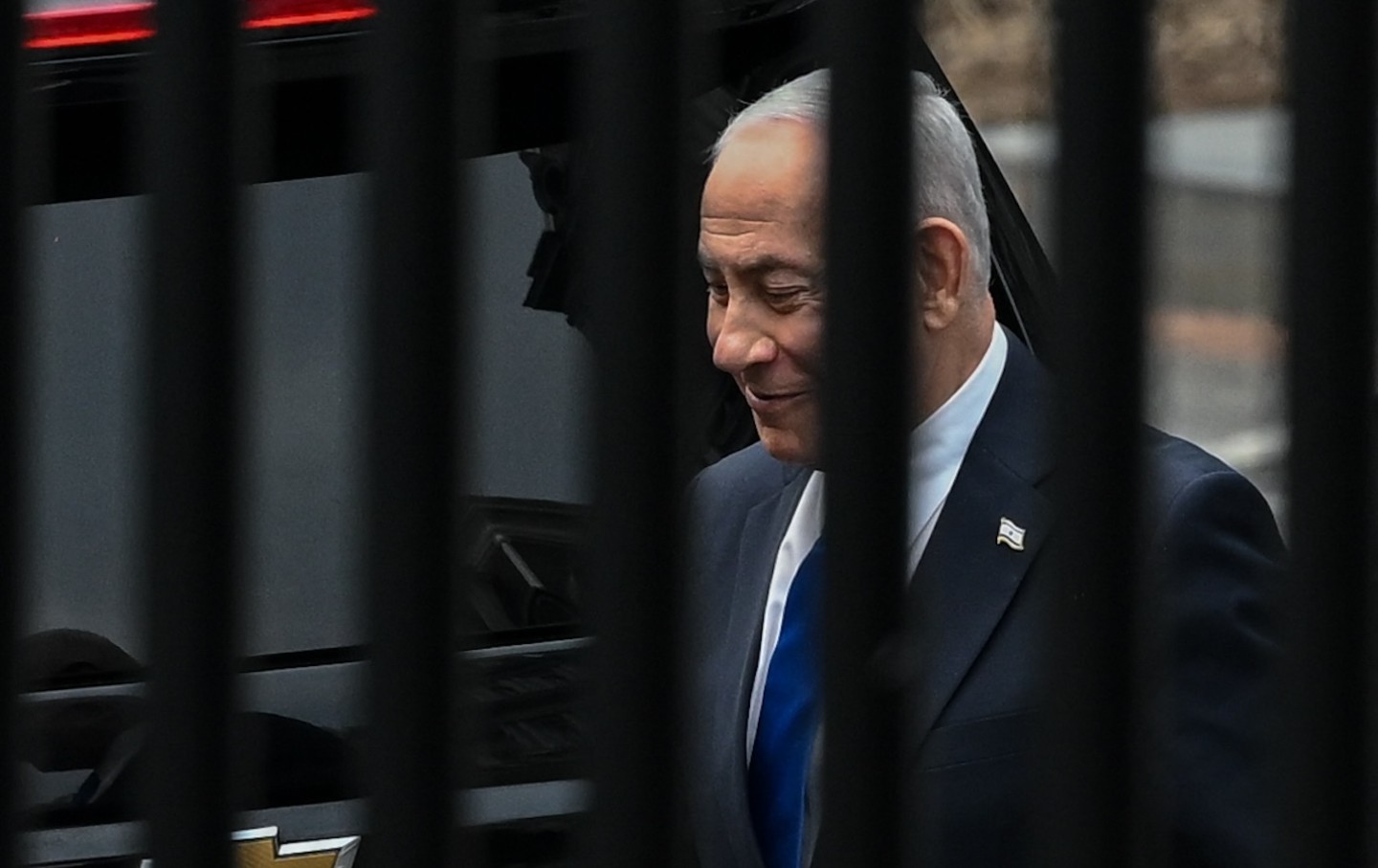
How to Arrest Benjamin Netanyahu How to Arrest Benjamin Netanyahu
Make no mistake: The United States can seize Netanyahu for crimes under US law and prosecute him in US courts when he is in New York City this week.
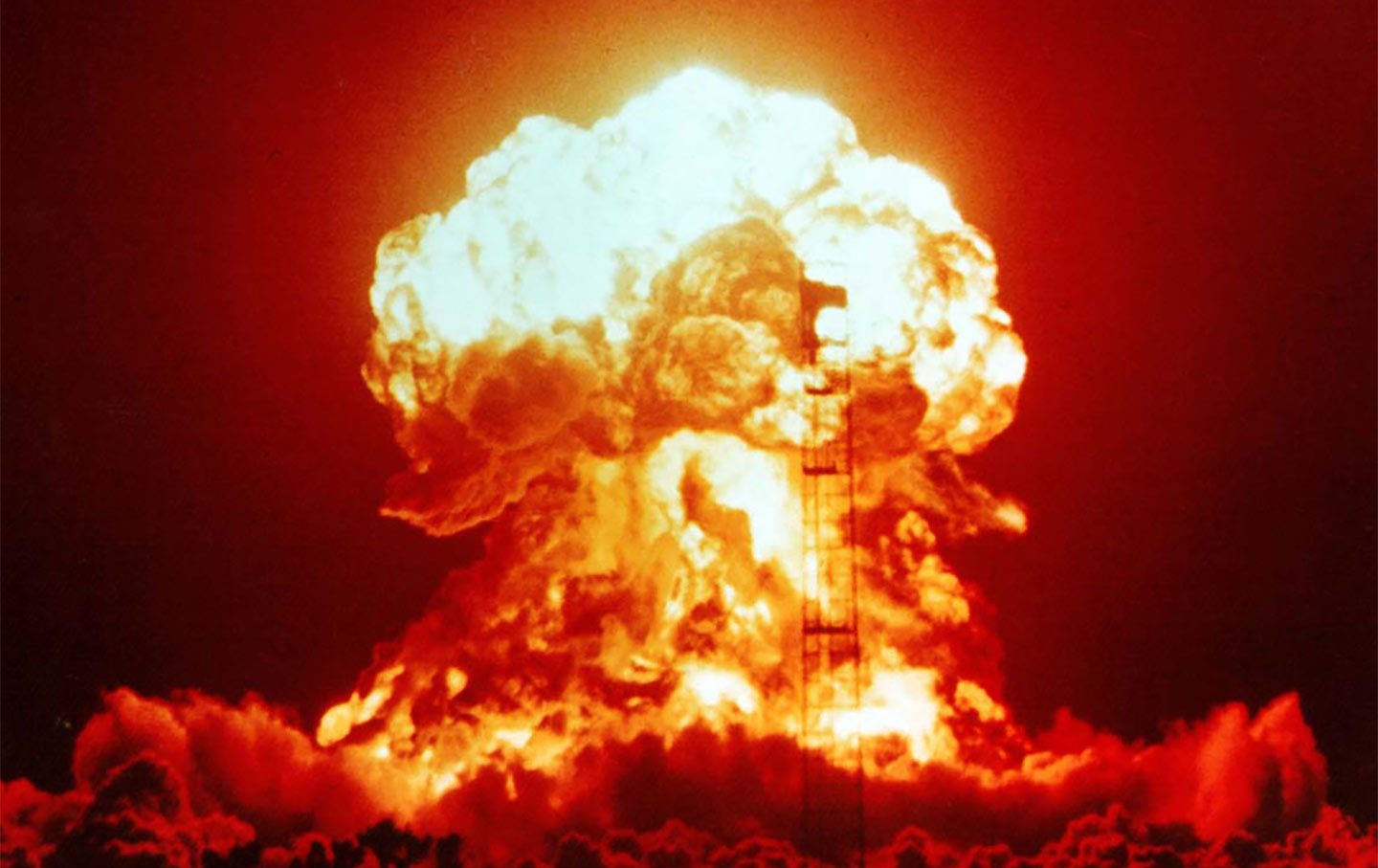
In the Age of AI, Nuclear Weapons Abolition Is a Renewed Imperative In the Age of AI, Nuclear Weapons Abolition Is a Renewed Imperative
As long as we have nuclear weapons, the job of ending humanity will continue to be as easy as the push of a button—or an AI agent hacking into a nuclear command-and-control system...
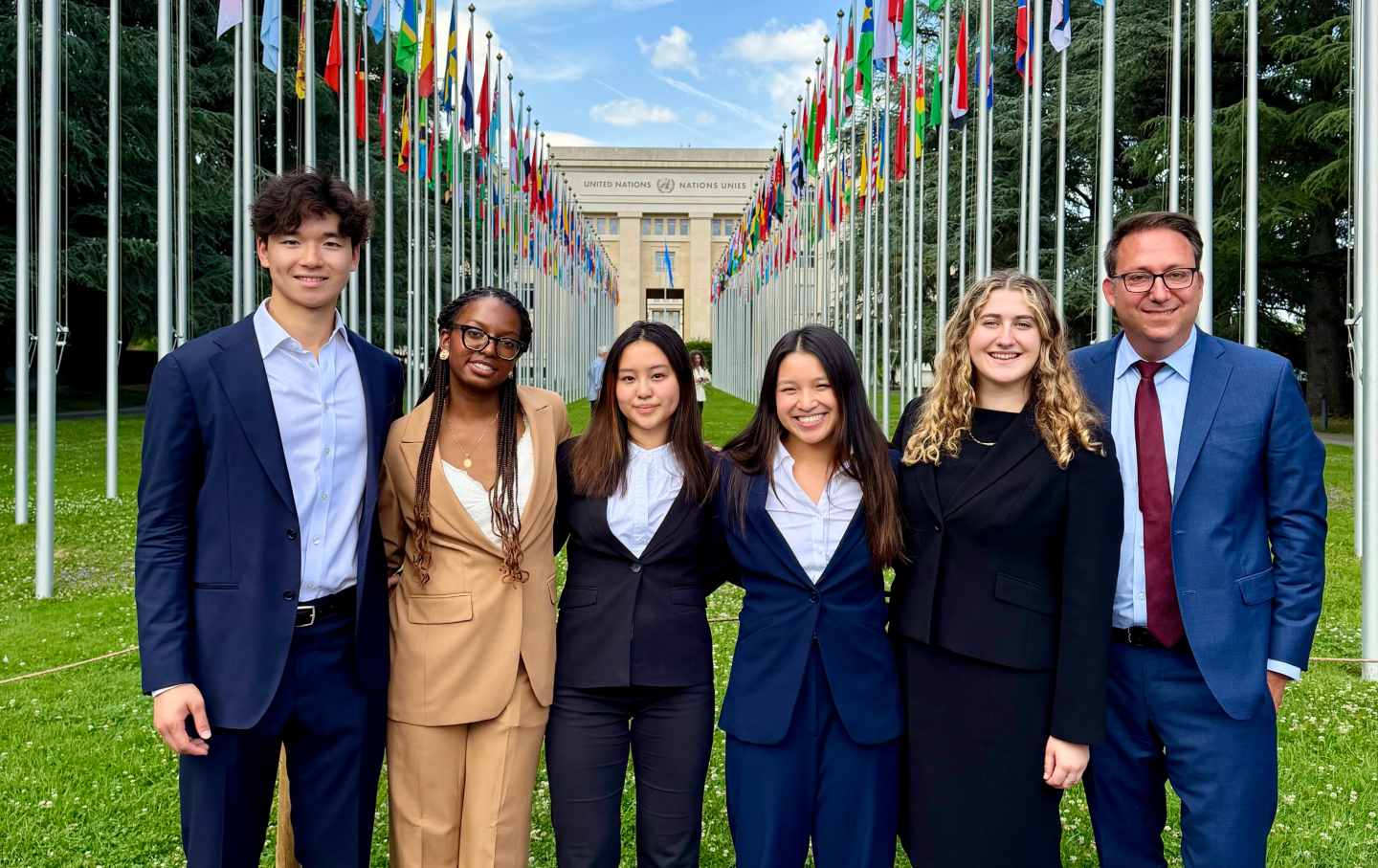
These Students Are Shaping UN Human Rights Policy These Students Are Shaping UN Human Rights Policy
Princeton undergraduates are helping the organization develop standards for post-mortem digital privacy and death in custody.

