How Harris Can Make America Democratic Again
Biden wisely passed the torch to someone who can counter the MAGA call.
Like most Americans my age, I still remember exactly what I was doing when I heard the news that John F. Kennedy had been shot. My mother and I were in an elevator at Children’s Hospital of Philadelphia, where I was being treated for cancer. Although I had no idea at the time (my parents spoke simply of a cyst that had been removed from my neck), I was not expected to survive. The elevator operator, a middle-aged Black woman who always asked after me, was crying, and when my mother asked what was the matter, she replied, “They killed the president.”
As a 6-year-old, I had a less than perfect grasp of the machinery of our democracy. All I knew about Kennedy was that, like my father, he had two small children. I thought being president was something fathers did, like mowing the lawn or taking out the garbage. So I asked, “Will they shoot Daddy when he is president?”
Five years later, when Martin Luther King Jr. was murdered, my teachers were still crying when we returned to school four days later. And I can remember my parents crying when Robert Kennedy was shot.
I was in Maine visiting relatives the day someone tried to assassinate Donald Trump at a rally in Pennsylvania, and my first response was not grief—The Nation is not a Trumpist organ—but fear. Not for the candidate, but for our country, and our politics. The phrase that came irresistibly to mind, at the time and afterward, was Malcolm X’s comment that JFK’s assassination represented “the chickens coming home to roost.”
Mao’s adage that “political power grows out of the barrel of a gun” is of little use in democratic politics, though it may explain part of our country’s fetishistic devotion to the Second Amendment. Because in America, what grows out of the barrel of a gun is chaos, and fear, and desperation.
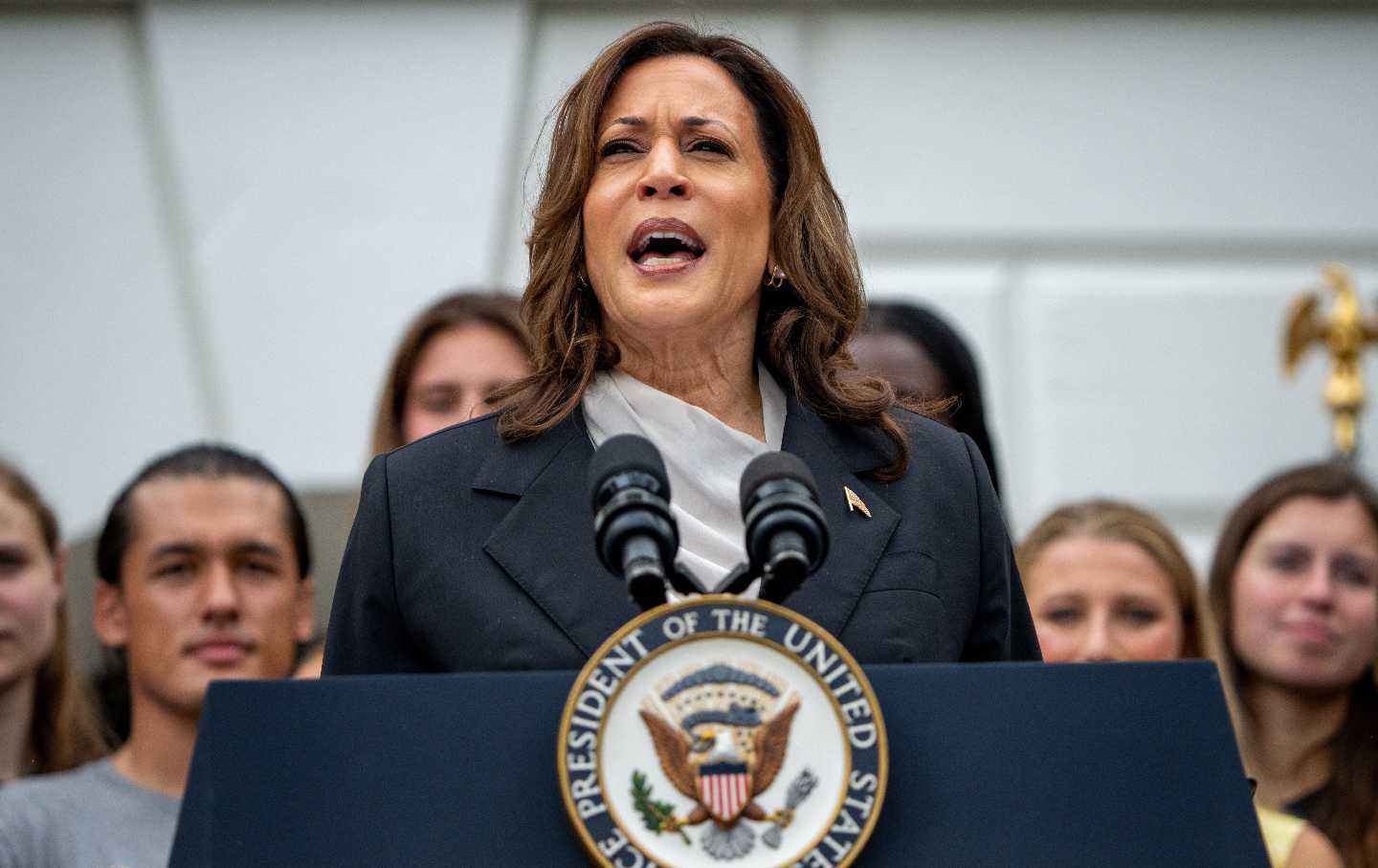
In the days before Trump was shot, the Democratic Party had been consumed by the question of whether President Biden should step aside. That question has now been settled. On July 21, in an act of patriotism and devotion to duty that should secure his legacy as the most successful single-term president in US history, Joe Biden announced that he would stand down, and speedily endorsed Vice President Kamala Harris. As we went to press, all of Harris’s most daunting competitors had followed suit, joining a potential popular front that stretches from the Clintons to Cori Bush and Alexandria Ocasio-Cortez.
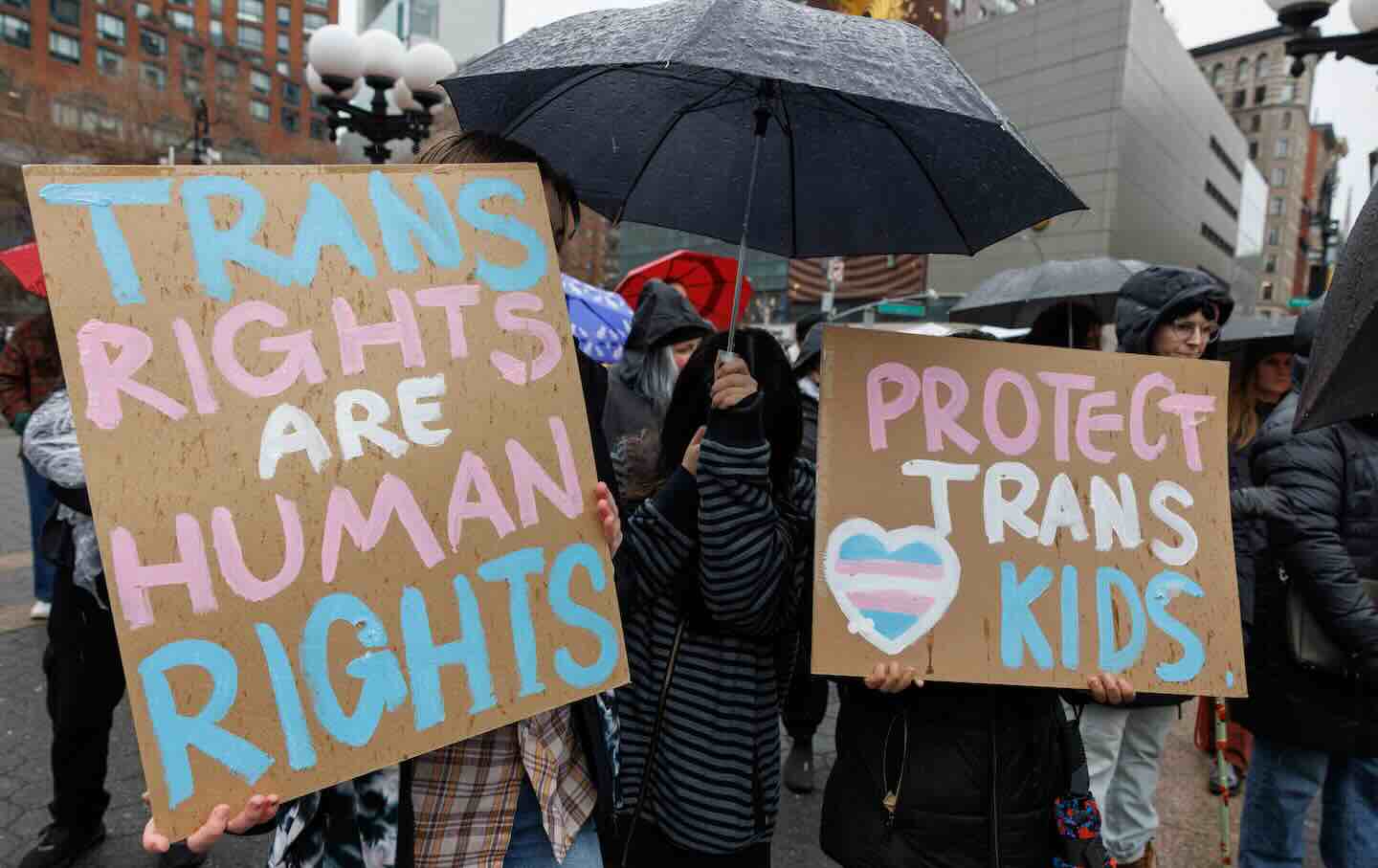
Yet the shooting—which spared Trump but took the life of Corey Comperatore—has already roiled our politics, burnishing the Republican candidate’s sense of impunity and driving some Democrats to despair and defeatism. Like Representative Ocasio-Cortez and Senator Bernie Sanders, we draw a different lesson, namely that the best way to counter the call to Make America Great Again is with a summons to Make America Democratic Again. This means not just the formal democracy of elections—fragile and necessary though that is—but the genuine democracy of a country in which power comes from the mouths of the people; women control their own bodies; workers enjoy security and the fruits of their labor; healthcare, childcare, and higher education are regarded as basic rights; and the food we eat, the air we breathe, and the water we drink are protected by the public, for the public.
Thanks in part to her role as the Biden administration’s point person on abortion, Harris is a formidable messenger for that summons. But for the millions who have been led—like the mainstream media—to discount the vice president’s abilities, Joan Walsh’s exclusive profile of Kamala Harris offers a must-read corrective. Equally compelling—and just as essential—are Elie Mystal’s anatomy of Justice Ketanji Brown Jackson’s emerging jurisprudence, Gabriel Furshong’s dispatch from Jon Tester’s Senate campaign, Rania Abouzeid’s profile of the Palestinian actor and director Mohammad Bakri, and Daniel Judt’s radical reenvisioning of workers’ education. Oh, and we sent Ethan Iverson to see the Rolling Stones…
As for our critics, Nawal Arjini reviews Hari Kunzru’s new novel, Sarah Chihaya considers Helen Oyeyemi’s uncanny fictions, Karrie Jacobs appraises Brooklyn’s Dubai, David Klion interrogates John Ganz’s argument that it all started in the 1990s, and Aaron Timms samples food TV. Plus dispatches from France and Texas, our brilliant columnists, and more!
See you in September.
D.D. Guttenplan
Editor