Photo Essay / March 11, 2026

Why Meatpacking Workers, Some Facing Deportation, Voted to Strike

The workers at the JBS plant in Greeley, Colorado, voted overwhelmingly for a strike last month.
Mary Anne Andrei
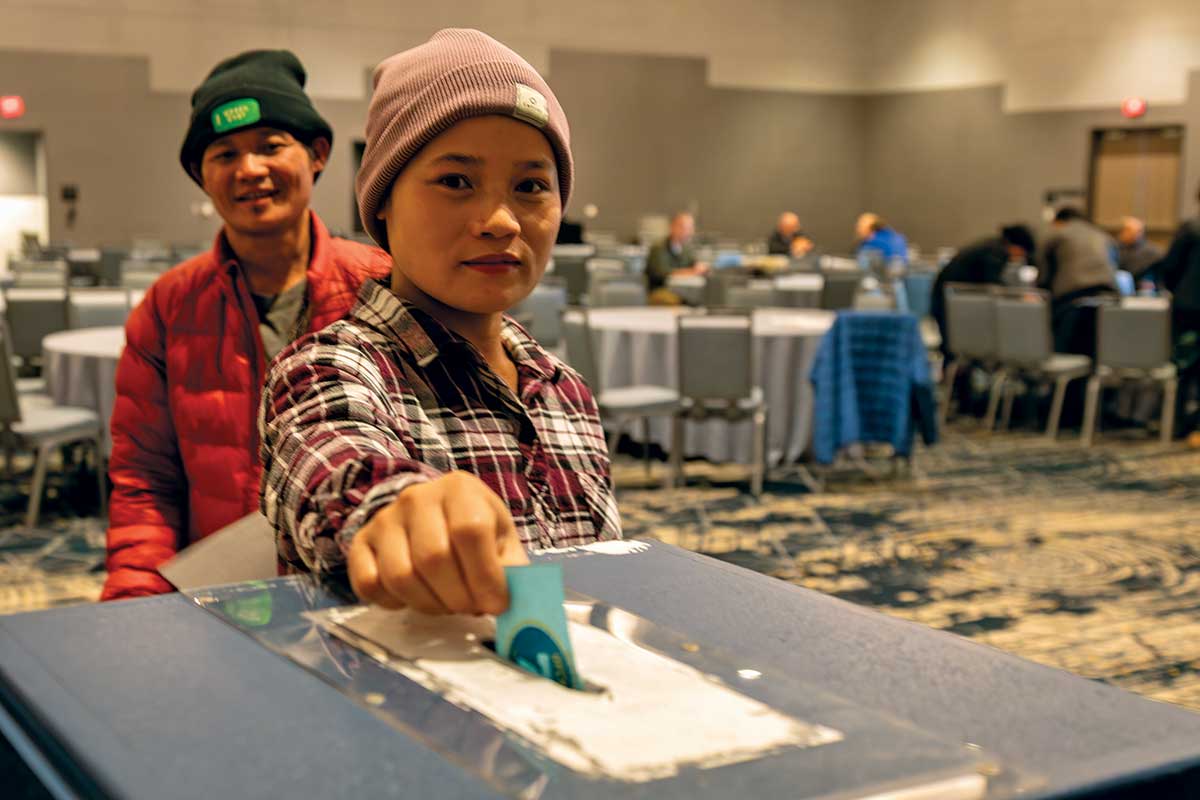
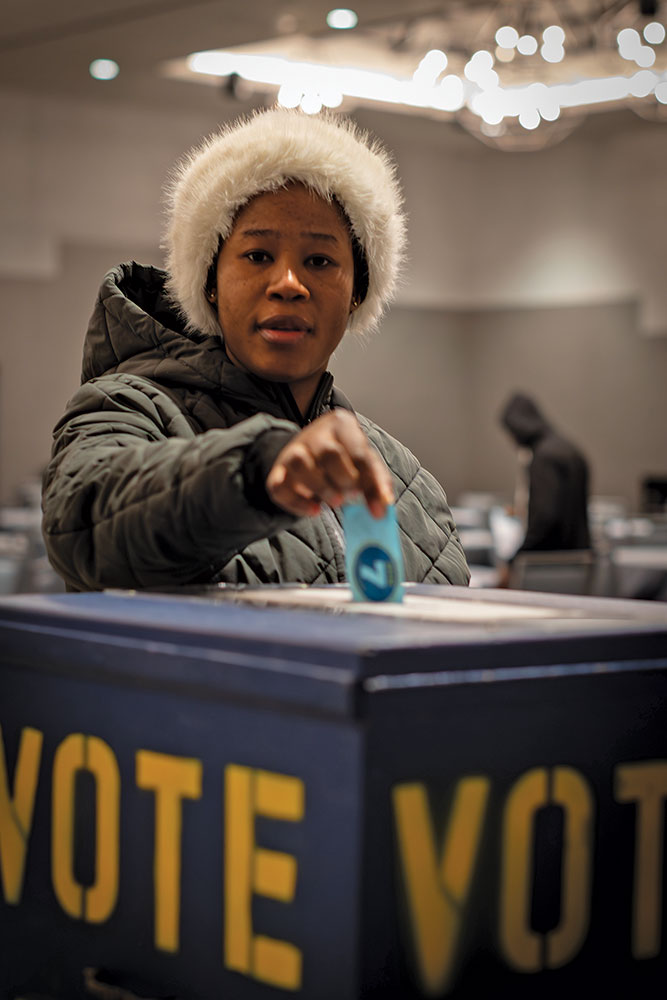
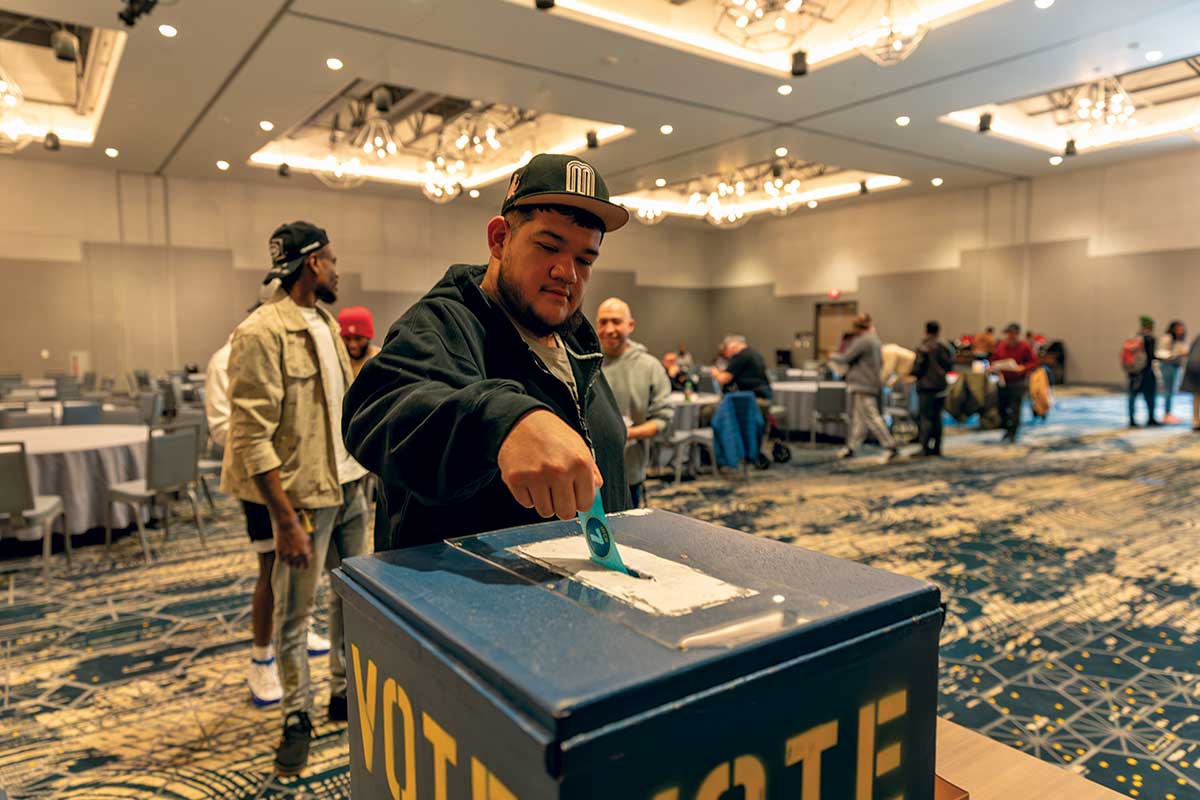
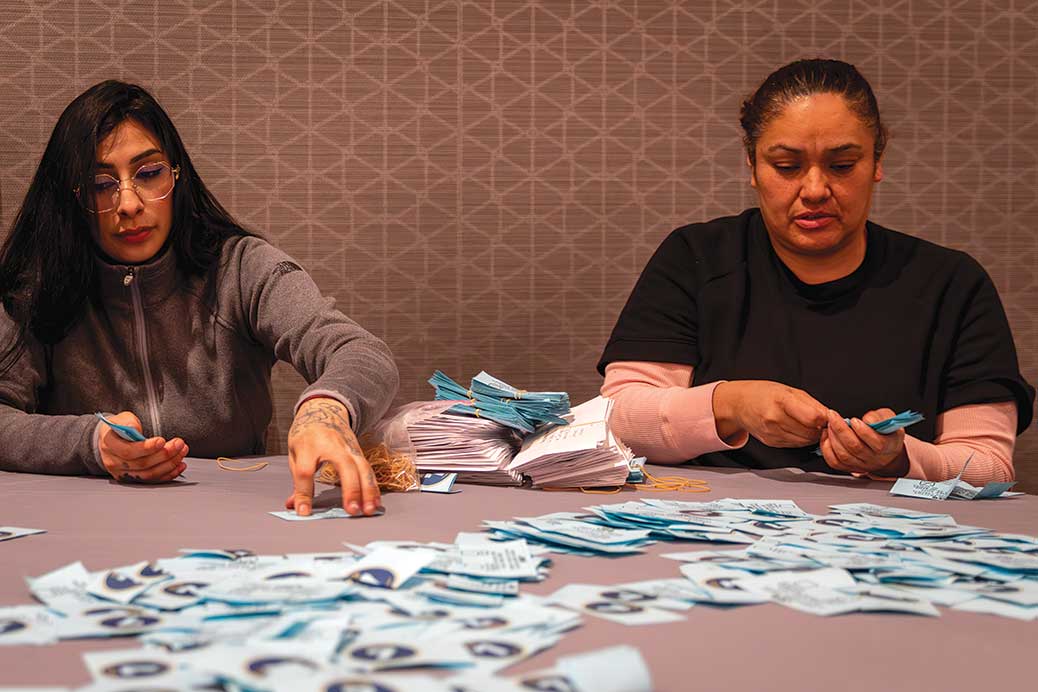
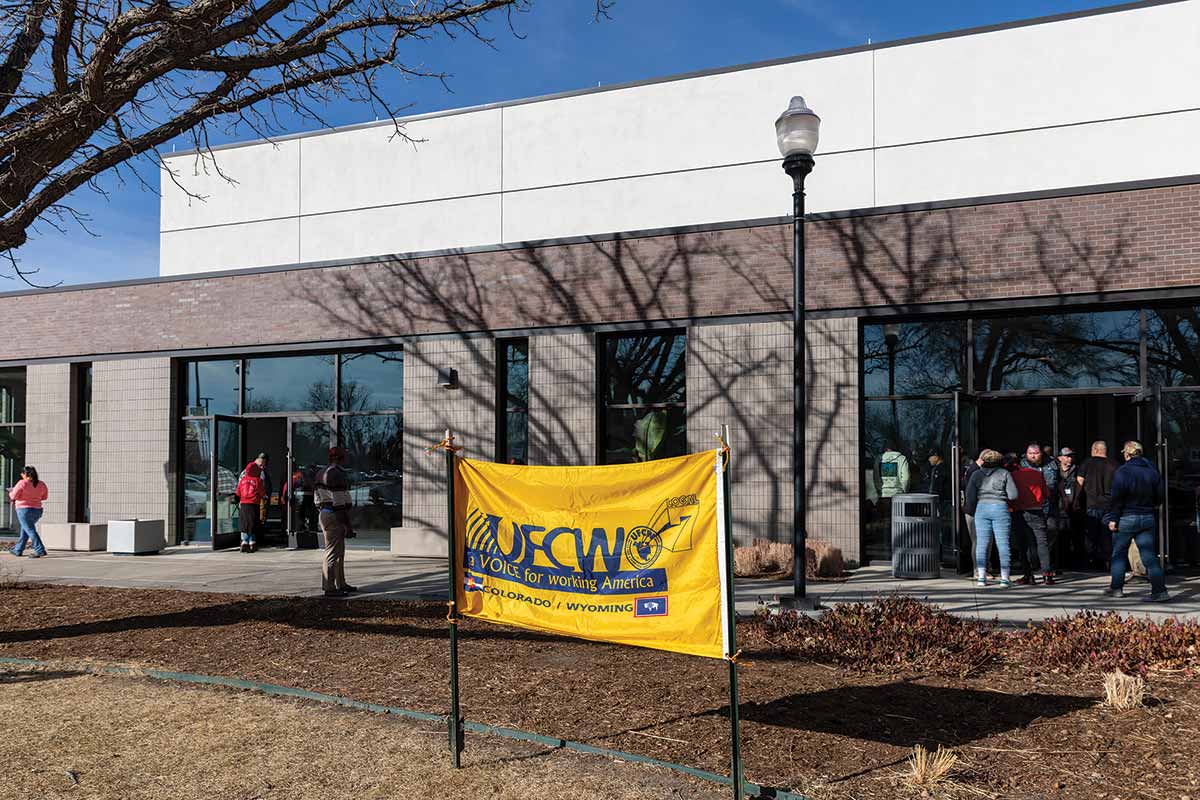
In the lobby of the hotel, workers were given a blue slip of paper with a simple choice: “Strike / Huelga” or “No Strike / No Huelga.”

In early February, more than 1,000 Haitian migrants employed at the unionized JBS meatpacking plant in Greeley, Colorado, faced imminent deportation, as the Trump administration fought in federal court to revoke their temporary protected status. Many of the Haitians say they were brought to JBS as part of a human-trafficking scheme concocted by a supervisor in the company’s HR department. (A JBS spokesperson told me there was no evidence tying the company to the union’s claims.)

Among them is Carlos Saint Aubin, who fled from the gangs in Port-au-Prince to Brazil, where he began a harrowing journey on foot—across the Darien Gap between Panama and Colombia, north to the US border. He came to Colorado after seeing TikTok videos promising jobs and housing. Instead, he ended up among the hundreds of Haitians packed more than six to a room at a roadside motel after working long hours. Now Saint Aubin is one of the lead plaintiffs in a class-action lawsuit alleging that the Haitians on the evening shift there were forced to work as much as 50 percent faster than those on the daytime crew.

On February 4, less than 48 hours after a federal judge blocked their deportation, 99 percent of the United Food and Commercial Workers Union members at the facility voted to strike in what could become the first sanctioned walkout at a major meatpacking plant in decades.      —Ted Genoways
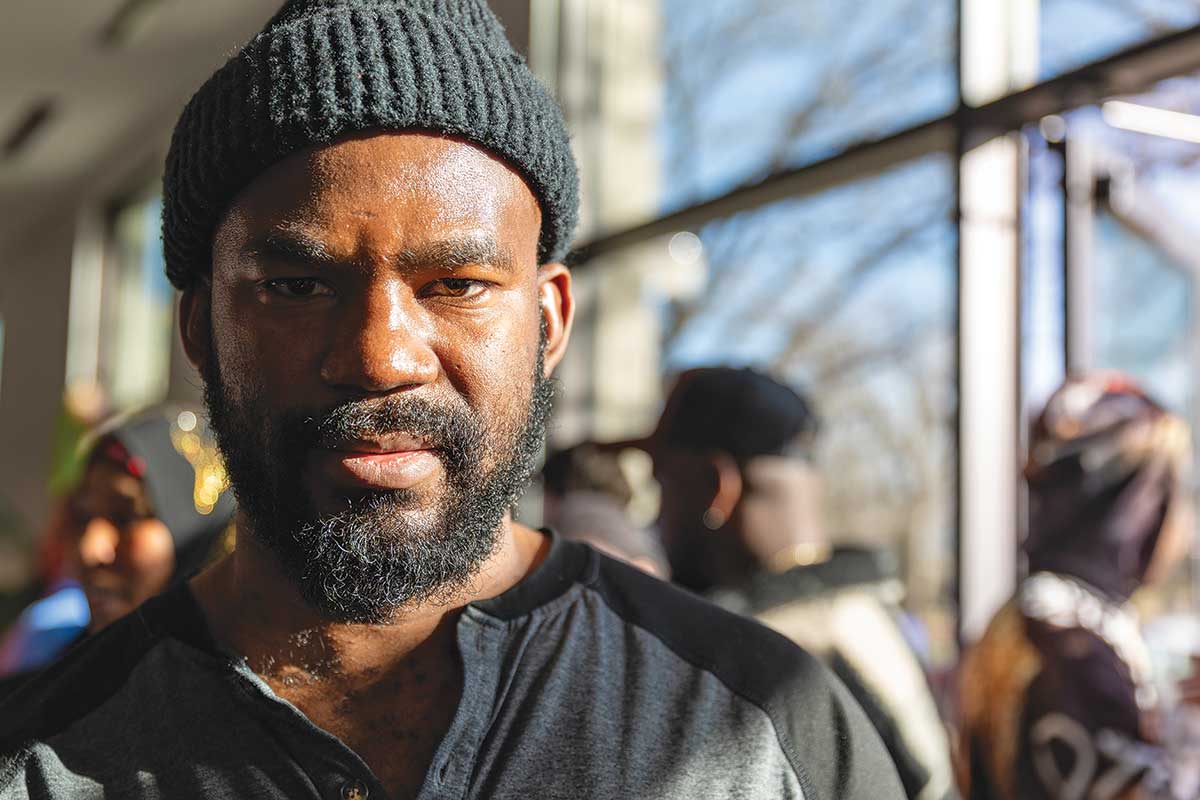
 

After casting his ballot, Carlos Saint Aubin chatted with fellow workers in the lobby outside the ballroom of the DoubleTree hotel where the vote was held.
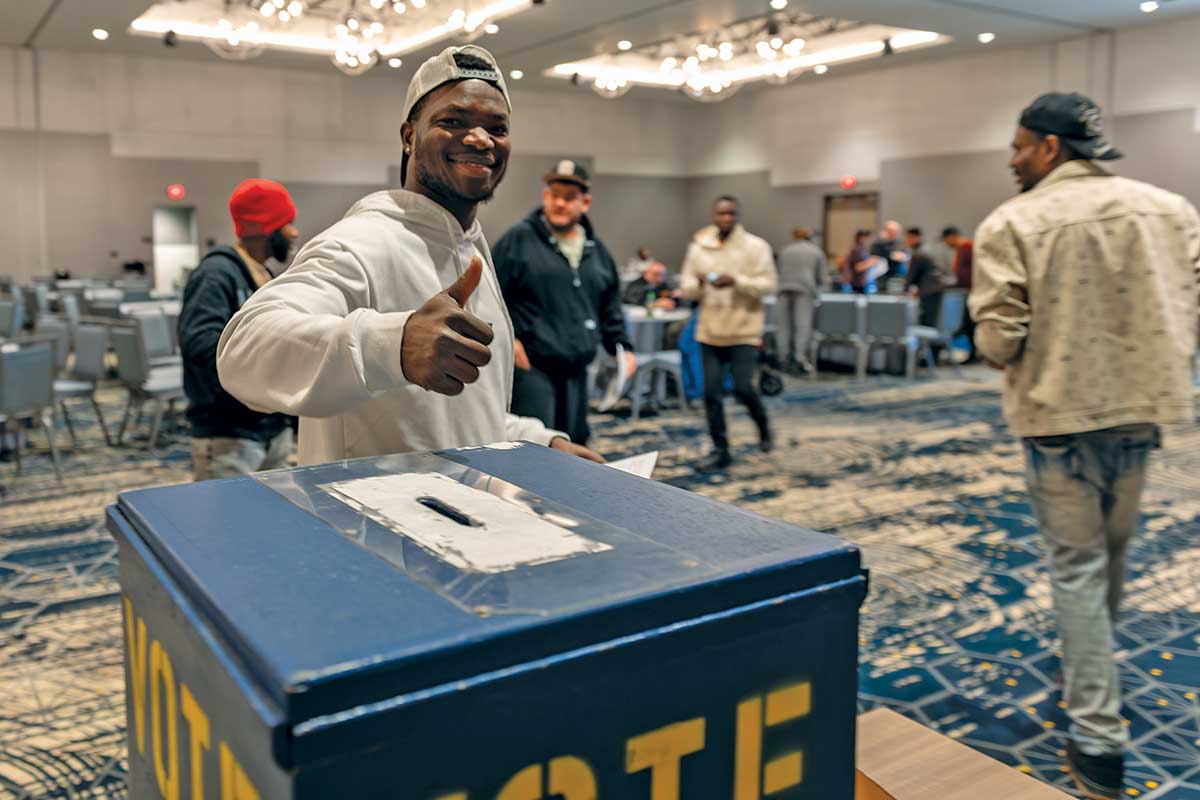
Some 90 percent of the workers at JBS’s Greeley plant are migrants. Beyond Haiti, they are from Burma, Somalia, West Africa, and Latin America.
Despite facing threats from ICE—and the anxieties of a potential strike—workers greeted each other with hugs and handshakes.
Rumors circulated that unmarked white vans had been seen circling outside the hotel, raising fears of an ICE raid, but the vote was held without disruption.
Local 7 and JBS resumed talks on February 20 in hopes of avoiding a walkout, but the workers had already assembled 4,000 picket signs.
Members of Local 7 arrived just before 7 pm to count the votes. Out of the more than 2,000 workers who cast ballots, roughly 25 voted against a strike.

Your support makes stories like this possible

From illegal war on Iran to an inhumane fuel blockade of Cuba, from AI weapons to crypto corruption, this is a time of staggering chaos, cruelty, and violence. 

Unlike other publications that parrot the views of authoritarians, billionaires, and corporations, The Nation publishes stories that hold the powerful to account and center the communities too often denied a voice in the national media—stories like the one you’ve just read.

Each day, our journalism cuts through lies and distortions, contextualizes the developments reshaping politics around the globe, and advances progressive ideas that oxygenate our movements and instigate change in the halls of power. 

This independent journalism is only possible with the support of our readers. If you want to see more urgent coverage like this, please donate to The Nation today.

Mary Anne Andrei

Mary Anne Andrei is a freelance multimedia journalist.

More from The Nation

Why Pope Leo Gets Under Trump’s Skin

Why Pope Leo Gets Under Trump’s Skin Why Pope Leo Gets Under Trump’s Skin

The Catholic Church’s power is on the wane—but it now has a pope who is to the left of many US institutions and enrages the president by expressing his convictions.

Rose D’Amora

Undocumented third grader Yanela Sanchez practices math at her family's apartment

How Trump’s Deportation Regime Is Reshaping Schools How Trump’s Deportation Regime Is Reshaping Schools

Across the US, students are missing school, falling behind academically, and carrying the trauma of detention and family separation into school each day.

StudentNation / Lajward Zahra

The Richard J. Daley Courthouse and Office Building in Chicago.

Illinois Is Helping People Awaiting Trial Get Back to Court and Stay Out of Jail Illinois Is Helping People Awaiting Trial Get Back to Court and Stay Out of Jail

The state has a tremendously successful pilot in four counties to offer free services to those on pretrial release. But federal budget cuts put the program at risk.

Bryce Covert

WNBA’s Angel Reese attending the Met Gala in New York City on May 4, 2026.

WNBA Players Should Have Picketed, Not Attended, the Met Gala WNBA Players Should Have Picketed, Not Attended, the Met Gala

At the Bezos ball, WNBA stars chose celebrity over solidarity.

Dave Zirin

A trans woman prepares a hormone shot obtained on the black market, in New York City on December 1, 1999.

The Troubled History of DIY Trans Healthcare The Troubled History of DIY Trans Healthcare

Trans people have been going underground to access care for generations. But that doesn't mean DIY networks are a large-scale strategic answer to transphobia.

Grace Byron

Columbia University’s Remedy Project chapter celebrates filing 500 administrative remedies.

How Students Are Pushing for Justice in US Prisons How Students Are Pushing for Justice in US Prisons

The Remedy Project trains students to help incarcerated people file grievances, expose abuse, and, in some cases, secure release.

StudentNation / Charlie Bloomer