NATO Charts a New Course
Will NATO encircle China next?
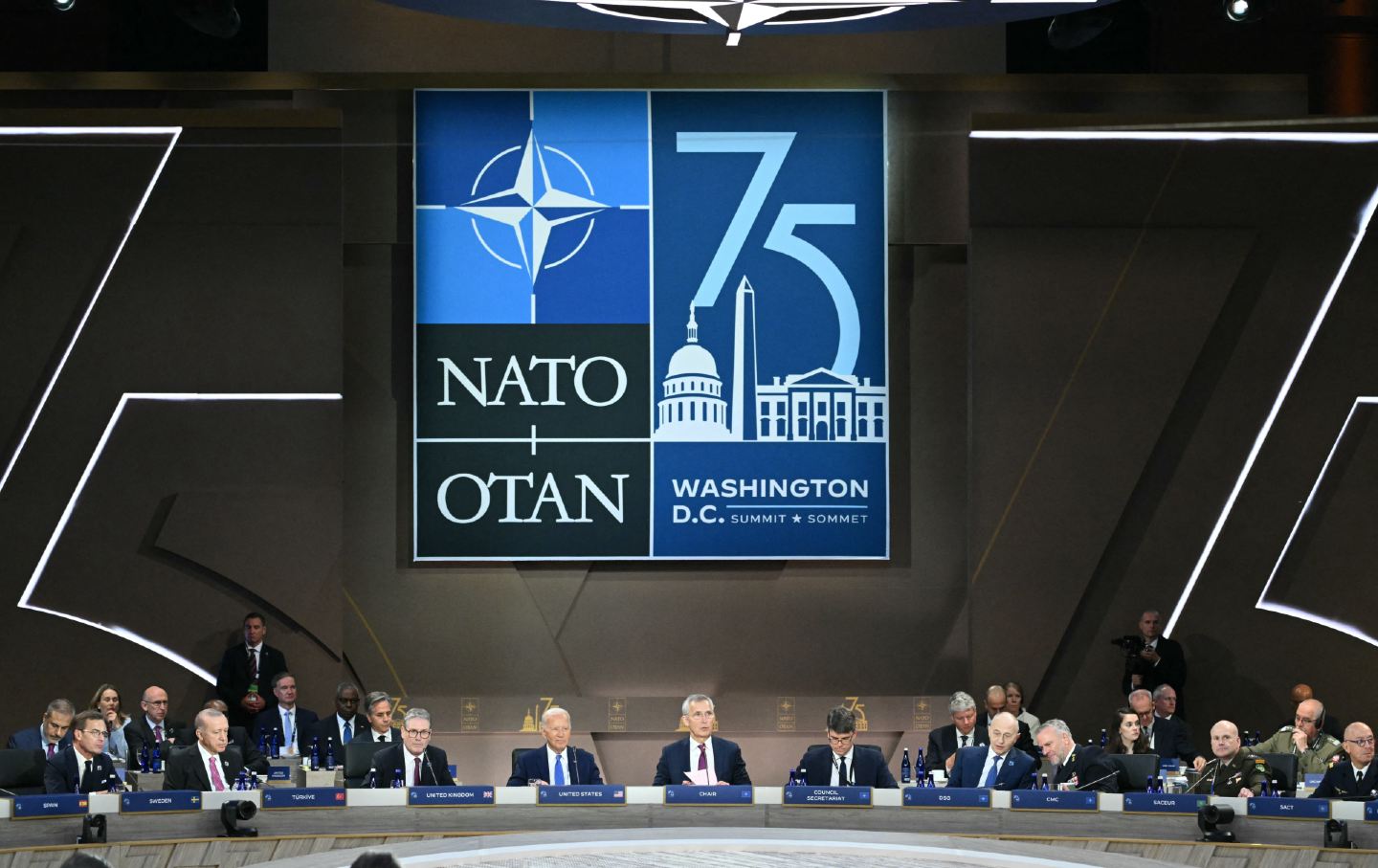
The July 2024 NATO summit in Washington threatens to set in train a Cuban Missile Crisis of truly global magnitude. Recall that in 1962, nuclear war between the US and the Soviet Union was averted only at the last moment. Both superpowers were determined to block the deployment of nuclear weapons in their immediate vicinity, or nuclear missiles capable of easily hitting major population centers. To resolve the crisis, US Jupiter missiles—developed by former Nazi rocket engineer Werner von Braun—had to be withdrawn from Italy’s south-eastern region of Puglia and the Turkish city of Izmir; such were the conditions for the Soviet removal of nuclear weapons from Cuba, along with its substantial troop deployments there.
Since then, an unspoken diplomatic rule has held that countries in the close proximity of great powers should neither be bound by military pacts, nor make their territories available to rival alliances. It was precisely for this reason that US diplomats like George Kennan advised against NATO’s eastward expansion in the 1990s, in part because they feared a potential backlash. But the Clinton administration, feeling it was no longer obliged to consider the interests of a much-diminished Russia, pressed ahead with just such an enlargement, right up to the Russian border. Even after Moscow signaled in 2008 that NATO expansion into Georgia and Ukraine would be crossing a “red line”—that is, an intolerable threshold—Washington carried on as if the lessons of the Cuban Missile Crisis could be disregarded.
More recently, but keeping with this logic, NATO’s Secretary General Jens Stoltenberg dismissed out of hand the December 2021 Russian proposal for a treaty on mutual security, which was to rule out Ukraine’s accession to the alliance (it asserted that “the time of exclusive zones of influence is over”). Today, NATO is waging a proxy war in Ukraine against Russia, with its own mission headquartered in the German city of Wiesbaden. For Berlin’s part, what began with the delivery of soldiers’ helmets then developed progressively into the shipment of ever more arms, with Kiev now granted political cover for their use in attacks on targets inside Russia proper. The road leading to escalation, including direct military confrontation and the deployment of weapons of mass destruction, now appears to be well mapped. By the contemporary reasoning of Joe Biden and Jens Stoltenberg, Kennedy ought to have launched a nuclear war in 1962.
Just imagine if a country on the US border hosting Russian or Chinese military missions were to wage war on the US, attacking Washington or New York with armed drones. How might Washington react? It’s hardly in doubt that it would mobilize every available capability to eliminate such a threat.
The real absurdity of the present NATO summit in Washington, however, is that a strategy aimed at Russia, which according to Kennan would guarantee direct military confrontation and increase the risk of world war dramatically, is now being globalized and turned against China. NATO is to become a global power formally, and, at least from Beijing’s perspective, aims to advance on China. For the time being, NATO will operate on the basis of bilateral treaties in the Pacific, but the goal appears to be an expansion of the military pact throughout the region, so that it will exist as a “North Atlantic” alliance in name alone.
It often goes unnoticed in Washington that positioning Germany against Russia, or Japan against China, conjures memories in the old belligerents of the wars of aggression waged by the predecessors to NATO member states, whose current participation in the Ukraine proxy war—along with provocations issued by the German Foreign Minister to “ruin Russia”—call forth the mobilization of their historical adversaries. Such developments, in other words, raise suspicions that retribution is being sought under US protection. Yet those who have staked everything on the transformation of Ukraine into Russia’s Afghanistan should not overlook the prospect that they may get the obverse, that ultimately Ukraine may prove to be global NATO’s Vietnam. Western expenditures in this proxy war are already unprecedented. They will have to be paid for by social cuts that promise to shake the foundations of society, and with them political stability. That the other side will face imminent ruin and simply relent might in this case prove to be nothing more than wishful thinking.
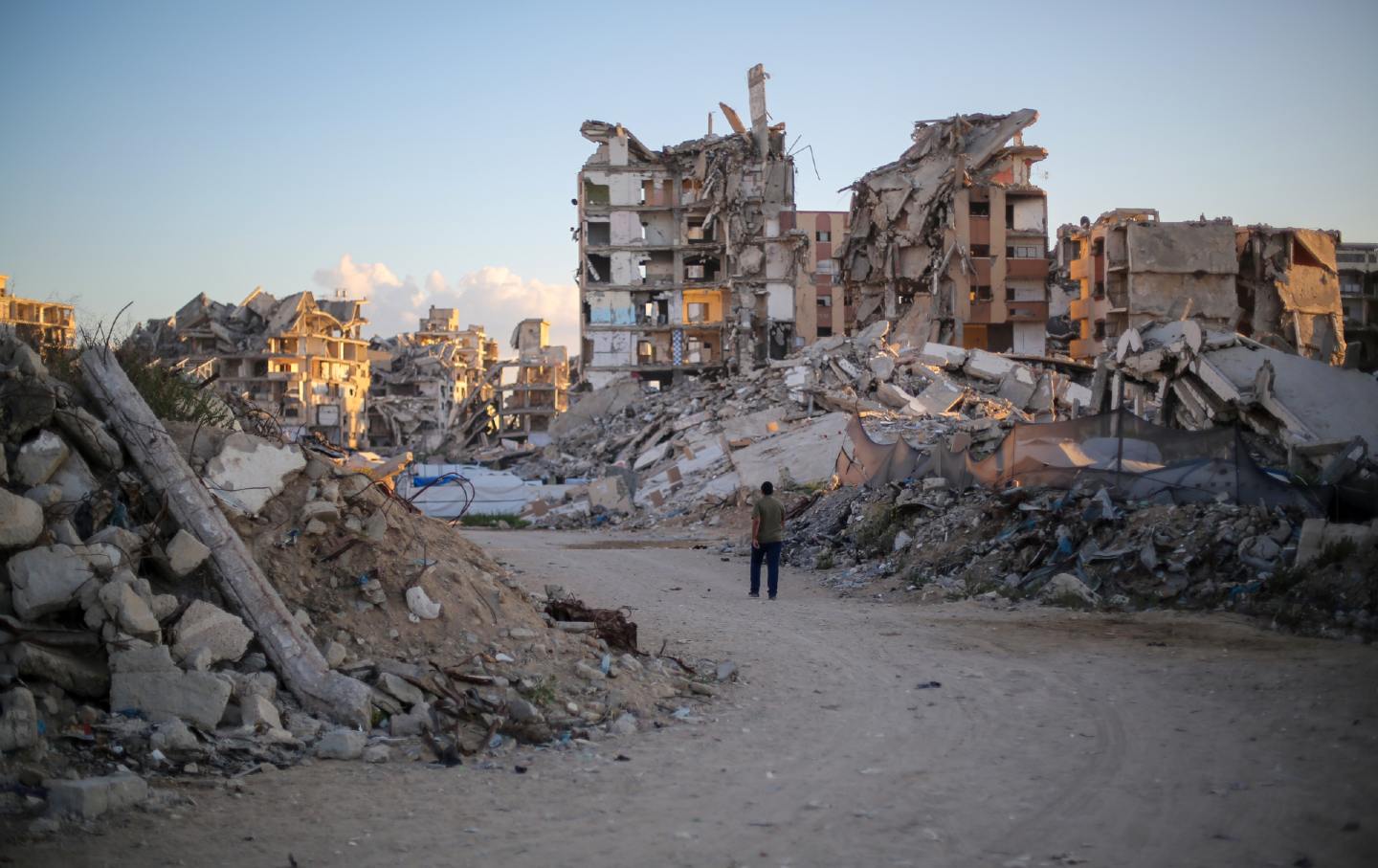
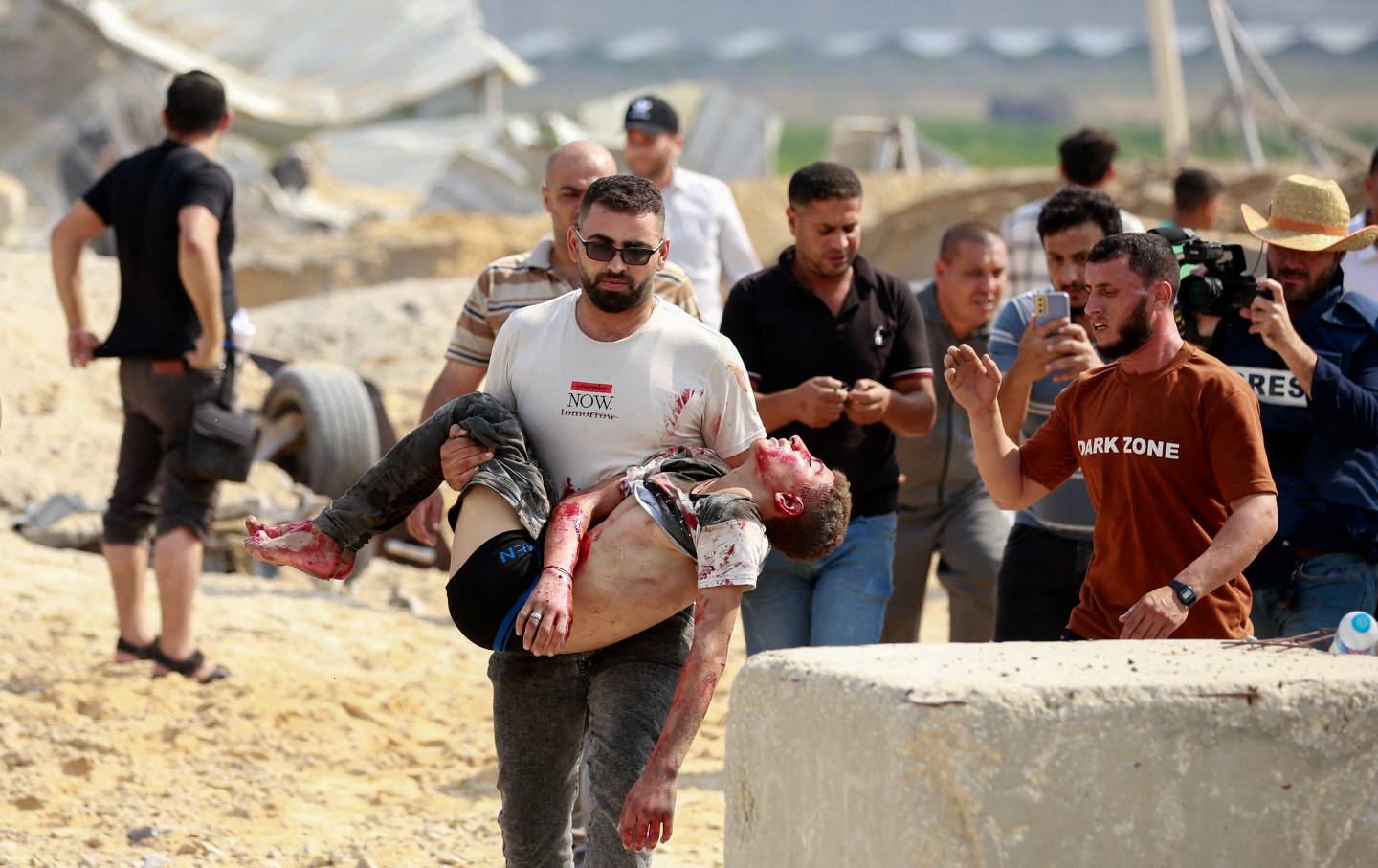
Indeed NATO is getting on in years. The self-serving mythology of an alliance based in the rule of law and kept up for the protection of human rights has frayed amidst the enormities of wars waged by its members—as in the US invasion of Iraq, enabled by infamous official lies—and its unconditional support for Netanyahu’s onslaught in Gaza, which has now left 13,000 Palestinian children dead, and for which invocations of Israel’s right to self-defense are scarcely credible. Today NATO approaches moral and military overextension.
The lessons of the Cuban missile crisis for the current period are: Don’t disturb the recognized principle of neutrality as it applies to states abutting great powers; and, as utopian as it may appear at present, seek diplomatic settlements with Russia and China. The alternative offered by the Washington NATO summit thus far only threatens heightened risk of world war, and in this way recapitulates the strategic miscalculation Nikita Khrushchev once committed when the USSR challenged the US in the Western Hemisphere. In the nuclear age, such reckless encroachments amount to a fatal gamble.
A sane foreign policy is imperative now, perhaps more than ever; even a return to a Kennedy or a Kennan would be an improvement. One thing is quite clear: through their strategy of escalation and expansion, the US and NATO are forcing an increasing number of states together as an opposition, in a development stemming from a reversal of American policy dating from the 1970s, which had recognized Beijing’s own security interests. Arresting the escalating global confrontation requires at the very least an immediate end to the war in Ukraine, a freeze on NATO expansion, and finally negotiations among the major powers to guarantee the security of all parties.