The Awful Plan to Turn Gaza Into the Next Dubai
The Netanyahu administration seems to have learned from neighboring petrostates that spectacle can distract from ethnic cleansing.

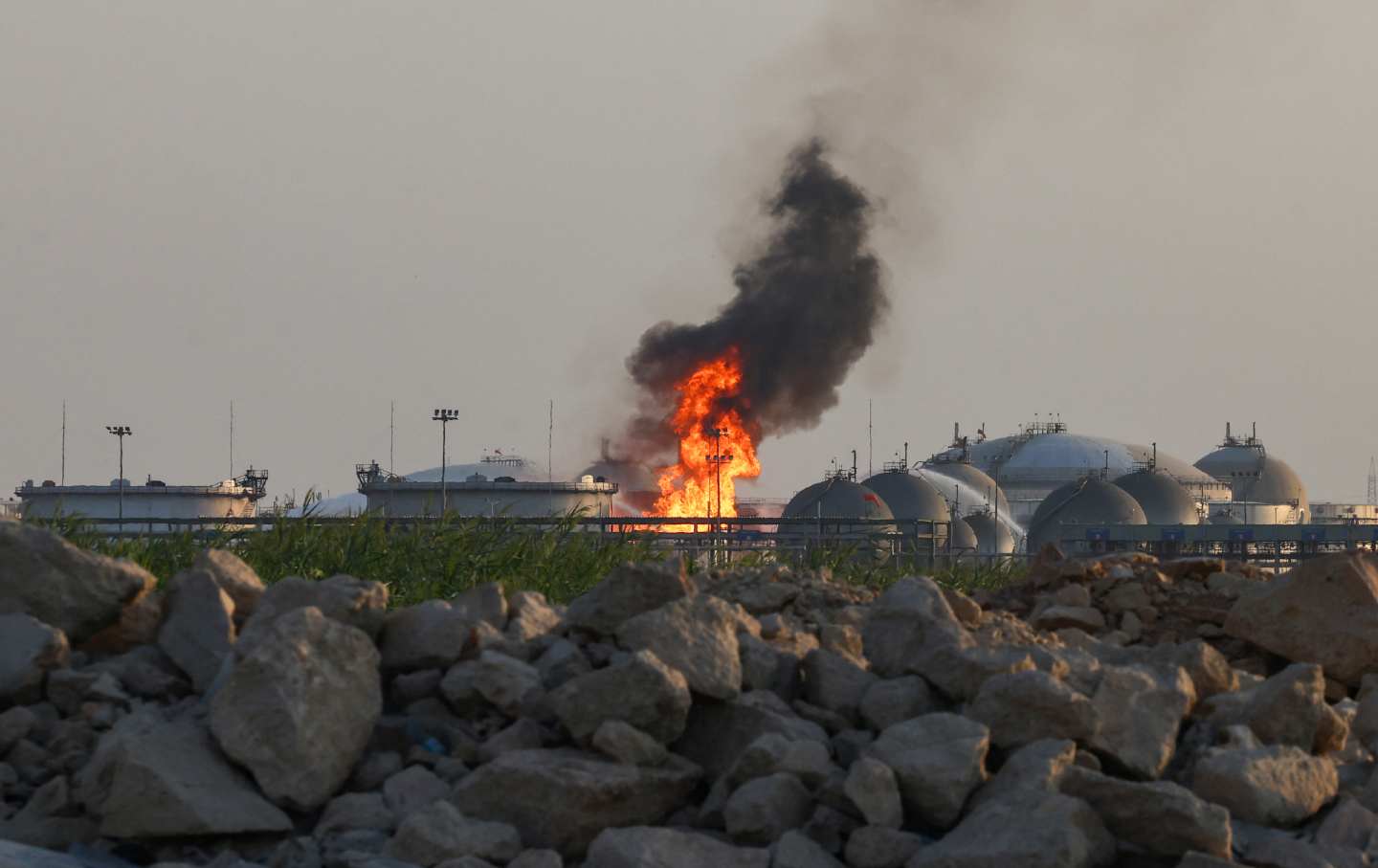
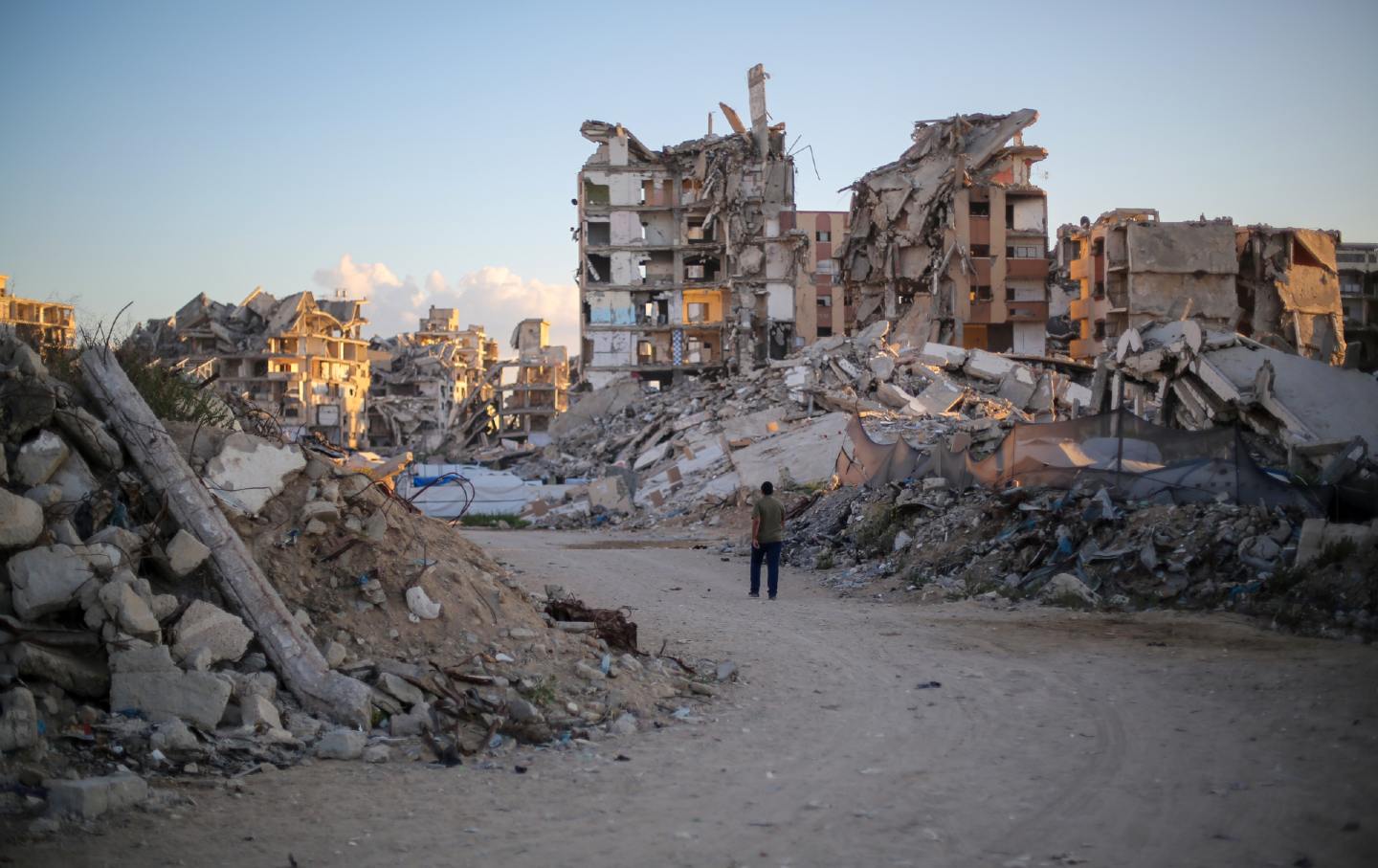
Few places in the world face a more uncertain future than Gaza, where famine looms and 37,000 Palestinians have been killed in the course of Israel’s brutal retaliation for the October 7 Hamas attacks. But in May, the office of Israeli Prime Minister Benjamin Netanyahu reportedly unveiled a (still unconfirmed) plan for the region dubbed “Gaza 2035.”
As outlined in the trade publication The Architect’s Newspaper, the plan envisions postwar Gaza as a tabula rasa, purged of residents, on which Netanyahu can realize a cartoonish, convoluted vision of fossil fuel extraction (an estimated 1.7 billion barrels of oil sit in the Strip’s coastal area), preemptive greenwashing (there’s talk of “electric car manufacturing cities”), and total fealty to the technology and real estate industries to shape the land.
The proposal was accompanied by AI-generated images showing hyper-modern skyscrapers, offshore oil rigs, solar energy fields, and other details that evoke a generic technocratic vision of urban progress. In order to complete the plan by 2035, Netanyahu proposes that after 12 months spent “freeing” the region of Hamas, Gaza will be put under the patronizing supervision of Bahrain, Jordan, Saudi Arabia, and Morocco before returning it to Palestinians (if there are any left) under a vague “self-rule” that does not include a path to statehood. To call this plan, set to be carried out in the immediate aftermath of unimaginable suffering, anything but a naked land grab—a bloodthirsty colonial vision if ever there was one—is to mince words.
A curious part of Gaza 2035 is Netanyahu’s plan to connect Gaza via high-speed rail to NEOM, the $1.5 trillion speculative city that Saudi Arabia is building on the back its own, much-less-publicized ethnic cleansing campaign, in which the Howeitat tribe has been forced off its land under threat of imprisonment. Pandering to NEOM—a project to which some of the world’s most prestigious architecture firms have pledged their labor—is part of Netanyahu’s attempt to piggyback on the type of culture-washing that Qatar and the United Arab Emirates have engaged in, with arguable success. When presented with the opportunity to design high-budget buildings, architects are all too happy to serve such problematic petro-governments, despite their field’s alleged devotion to sustainability and democracy. For Netanyahu’s purposes, NEOM serves as a model of how to use spectacle to distract from ethnic cleansing.
The only problem: NEOM is a pipe dream. In April, Bloomberg reported that instead of the 1.5 million people Saudi Arabia had imagined would be living in the city’s flagship horizontal mega-skyscraper by 2030, newer projections point to a number more like 300,000. The original plan for 170 kilometers of coastline construction has been shrunk to a meager 2.4 kilometers. While it’s true that Crown Prince Mohammed bin Salman continues to dump funds into other infrastructure projects along the Red Sea, the extravaganza touted in design magazines for the past few years seems unlikely to materialize.
Gaza 2035 and NEOM have more in common than underlying violence, colonial ambition, and a hypothetical high-speed railway. They both exemplify how architecture, engineering, and construction (AEC) firms make easy cash off new-money regimes. Recently, the AEC conglomerate AECOM published a job listing for a design manager to coordinate a USAID project to build water infrastructure in the West Bank and Gaza (presumably to be commenced after Israel razes every single building in Gaza to the ground). This isn’t the first time AECOM has shown an interest in Gaza. In 2017, it helped develop a paternalistic master plan called “Connected Gaza,” a series of modernization projects involving the flow of goods and services through new roads and offshore ports. While the company was careful to use the word “Palestine” and invoke historical complexity in its rhetoric, the plan read like the bog-standard vision of an AEC firm: technocratic, frictionless, top-down, and curiously apolitical.
It’s not surprising that AECOM is taking work in Gaza despite the political situation. It specializes in the “boring” parts of architecture—groundwater and geological monitoring and feasibility studies—that walk so that the glittery skyscrapers can run. Plus the reduction in capacity at NEOM (for which AECOM is slated to work on an airport, among other large projects) means it already has a workplace in the region.
Some may wonder why firms sign on to such speculative projects. Isn’t it a waste of work and talent, since these things may never get built? During the past 40-odd years, AEC projects have mushroomed in newer, cash-flush countries like the UAE, Saudi Arabia, and Bahrain—places desperate to strut their new power and develop tourism and culture sectors to diversify from oil while the oil money is still in their hands. Because most architecture firms bill by the hour, they can rake in enormous fees for design development: the renderings, proposals, and formal explorations that precede the commitment to actually building something. When projects are so vast, complex, and unfeasible that the design development phase is effectively interminable, they come with far less risk than actually committing to a physical structure, which exposes the firm to legal liability. In megaprojects like NEOM that are unlikely to come to fruition, firms can futz around and rake in cash for as long as the vision stays alive. And when the vision dies, there’s always another MBS or Netanyahu dreaming of a city of glass and steel.
Who doesn’t love getting paid—often quite a lot, judging by the job listings—to dream? Considering the soulless, de-skilled, highly stratified field that architecture has become, these jobs are alluring for a reason. And after all, is it not true that architecture can help make a rotten world better? Beyond the veneer of glitzy, fake eco-cities, AEC firms and individual architects alike often see things like infrastructure as being necessary and unspectacular—an inherent common good. But no project undertaken in the wake of ethnic cleansing, such as in Gaza, is neutral. As I wrote shortly after the war began, profiting from such violence, however visionary or mundane the work may be, is a political act with ethical ramifications. As the jobs open up to remake Gaza according to Netanyahu’s plan, I can only reiterate: Do not take them.