13 Days That Changed the World
On the 35th anniversary of the First Congress of People’s Deputies in Moscow.
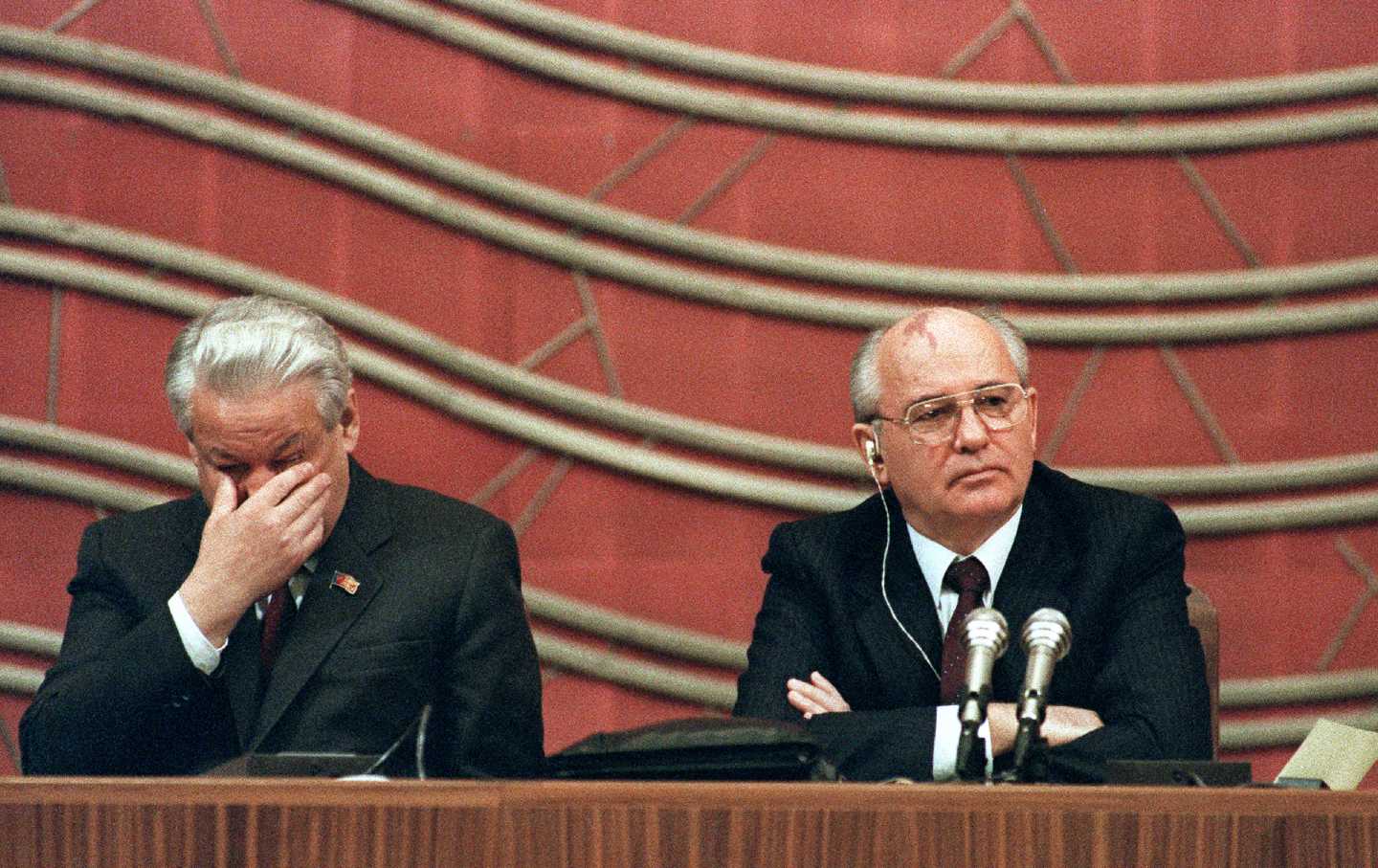
Editor’s note: In these years of war when restrictions affect Russian society and politics, correspondent Nadezhda Azhgikhina recalls a time of great breakthrough, when Russian leader Mikhail Gorbachev’s reforms of perestroika and glasnost offered hope that change was possible—let’s hope such reforms emerge again.
Perestroika became irreversible in June 1989. That was made clear at the clunkily named First Congress of People’s Deputies of the Supreme Soviet USSR. The year before in June 1988 at the 19th Party Conference, General Secretary Gorbachev declared a course of political reform. In his book Understanding Perestroika (2006), he wrote: “If we try to define the meaning of political reform, we can say that it was a transfer of power from the hands of the Communist Party into the hands of those to whom it should belong according to the Constitution—the Soviets…. It was a devilishly complicated political operation, one could say, ‘with a fatal outcome’ for the party nomenklatura.”
Gorbachev decided to try the inconceivable: real parliamentary elections, instead of the usual formal ones. For the first time, Soviet citizens could choose among several candidates, and candidates could be nominated not only by party organizations, collective farms, and unions but also by creative organizations, academies of science, and collectives in any city. For the first time, people felt that their votes had meaning. Every republic and city and town saw energetic campaigns for election of people’s deputies, a real battle between the old party nomenklatura and new people, the people of Gorbachev’s perestroika.
I saw this up close.
My husband, the investigative journalist Yuri Shchekochikhin, the first to write about the mafia and organized crime in the USSR in Literaturnaya Gazeta, was nominated by the young engineers of Lenin Factory in the Ukrainian city of Voroshilovgrad to run against the region’s party leader. He had never been to the city before. His campaign united the most varied people, young and old, professors, students, and workers—everyone who wanted change. They won, and Yuri became a people’s deputy. In the next two years he worked with his supporters to fulfill his constituents’ demands, returning the city’s historical name of Lugansk, getting rehabilitation for victims of Stalin’s repression, and helping individuals. He also worked in the democratic Interregional Group of deputies with Andrei Sakharov.
The new cohort of deputies of the First Congress included many writers and journalists and scholars and scientists, some of whom later became politicians: the Belarussian writer Ales Adamovich; Vitaly Korotich, editor in chief of the glasnost magazine Ogonek; Yegor Yakovlev, editor in chief of Moscow News; historian Yuri Afanasyev; future Moscow mayor Gavriil Popov; leader of the Lithuanian Sajudis Vitautas Landsbergis; the future leader of Belorussia, Stanislav Shushkevich; ethnographer and dissident politician Galina Starovoitova; future St. Petersburg mayor Anatoly Sobchak; the poets Yevgeny Yevtushenko, Olzhas Suleimenov, and David Kugultinov; and the prose writers Grigory Baklanov and Valentin Rasputin.
Nobel Peace Prize laureate Andrei Sakharov, recently returned from exile in Gorky, became the leader of the democratic minority (of the 2,225 deputies, the majority of 1,958 belonged to the Communist Party). The heated discussion between Gorbachev and Sakharov, who harshly criticized the Soviet political system, was one of the most important aspects of the congress. The entire country was glued to television screens and portable radios as it followed their polemics. The sessions were broadcast live—also a first. Millions of Soviet people tried to catch every bit of the discussions for all 13 days. People carried radios with them everywhere—listening at work, in public transportation, in cars. Groups gathered around television sets in stores, hair salons, and hotel lobbies. The whole country observed the discussion of the past (which they had been afraid to talk about out loud), the present, and the future. Productivity rates collapsed.
People wrote to and called their deputies, asking them to speak out. They discussed the events with family and friends, often through the night, trying to understand and put a precise name to what was happening and to elaborate their own positions.
Everything about the forum was extraordinary.
At the beginning of the Congress, for the first time, an alternative candidate for chair was proposed: Deputy Alexander Obolensky ran against Gorbachev as a sign that the practice of single-candidate elections should be done away with. Deputy Alexei Kazannik gave his mandate to Boris Yeltsin. The discussion between Boris Yeltsin and the “orthodox” Yegor Ligachev, proposals for a new Union Treaty, discussion of the past, and changes to the Constitution were the main topics of discussion. The battle between the old and the new in each of them was impassioned, and sometimes raged through the evening hours.
The congress adopted a resolution on the main directions of the domestic and foreign policy of the USSR and a proclamation to the peoples of the world, which reaffirmed a commitment to democratization of the country, pledged to open international dialogue instead of confrontation, and called for the renunciation of nuclear weapons.
On the final day of the congress, the democratic minority created the Interregional Deputies Group (the cochairs were Andrei Sakharov, Boris Yeltsin, Yuri Afanasyev, Gavriil Popov, and Victor Palm), which called for a radical reform of the country’s economic and political system. In the course of the subsequent congresses in 1989–91, the group won hard-fought battles for the passage of important decisions, including the repeal of the notorious Article 6 of the USSR Constitution that stated that the Communist Party of the Soviet Union (CPSU) was the leading and guiding force of Soviet society, the condemnation of the Molotov-Ribbentrop Pact, the repeal of censorship, and a declaration of the freedom of the press and civil rights.
Five Congresses of People’s Deputies (1989–91) laid the foundation of a democratic political system and, just as importantly, the foundation of a democratic consciousness. In the fall of 1991, the congress voted to dissolve itself.
There was much that the deputies did not manage to do in that short period. The party nomenklatura, the bureaucracy that resisted renewal in the perestroika years, transformed and strengthened its positions in the era of market economics and shock therapy.
It makes it all the more important to recall the experience of the first Congress of People’s Deputies, the national desire for change, the experience of hope and the first steps of freedom and civil solidarity. The desire for dialogue with people from different countries free of confrontation. That dialogue did begin! Those who remember it believe that it will be revived.
Popular
“swipe left below to view more authors”Swipe →“Thirteen days that changed the world” was the description given to the First Congress of People’s Deputies at a conference held at the Gorbachev Foundation in last month, attended by historians, analysts, and participants of the historic event that Andrei Sakharov called revolutionary.
Nor can we disagree with the words of the proclamation to the people of different countries, issued in June 1989: “We appeal to the world to fully develop the exchange of ideas and people, cultural and values, dialogue at all levels and in all spheres, to jointly seek and find mutually acceptable compromises for the sake of preserving peace on earth, for the prosperity and progress of all mankind.”
Back then, I believe most Russians believed that the Cold War and the arms race would be a thing of the past. And not only in Russia. Thirty-five years ago, perestroika, the most peaceful Russian revolution, acquired a legislative framework and involved millions of people in direct political participation, not as a faceless mass but as a sum of individuals imbued with voice and dignity. It has entered collective memory.
Translated from the Russian by Antonina W. Bouis
More from The Nation
The Specter of Lepenism Looms Over France’s Social Crisis The Specter of Lepenism Looms Over France’s Social Crisis
Joining forces with the “yellow vests,” youth demonstrators are raising the alarm in a country falling to the far right.
Progressives Are Backing Puerto Rican Independence. It’s About Time. Progressives Are Backing Puerto Rican Independence. It’s About Time.
More and more leftists are concluding that statehood for the island is not enough.
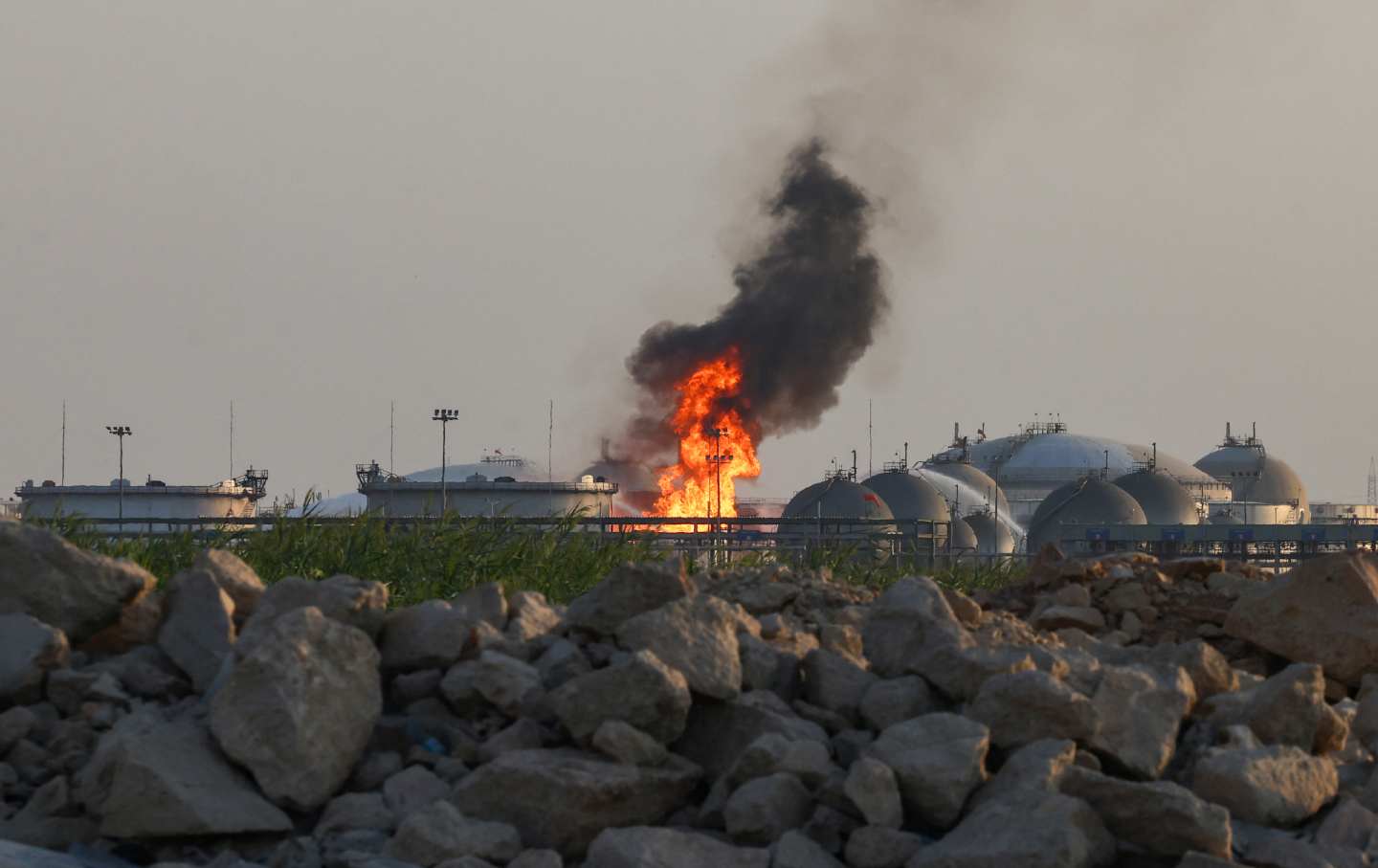
The Saudi Phase of the Iran War Signals More Chaos to Come The Saudi Phase of the Iran War Signals More Chaos to Come
The conflict that Donald Trump has repeatedly proclaimed an unequivocal American victory keeps spiraling out of control.
Andy Burnham’s Speech to the Labour Party Conference Could Be the Start of a Positive Social-Democratic Politics Andy Burnham’s Speech to the Labour Party Conference Could Be the Start of a Positive Social-Democratic Politics
But the autumn budget to be released at the end of October will offer needed details.
Why Navi Pillay’s Receiving the Nobel Peace Prize Is So Important Why Navi Pillay’s Receiving the Nobel Peace Prize Is So Important
She believes that human rights and international law are universal principles that must be enforced regardless of violator’s ideology, ethnicity, or geostrategic alignment.