
Adam Schiff’s Reverse Psychology Ad Campaign
In a bid to keep his Democratic rival Katie Porter out of the running, the California representative is touting Republican Steve Garvey’s conservative credentials.
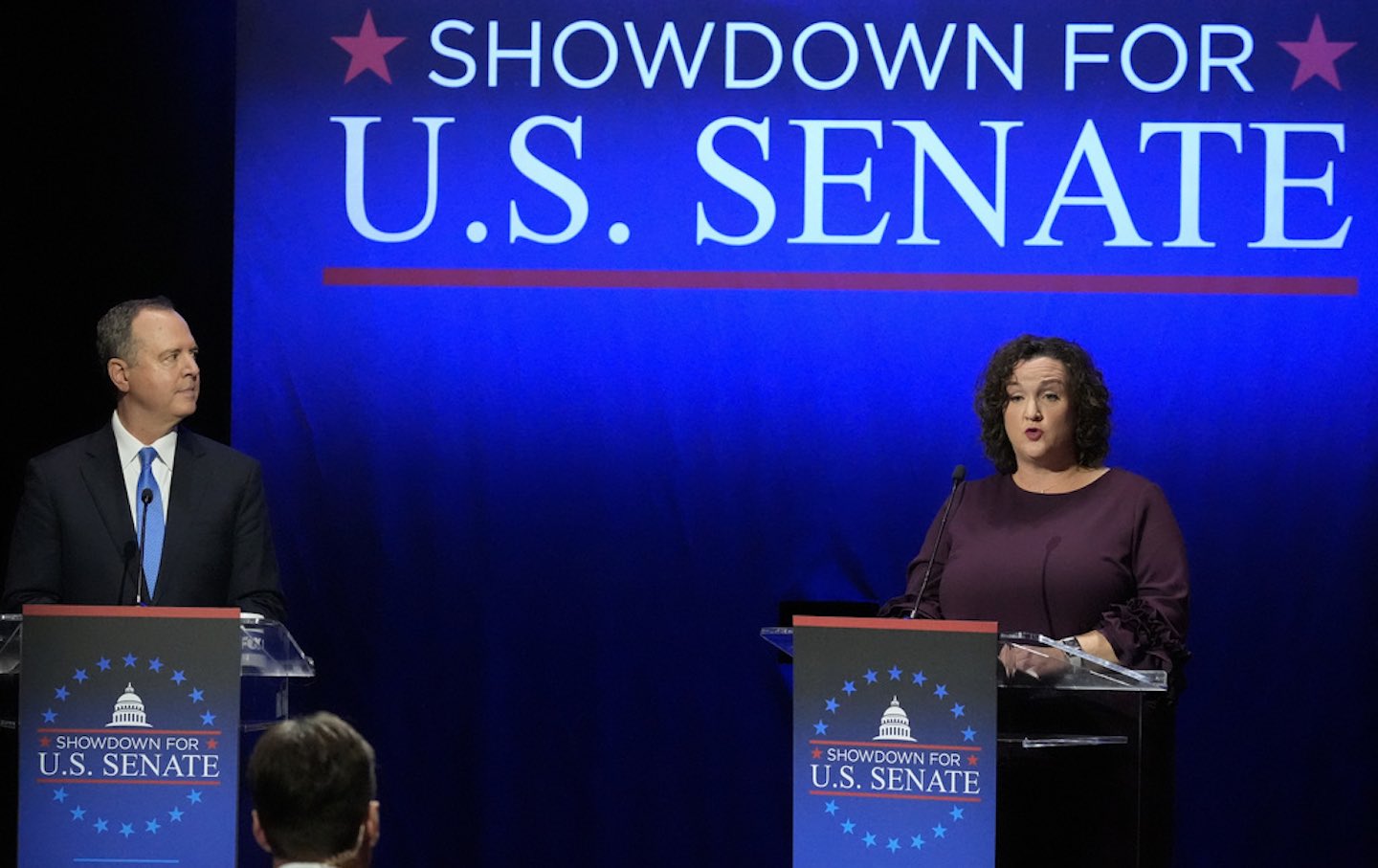
As California’s March 5 primary approaches, Adam Schiff, who is polling ahead of his main Democratic rivals for the open US senate seat, has been going out of his way to boost Republican candidate Steve Garvey.
The septuagenarian former baseball star Garvey is, Schiff’s multimillion-dollar advertising campaign tells TV audiences and readers of glossy mailers that show up with annoying regularity, “too conservative” to represent the liberal Golden State. He is, the ads opine, too closely allied to Trumpism, and too opposed to California’s signature liberal policies.
In reality, this advertising blitz is designed not to cut off Garvey’s campaign at the knees but rather to boost his profile among GOP voters in the state who have no intention of voting for a liberal Democrat. Tell a conservative rancher in the north of the state or a conservative desert-dweller east of Bakersfield that Garvey is “too conservative,” and it’s a sure bet that their interest in the candidate will increase. After all, if Adam Schiff, long the bête noire of the MAGA movement, dislikes Garvey, then, the conservative mind assumes, Garvey must have something going for him.
It’s the sort of tawdry dirty trick that California’s bizarre open primary system, in place for the past 13 years, encourages. In this system, non-presidential-election candidates from all parties are thrown into a single primary, in which any registered voter can participate. (The presidential contest is still separated by party.) In this open primary system, somewhat disparagingly known as the “jungle primary,” only the top two candidates progress to the general election.
Given that twice as many Californians are registered Democrats as are registered Republicans, the open primary result often sees two Democrats topping the ballot and making it through to the November vote, essentially leaving the portion of the electorate that is Republican without a meaningful choice come Election Day. Until Schiff’s advertising onslaught shifted the calculus and Garvey’s poll numbers ratcheted upward, the political wisdom was that the race for US senator would come down to a choice between various shades of blue in November.
Schiff’s calculus in boosting Garvey is particularly cynical. It rests on the idea that if the Los Angeles congressman ends up in a runoff with his nearest Democratic rival, Katie Porter, he might well lose. Porter has run a good ground game, becoming something of a progressive icon, especially among younger voters, with her anti-corruption speeches over the past few years. At the same time, Republican voters, who particularly loathe Schiff because of his role in the impeachment proceedings against Donald Trump, might choose Porter over Schiff if they come to see her as the lesser of two evils. Far better for Schiff to neutralize that risk through boosting the profile of Garvey enough in the primary that he consolidates GOP support behind him and edges Porter out. Come the general election, this theory goes, Schiff would then consolidate Democratic support and cruise to victory over the somewhat hapless, and in reality too-conservative-for-California, Garvey.
From the point of view of a political consultant, such a strategy makes perfect sense. But from the perspective of encouraging political engagement it is, to say the least, disingenuous.
Not that I think it’s a good thing for two members of a single political party to compete in the general election in November; I don’t. To my mind, the open primary system is a pretty gross distortion of the political process and contracts rather than expands choice in the general election—giving disproportionate power to primary voters early in the political season and essentially disempowering the majority who don’t engage with the election until much later in the year. But given that California is stuck with the open primary, it would be nice to have a fair contest rather than a dirty tricks campaign in which a Democrat gives a boost to a Republican simply to neutralize another Democrat.
Of course, in a low-turnout election, it’s also possible that Schiff might miscalculate—that his campaign boosts Garvey’s profile too much and consolidates GOP support around his candidacy to the extent that he becomes the public face of the Republican Party in Tuesday’s primary. The Sacramento Bee pointed out this week that if Schiff’s support dips slightly and he, Porter, and Barbara Lee—the progressive congresswoman from Oakland who is currently in third place among the leading Democrats—end up splitting the Democratic vote too evenly, it’s mathematically possible, given the number of GOP voters in the state, that Garvey could come out on top in Tuesday’s vote. With only days to go until the primary, some polls have pointed to exactly this outcome, with Garvey now topping the field in a survey released by the Los Angeles Times today. It would be, at the very least, a startling embarrassment for Schiff, and would call the wisdom of the strategy into question.
The second election that could shake things up in California this year is for San Francisco’s mayor. While there’s no primary election in March for that position, the November race is already in full swing, and incumbent mayor London Breed is facing stunningly high disapproval numbers, in large part because of the city’s failure to rebound from the pandemic disruptions, with huge swaths of the Downtown void of businesses and with cascading homelessness and fentanyl crises.
More than 70 percent of San Franciscans disapprove of Breed’s performance, and polling suggests that fewer than one in five voters are planning to put her first on their ranked-choice ballot. Venture capitalist Mark Farrell, who served as interim mayor for a few months back in 2018, recently entered the fray on what for San Francisco passes as a surprisingly conservative platform. Farrell is pledging more aggressive actions on homelessness—an end to encampments and an expansion of the city’s shelter system—and on public drug usage, as well as the firing of the city’s police chief and new zero-tolerance policies on crime. Within days of his entry, he was topping polls in the increasingly angst-ridden city.
Breed’s mayorship has not been a roaring success. While she has been tacking to the right in recent months on the same issues that Farrell is now seeking to make hay out of, many voters remain convinced that her administration is both too liberal and too ineffective. By huge margins, San Franciscans tell pollsters they are concerned by homelessness, drug usage, and crime—and that they believe the city is on the wrong track. These are the sorts of numbers that dogged Oregon Governor Kate Brown in the last years of her term, and that resulted in the Republicans’ launching a surprisingly strong—though ultimately unsuccessful—effort to recapture the statehouse in Salem in 2022. Breed has dropped the ball on numerous fronts in recent years; if the city’s voters kick her to the curb come November, will they replace her with a more effective progressive, or will America’s most proudly liberal city take the surprise turn to the right that some of the polling suggests it might?
More from The Nation
Abolish ICE Abolish ICE
Demonstrators take to the streets in protest against an ICE shooting in New York City. Foley Square, October 2026.
Mamdani Is Facing Heat Over the NYPD. Here’s What He Should Do. Mamdani Is Facing Heat Over the NYPD. Here’s What He Should Do.
The mayor is being given a series of false choices over his public-safety agenda. But there is another way forward.
Why Calling Anti-Trans Hate a “Distraction” Is So Troubling Why Calling Anti-Trans Hate a “Distraction” Is So Troubling
It’s a familiar line in the midterms: Anti-trans attacks are a “distraction” from “kitchen-table” issues. That sends a chilling message about whose rights are worth fighting for.
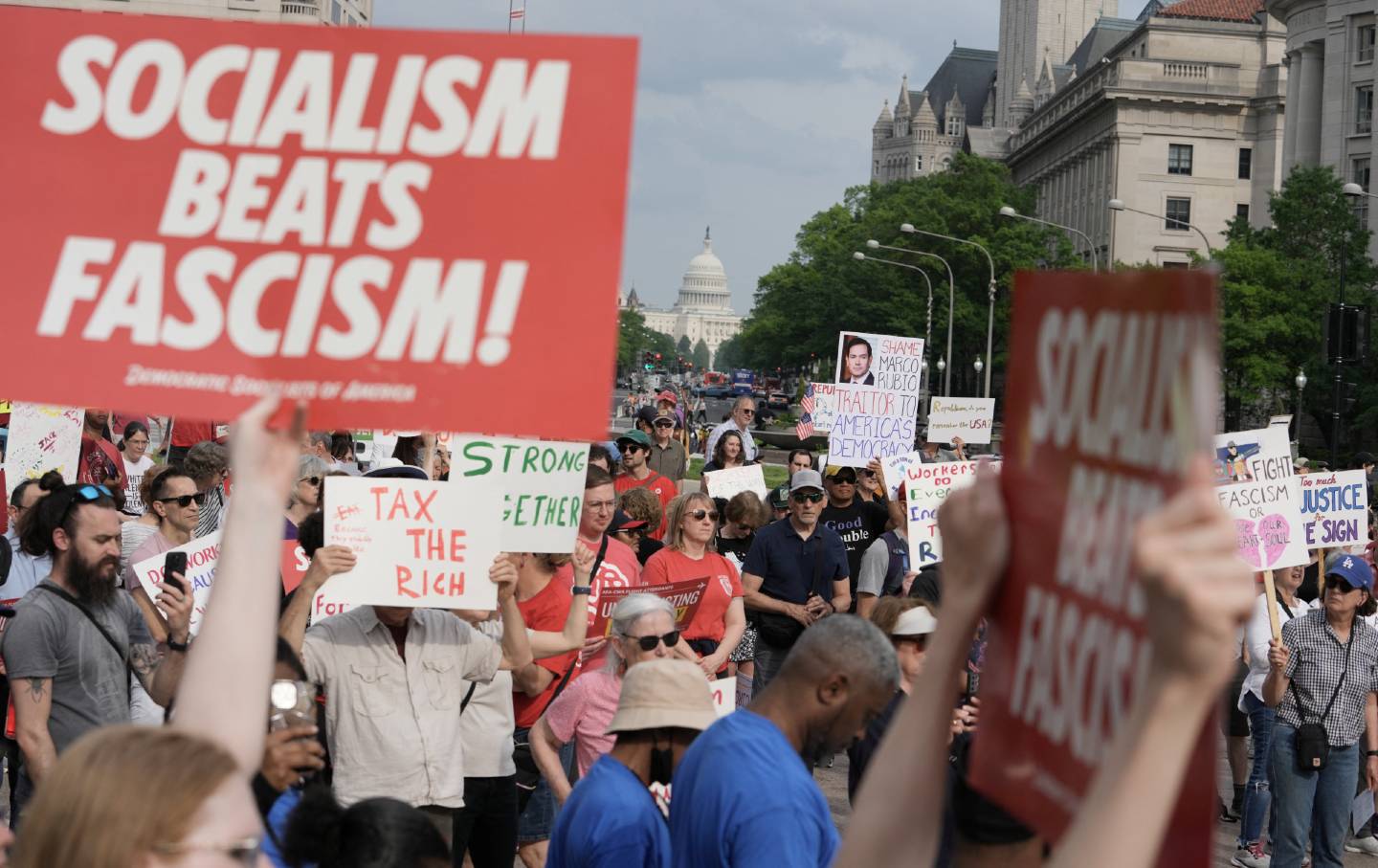
So What Is Socialism, Anyway? So What Is Socialism, Anyway?
In a world dominated by neoliberal market fundamentalism, “socialism” is what will make a more moderate, regulated form of capitalism work for most people.
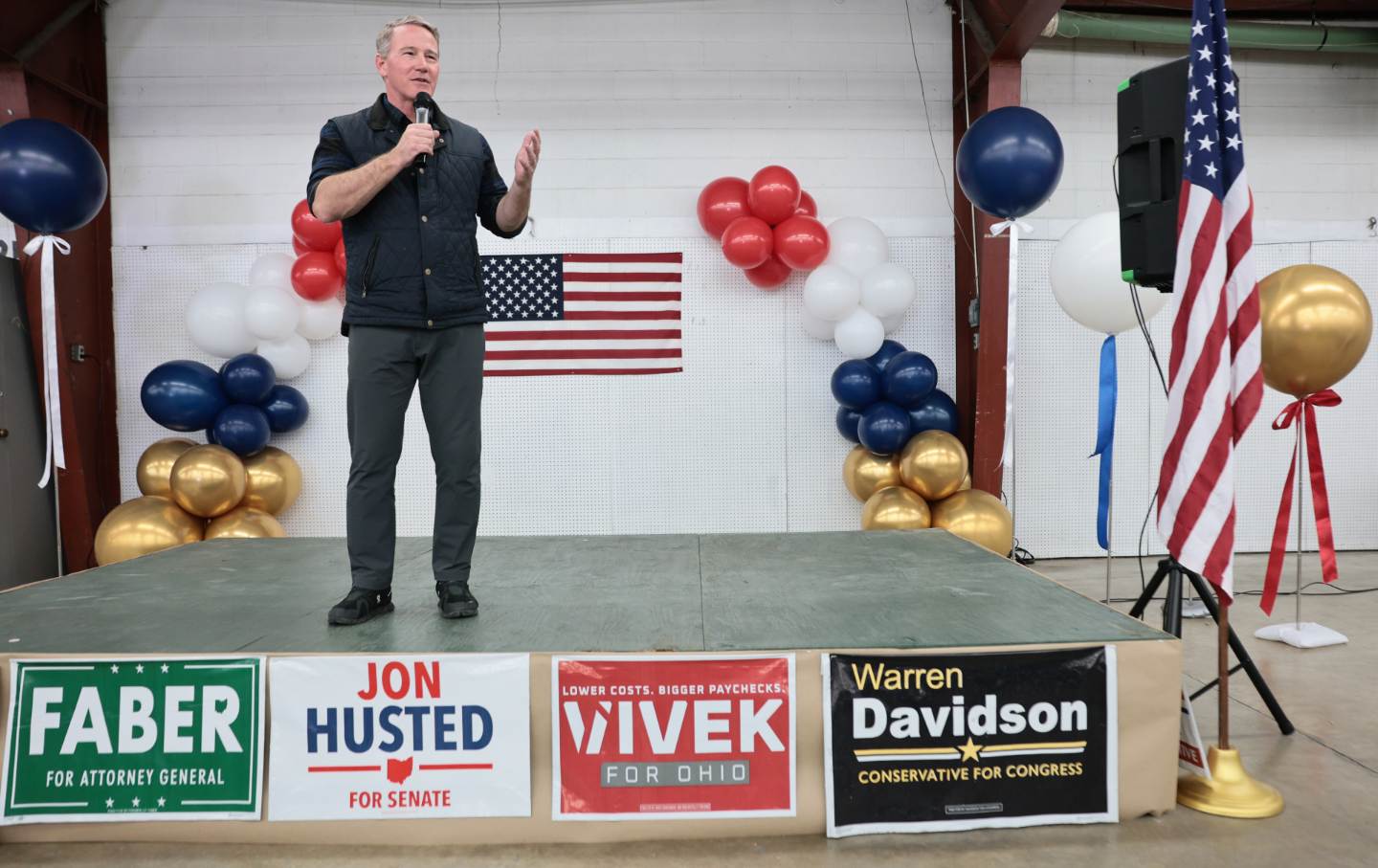
Will the GOP’s Big Money Save Jon Husted in Ohio? Will the GOP’s Big Money Save Jon Husted in Ohio?
Former senator Sherrod Brown is leading in most polls, but a tidal wave of spending may prop up the struggling incumbent.
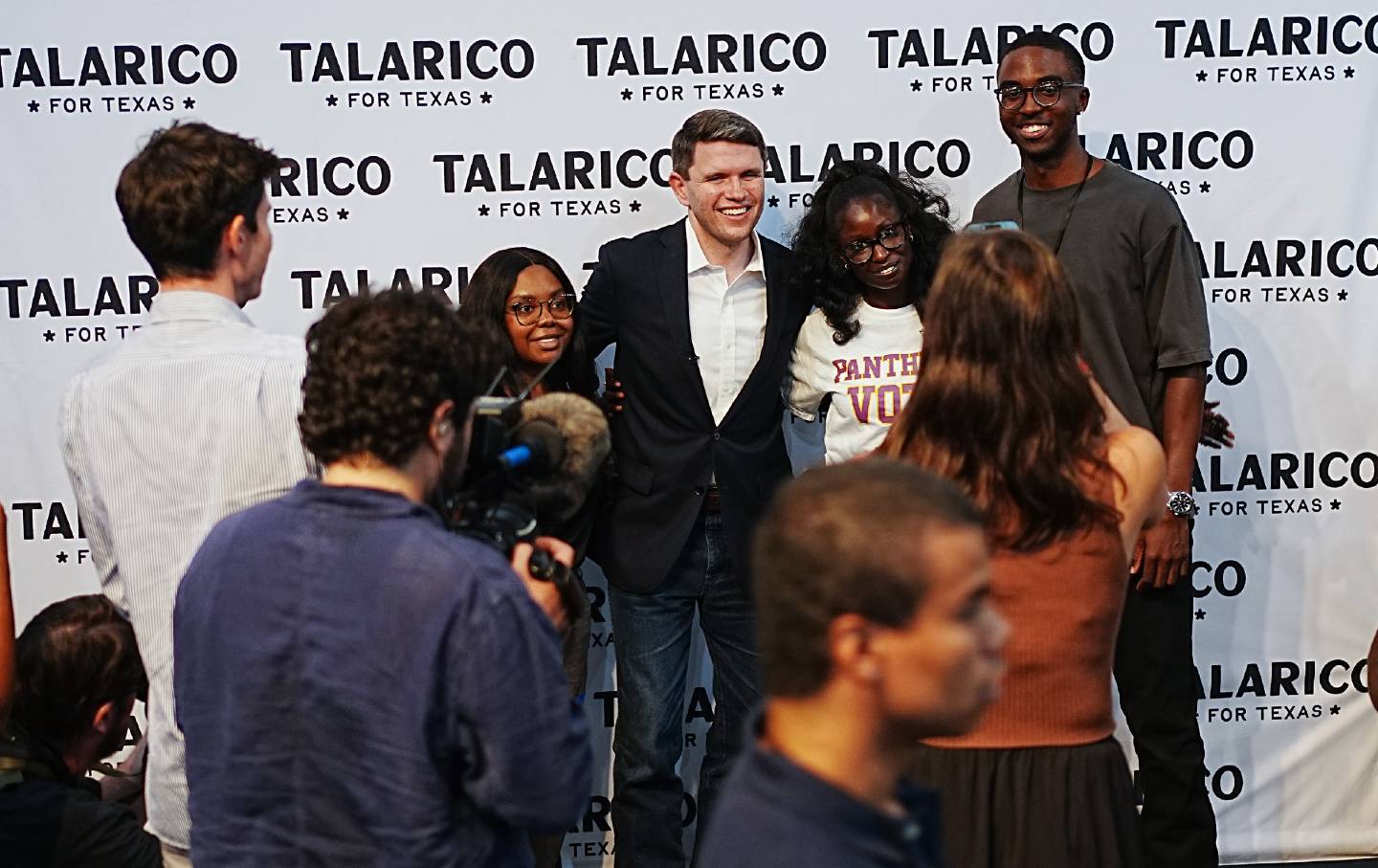
James Talarico Is Preaching a Gospel of Pluralism James Talarico Is Preaching a Gospel of Pluralism
He’s not the only progressive doing it.

