“I Don’t Want to Resist the Occupation—I Want to End the Occupation”
An interview with Palestinian activist Ali Abu Awwad.
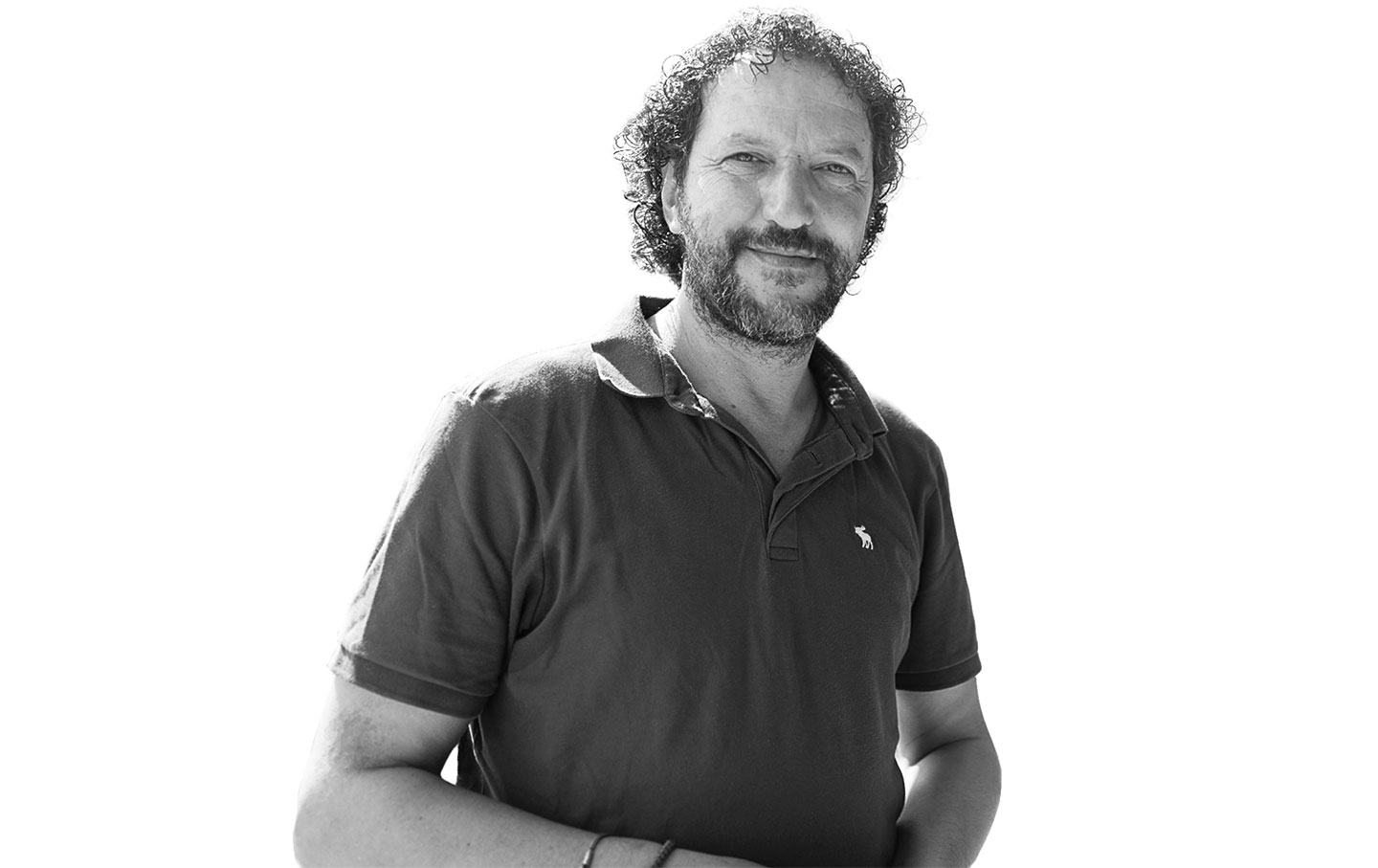
Ali Abu Awwad
(Michelle Phillips)Ali Abu Awwad is a Palestinian activist who has been an advocate of nonviolent action for 20 years. He was recently awarded the Indira Gandhi Prize for Peace, Disarmament and Development for 2023. He spoke with Ray Suarez, who has covered international affairs for nearly four decades and is now the host of the public radio program On Shifting Ground. This interview has been condensed and edited for clarity.
Ray Suarez: You’ve been on the ground in the West Bank for decades, fighting for a peaceful solution for Palestinian freedom and Israeli security. Did the October 7 Hamas attack push people away from where you want them to be?
Ali Abu Awwad: I think people concentrate too much on events. What have we been expecting from Jewish people who are living and spending hours of their lives in shelters because of rockets? Were we expecting them to become Nelson Mandelas, even before October 7? What are we expecting from Palestinians—millions of people locked in Gaza and the West Bank with no rights? These are the consequences of failed leadership. But they’re also the consequences of the engagement of so many fighters in this conflict.
I don’t want to resist the occupation—I want to end the occupation. I’m speaking as a Palestinian. We need a strategy that is not focused on what we’re against, but what we’re for. And we have to be for ourselves, for taking responsibility for ourselves.
RS: Let’s talk about how you got here. You’ve been to prison twice. You threw rocks at Israeli soldiers in the First Intifada. But you had a moment when you said, “What we’re doing now isn’t going to work.”
AAA: Everyone has the seeds of humanity in his soul, his heart, his mind. But we’re still led by the conditions around us. I grew up as a very angry child, born to a refugee family. I saw the humiliation of my people, my family. I saw my mother beaten up in front of my eyes. Jewish people sometimes say, “You Palestinians educate your kids to hate.” If you experienced that amount of humiliation, you would not need a curriculum for hatred.
When I was in prison, my mother was imprisoned too. I went on a hunger strike to [be allowed to] see her. I didn’t go on a hunger strike because my heart was full of empathy; I wanted to win. I wanted to win over Israel. And that experience taught me a big lesson. I had a weapon I’d never used before—my humanity. And this is the key: My enemy couldn’t stand the humiliation of my humanity. That’s the secret of nonviolence: Your enemy is a human being, too. We cannot ignore that. We have to bring them to that level of seeing your humanity. But fear is making everyone blind.
RS: But haven’t we been walking away from the Oslo Accords for 28 years?
AAA: After that initiative was signed, the real job was not done. We never implemented it on the ground, for many reasons. In Oslo, there was a recognition of the Palestine Liberation Organization as a representative. But when you recognize something, you need to practice and build a whole environment based on that. Israelis want security, [but] that will never come when you take someone’s rights and dignity. If Palestinians want freedom, we have to adopt nonviolence as the best carrier of that freedom, where Israeli security is one of our priorities. But that will not be our priority under occupation. It’s just a dream.
The nonviolence movement I’m leading is not about hummus and hugs. It’s not about good intentions. It’s not about sending our kids to each other’s summer camps. This is not the peace I want. Dialogue is not the goal. Dialogue is a tool for a bigger goal.
We need to build a new political reality that can speak to both sides. We need to decide on principles even before we decide on one state or two states. Not on land, not on borders, not on water—deciding on the principles of identity. We need to guarantee that these two identities can be practiced in a fashion that no one has to pay the price of his dignity, land, rights, or nationality.
RS: Let’s talk about what that might look like when the guns finally fall silent, when the bombs stop dropping, when the rockets stop going from west to east over the Israeli border. What has to happen to get this thing back on track and to stop the dying, stop the suffering? What are some actual steps that could be taken toward a different way of life?
Popular
“swipe left below to view more authors”Swipe →AAA: We need a cease-fire, immediately. That is to save people’s lives, but it is not the end goal. The end goal is to cease conflict. For that, first we need an international conference that will create and decide the values of any next approach to our peaceful negotiations, and [form] a plan to create the conditions for any peace agreement to succeed.
Number two is: We need a grassroots movement that will lead with the full cooperation of governments—not just the leadership of politicians. The grassroots leaders have the backs of their own societies. Number three is: [We need the] good engagement of the international community. Right now, countries are playing to their own interests. It’s easy because we are full of anger and hate. But at the end of the day, we are the ones who fail and pay the price.
RS: You’ve been awarded the Indira Gandhi Peace Prize. What’s important about getting that prize right at this moment? And can it be useful?
AAA: I’m honored to have it. And I’m thankful to the people of India, to the Indira Gandhi Memorial Trust. Mahatma Mohandas Gandhi is, for me, a hero. When I heard about the prize, I cried, for two reasons. First, this way is not easy. It’s easier to advocate for aid than for a solution; it’s easier to be pro-these or pro-those. But the acknowledgment of my humanity, of this political vision, of the recognition that both identities in this land have to be our top priority—that gives me proof that the world is still fine, and there are people around the world who will partner with me.
The other reason I cried is because I’m being awarded and people are dying. Thousands of people are losing their lives… innocent people. You know, when my brother was killed by an Israeli soldier in 2000, I was so angry. My advice to everyone is that when the world is dark, be a visitor to your pain—don’t be a resident of it. Go! You can grieve; you can cry. But don’t stay there, because the purpose of life is much more meaningful than tears and fear.
No one promised me heaven in this hell. But I keep practicing my values, my belief that heaven is still there. I never lose hope. But I never lose commitment.
More from The Nation
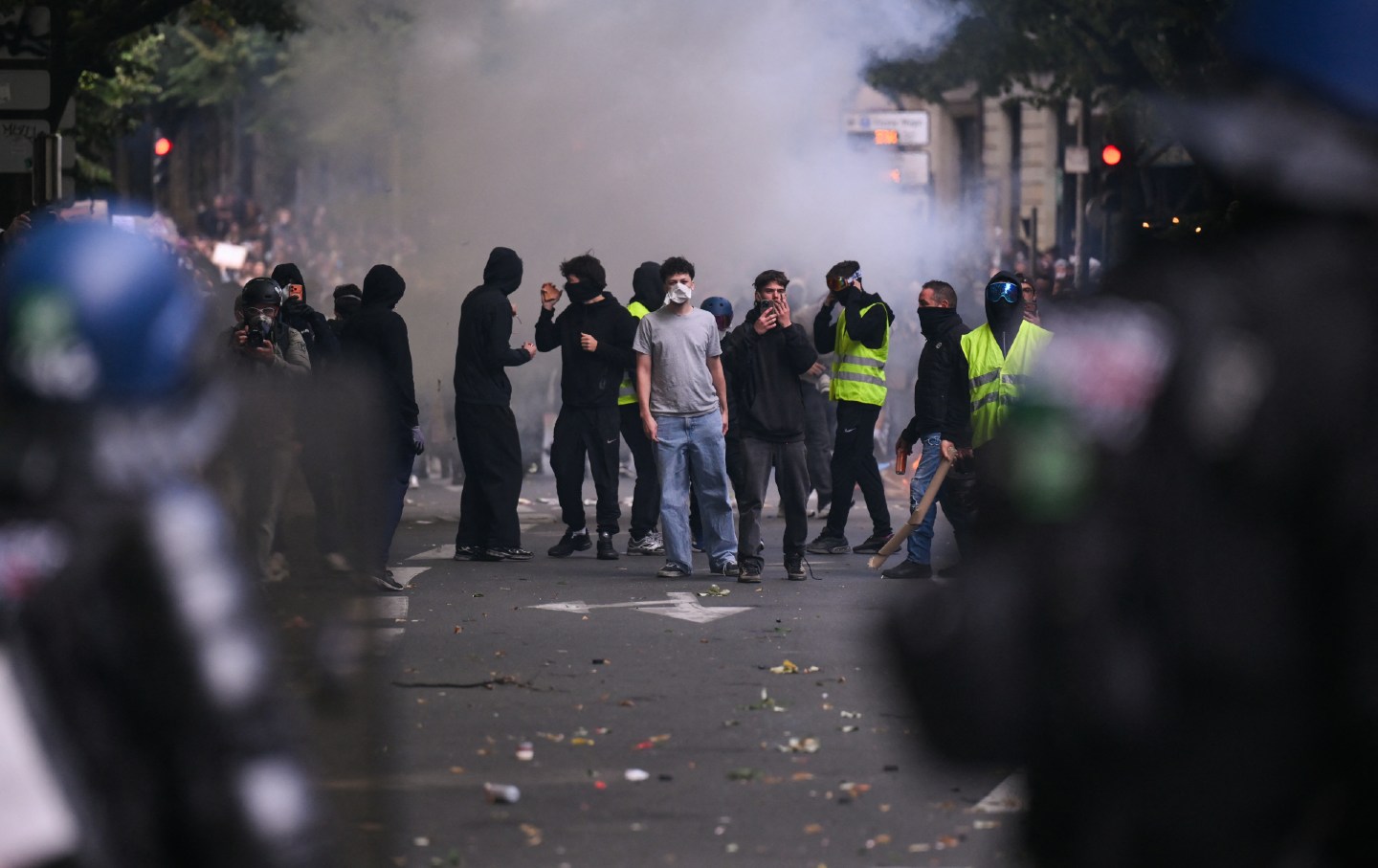
The Specter of Lepenism Looms Over France’s Social Crisis The Specter of Lepenism Looms Over France’s Social Crisis
Joining forces with the “yellow vests,” youth demonstrators are raising the alarm in a country falling to the far right.
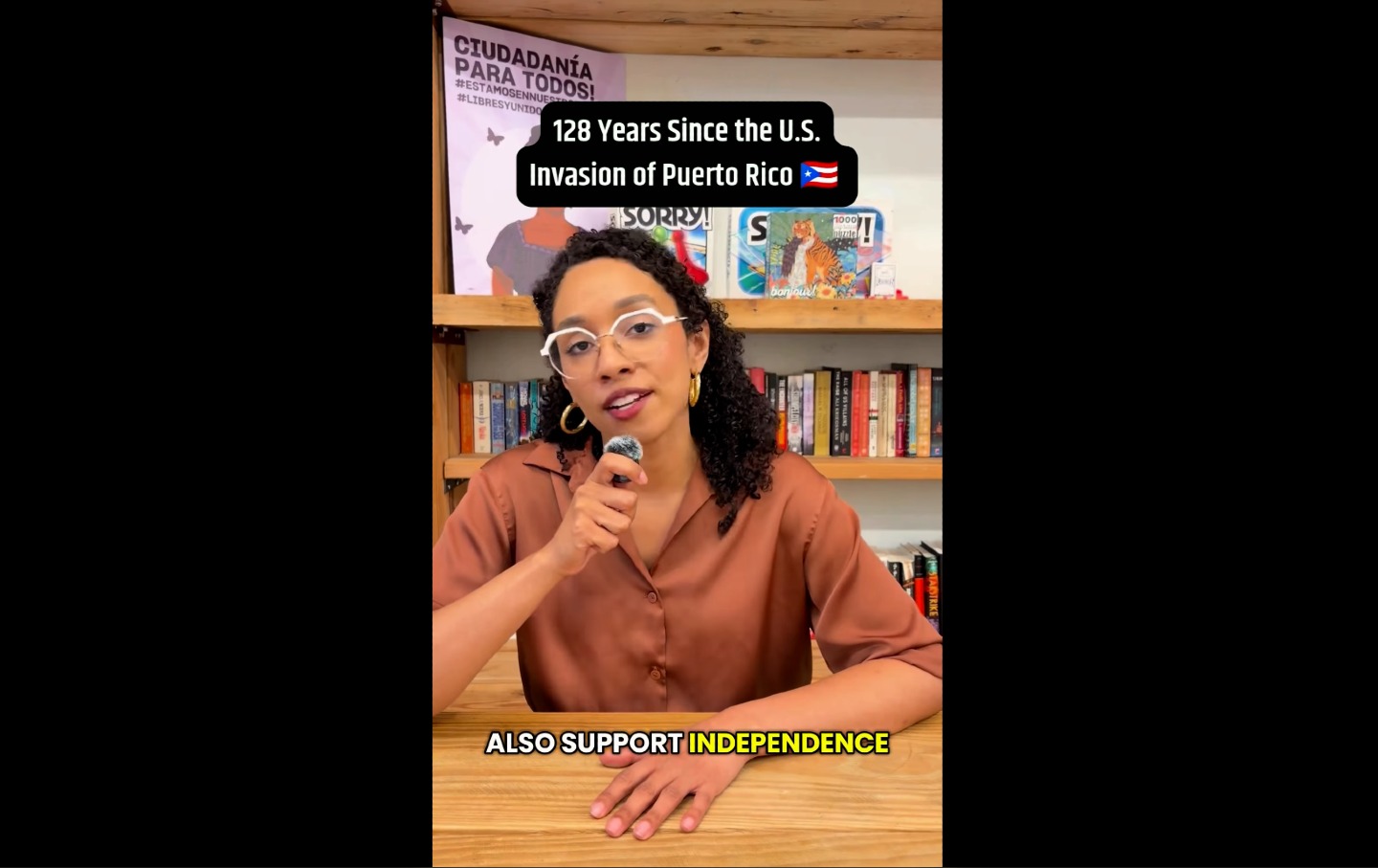
Progressives Are Backing Puerto Rican Independence. It’s About Time. Progressives Are Backing Puerto Rican Independence. It’s About Time.
More and more leftists are concluding that statehood for the island is not enough.
The Saudi Phase of the Iran War Signals More Chaos to Come The Saudi Phase of the Iran War Signals More Chaos to Come
The conflict that Donald Trump has repeatedly proclaimed an unequivocal American victory keeps spiraling out of control.
Andy Burnham’s Speech to the Labour Party Conference Could Be the Start of a Positive Social-Democratic Politics Andy Burnham’s Speech to the Labour Party Conference Could Be the Start of a Positive Social-Democratic Politics
But the autumn budget to be released at the end of October will offer needed details.
Why Navi Pillay’s Receiving the Nobel Peace Prize Is So Important Why Navi Pillay’s Receiving the Nobel Peace Prize Is So Important
She believes that human rights and international law are universal principles that must be enforced regardless of violator’s ideology, ethnicity, or geostrategic alignment.